
Alexander Luchaninov on Family, Culture, Social Divisions, and War
How has the Russia-Ukraine war affected marriage, family relationships, cultural identity, generational differences, language, social attitudes, and technological development in Ukraine?

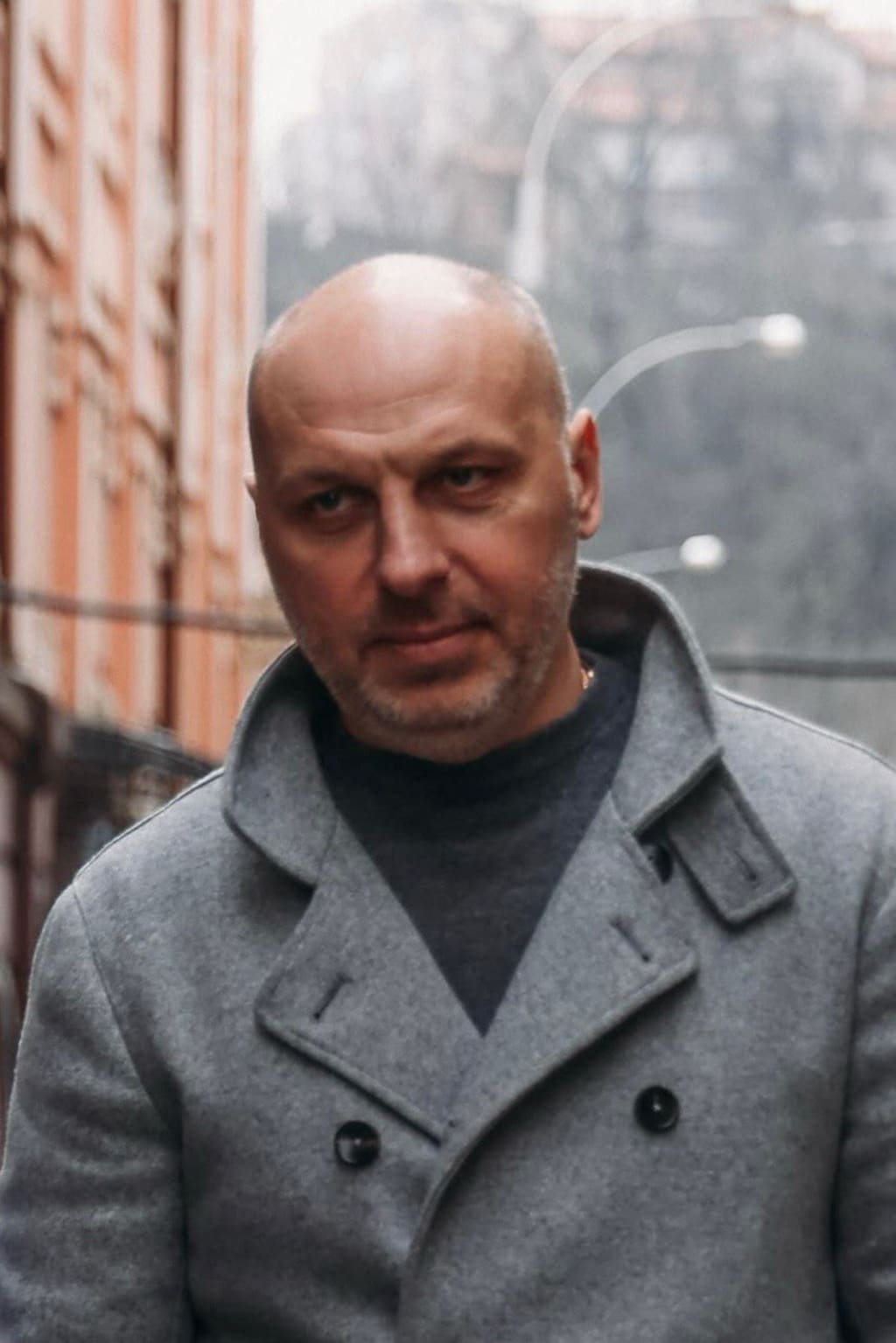
Scott Douglas Jacobsen interviews Alexander Luchaninov about wartime Ukraine, marriage, divorce, cultural identity, generational tensions, linguistic tolerance, racial prejudice, and social change. Their discussion examines individual suffering, national narratives, engineering mentorship, technological innovation, professional responsibility, and Ukraine’s postwar reconstruction and development.
Alexander Luchaninov (Oleksandr Luchaninov) is a Ukrainian journalist with a strong interest in industrial innovation, engineering, emerging technologies, and international affairs. Drawing on his knowledge of business, technology, and journalism, Luchaninov brings a distinctive perspective to discussions on Ukraine’s economy, industrial development, national security, and the country’s future. His professional interests focus on Ukraine’s technological capabilities, the challenges facing Ukrainian society, and the country’s role in the evolving international landscape.
Scott Douglas Jacobsen: Marriage and divorce in Ukraine, the divorce rate was approximately 60% before the war. During the war, it has been much higher. Given those rates, should Ukrainians reconsider how marriage is defined or change their cultural expectations of it after the war?
Alexander Luchaninov: You gave the divorce rate, but you did not say what happened afterward. Some families separated and divorced; other people entered new marriages. Some do not register their relationships at all. So what? I see no reason to redefine the institution of marriage on the basis of those statistics.
Jacobsen: What particular strains does war place on relationships in everyday life? I mean the specific ways that stress manifests, beyond simply saying that war produces more divorces.
Luchaninov: Why do you assume war must affect relationships in the same way for everyone? There is a crash on the Kyiv–Lviv highway and people are killed. It is a tragedy for those close to them, but other people continue to drive on that road. We should not try to derive one universal psychological formula from every event.
Jacobsen: That is true. People in the country suffer fewer car crashes after more left for total numbers, correct?
Luchaninov: First and foremost, the people who suffer are those who have lost someone close. Death, illness, an accident, war — any loss changes the lives of a particular family. What irritates me is when individual human experiences are turned into one endless “national catastrophe” for the sake of dramatic language. When one person loses someone close, it is a tragedy. When thousands die, we speak in statistics. I am not denying anyone’s pain; I object to empty dramatization that explains nothing.
Jacobsen: In terms of human history, we also live in one of the most fortunate periods to be alive, considering global life expectancy and the number of healthy years people can expect.
Luchaninov: Why do you think that?
Jacobsen: Medicine and science applied rationally.
Luchaninov: Human nature has not changed. Society has simply created laws and rules that prevent people from killing one another in everyday life.
Jacobsen: Also true. It may have been Steven Pinker who noted that only about 8% of recorded human history has been peaceful.
Luchaninov: Internal and external wars have been a recurring feature of human history. Pretending that war is some unimaginable exception means failing to understand history.
Jacobsen: As a man in the middle of life, how do you assess the older and younger generations in Ukraine, particularly the culture they create and their ways of behaving and thinking?
Luchaninov: Older generations do not know how to pass on cultural meaning, and younger generations often do not want to accept it. This war has exposed an uncomfortable truth: people brought up on Lermontov, Pushkin, and Dostoevsky came here to kill us. Reading those books did not make them better people. The Russian Federation is our enemy, and no amount of talk about “great culture” can obscure that reality. This is no longer a literary argument with an opponent. It is a war.
Suggested question: How can businesses help pass experience from one generation to the next when education and professional networks have been disrupted by war?
Luchaninov: Through real projects and mentoring. When an experienced engineer works alongside a young specialist, knowledge becomes practical skill. This is especially important in high-technology industries. To develop products of our own, we have to preserve engineering traditions, train people, and give them room to grow within teams. That is a contribution not just to a company but to a culture of professional responsibility.
Jacobsen: What are the biggest taboos in Ukraine now?
Luchaninov: There is no single absolute taboo in Ukraine. There are people who shout louder than everyone else about the Russian language or Russian music. Today they demand one thing; tomorrow something else. Shouting is not the law. Part of the problem is that many people do not know how to defend their legal rights.
Jacobsen: You are describing cultural taboos in relative terms. Which ones would you identify here now?
Luchaninov: Ukrainians are, on the whole, quite tolerant. I can speak Russian in Lviv, although I believe it is right to respect the city’s linguistic traditions and speak Ukrainian there. But that is a matter of respect, not grounds for declaring someone an enemy. Our enemy is the Russian Federation, which is waging war — not a language in itself.
Jacobsen: What do people find offensive in Ukraine?
I believe I have offended only one person here. I was travelling with a Christian man and remarked that I could understand a mother who lost her son in the war wishing to be reunited with him in the afterlife. In the short term, that makes complete sense to me. Over the longer term, I do not know whether it is necessarily healthy. That was all.
Luchaninov: That is one individual’s opinion. A mother who loses her son in the war and a person who loses someone close in a road accident may suffer just as deeply. But you cannot turn a personal reaction into a description of an entire country’s population. We are discussing society, not appropriating someone else’s grief.
Jacobsen: Yes. I want to distinguish an individual experience from the population as a whole. Applying one to the other would be foolish.
Luchaninov: In every country, there is a difference between one person’s position and the condition of society as a whole. An individual’s views depend on circumstances and may change as soon as tomorrow. You cannot present a private conversation as a nationwide truth.
Jacobsen: What uncomfortable truths about Ukraine would you identify?
Luchaninov: Any truth can be uncomfortable.
Jacobsen: That sounds more powerful than it is. Saying that someone is six feet tall is a truth. It is not necessarily uncomfortable. It is simply true.
Luchaninov: You have to consider the context. A fact alone tells you nothing about how it will be interpreted.
Jacobsen: Context matters. I was recently interviewed by the Congress of African Journalists alongside a Chinese poet named Cao Shui. I made the point that we are the same species living in different contexts. Therefore, context matters.
Luchaninov: If we are talking about white people.
Jacobsen: No, species. Race is a sociological construct. Species is a biological construct.
Luchaninov: I find it hard to agree that African people are human beings in the same way.
Jacobsen: I have encountered this opinion throughout Ukraine as well. What else?
Luchaninov: I am referring to statistics and claiming that, in some countries with large African migrant populations, African migrants are heavily represented among prison inmates.
Jacobsen: How are principles of equal treatment reflected in the work of an international technology company?
Luchaninov: A business working with engineers, customers, and partners from different countries needs professionalism and respect. We judge people by their skills, reliability, and quality of work, not by nationality or origin. International cooperation depends on trust, legally sound agreements, and respect for partners.
Jacobsen: In your professional and personal life, what makes you most proud?
Luchaninov: In my personal life, I am proud of my family. In my professional life, I am proud of what I do. What matters is not merely talking about work but actually doing it.
Jacobsen: Thank you very much for the opportunity and your time, Alexander.
Scott Douglas Jacobsen is the Founder and Publisher of In-Sight Publishing (ISBNs: 978–1–0692343, 978–1–0673505) and Editor-in-Chief of In-Sight: Interviews (ISSN: 2369–6885). An accomplished journalist, his portfolio includes over 10,000 publications across 200+ outlets, including International Policy Digest, The Humanist, Basic Income Earth Network, Humanist Perspectives, and rabble.ca. He has served in leadership and board roles across global media and humanist organizations and holds memberships with the Canadian Association of Journalists, PEN Canada, and Reporters Without Borders.
Image Credit: Alexander Luchaninov.
About the Creator
Scott Douglas Jacobsen
Scott Douglas Jacobsen is the publisher of In-Sight Publishing (ISBN: 978-1-0692343) and Editor-in-Chief of In-Sight: Interviews (ISSN: 2369-6885). He is a member in good standing of numerous media organizations.
Enjoyed the story? Support the Creator.
Subscribe for free to receive all their stories in your feed. You could also give them a one-off tip, letting them know you appreciate their work.
Comments
There are no comments for this story
Be the first to respond and start the conversation.