
Alex Guts on Ukrainian Entrepreneurship, European Banking, and Fintech
How do Ukrainian entrepreneurs approach risk, navigate European regulation, and bring digital innovation to banking and international payments?

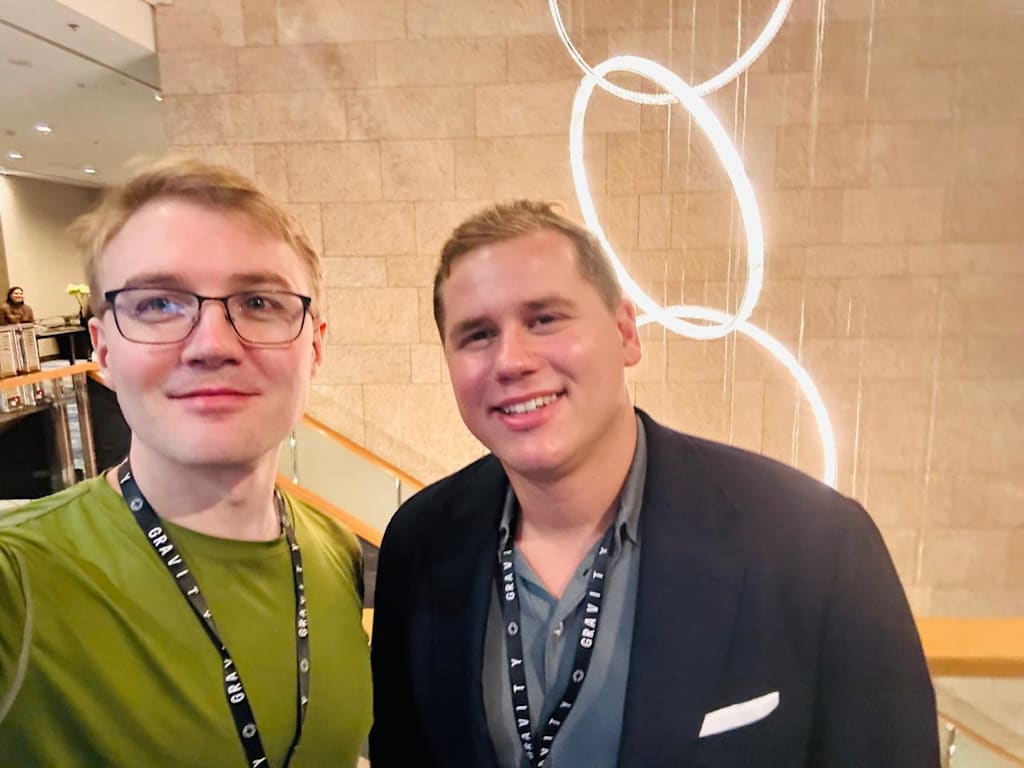
Alex Guts is Group Chief Executive Officer of Banxe, a fintech platform connecting international payments and digital asset services. Originally from Odesa, Ukraine, and based in southern France, he has experience in startups, software, e-commerce, and digital marketing. His work focuses on financial technology, business development, and cross-border payment markets.
Scott Douglas Jacobsen interviews Alex Guts about Banxe, Ukrainian entrepreneurship, and differences in European business cultures. Guts discusses Odesa’s multicultural influence, migration, risk-taking, banking digitalization, and fintech development. Their conversation covers regulation, startup funding, wartime innovation, and the value of balancing entrepreneurial speed with patience in major business decisions.
Scott Douglas Jacobsen: Could you introduce yourself, your role, and the company you represent?
Alex Guts: I’m the CEO of Banxe, a fintech platform offering international money transfers, card issuing, card acquiring, cryptocurrency payments, and cryptocurrency exchange services.
Jacobsen: When did you get involved?
Guts: Five years ago.
Jacobsen: Why?
Guts: I’ve been involved in different startups for almost a decade, including software-as-a-service and e-commerce. I also have experience with some larger enterprises.
One day, I met my partner, who pitched me on his project and said he wanted to disrupt the market a little. It sounded like an exciting path, so I decided to try it and see how it went. I’ve been doing that for the past five years, and I’m happy to be involved in this industry.
Jacobsen: Did you originally start in Warsaw, or did you move from one place to another?
Guts: I don’t live in Warsaw now. I live in southern France. Originally, I’m Ukrainian, from Odesa. I was born next to the sea. I ended up in a coastal city, too. It’s probably something fundamental to me.
I’ve lived in different countries, including Ukraine and France. I studied in Germany. I also studied at Kozminski University in 2015 and 2016. It’s my alma mater.
I didn’t start this business in Warsaw. The market was different when we started.
Jacobsen: What does Ukraine mean to you? How would you distinguish Western European and Eastern European approaches to business, as broad trends? There is some overlap.
Guts: That’s a good question. Ukraine is my home. I was born and raised there. Odesa is very different. If you’ve been there, you know its atmosphere is different from Kyiv, Lviv, and other cities. It’s extremely international.
Probably the biggest advantage Odesa gave me was the opportunity to be part of multicultural, international communities and build connections with people from different backgrounds.
That’s important in my business now. We work with people in the UK, which is itself very international, and across Europe. We also do business with the Middle East and North America, and we have some Asian clients.
Thanks to Odesa, I have a basic understanding of different cultures and religions. Christian, Jewish, and Muslim communities are part of that environment. It was a good education.
Regarding the difference between Western and Eastern Europe, I'm impressed that people in Eastern Europe are more willing to take risks. There hasn’t been the same continuity over generations in building businesses, preserving wealth, and passing on capital.
I see that willingness to take risks in Ukraine, Poland, and Czechia. There are similarities in business mentality. That may help explain why Ukrainians were moving to Poland even before Russia’s full-scale invasion in 2022. When I studied here in 2015, many Ukrainian students were already here.
In Western European countries such as France, Germany, Spain, and Italy, people seem more relaxed and less inclined to rush. They feel they can build wealth over decades. Economic conditions differ, but they often feel more stable over the long term.
In Ukraine, we’ve experienced crisis after crisis over the past 30 years. I think that’s another reason people are willing to take risks. They feel they don’t have as much time.
Jacobsen: Some businesses can also get started more quickly because the regulatory burden can be lighter than in Germany.
Guts: That’s a good point, although I wouldn’t necessarily call it a major advantage.
Jacobsen: I don’t frame it as better or worse. When I look at business and other aspects of culture, I look at trade-offs.
Guts: Yes. One problem in 2022 was that many Ukrainians had to leave their homes because of the full-scale invasion and move to other European countries without understanding the basics of local law and regulation. For them, starting a business was difficult at first.
Jacobsen: It was a drastic shift in mentality.
Guts: Yes. Since then, I’ve seen people adapt and do well.
Jacobsen: Motivation, hard work, and having no other option can play a role.
Guts: Unfortunately, yes. That’s another reason people take risks.
Jacobsen: Sometimes you have to be strong because you don’t have a choice. Survival matters.
Guts: That’s true. It’s also part of the Ukrainian mentality: if we do something, we want to do it on a big scale.
Jacobsen: You want to do it better than the host population?
Guts: It isn’t necessarily competitive. It’s about how we do things and present ourselves.
Jacobsen: Professionalism is a big factor. What should people understand about banking principles?
Guts: Banking in Ukraine and the rest of Europe isn’t fundamentally different. But one of the first things people should understand is that, in my view, many European banks still lag in digitalization and in modernizing their systems and processes.
Jacobsen: I’m told that Germans love fax machines. Annoyingly.
Guts: Sometimes people are still using fax machines, right?
Jacobsen: Annoyingly, if not exasperatingly.
Guts: In Ukrainian banking, major players like monobank helped push the market toward digitalization. It was Ukraine’s first mobile-only banking service, without a traditional branch network. That was remarkable. When you think about traditional banking, you expect a physical branch.
Jacobsen: You expect a teller.
Guts: Yes. You expect to be able to come in and shout at someone.
Jacobsen: A very Slavic point: “I will yell at this person personally.”
There’s also the joke that, if a North American is asked about something, they might say, “Let me check the national statistics or Pew Research.” The Slavic version is, “Let me call Uncle Boris. He lives near there.”
Guts: That sounds like a story from my childhood. Sometimes it works like that.
In the European market, Revolut is one of the major players focused on digital services. It also operates as a licensed bank.
On the other hand, European regulations exist. Some are useful; others can be questionable. To return to your point, a lighter regulatory burden can sometimes facilitate innovation.
Many Ukrainians now found and run fintech companies in Europe, North America, Asia, Africa, and Latin America. We’ve seen how well digital banking can work.
If you use major Ukrainian services such as PrivatBank or Sense Bank, then go to the Netherlands, Germany, or the UK and look at some established banks, you may think, “I want to digitalize this. I want to do it better. I can build a good mobile application. What do I need to do?”
When you start exploring, building a fintech in Europe can be more achievable than you initially thought.
There are regulations and demanding procedures. You need a team and capital. You need substantial funding to launch a financial services business, but it doesn’t necessarily mean hundreds of millions.
For a smaller project, I would estimate one or two million; for something somewhat larger, perhaps five million. If you have that funding, or can raise it, you can explore starting your own financial services business.
Depending on the structure and permissions, that could involve money transfers, SEPA payments, SWIFT transfers, card issuing, or your own branded debit card.
That’s what I like about the European market. You can start small and grow.
Jacobsen: What’s your favourite Ukrainian business aphorism? It could also be a broader Slavic saying.
Guts: It means, “Don’t rush.”
Jacobsen: “Don’t push the horses.” I’ve worked with horses, so that’s a good phrase.
Guts: I don’t like to rush. Maybe that comes from living elsewhere in Europe for some time. Sometimes you need time to make a good decision.
That’s another thing Ukrainian entrepreneurs can learn from other European businesses. Being faster than everyone else can be an advantage, but sometimes you need to slow down.
Jacobsen: Another area is technology, as we’ve seen with military technology. Underdogs have to innovate. It may not always be necessary, but it’s close.
I think Ukrainians don’t allow themselves many excuses right now. They push themselves to innovate on several fronts.
Thank you for your time.
Guts: Thank you.
Scott Douglas Jacobsen is a blogger on Vocal with more than 200 publications on the platform. He is the Founder and Publisher of In-Sight Publishing (ISBN: 978–1–0692343; 978–1–0673505) and Editor-in-Chief of In-Sight: Interviews (ISSN: 2369–6885). He writes for International Policy Digest (ISSN: 2332–9416), The Humanist (Print: ISSN, 0018–7399; Online: ISSN, 2163–3576), Basic Income Earth Network (UK Registered Charity 1177066), Humanist Perspectives (ISSN: 1719–6337), A Further Inquiry (SubStack), Vocal, Medium, The Good Men Project, The New Enlightenment Project, The Washington Outsider, rabble.ca, and other media. His bibliography index can be found via the Jacobsen Bank at In-Sight Publishing, comprising more than 10,000 articles, interviews, and republications across more than 200 outlets. He has served in national and international leadership roles within humanist and media organizations, held several academic fellowships, and currently serves on several boards. He is a member in good standing in numerous media organizations, including the Canadian Association of Journalists, PEN Canada (CRA: 88916 2541 RR0001), Reporters Without Borders (SIREN: 343 684 221/SIRET: 343 684 221 00041/EIN: 20–0708028), and others.
Image Credit: Scott Douglas Jacobsen.
About the Creator
Scott Douglas Jacobsen
Scott Douglas Jacobsen is the publisher of In-Sight Publishing (ISBN: 978-1-0692343) and Editor-in-Chief of In-Sight: Interviews (ISSN: 2369-6885). He is a member in good standing of numerous media organizations.
Enjoyed the story? Support the Creator.
Subscribe for free to receive all their stories in your feed.
Comments
There are no comments for this story
Be the first to respond and start the conversation.