
Yamauba Never Sleeps
Centuries before the Mountain: Yamauba Appears


This is an original work of gothic horror inspired by Japanese folklore surrounding the Yamauba. While it draws from traditional legends, the events and characters in this story are fictional.
Some monsters do not hunt with claws or fangs. They wait with warm food, gentle smiles, and the promise of belonging. Inspired by the Japanese legend of Yamauba, this original gothic horror tale imagines a forgotten mountain village where comfort itself becomes the greatest danger.
Greetings Whisperers,
“Before the legend of Yamauba became a warning, there was a village that learned the mountain was listening.”
Before Mount Ashigara earned its dreadful reputation, there had been a village built high among the ridges, where the air was cool and the streams ran clear.
The villagers believed themselves truly blessed.
Their harvests were plentiful, and wild animals rarely threatened their homes. Families lived peacefully among the mountains, believing they had been favored by something greater than themselves.
Yet prosperity has a way of inviting complacency.
Over time, the villagers forgot the old offerings once left at the forest’s edge. They abandoned the traditions their ancestors had followed for generations.
And deep within the shadows of the mountain, Yamauba waited.
She lingered among the trees, patiently planning her next move.
For the children of the village, their fate had already been decided.
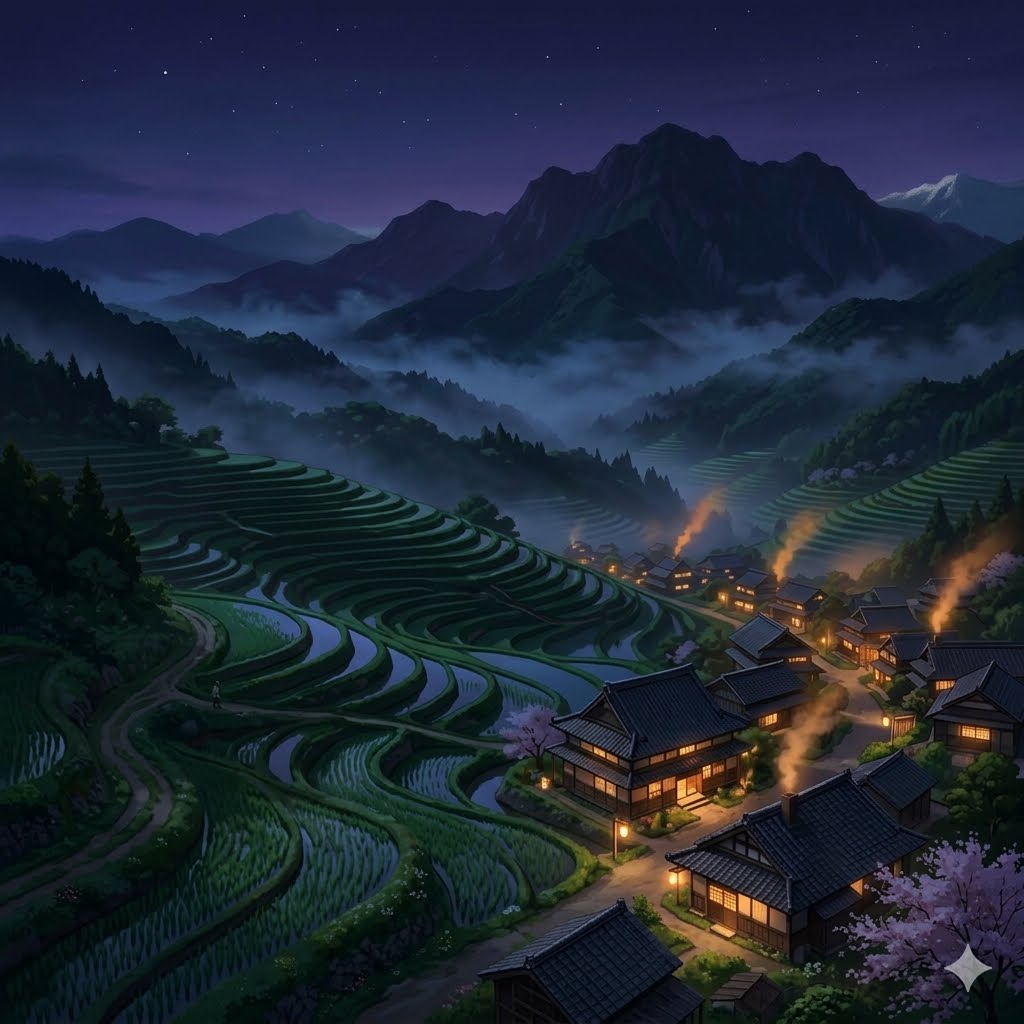
The village itself was strangely beautiful.
Rice fields shimmered beneath the morning mist.
Paper lanterns glowed warmly from every doorway.
Children chased dragonflies through narrow paths lined with wildflowers.
Mothers laughed beside the river while washing their clothes, their voices carrying softly through the valley.
To anyone passing through, it appeared to be the happiest village in the mountains.
But only those who stayed until sunset noticed something strange.
The laughter always stopped at the same moment.
As the last ray of sunlight disappeared behind the mountain, every child froze where they stood.
Together, they turned.
Not toward their parents.
Not toward their homes.
But toward the forest.
The silence that followed was so complete that even the wind seemed afraid to move.
Then, as if waking from a dream, the children calmly walked home without saying a single word.
No parent ever asked why.
Because every parent already knew.
The mountain was calling.
From the day they were born, every child wore a red braided cord around one wrist.
Their grandmothers tied it there before the baby’s first sunrise, whispering prayers older than the village itself.
The cord was never removed.
Not during bathing.
Not during illness.
Not even after death.
The elders believed the red thread reminded the mountain that the child still belonged to the living.
Every few weeks, the mothers checked the knots.
Sometimes, they found the braid untied.
Sometimes, it had been retied…
With a knot no one in the village knew how to make.
Those mothers never slept again.
The first sign was never a scream.
It was always kindness.
A child who once feared the darkness suddenly insisted there was nothing frightening in the forest.
A quiet boy began leaving bowls of rice beneath the oldest cedar tree every morning.
A little girl spoke of a sweet grandmother who brushed leaves from her hair while they played.
“She says I’m growing so beautifully,” the girl whispered one evening.
Her mother dropped the cooking pot.
The child’s grandmother had died six years earlier.
Soon, other children began speaking of the same woman.
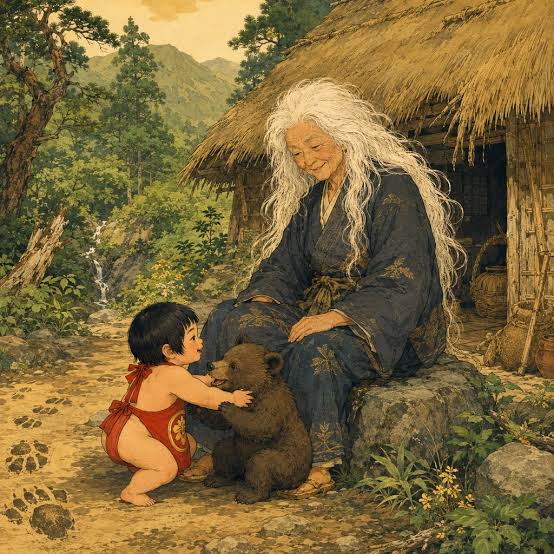
She always wore faded mountain robes.
Her hair was as white as winter snow, so long that it trailed across the moss behind her.
Her smile was gentle.
Her voice was warm.
She knew every child’s name before they spoke it.
She remembered their birthdays.
She knew which child cried at night.
She knew whose father had died.
She knew which boy secretly blamed himself for his mother’s illness.
She listened.
She comforted.
But she never frightened them.
That was what terrified the adults.
The village elders ordered every child indoors before sunset.
Windows were covered.
Lanterns were extinguished.
Fathers swept the front doorstep clean every night, while mothers sprinkled a thin line of salt across the threshold.
The eldest child placed a bowl of freshly cooked rice outside the door.
The youngest child lit a single candle in the window.
Then, together, the family bowed toward the mountain without looking directly at it.
The rice was never meant as an offering.
It was a distraction.
The elders believed hungry spirits would stop to eat before entering a home.
The candle was not meant to guide people.
It was meant to convince wandering souls that the house was already occupied by ancestors.
The salt was never expected to stop evil.
It simply reminded the spirits that the living still remembered the old promises.
Every child was taught the same warning:
If they ever met an old woman alone in the mountains, they must never accept her food.
Never accept her directions.
Never allow her to brush dirt from their clothes.
Never let her touch their hair.
For Yamauba was said to appear as the grandmother every child wished they had.
Her hands smelled of cedar smoke and sweet herbs.
She always knew the child’s name.
She always knew what frightened them.
She always knew what they wished for most.
A lonely child would be promised friendship.
A hungry child would be offered steaming soup.
A grieving child would hear the voice of their dead mother calling from a cottage hidden deep within the forest.
The elders warned that Yamauba never hunted through violence.
She hunted through comfort.
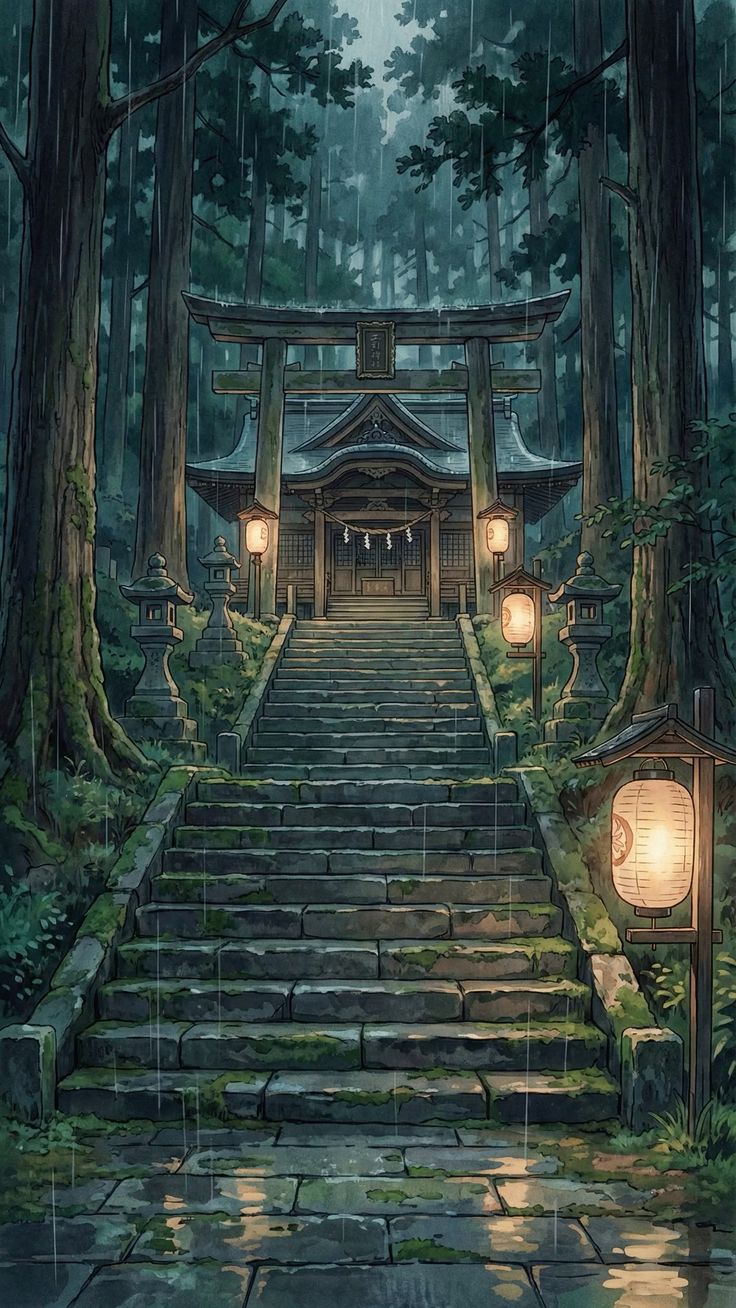
The shrine bells rang every midnight.
Still, every morning, muddy footprints appeared beside one more child’s bed.
They were always barefoot prints, small enough to belong to an old woman.
They were wet with black earth that smelled of cedar roots and rain.
And they never led to the door.
The footsteps simply circled the child’s bed…
Then vanished.
The children always slept peacefully through the night.
And when their parents asked about the footprints, they smiled.
“Oh… Grandmother came to tell me another story.”
As autumn deepened, the children began changing.
They laughed less with one another.
Instead, they stood quietly at the edge of the village, staring into the trees.
Sometimes they smiled.
Sometimes they waved.
Though no one stood among the ancient cedars.
Parents pulled them away in tears.
Yet the children always looked confused.
“Why are you crying?” they asked.
“She’s lonely,” they whispered.
“She only wants someone to talk to.”
There was one place every villager feared above all others.
A clearing hidden deep within the mountain.
No map marked its location.
No path remained the same twice.
Those who stumbled upon it described an enormous cedar tree growing from a ring of black stones.
Beneath its branches sat a dozen small wooden bowls.
Each bowl carried the name of a child carved into its rim.
Some names belonged to children who were still sleeping safely in the village.
Others belonged to children who had vanished generations ago.
The bowls were always filled with fresh rice.
Still warm.
As if someone had just prepared them.
No birds landed in the clearing.
No insects buzzed through the trees.
The only sound was the gentle humming of an old woman somewhere beyond the cedar forest.
The villagers believed this was where Yamauba counted the children she had chosen.
Not those she had eaten.
Those she intended to claim.
The elders often said the mountain was patient.
It did not hunger every day.
It did not kill without reason.
It simply waited.
It watched children become adults.
Adults become elders.
Families grow.
Generations pass.
And when the time was right, it reached quietly into the village and took only one.
Just one.
Enough to remind everyone that they survived not through their own strength…
But through the mountain’s mercy.
That was the true horror of the village.
Not that the monster lived within the forest.
But that every sunrise, every harvest, every wedding, and every child’s laughter was borrowed time…
Granted by something ancient that never stopped watching from the shadows of the black mountain.
Even today, the abandoned village is said to remain hidden somewhere among Japan’s ancient mountains.
Travelers who wander too far sometimes hear children laughing between the cedar trees.
The laughter is never frightened.
Never desperate.
It sounds like children playing with someone they love.
If you follow the voices, you may glimpse them through the mist.
A circle of children holding hands.
An old woman seated among them.
She smiles as she gently combs a little girl’s hair.
The children wave happily to anyone watching.
And they always ask the same question.
“Would you like to meet our grandmother?”
The old woman never speaks.
She simply smiles.
If you smile back…
The children make room for you in their circle.

About the Creator
Eliza Hope
Inspired by folklore, ghost tales, and the unknown, my writing invites readers into worlds where every creak, whisper, and flicker of light tells a story. When I am not writing, I am usually dreaming up my next chilling adventure.
Enjoyed the story? Support the Creator.
Subscribe for free to receive all their stories in your feed.
Comments
There are no comments for this story
Be the first to respond and start the conversation.