
Why is Patrick Bateman held on a pedestal by men?
A delve into American Pysho, the psychology of masculinity, and why Patrick Bateman is eulogised as a 'sigma male'


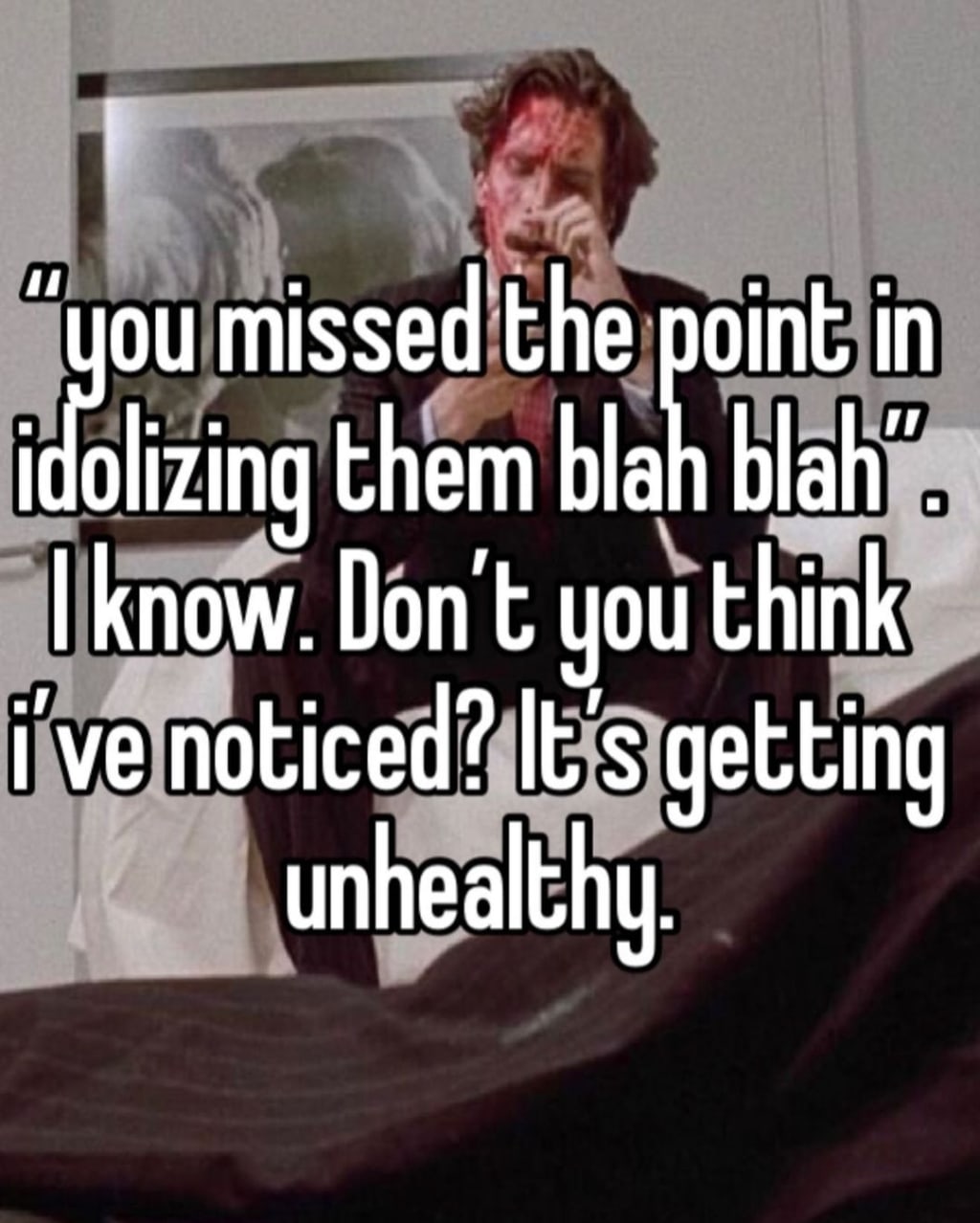
American Psycho, originally a novel by Bret Easton Ellis, later released as a movie in 2001, has solidified its place in media history as a classic that is loved widely. Although having been criticised by some under the accusation of glorifying violence against women and misogyny, the movie rendition has become a staple amongst male dominated corners of the Internet as a source of humour and relatability. In this essay, I will comment on the variety ways that the American Psycho movie has been consumed by different groups and communities, the significance of the commentary on conformity and why I believe this piece of media is held on a pedestal by young men in specific Internet cultures of 'sigma mindset' in terms of masculinity and the struggle to solidify an identity in today's culture of consumerism.
At its core, American Psycho is a story about conformity. It dramatises the effects that a mass consumerist mindset and the overwhelming need to fit in and conform can do to a man, stuck amidst this culture to the most extreme degree. Although, the story doesn't just touch on consumerism and conformity — it does so in a way that specifically taps into the psyche of men, concepts of masculinity and what the consequences of a capitalist and collective identity can be. The movie still remains to be as culturally relevant today as it was at the time of its release in 2001, as technology, capitalism and the pressure to conform continues to spiral and cast its shadow onto society, especially male dominated spaces and cultures. The significance of this film today reflects the post-modernity of our world, and the fact that the movie and notably, the character Patrick Bateman, is held in such high regard by teenage boys and young men shows that fitting in and finding a sense of identity as a male is growing increasingly difficult.
Ironically, the director of the movie is a woman, Mary Harron, who I would argue has almost satirised the character of Patrick Bateman as a borderline comedic caricature of a male stuck within these inescapable structures of society. In many ways, American Psycho comes across as a comedy from the sheer absurdity of the inner monologue of the character, which begs the question; why do young men hold Patrick Bateman on such a pedestal without a blink of irony? This is a question I find myself pondering often, and also raises the fact that the film can be consumed in a variety of ways by a variety of people.
The theory of the shadow archetype, as theorised by Carl Jung, is that the shadow is the unknown, dark side of the personality. Everybody has a shadow to their personality, and as Jung wrote, "the less it is embodied in the individual's conscious life, the blacker and denser it is." To put it simply, the more that one represses the dark side of their personality, the more it festers and arguably, the harder it becomes to mask it. This theory is especially relevant to American Psycho and why it resonates with young men so deeply; boys are raised into a society that tells them to 'man up' or to 'grow a pair' — to repress. This mindset of repression carries through into adolescence and moves past repressing vulnerability, but anger and reservations about the world as well. As these feelings are repressed so much, the tendency to repress the shadow side of their personality grows, and it becomes increasingly harder to keep emotional turmoil and taboo thoughts and opinions inside. This is all a product of toxic masculinity, and the negative effect that a patriarchal society has on men, which is a topic seldom discussed in male dominated corners of the Internet in fear of persecution. With this in mind, it soon becomes clear why Patrick Bateman is eulogised by men navigating through these experiences; he is a character who finds himself no longer able to contain his shadow self after a lifetime of conformity, being surrounded by carbon copies of himself and listless consumerism — and watching this character lose himself to his shadow self would, presumably, be very cathartic to watch for somebody who can't do that themselves.
American Psycho doesn't glorify violence against women, and although it's an understandable position to take, I would argue that this is not the reason why Patrick Bateman and the story his character follows is held in such regard by men. This movie is a warning, in a way, and doesn't glorify the actions that take place; it condemns them. It doesn't, however, condemn Patrick Bateman or the shadow self — it condemns the structures of society that have caused this loss of control and exacerbated it with endless, capitalist ideas of consumerism, loss of individuality and the crushing pressure to perform. Patrick Bateman is not the villain of this story, but one of the countless victims amongst the people he murdered; a victim of capitalism and the state of being he, and countless other men of his stature, are forced into. This is why this character is so widely enjoyed, be it in an amusing way or an idealistic way, as the butt of jokes online or as a way of being held on a pedestal; he's written from an empathetic standpoint. The viewer hears his inner monologue, sees his mask and then sees what's beneath it, and it creates a connection to the audience. Not to glorify what he does, but to solidify an understanding of what is happening in his psyche, and why.
Conformity in American Psycho clearly appears to be the most prevalent theme, down to the haircuts, the suits, the business cards, even the men's positions within the company. It shows the viewer that all of these men think they're individual and special, but are actually feeding into the same, collective identity as the rest of the wider group. Its a theme that feeds notions of self-obsession whilst simultaneously exacerbates insecurity, and although Patrick Bateman is clearly self-obsessed and nigh on narcissistic, there are clear moments where even he becomes insecure in the context of needing to fit in. For example, when he and his business acquaintances all share their identical business cards, Bateman becomes visibly distressed and angered by other business cards that he views as better than his own. This insecurity manifests in rage, as emotions often do in all men stuck in an emotionally repressive state of mind and environment. It's often the easiest feeling to default to having spent years being forced into pushing down anything that may appear vulnerable, which is something Bateman clearly has experienced and can again be linked to his idolisation by young men growing up in today's world. Conformity is just another way to suppress the self, pressuring men into the same notions of masculinity and presentation and personality; therefore, the suppression of conformity would be exacerbating the shadow self, and therefore making it harder and harder to repress.
The prevalence of discussion around American Psycho remains incredibly common today, although a lot of the content and commentary being shared about the film is comical, satirising Patrick Bateman's character even more than the film has in absurd, idealistic ways. Often, groups of men who refer to themselves as 'sigma males' will share jokes about Patrick Bateman and how relatable he is, and in tow, jokes about the murders he committed. These jokes will be broken up by a seemingly genuine expression of why American Psycho is so relevant and hard hitting, but inevitably defaults back to the humorous, repressed content soon after. This is merely the condition of the Internet at play, meme culture and jokes immortalising Patrick Bateman as a funny, relatable character with an undertone of sincere understanding. It seems, as is common to do so, that these men are joking about Patrick Bateman and what his character represents as a way to cope, or a way to repress the uncomfortable truth that the character reflects back to them. This endless, copycat joke sharing and carbon copy mindsets that have spread through male communities online seem to have become a whole new collective identity. They're unaware of the fact that all making identical jokes about Patrick Bateman being relatable is just another form of conformity; they want to fit in with like-minded male peers online, so scramble to create 'sigma mindset' content to solidify their place in these online communities. Although this isn't specific to them — it's merely the culture of social media, and affects every community that exists amongst it, whether they are aware or not. For the chronically online male fans of American Psycho, however, it feels much more bitterly ironic than many other examples of conformity on social media. They make jokes about not fitting in so they can fit in and relate to each other through this partially ironic sense of found identity with Patrick Bateman. Really, it only proves that the themes the movie warns about are painfully relevant.
In conclusion, American Psycho is a layered delve into masculinity and conformity under a capitalist, consumerist world. It makes perfect sense that young men who are navigating through the world would find solace and catharsis in watching this movie, as it represents an extreme example of what they experience on a day to day basis. It's painful and repressing and seldom discussed amongst men, but the satirical expression of this film offers a significant emotional release and a fictional idol to find relatability and identity in. As unhealthy as this may seem to some, it offers young men a piece of media that they can hold close, idealist and relate to, in a world that so often shies away from representing these topics in fiction in a way that isn't explicitly villainising. Patrick Bateman offers both a grim warning and a solace to the men who relate to him; portrayed as somewhat a victim in the story, but also showing the result of what can happen when self-repression becomes that severe. As uncomfortable and harrowing as the message this film offers, it is understandable why it's held on the pedestal it is, and equally, why men love it so much.
About the Creator
M. Edwards
Writing for the sake of writing. I love bizarrely niche essays, fiction and recently, poetry. Not a professional - yet.
Enjoyed the story? Support the Creator.
Subscribe for free to receive all their stories in your feed.
Comments
There are no comments for this story
Be the first to respond and start the conversation.