
When the Ants Come Marching In.
Who needs to fabricate horror stories.
To those who require the imaginary graphic descriptive of the mental machinations and detailed horrific events recounted of the situation presented herein, refer to opus ‘Leiningen versus the Ants’ by Carl Stephenson (1893-1954). After surviving drought, hood, plague and other acts of God, Leiningen’s motto was, “The human brain needs only to become fully aware of its powers to conquer even the elements."
With the advent of computers, humanity has gained even more self-confidence, and become a victim of hubris.turning a blind eye to the consequences of small things that cause devastating change.
As ocean temperatures increase, ice caps melt, water levels rise, and fertile land availability decreases, the artistic creative spirit of nature remains. Invasive ants are particularly notorious global invaders. Over 520 alien ant species have spread globally, largely driven by human-mediated transport like shipping and trade.
Electric ants, Wasmannia auropunctata, also called little fire ants, are invisible to the casual eye. The small golden-brown species native to Central and South America have a painful sting relative to their size. The electric ant forms extremely dense super-colonies. Their ultra-aggressive colonizing ability is alarming. They are found in southern France and on the Swiss border and threaten farms in China. They have effectively displaced native species and without natural predators permanently alter the already changing ecosystems. The ant’s massive predatory behaviour targets insects, birds, and mammals, by stinging and causing blindness, allergic reactions and results in crop damage by aphids.
Ants are the aphid’s bodyguards. Ants herd, protect, and shelter aphids in exchange for "honeydew", a sugary, nutrient-rich liquid that aphids excrete. Ants "ranching" or "farming" aphids is a highly evolved mutualistic relationship.
In Carpenter ants, sap-sucking aphids carry the bacteria Blochmannia that lives exclusively inside specialized cells in the ant's guts and ovaries. The bacteria supply their hosts with essential amino acids and help recycle nitrogen, allowing the ants to thrive on nutrient-poor diets. The bacteria, also make radical genetic alterations to embryo development, at multiple points, regulating the size distribution of workers in the colony by enhancing the ants’ ability to synthesize nutrition. Carpenter ants destroy wooded framed houses. As opportunistic omnivores and scavengers, when food is in limited supply, they can eat human flesh.
The symbiotic relationship with ants goes back 51 million years. Each species needs the other to survive. Homo sapiens have lived on Earth for approximately 300,000 years, yet ignore the health risk ants pose.
In Islam, the Prophet Muhammad explicitly forbade the killing of ants. Scientists create various pongs and fragrances, to thwart outbreaks of invasive ants. Pesticides hold dangers of bioaccumulation and favour the development of resistant species. Some individuals may mix feces, urine, and sewage spills with a pinch of hot pepper and cinnamon to recreate the dank essence of an ancient tomb encased in a tower in the deserts of Palmyra, or recreate the scent of a freshly dug grave in the countryside in late August, laid with rotting flowers to attract then kill the ants.
Attempts at natural controls include: lemon juice to mask the ants' scent trail; cinnamon, that can cause them to suffocate and die; Borax a slow-acting poison wreaks havoc on their digestive system; powdered sugar and baking soda kills them by mixing with the acid in their stomachs; Cream of wheat expands in ants' stomachs when they ingest it and cause them to die; mixing apple juice with ‘Equal’ packets act as a neurotoxin.
Heated structures such as homes and greenhouses are stepping stones for the integration of invasive species into colder climate biomes. Fire ants have spread through the U.S and established populations in Europe (e.g., Sicily, Italy) and march rapidly across regions of Australia and other parts of the world. Interspecific competition causes the most mortality.
In the biblical Book of Proverbs, King Solomon describes the Harvester ant as a model of wisdom and industriousness: “Go to the ant, you sluggard; consider its ways and be wise!” Young entrepreneurial individuals, eager to take risks to gain their fortunes, are smuggling Nairobi giant harvester ants in syringes to sell on the black market, to meet rising global demand for use as exotic pets in Asia and Europe.
Overharvesting the giant African harvester ants, the tigers of the ant-world that are useful in collecting, storing and dispersing seeds, has led to devastation of diversity in grasslands and savannah ecosystems. Their introduction outside their native ranges has led to invasions with dire environmental and economic consequences. They are a threat to biosecurity. Laws for testing materials for global trade are limited by cost and challenges of controlling invertebrate infestations.
Mankind has naysayers, who believe global climate changes are hogwash. They downplay the dangers of commercial globalization introducing invasive species from remote areas. Yet swarms of ants are being transported and attacking ecosystems throughout the world. The speed of their destruction depends on the species. Attempts to collect and kill them or alter pheromones, does not stop them.
Human society relies on reciprocity and reputation, language and culture. Information is monitored and shared over the Internet, Ants, as social insects, rely on the 'Anternet'. Bits of chemical information in Pheromones (scent signals) are received by antennae and processed by thousands of tiny brains that read the AND gates and STOP commands as computers.
In both societies, small populations rarely take big risks and engage in conflicts, but humans and social insects have the potential for large, diverse populations with extremely aggressive responses to outsiders. The scale and intensity of aggression shifts from low-risk raids and ritualized fights to full-born all-out wars as populations grow. Both sides risk total destruction in concentrated engagements of group against group.
A Borneo ant species has worker ants that act as suicide bombers that blow up by squeezing their body so hard that the cuticle ruptures, and a toxic yellow glue from an internal gland spews out, killing the intruder dies before it has a chance to run home and report.
The southeast Asian black crazy ant is highly aggressive tramp ant that uses frantic, "crazy" movements to spray formic acid and overwhelm prey. Yellow crazy ants, infamous for devastating native wildlife (most notably the red land crabs on Christmas Islands) can piggyback on suitcases of tourists and cargo. They form super-colonies.
Argentine ants, infamous for forming the largest cooperative super-colony on Earth, stretching across hundreds of miles along the California coast and parts of Europe and other parts of the world. Millions of casualties occur each week along borderlines. The ants use sheer numbers and muscle power to overwhelm their rivals, gathering around each enemy and pulling it apart, with a reserve labor force that can be quickly deployed as needed.
The estimated time of global total invasion, by the illimitable host of ants, are best guesses. The future holds the potential of an invading writhing colony of ants marching two by two, with mandibles clacking. Even when they are killed, and burned, their corpses will come to life as more ants crawl over it forming a blackened sceptre.
The scenes of destruction may one day be witnessed by small groups of humans within steel enclaves, fitted as biospheres constructed in underground shafts, in the optimally packed cell construct of the human hive. The queen and young will be tended to by workers who will provide scientific, technical and mechanical supports, providing hydroponic gardens, waste and water recycling.
When the invasion happens, some internet communications may be possible. However, that depends on if fibre optics and external cameras are not destroyed by the ants or fires and floods used to combat the enemy. The fear is that some ants will remain alive on debris in the waters, or like aphids, change from flightless to flyers and find a way to become dormant.
The novel of Carl Stephenson may be translated into all known languages and become the new Rosetta stone, that offers warnings of hubris and hope, inspired by knowledge from ancient indigenous populations. The original stone held a religious decree that said, “Respect the source. There is punishment for not repaying the tax imposed. Protect the future”.
The stone was the tool used to translate the deep psychological associations and social relationships of sensory inputs of moods, perceptions, sensations, passions and emotions between different languages. Hopefully, the loss of the nuances of cultural wisdom and information, so diligently accumulated in the last 50 years, will not disappear as in previous eras.
Mankind is up against a formidable predator. Some species of ants are safe to consume and considered nutritious, featuring a unique, tangy flavor similar to sour lemon caused by formic acid, however ingestion of invasive species is not recommended. Think twice about eating ants. Ants are symbiotically aligned with a bacteria that originated from space and control ant genetics.
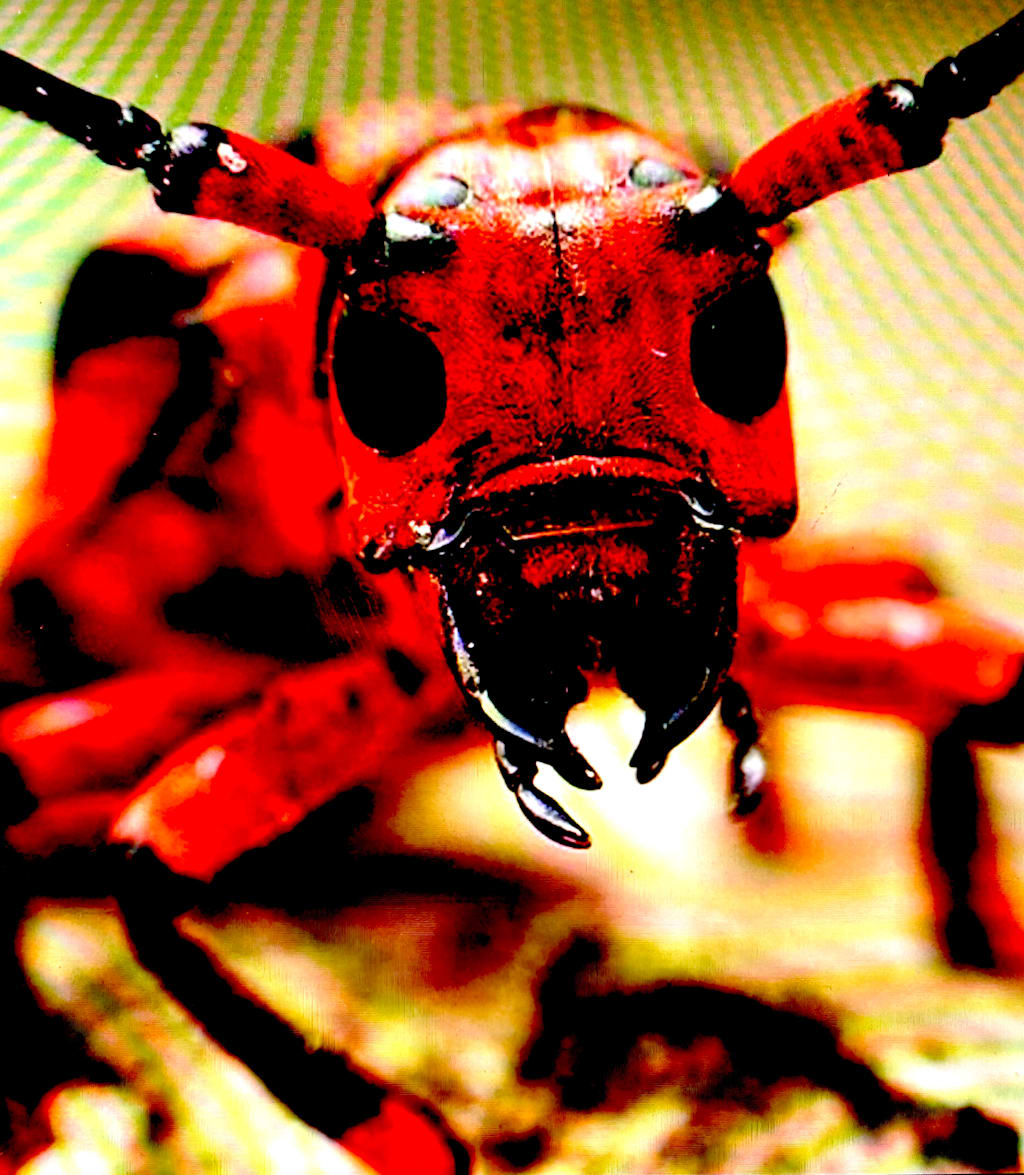
We do not need to fabricate imaginative horror stories, but require the strength and humility to face them before they are literally in our face..
About the Creator
Katherine D. Graham
My stories usually present facts, supported by science as we know it, that are often spoken of in myths. Both can help survival in an ever-changing world.
Enjoyed the story? Support the Creator.
Subscribe for free to receive all their stories in your feed. You could also become a paid subscriber, letting them know you appreciate their work.
Comments
There are no comments for this story
Be the first to respond and start the conversation.