

The cabin in the woods had been abandoned for years, but one night, a candle burned in the window.
Sarah stopped in her tracks. She’d been coming to the cabin alone for two years, had never seen another soul here, and had never been inside herself. That was really saying something, considering that the cabin was her secret hideout. She was the one who had discovered it. Her name was carved in the rickety railing of the ruined porch. You didn’t see anyone else’s name there, did you?
Yet there it was: a warm pool of light flickering behind the thickly grimed window. Someone was inside, and they had made themselves at home.
***
Sarah had found the cabin two summers earlier, in the June of her tenth year. She’d been playing some arcane variation of hide-and-seek with Grace (her twin sister) and Charlie (a boy from school she once found cute). While Grace counted loudly up to fifty, Sarah and Charlie wove diverging paths through pillars of oak and maple.
Sarah galloped because she thought it made her faster. She bounded down a gentle slope and found herself alone in a clearing she had never seen before, staring at a cabin she half-remembered from a dream.
It was short, stout, and utterly in shambles. A stone chimney climbed up one end, blanketed by moss. The porch was little more than loosely associated planks. A swing groaned on rusty chains.
Sarah approached cautiously. On her tiptoes she peered inside through dust-clouded windows. The splintery floor was bare except for dry leaves and animal droppings. The world’s best hiding spot. Sarah tried the front door. No luck! Instead of a knob, the door had a wooden latch that Sarah could not lift. She found a small hole in the lattice under the porch and crawled inside.
The spot proved too good—as the sky began to pink and the katydids to sing, Sarah realized no one was looking for her anymore. She crawled out, ran back to her bike, and rode to Charlie’s house. He and Grace were upstairs playing video games. They didn’t even look at her when she came in. They just kept staring dumbly at the screen, watching pixelated go-karts fly off cartoon ramps.
Sarah would remember this as the day she realized she saw nothing of herself in Grace. They were twins—identical twins—with black hair and fair skin and eyes green as the shallows of the lake. But I would never leave my sister alone in the woods, Sarah told herself.
She clattered furiously down the stairs and slammed Charlie’s front door so hard that Charlie’s mom forbade her from coming back until she apologized. Sarah never did apologize, so she never went back. She rode back to the cabin and cried on the front porch and imagined taking hideous revenge on Grace and Charlie, making them see the error of their ways. She paced the creaking boards and ranted and sniffled until the first stars started to peek out.
The pattern was set. When Grace won Spookiest Costume that Halloween (for going as a princess of all things—not even spooky!), Sarah rode to the cabin with her black witch’s robe billowing behind her, and there she cackled as she imagined locking Grace in a tower and killing Charlie when he came to rescue her. When Grace got more Valentines than any other girl in class, and Sarah got the fewest, Sarah swept snow off the porch-swing and sat howling madly ’til her breath gave out. The following summer, while Grace was off at Space Camp, Sarah was at the cabin—reading and writing and playing and dreaming, talking to the trees that stood guard all around, pressing her face up to the window and watching the sunbeams crawl across the floor. Occasionally she’d try the door again. It was always shut fast.
Until tonight.
***
This was the first time Sarah had visited the cabin late at night. Strictly speaking, Sarah—now twelve—was not allowed out alone after dark. But it was her parents’ fault that she’d run away tonight, so if they were worried about her, well—let them worry.
The fight had been about Grace, of course. Sure, it had started with their mother noting that Sarah hadn’t eaten her peas. But Grace had helpfully chimed in: “I ate my peas!”
It got worse. When their father noted that he didn’t know what to take away from Sarah—given that previous misbehavior had already cost her ice cream, allowance, and TV privileges—Grace had chimed in with another doozie: “She still has her bike.”
“That’s true,” their father said. “Sarah, you have thirty seconds to eat your peas, or you lose your bike for two weeks.” He started counting down loudly.
Enough was enough. Before anyone could stop her, Sarah had scooted her chair out, scampered out the front door, and hopped on her bike.
Which brought her here—the clearing, the cabin, the candle.
Sarah was a good forty feet from the cabin, weighing her next step, when suddenly the front door opened. The warm glow of a fire spilled out, painting a long rectangle of light on the dancing underbrush. A tall dark figure stood in the doorway. Without a sound or gesture, it welcomed Sarah.
She went inside.
The door shut.
***
That was how it started. This is how it ends.
Sarah watches the candle flicker from what she hopes is a safe distance. She’s crouched beneath the interlocking fingers of two fir trees on the slope of a hill. She peers through gaps in the foliage, down at the clearing where the cabin stands. The porch-swing has collapsed into a jumble of splintered planks. Other than that, nothing has changed in twenty years.
Sarah’s mouth is thin, her brows knit, her eyes moist with worry. Her once-fair skin is lobster-red and peeling. Her black hair, so recently soft and lustrous, is tangled in a days-old ponytail. She doesn’t have to see a mirror to know that she’s far thinner than she was sixteen days ago, when she woke up from the Dream and started walking.
Just a few more steps. Sarah stands, unraveling days of aches in her spine. She reaches down to the needle-carpeted earth and grabs something, then steps out from the brush.
She marches towards the cabin, jug of kerosene in hand.
***
Sixteen days before she returned to the cabin, Sarah woke from a nightmare that felt realer than the last twenty years. She gazed up through a film of tears at a white spackled ceiling that she didn’t really see. In her mind’s eye, Sarah saw only the beam of a flashlight on a rough granite floor, and four blood-red streaks the same width as her fingers.
She rose. She dressed. Around her neck she hung the tiny leather pouch she’d carried for two decades. Then she stepped out her front door and started walking.
She walked past the office where she worked. She walked through the heart of downtown, through wafting clouds of exhaust fumes, in the shadow of megalithic towers. She left the skyscrapers behind and walked through acres of strip malls, along six-lane highways teeming with cars that rocketed frightfully past her. That evening she walked under a bridge that reeked of guano, and she watched a swarm of bats pollute a sky gone plum from sunset. She lay down to sleep, had the Dream again, woke with a shriek, saw a thin and dirty man setting up a tent with his back to her, got up and resumed walking. Walked until the sky was plum from sunrise.
On the sixth night, in a tiny town near Birmingham, Sarah crossed a street glossy with mist. Under the blinking yellow traffic light, she saw a mountain lion loping towards her, eyes glowing, teeth bared. She whispered the secret words to it and made the secret hand-sign, and it growled and loped away.
Sarah lay down on a park bench, crying softly because she knew she’d have the Dream again.
***
The shadow stands in the cabin door, watching me.
Its shoulders heave as it draws breath. Its hands are taloned, gnarled and black. It’s bald except for a few uneven bristles that are not hair.
The shadow walks backwards into the cabin, never turning its head, and disappears. But the door remains open, and as I draw closer I’m intoxicated by the smell of cinnamon and fir, like the candles that my mother burns at Christmas, and I am through the door now, and the floor is smooth and lacquered, and a thick bearskin rug looks up at me, and there are two armchairs with their backs to me and their faces to the fire, and on one armrest a mottled claw gestures for me to sit.
The door shuts behind me. I sit.
Everything outside the firelight is black as ink. The creature in its chair is cloaked in shadow, invisible except for the one hand that traces circles in the armrest with the points of its hooked fingers.
“My name is Sarah.”
The creature clicks and purrs, then rasps, “Saaa-rahhh.”
My heart is racing. “Who are you?”
It wheezes, “Nobody.”
“How long have you lived here?”
Its silhouetted head turns toward me. Shadow fills the cavernous, bristle-rimmed sockets of its eyes. “Forever.”
“Why haven’t I seen you?”
“I—live—” the creature points down at the floor, then grumbles in frustration. It sounds like a garbage disposal full of glass. It leans down and taps a mirror-polished floorboard with its claw.
“In the basement?”
“Ahhh…” The small black feathers on its forearms shiver with delight. “Basement.”
“You can’t have lived there forever.”
“Why not?”
“My mom says nobody lives forever.”
The creature coughs so violently it sounds like something is ripping inside it, and a new sound breaks through underneath the dust and wheezing—the sound of a human voice. A woman’s voice. Laughing.
“Well,” she—it is a she, isn’t it?—says in her newly honeyed tone, “mothers don’t know magic.”
“Magic isn’t real.”
She clucks reproachfully. “I’ll show you.” She makes a shrill staccato whistle, and a rat scurries in from out of the shadows and stands waiting beside her chair.
She plucks the rat up by its tail, lifts it high so I can see, and with a long gasp, she pulls the breath out of it. The rat flutters its little feet and writhes as its hair grays, then blackens, and its body crumples and deflates, and the skin shrivels around its tiny bones.
“How can you do that?”
“You already know. But you don’t know the best part.”
“What’s the best part?”
“You can do it, too.”
***
At a homeless shelter near Birmingham, Sarah considered turning back. The police found her on that park bench, brought her in, sat her down with some concerned copper-haired woman who said that she would be Sarah’s “case manager” and that Sarah was lucky to have survived these past few days, that for homeless women assault isn’t a question of if but of when, that Sarah would die if she went back out.
“You’re not the first person who started walking one day and didn’t stop,” the case manager said. “It’s called a dissociative fugue state.” She explained how sometimes people who lead otherwise normal lives will suddenly just snap, start wandering, forget who they are, even invent new memories and personalities. “It can last days. It can last months. I’m grateful that we found you when we did.”
Sarah sat in silence for a while, then cried, then said she wanted to go home. They hugged, and the case manager’s sweater smelled clean and old, and it soaked up Sarah’s tears.
Sarah took her first shower in a week. She put on the last clean clothes she’d ever wear. They had confiscated the little pouch she wore around her neck. Sure enough, she got hungry again, but they gave her a hot meal.
She lay down in a bottom bunk and stared up at the underside of the mattress stacked above her bunk. Just before she fell asleep, she remembered that she’d left the lights on in her apartment.
***
I see the candle in the window, and my heart leaps. She wants to see me. She’s been sleeping in the basement for weeks, but now she’s awake.
It wasn’t easy sneaking out. My parents have known for at least a year that something is wrong. Thank God I don’t share a room with Grace anymore—that would’ve made it impossible.
The burlap sack is with me, and it’s full.
The first night, it was just mushrooms. She told me where they grew and what they looked like, and I picked them, and I put them in the burlap sack and brought them to her, and we ate their pallid flesh and tawny scales, and when I woke from the trance, she told me that I would know the name of every herb and all its uses from that day forward for the rest of my life. I walked home pointing at plants and calling them out: echinacea for snakebites, goldenseal for sores, bloodroot for fever.
In late April, it was a bullfrog that I caught in the creek. I came back to the cabin with my jeans covered in mud and the frog croaking in the burlap sack. That night she sent me home with a small pouch around my neck that contained the frog’s bones. As long as I wear it, she says, I will not need food or water. I wore it for a week and found that she was right.
The day is coming when I won’t need to go home at all. My parents won’t miss me—why would they? They have Grace.
The fire is roaring inside the cabin. An iron cauldron, huge and black and ancient, bubbles furiously over the blazing logs. The Witch shambles back and forth from the cauldron to a long wooden table from which she seizes her ingredients. She’s naked as always except for the bristles that dot her flesh. Her breasts sag to her belly button. Into the gurgling brew she tosses fistfuls of herbs, ladles of slime, little bits of animals—a glistening eyeball, a scaly tail, three raven’s feathers.
No matter how she turns her head, her face remains masked in shadow. Yet from time to time I catch a glimpse of a hard, curved beak where a nose and mouth should be, and of eyes that are the color of amber except for their tiny black pupils.
“Got something for me?” she asks without looking up.
I open the sack and gingerly lift my cargo from it: a young kitten, sleek and black, with eyes that match the Witch’s. “I used the charm you showed me. I said the words and traced the symbols in the air, and she climbed in all by herself. She didn’t move or make a sound the entire ride over.”
“You have real power, girl. I was wise to reveal myself to you,” the Witch says. I hand her the kitten, and her long claws curl around it. It purrs for her, and she purrs back.
“Who else have you revealed yourself to?”
She doesn’t answer, and I know I’m to ask no more questions—not even “What will you do with the kitten?” The Witch is strange towards animals. Sometimes she seems like family to them. Sometimes she boils their bones to make face-cream. It is not for me to question why she needs something—it is for me to find the thing and bring it to her. Being a Witch, she told me, means getting your hands dirty.
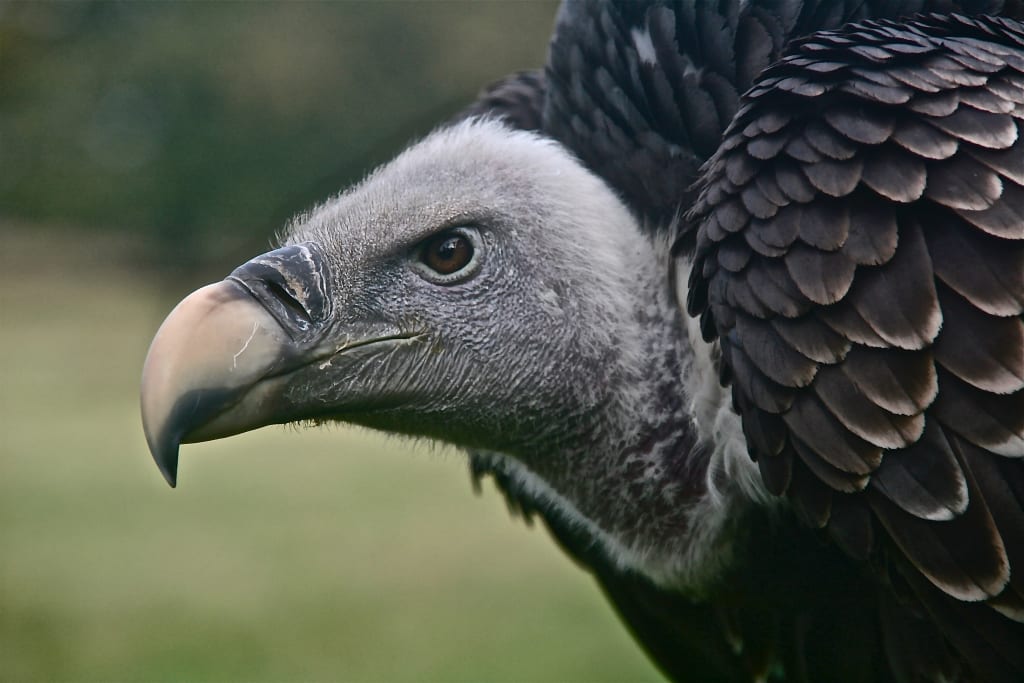
“This last spell will be the most important we have cast. It demands perfect focus and perfect calm. I find it’s helpful to pet a cat throughout.” I sigh in relief. “When the spell is done, you will cease to be a human girl. You will become a Witch like me. We will ride the night-winds on vultures’ wings, command every animal with a glance, gaze into the future in our dreams. Together, we will live forever. Do you desire this?”
I nod. She knows I want it more than anything.
“Then bring me your twin sister.”
***
Sarah woke in the homeless shelter. The bunk bed above her was lurching. Strange—there hadn’t been anyone in it when she fell asleep.
Sarah heard a sound like a death rattle, then a hiss: “No one walks away from Her.”
Sarah wasn’t sure she’d really heard it, so she whispered: “What?”
“She offered you a gift. You refused. She won’t forget that.”
A face appeared at Sarah’s side—an upside-down face, with a tangle of milk-white hair spilling out below it. An old woman was hanging over the edge of the top bunk, eyes glinting in the darkness, smiling at Sarah.
“I know what you’re thinking,” the old woman said. “I’m not Her. Count yourself lucky.”
“Who are you then?”
“Just an old Crone, love,” the Crone replied. “You knew you weren’t the only one, of course. She had others. Other girls. We did not spurn her gifts as easily as you did.”
“And what did she give you?”
“I can make people forget they’ve ever seen me, or think they’ve known me all their lives. Can make myself young or old, beautiful or ugly. And, of course, there’s this.”
The Crone winked, reached behind Sarah’s ear, and snatched a hundred-dollar bill out of the air. “Whenever I want!” she giggled and pressed the bill into Sarah’s hand with one weathered palm. “Keep it. I have all the money in the world.”
“Then why are you here?”
“Why are you?”
Sarah closed her eyes and threw her head forcefully back onto her pillow. “This is a dream. You’re not real.”
“Of course, dear. Close your eyes. You’ll wake up any minute.”
***
I wake up into the Dream, to a forest lit by blood-moon. Please, no. Not this part.
“Where are you taking us, Sarah?”
I turn to the familiar voice and see myself.
Grace. Grace, you’re alive. Your eyes are green like the shallows of the lake. Your cheekbones have grown high now, so I guess mine must have, too. We’re barely fourteen, and you’re wearing makeup already. I hate that I hated you for that. I hate that I thought it mattered. We are so young, Grace, and so much more alike than we’ll admit. None of it is fair. We should have been friends.
But I can’t say any of this, because this is not what I said.
“I—I don’t want to go. Sarah, how did we get here?”
I chant the charm and trace the symbols in the air, and Grace follows my finger with her eyes, and the panic that flashed across her face disappears, and her eyes soften. I take her by the hand. We keep walking.
Grace, you must forgive me. I won’t do it this time, I promise. This time will be different. This time I’ll save you.
The candle in the window is lit. The cabin door, ajar, groans open at my touch. By the flickering candlelight, we see that it is desolate, littered with dust and autumn leaves that have fallen through holes in the roof. She can make it look this way whenever She wants.
“Sarah, this place is scary. Are you sure we—?”
“Downstairs, Grace. We’re going downstairs.”
Even as I say it, I can’t believe it. The basement. She’s never let me down there before.
I pad over to the trapdoor and lift it open. A faint green glow dances up out of it. Wooden stairs descend into the tunnel. The walls and floor are granite, rough and uneven, with shadows pooling in the features. I gesture for Grace to climb down first, and she obeys. I climb down after and close the trapdoor over us.
We look down the tunnel. It’s a cave—a natural formation. The cabin was built on top of it.
The floor slopes gently downwards. We descend into the earth, and the green light grows brighter, and we feel heat pressing on our faces, and we smell rotten eggs. At the end of the slope, some hundred feet ahead, the hallway takes a turn. We cannot see past it. The firelight is brightest there, and the rocks blaze as though they’re hot.
The walls are covered in paintings: woolly mammoths and mighty aurochs and howling direwolves, human figures holding spears, a giant man with a crown of antlers, a woman drawn in charcoal-black with wings for arms. The paintings tell a story, and even without words I can see it: how a hole opened in the earth one day, and the girls of the tribe all gathered round, and one by one descended to meet Her, to worship Her, to let Her devour their spirits until they became as She was. And I am next.
The Witch has been here forever. Since before the cabin, before any ancestor of mine. Since before there were people here at all.
We reach the end of the hall and turn into a huge round chamber. We cannot see its ceiling, only the tips of the lowest-hanging stalactites. In the center of the floor burns a viridescent flame that produces no smoke. The cauldron boils over it. The Witch stands waiting for us in a robe of raven feathers. In her arms, she holds the sleek black kitten.
“Well done, little Witch.”
“S-S-Sarah?” Grace can only whisper. Her voice is choked, her face crumpled with fear.
“Hush.” The Witch waves her free hand, and Grace falls silent. She sets the cat down and gestures to Grace. “Stand by the cauldron, child.” Grace sleepwalks over dutifully.
The Witch turns to me. “I told you that becoming a Witch meant getting your hands dirty. Are you ready for that?”
“I don’t know.”
She stalks up to me and places something in my hands. It’s a knife—an ancient one, with a wooden handle and a blade of bone that’s been chipped and honed to a razor’s edge.
“For Sarah the Witch to be born, Sarah the Girl must die. All of Sarah’s blood must spill into the cauldron.”
“My blood?” I repeat, confused. The cat slinks against my legs and purrs.
“Tricky, isn’t it? Usually, spilling an entire person’s worth of blood has the nasty side effect of killing said person. That’s why it’s so fortunate if one has a willing donor.” The Witch snaps her claws, and Grace sweeps her hair behind her shoulders and leans over the cauldron, head tilted back so that her throat is bare.
My heart sinks. My body is numb.
“I can’t.”
“You can. You knew when you brought her here.”
“She’s my sister.”
“Witches have no sisters. No families. No names. Do you know my name?”
The knife clatters to the stone floor. “I can’t do this. I won’t.”
The Witch closes her eyes. Her sigh is a chitinous rattle. She walks away from me, muttering to herself. Then she places one claw on Grace’s shoulder, looks back at me, and says: “Come find me when you change your mind.”
The fire goes out. Instantly, the chamber is black and cold, and I hear a soft draft blowing through it.
“Grace?” My small voice echoes in the chamber. “Grace?”
I pull a tiny low-watt flashlight from my pocket and sweep its feeble spot around the chamber. There is no cauldron. No logs for a fire. No cat.
“Grace?”
There’s something faint on the floor—some pale discoloration. Scratches. With my flashlight beam, I follow the lines of the scratches to a tangled web of tree roots that have split one of the cave walls open. They are too dense for me to push through, but I know that the cave goes on beyond them because when I press my ears to them, I can hear the cat’s mewling echo growing fainter.
At the spot where the scratches meet the roots, they turn into something else: four bloody streaks on the granite, the same width as my fingers.
***
As the first sunrays burned through the windows of the homeless shelter, Sarah rose silently from bed. The Crone was gone from the top bunk. There was only a bare mattress.
It was too risky to reclaim the frog-bone pouch. She left without it.
She stopped at a gas station and bought a gallon of water, trail mix, and a jug of kerosene. She paid with a hundred-dollar bill.
***
This is how it ends. She marches towards the cabin, jug of kerosene in hand.
She douses the porch, kicks open the door, douses the floorboards. She takes the candle from the windowsill and descends into the cavern, trailing kerosene behind her.
***
The police questioned the whole family after Grace disappeared. Sarah confessed to everything in vivid detail—all those years that she had known the Witch, had gone to the cabin in secret, mixing herbs and making sacrifices and growing in her power.
She led them to the clearing, but the cabin wasn’t there. She collapsed to her knees and dug in the dirt with her hands, trying to find its foundations. “It was here. It was right here. The Witch told me to bring her here, and I did, and it’s all my fault—”
At the institution where she spent the next five years, Sarah learned to play badminton and chess. She went to classes and made art with other girls who’d been hurt. She learned that the Witch was a delusion she’d concocted to cope with profound trauma. A psychiatrist explained that survivor’s guilt was especially strong in twins, where there was so little difference between the one who lived and the one who died.
Sarah’s mother killed herself. Her father moved to another state and started a new family.
Sarah finished school, got a job, moved away. Pretended to forget.
Until she had the Dream.
***
Sarah walks down the tunnel, past the ancient gallery. The green fire is burning in the chamber. She presses towards it, kerosene gurgling onto the floor behind her, candle shaking in her hand.
She will face the Witch and kill Her. It will be the last thing she ever does.
She enters the chamber. For just a moment, she thought there might be nothing there. What if it was all a dream?
But she is not dreaming. Everything is as it was. The great green fire. The boiling black cauldron. And the Witch. She stands openly, her face in full view, hideous and bald and beaked, golden eyes fixed on Sarah. The only thing that’s changed here is the kitten in her arms, who has grown into a silvered, august cat.
The Witch speaks. “I called to you, and you answered.”
Sarah tosses the jug at the Witch’s feet. Kerosene glugs freely from it and pools there.
“No. I came to burn this place to the ground and kill you.”
The Witch sets the cat on the floor, and it lurches away from the growing lake of kerosene.
“Did you?” the Witch says. “Why do you think you had the Dream, Sarah?”
“I lied to myself for a long time about what happened here. But some part of me never forgot. Some part of me wanted justice. For my sister.”
The Witch cocks her head to one side. Her pupils tighten, then widen again. It’s the only time Sarah’s ever seen Her confused.
“Oh, Sarah. I see now,” the Witch says. “You think you didn’t do it.”
Sarah furrows her brow for a moment, then shakes her head. “I led her here. I charmed her. I did what you said. But I didn’t—”
“You led her here, yes, you charmed her, yes. And you cut her throat and spilled every drop of her blood into my cauldron.”
“No. I threw down the knife. You told me to come back if I changed my mind. Then you disap—”
“I told you to come back in twenty years’ time. That’s how long it took for this—” the Witch draws a bowl from the folds of her raven-feather robe, dunks it into the cauldron, pulls it out steaming, “—to ferment. My, but I forget what a number a girl can do on her own mind in twenty years.”
“You can’t control me anymore. I’m not a child. I won’t just believe anything you say.”
“Then believe this,” the Witch says, and suddenly she’s flashed across the room, snatched the candle from Sarah’s hand, and held the steaming bowl to Sarah’s lips. “Breathe, Sarah. Breathe.”
Before she can stop herself, Sarah breathes in the vapors and remembers the truth.
The truth. That no one ever tricked her. That she wanted Grace dead. That she was jealous enough to do it. Selfish enough to believe that she deserved the Witch’s power and had the right to kill for it.
And Sarah begins to drink. She drinks the bitter draught until it’s gone, and it scalds her all the way down, and it burns away the pain that’s been living inside of her for twenty years.
The candle goes out.
***
We sail above the clouds, the Witch and I, and look down at the tiny trees that carpet these hills, and the moonbeams scattered on the lake, and the little lights of little towns where little people live their little lives.
It is just as She said. We ride the night-winds on vulture’s wings. We see the future in our dreams. We will never get sick, we will never get old, and we will never die.
About the Creator
Thomas Cooke
Thomas Cooke is a 29-year-old law clerk in Houston, Texas. He's been writing as a hobby from a young age.
Enjoyed the story? Support the Creator.
Subscribe for free to receive all their stories in your feed.
Comments
There are no comments for this story
Be the first to respond and start the conversation.