
Three Doors That Never Closed: Unsolved Mysteries That Still Haunt Investigators
The Children Who Vanished Into a Fire That Couldn't Have Killed Them

Some crimes get solved by a fingerprint, a confession, a lucky break decades later. And then there are the cases that simply refuse to close — not because no one looked, but because everyone did, and the evidence itself kept contradicting the official story. These three are among the most documented, most argued-over unsolved mysteries in American history. No invented twists here. The real evidence is strange enough on its own.
The Children Who Vanished Into a Fire That Couldn't Have Killed Them
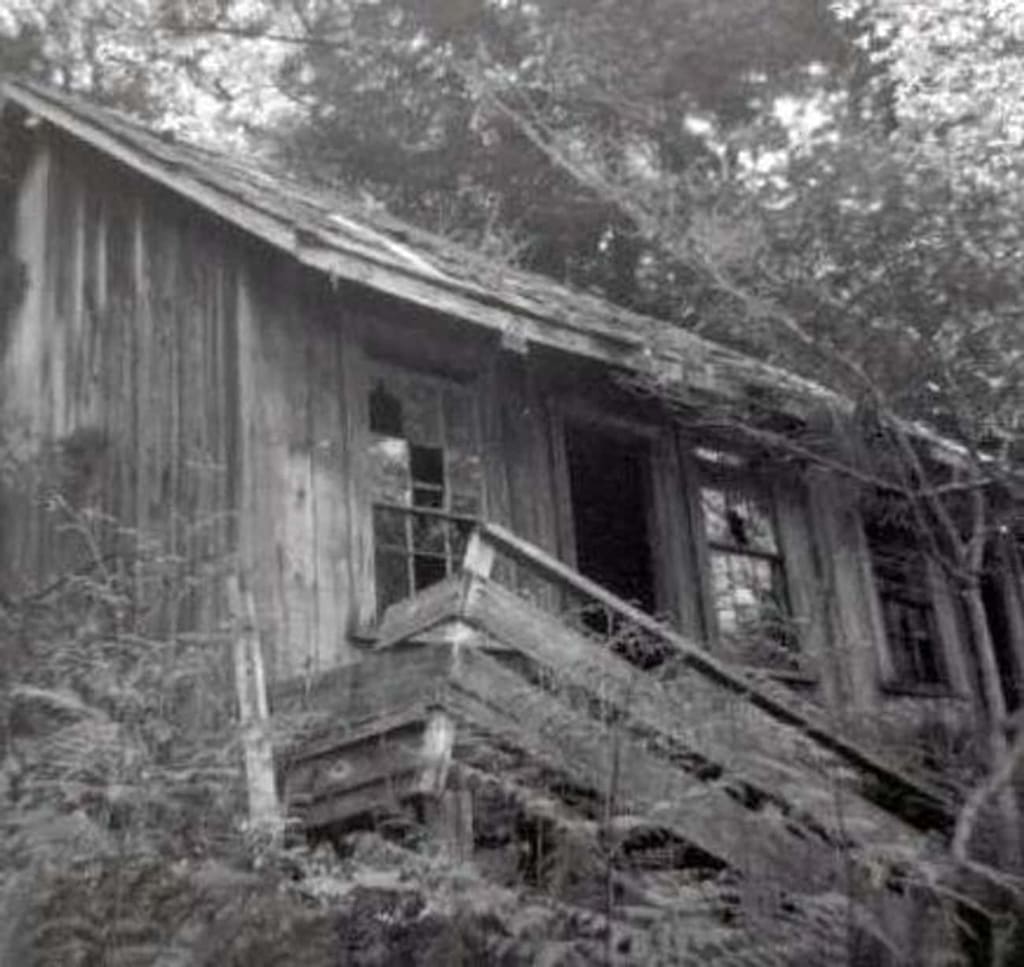
Just after midnight on December 24, 1945, Jennie Sodder woke up in her home in Fayetteville, West Virginia, to a phone ringing in the dead of night. A stranger asked for someone she didn't know, and when she said they had the wrong number, the caller answered with what she later described as a strange laugh. She fell back asleep. Half an hour later came a second, stranger sound: something hit the roof like a rubber ball, rolled, and thumped onto the ground. She still didn't think much of it.
By the time she woke again, the house was on fire.
George and Jennie Sodder, both Italian immigrants, escaped with four of their children. Five others — Maurice, 14; Martha, 12; Louis, 9 (sources vary, some list him as 10); Jennie, 8; and Betty, 5 — were never seen again. By the time fire crews reached the two-story house seven hours later, it had burned to the ground, and the children were gone.
Officials ruled it accidental — faulty wiring, the children burned alive, case closed. The Sodders never believed a word of it, and the physical evidence backed them up.
For one thing, the timeline didn't add up. George had recently paid for a professional rewiring job that had passed inspection, and the family could still see lights on downstairs even as the fire spread — inconsistent with a simple electrical fault. For another, the fire moved unnaturally fast: investigators noted it consumed a wood-frame house in well under an hour, which fire experts considered aggressive for an "accidental" blaze.
Then there was the matter of the bones — or rather, the total absence of them. No remains belonging to the five missing children were ever recovered from the wreckage, the single most significant piece of evidence the family pointed to for the rest of their lives. Fire investigators consulted afterward considered this deeply strange, since a residential fire of that duration and intensity shouldn't have cremated five sets of bones into nothing.
It gets stranger. Years later, when the family dug through the basement themselves, they uncovered small bone fragments. Forensic examination found the bones belonged to a single individual aged 16 to 22 years old, with no signs of having been exposed to fire — likely originating from fill soil added to the basement after the blaze, not from any of the missing children. In other words: the only bones ever found at the scene almost certainly weren't even the Sodders' children.
The family's suspicion of arson and abduction wasn't paranoia born from grief alone. Two months before the fire, a traveling salesman, after George refused to buy a policy, told him his house would "go up in smoke" and his children would be "destroyed" — and blamed it on George's public criticism of Mussolini's fascist regime. Separately, another man who came to the house under the pretext of seeking work warned George that his fuse boxes would "cause a fire someday," despite the electric company having just certified the wiring as safe.
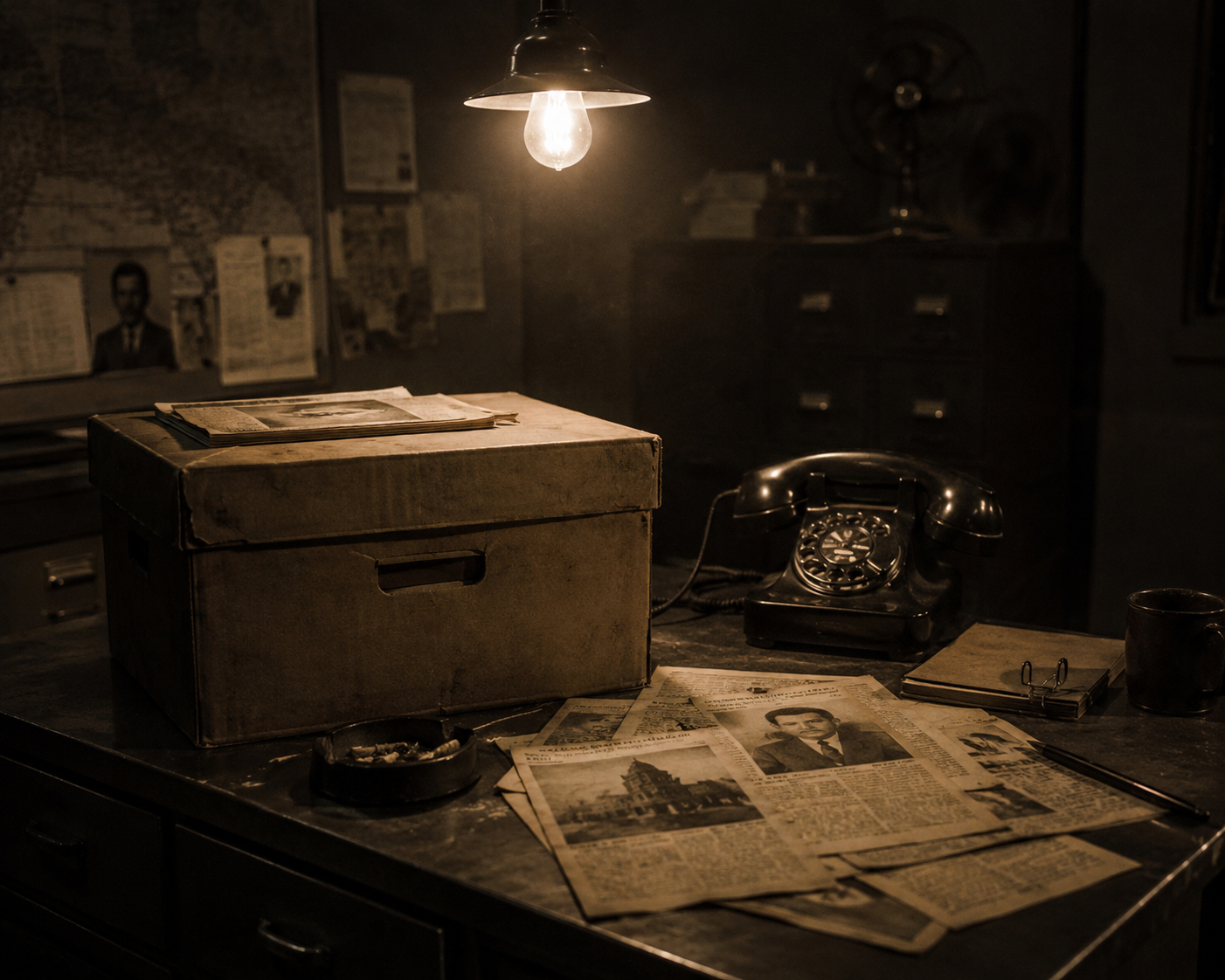
The most haunting development came in 1968 — 23 years after the fire. Jennie received an envelope, postmarked from Kentucky, with no return address. Inside was a photograph of a young man in his thirties who bore an unmistakable resemblance to Louis, the second-youngest missing son. On the back, someone had written a message addressed from "Louis Sodder," along with a cryptic string of numbers and a reference to "brother Frankie." The Sodders hired a private investigator. He found nothing conclusive. The photograph still exists. No one has ever explained who sent it, or why.
The Sodder children's case remains officially unsolved. There is still a reward posted, decades later, for anyone who can prove what actually happened that Christmas Eve.
The Body in Leimert Park
At around 10 a.m. on January 15, 1947, a Los Angeles housewife named Betty Bersinger was walking her three-year-old daughter to the cobbler when she noticed something pale lying in the weeds of a vacant lot. At first she thought it was a discarded mannequin — until she got close enough to see it was the body of a woman, bisected at the waist, her skin stark white against jet-black hair.
The victim was 22-year-old Elizabeth Short, an aspiring actress who'd moved to Los Angeles the previous year. She was identified through fingerprints faxed to the FBI via an early wire-photo machine, with a positive ID returned in under an hour — a remarkably fast turnaround for 1947 technology. Acquaintances back in Long Beach knew her by a nickname that would soon belong to the entire country: the "Black Dahlia," a nod to her habit of wearing all black and the previous year's film noir The Blue Dahlia.
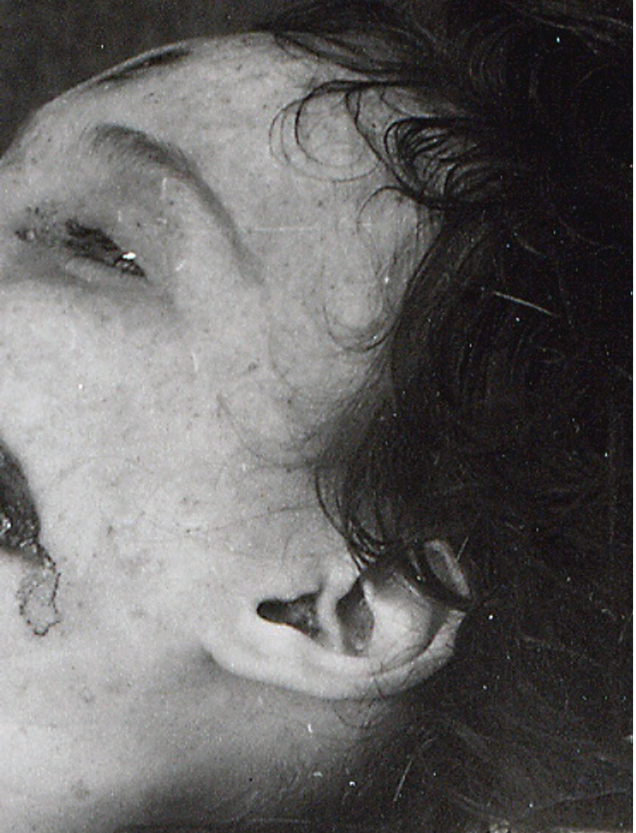
The crime scene defied easy explanation from the start. Despite the extensive mutilation, there was no blood at all at the scene, meaning Short had been killed somewhere else entirely and then transported to the lot. An autopsy determined she'd been tortured before dying from blows to the head and face, her body fully drained of blood and her torso severed. Investigators were struck by something else, too: the precision of the cut. The skill and exactness with which her body had been divided led LAPD investigators early on to suspect the work of someone with surgical training.
The pose itself seemed deliberate, almost staged. Her arms had been arranged stretched over her head at sharp angles, as though composed rather than simply discarded. The location — a vacant lot just off a public sidewalk — meant the body was virtually guaranteed to be found quickly, suggesting the killer wanted the scene discovered rather than hidden.
What followed was one of the strangest investigations in American criminal history — not for lack of leads, but for the sheer volume of false ones. A man named Robert "Red" Manley was briefly arrested and released, and the LAPD found itself flooded with copycat confessions from people who wanted credit for the murder despite having had no involvement. The killer, real or imagined, even seemed to taunt the city: items belonging to Short — her purse, a shoe — turned up in a dump weeks later, as if deliberately planted for police to find.
Despite decades of competing theories — corrupt LAPD officers, mob connections, a surgeon father accused by his own son decades later — no one has ever been charged. The case is still technically open. The killer, if alive in 1947, has almost certainly been dead for decades. The mystery hasn't aged a day.
What the Evidence Won't Tell Us
What connects cases like these isn't just that they remain unsolved — plenty of crimes do. It's that the unsolved part isn't from a lack of evidence. It's that the evidence itself refuses to agree with the official explanation. Bones that should have been there and weren't. Bones that turned up and didn't match. A scene built like it wanted to be found, by someone skilled enough that nobody could prove who they were.
Modern forensic tools have occasionally been brought to bear on cases this old, with mixed results. DNA testing, when degraded remains or surviving family members allow for it, has resolved some decades-old identifications in other cold cases entirely unrelated to these two — proof that time alone doesn't guarantee a mystery stays unsolved forever. But the Sodder case has no remains left to test, and the Black Dahlia case has outlived nearly every witness, suspect, and original investigator who ever touched it. Whatever physical evidence might once have settled the question has long since been lost, contaminated, or simply aged out of usefulness — leaving researchers with paper records, photographs, and the same nagging inconsistencies that troubled detectives the first time around.
Cold cases like the Sodder disappearance and the Black Dahlia murder remain technically open to this day, decades after anyone involved could plausibly still be alive to answer for them. Police departments still take tips. Reward money, in the Sodder case, is still on the table. Researchers, retired detectives, and amateur sleuths keep returning to the same photographs, the same case files, the same unanswered questions — not because they expect a confession after eighty years, but because some mysteries earn the right to be remembered, evidence and all, exactly as strange as they really were.
If you're researching true crime cases for personal reasons related to a loss of your own, it's worth knowing that many police departments maintain dedicated cold case tip lines, and organizations like the National Center for Missing & Exploited Children or local victim advocacy groups can offer support alongside the investigative process.
About the Creator
write with shan
🌍 Discovering the world through words.
👻 Horror & Mystery Stories
🔬 Science & History Articles
📈 Trading Knowledge
🎬 Movie Reviews & Analysis
New content every week.
Enjoyed the story? Support the Creator.
Subscribe for free to receive all their stories in your feed.
Comments
There are no comments for this story
Be the first to respond and start the conversation.