
There was only one rule. Don't open the door.
Eyes of Madness

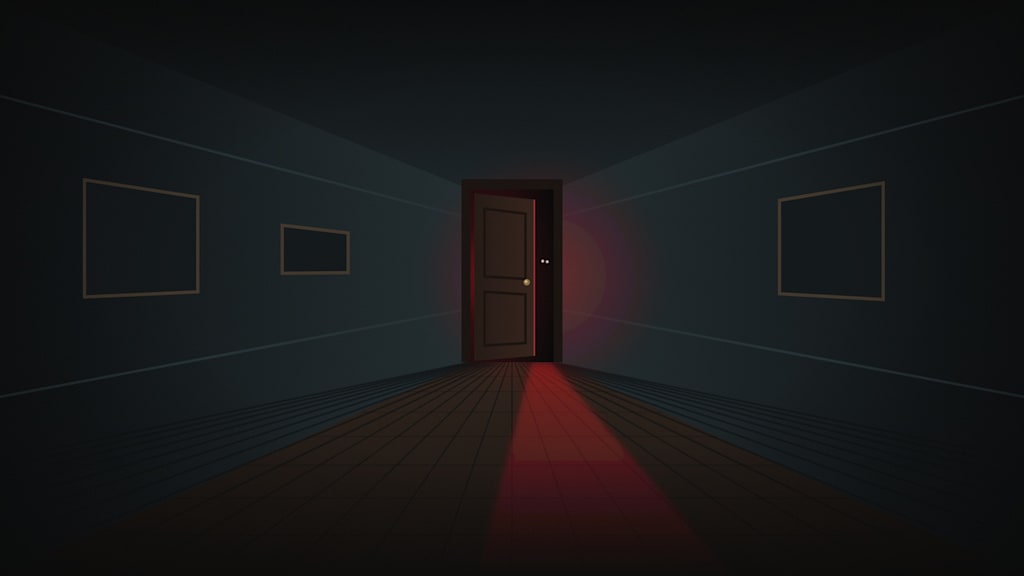
At the end of the upstairs hallway stood a door that did not belong to the house. It was older than the walls around it, darker than the wood beside it, and cold to the touch even in the middle of August. Roman's parents had given him a hundred rules growing up, but only one of them was ever spoken in a whisper.
Don't open the door.
Roman was nine, and nine-year-olds are made of questions. What's behind it? Why doesn't it have a keyhole? Why is it always cold? His father always found a reason to change the subject. His mother would kneel down, take him by the shoulders a little too tightly, and say, "Nothing you ever need to see." Her voice was calm. Her hands were shaking.
So the door became the most interesting thing in the world.
At night, Roman lay awake and listened. Some nights he was certain he heard something on the other side: a slow, patient tapping, soft as a fingernail on glass, as if something were counting the seconds until he came to it. One. Two. Three. It never hurried. It never stopped. It simply waited, the way only something with all the time in the world can wait.
On the night of the storm, the power went out. And for the first time in Roman's life, the tapping stopped.
The silence was worse.
He told himself he would only touch the handle. He told himself he would only look for a second. The brass was so cold it burned. The hinges did not creak. They sighed, like something exhaling after holding its breath for a hundred years.
His parents found him in the hallway an hour later.
The chilling silence that had fallen over their son was a monstrous thing, devouring his laughter and his voice. His parents stared at him, their faces twisted into a grotesque mask of disbelief and horror. How could this be? Their boy, their Roman, reduced to a statue, standing in the doorway with his eyes stretched wide around an unspeakable terror.
All because he opened the door.
A door that should never have been opened.
Roman, who used to stumble over his words when he got excited, now could not make a single sound. He could only stare, his eyes fixed on his parents with a chilling intensity, a desperate plea trapped behind an invisible wall. Inside, he was screaming. He was begging them to run. He tried to speak, to warn them, but every word was choked off before it reached his lips, swallowed by the same abyss that had swallowed his voice.
His mother sank to her knees in front of him. She cupped his face in her trembling hands, the way she used to when he had a fever.
"What's behind it, Roman?" she choked out, her voice a ragged whisper. "Baby, please. What did you see?"
But Roman couldn't answer.
He couldn't tell them that the door did not lead to a room, or a closet, or anywhere at all. It opened onto an oblivion beyond human comprehension, a darkness so deep it had weight, a darkness that looked back. It was not a man, a woman, or a child that waited for those who dared to cross the threshold. It was something far worse. Something with no shape, because shape was too small a word for it. Something that did not just break the rules of the world, but showed him the world had never had any rules at all.
It was a horror no living thing could ever imagine, because no living thing was ever meant to see it.
And Roman had seen it.
His father raised the flashlight to his son's face, and in the trembling beam they finally understood. The thing behind the door had not let Roman go. It had simply moved into the only place it could fit.
There, captured in his eyes, was pure MADNESS.
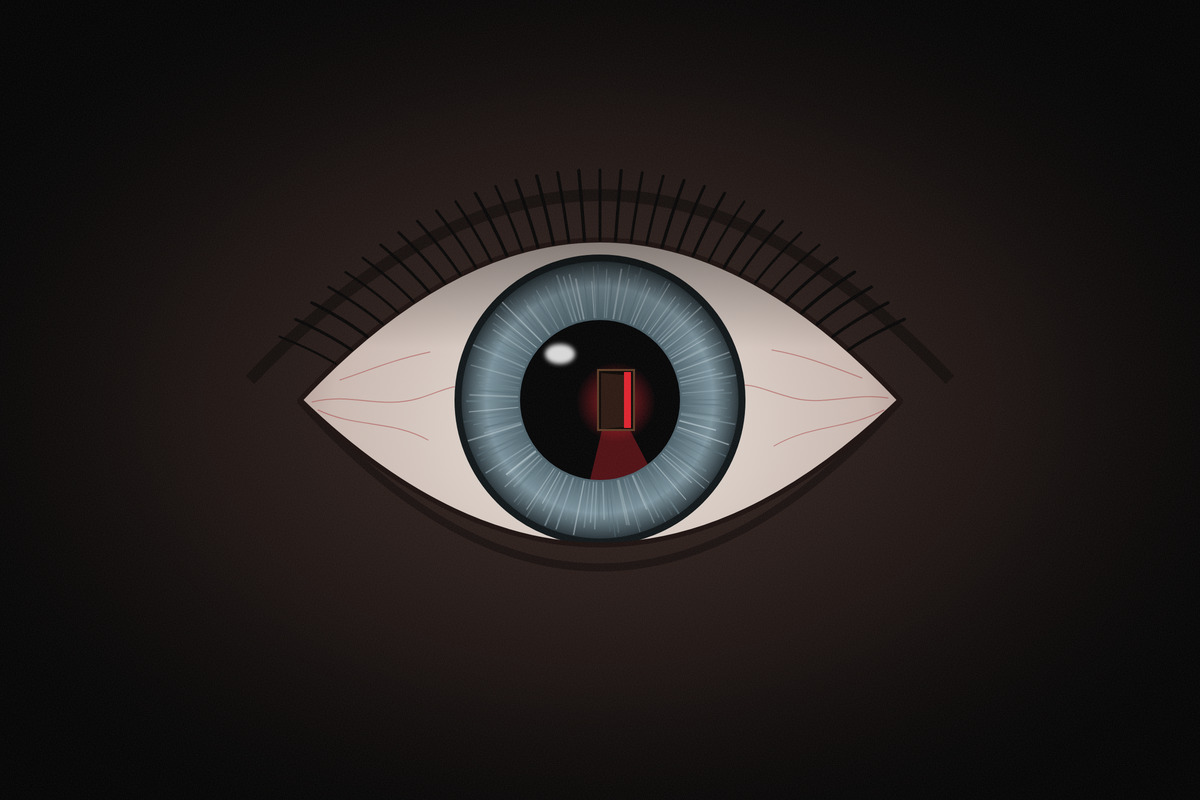
Behind them, at the end of the hall, the door stood open.
And somewhere in the dark, the tapping began again.
Written By Dr. George Shannon Ferguson
About the Creator
Dr. George Shannon Ferguson
Dr. George Shannon Ferguson. Educator by calling, poet by daily habit. I write about faith, gratitude, love, and the seasons that test us, with some short fiction (and a few ghosts) along the way. Pull up a chair.
Enjoyed the story? Support the Creator.
Subscribe for free to receive all their stories in your feed. You could also become a paid subscriber, letting them know you appreciate their work.
Comments
There are no comments for this story
Be the first to respond and start the conversation.