
The Yeongdeok Haunted House: south Korea’s Most Terrifying Coastal Haunting
False phenomenon or true paranormal fueled by violent deaths without closure.

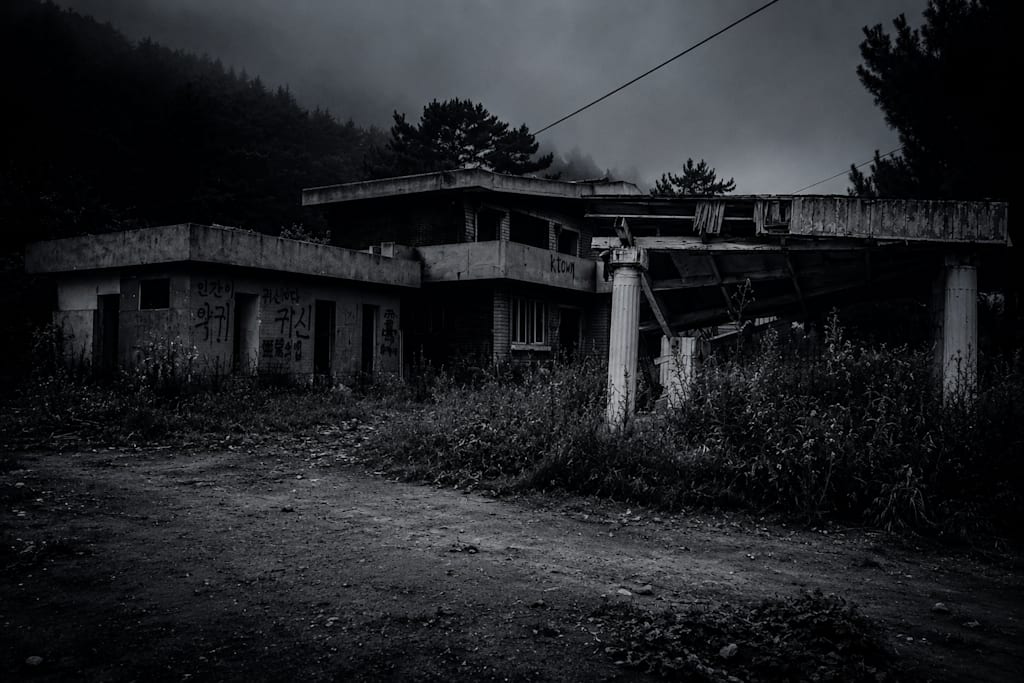
There are places where silence feels natural. And then there are places where silence feels like something is waiting. Along the eastern coastline of South Korea, overlooking the crashing waves of the East Sea, sits a decaying structure locals avoid even in daylight. Broken windows stare toward the ocean like empty eye sockets. Salt-heavy winds scream through unfinished hallways. Rusted staircases groan under invisible weight. This is the infamous Yeongdeok Haunted House — one of Korea’s most feared paranormal locations. Some believe it is cursed. Others believe it is haunted by the forgotten dead. And according to the stories whispered by locals, the house was never empty at all.
A House Built on a Battlefield The Yeongdeok Haunted House stands near Jangsa Beach in Yeongdeok County, an area forever scarred by the Korean War. The region is historically tied to the tragic Jangsa Landing Operation of 1950, where hundreds of young student soldiers were sent into brutal combat with minimal training. Many never returned home. The war ended decades ago. But in Yeongdeok, people say something remained behind. According to local legends, the house was built on or near land containing unmarked graves of fallen soldiers. While historians caution that many paranormal claims are unverified, the emotional connection between the location and the wartime tragedy is very real. The original structure was reportedly intended to become a seaside restaurant or business property during the 1980s. It should have been beautiful. The view from the hill overlooks endless water and pale coastline. Instead, it became one of Korea’s darkest urban legends. Construction slowed. Owners changed. People left. And then the stories began.
The Woman on the Staircase One of the earliest and most repeated paranormal accounts involves the owner’s wife. According to local folklore, shortly after the building opened, she claimed to see a pale woman descending the staircase late at night. The figure reportedly wore white clothing, her long hair covering most of her face. The woman moved slowly. Silently. One step at a time. Witnesses claimed the owner’s wife collapsed from terror after seeing the apparition. Soon after, rumors spread throughout Yeongdeok that the house was haunted. Then came reports of sounds. Footsteps on empty floors. Children crying at night. Whispers echoing through unfinished rooms. Some visitors claimed they heard young voices calling for their mothers from inside the structure — a detail chillingly connected to the teenage student soldiers who died nearby during the war. Whether psychological suggestion or something darker, the stories multiplied fast. And fear became part of the house itself.
Entering the House Urban explorers who visited the abandoned property described an overwhelming atmosphere before even stepping inside. The building was never particularly massive, but witnesses consistently described feeling trapped the moment they crossed the entrance. Inside, the structure appeared frozen in decay: • Peeling paint hanging like dead skin. • Damp concrete walls stained black with mold. • Broken glass crunching beneath every footstep. • Narrow corridors swallowing flashlight beams whole. The sea wind intensified the horror. Waves crashing below the cliff sounded eerily human when funneled through the hollow building. Some skeptics believe many ghost reports can be explained by acoustics, wind distortion, and psychological fear. But visitors insisted the feeling went beyond imagination. Many described sudden nausea. Dizziness. Violent headaches. Some claimed electronic devices malfunctioned without explanation. Batteries reportedly drained unusually fast. Cameras froze. Audio recordings captured faint whispers no one remembered hearing at the time. And then there were the shadows. Dark figures standing motionless in upper windows. Shapes appearing briefly at the ends of hallways before disappearing. The sensation of being watched from somewhere just behind you.
The Shamans Who Refused to Stay Perhaps the most disturbing legends involve Korean shamans. According to widely circulated paranormal stories, spiritual practitioners were brought to the house to cleanse it through traditional rituals known as gut. But several accounts claim the ceremonies failed. One story alleges that a shaman entered the property and immediately sensed “thousands” of spirits crowding the structure. Not one ghost. Not two. Thousands. The spirits were said to feel confused, angry, and unfinished — trapped between violent death and forgotten memory. Another legend claims a ritual had to be abandoned midway because screams and unexplained noises erupted throughout the building. No official evidence confirms these stories. But the legends became deeply rooted in Korean paranormal culture. And that made the house even more feared.
Korea’s Most Infamous Haunted Location Over time, Yeongdeok Haunted House became grouped alongside other infamous Korean horror locations like Gonjiam Psychiatric Hospital as one of the country’s “top haunted places.”
Ghost hunters, thrill-seekers, and YouTubers began traveling to the site. Some never made it past the entrance. Others fled after hearing noises upstairs. Online forums filled with stories of shadow figures and phantom voices. One Reddit user even described hearing eerie whispers near the property before spotting what they believed was a black shadow sitting inside their parked car. Of course, skeptics argue the entire legend grew through internet culture and suggestion. Once people expect terror, ordinary sounds become paranormal. But horror has always thrived in uncertainty. And Yeongdeok offers plenty of it. Because unlike fictional haunted houses, this legend is connected to genuine tragedy. Real war. Real deaths. Real grief. The paranormal stories may never be proven. Yet the emotional weight surrounding the location remains undeniable.
The Ghosts of Forgotten Boys The most unsettling aspect of the Yeongdeok legend is not the apparitions. It is what they represent. Teenagers were sent to die on those shores during the Korean War. Many were barely trained. Some never received proper recognition for decades. In Korean folklore, violent death without peace or closure can create restless spirits. And in Yeongdeok, people believe the dead never truly left. The abandoned house became more than a ruin. It became a symbol of unfinished mourning. A concrete tomb overlooking the sea. A place where history, trauma, and fear fused together into something that still unsettles visitors today. Even now, many locals avoid the property after sunset. Some refuse to speak about it at all. And when the ocean wind blows through the empty windows at night, residents claim it sounds less like air… …and more like distant screaming.
Final Thoughts Whether you believe in ghosts or not, the Yeongdeok Haunted House remains one of Asia’s most chilling paranormal legends. Part urban myth. Part wartime memorial. Part psychological nightmare. The truth behind the hauntings may never be fully known. But perhaps that uncertainty is exactly why the story continues spreading across the internet and through whispered conversations in Korea. Because the scariest haunted places are not always the ones with monsters. Sometimes, they are the places where real suffering happened. And sometimes… history refuses to stay buried.
Author's Note:
Various information sites and articles were used to compile this article. Did you like this article? How about you give my other works a read too?
About the Creator
E. hasan
An aspiring engineer who once wanted to be a writer .
Enjoyed the story? Support the Creator.
Subscribe for free to receive all their stories in your feed.
Comments
There are no comments for this story
Be the first to respond and start the conversation.