
The Witch: Society’s Original Outsider
An exploration of the witch archetype

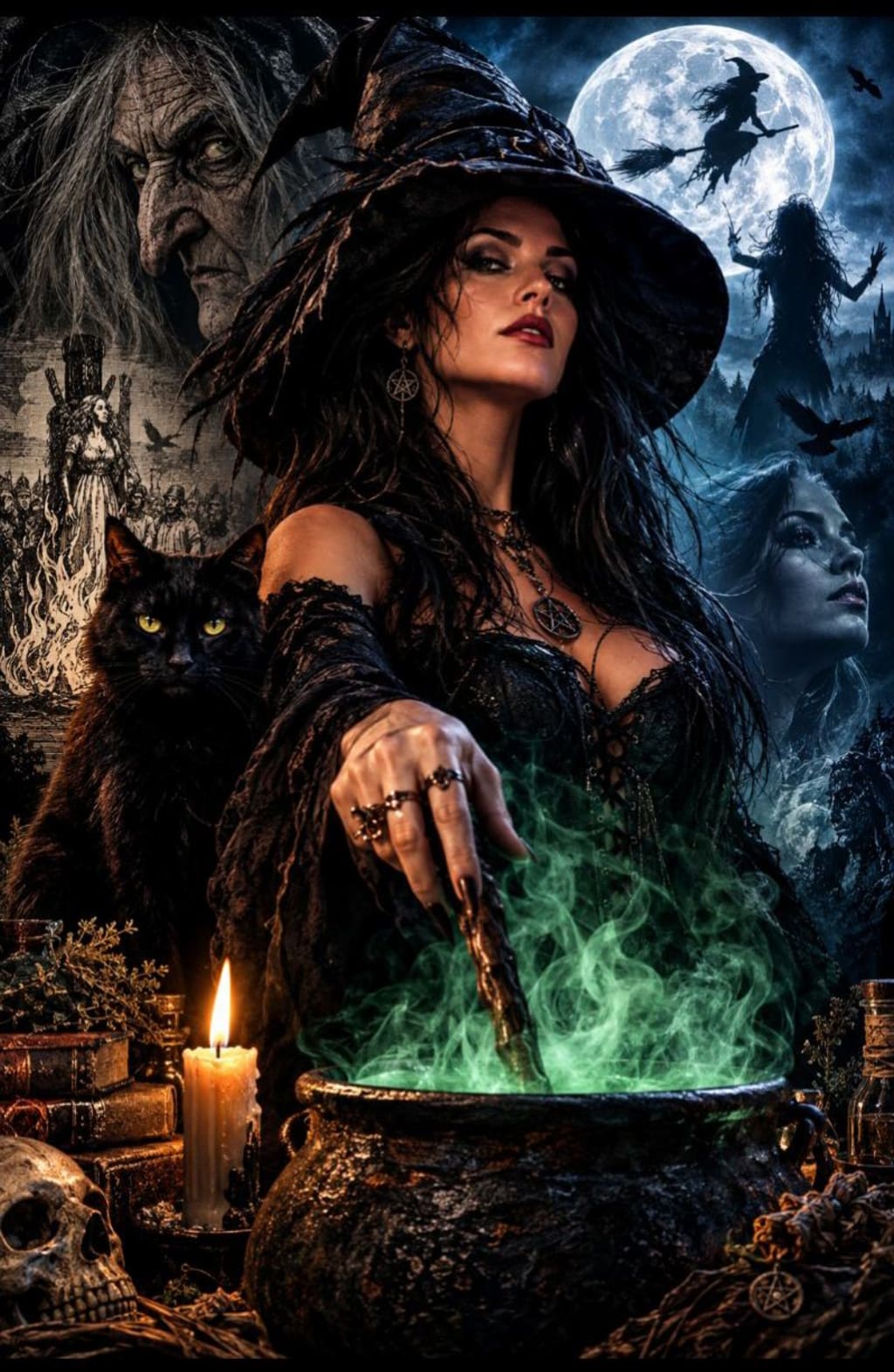
The Witch: Society’s Original Outsider
The history of the witch spans thousands of years, evolving from ancient magical healers and mythological sorcerers into figures of intense medieval persecution and, eventually, symbols of modern empowerment. The witch has taken many forms throughout history, but somehow she has never disappeared from our collective imagination.
Why?
Because the witch represents something deeply primal: the outsider, the exile, the shadow self, and the person who refuses to play by society’s rules.
The witch archetype exists on the boundary between the world we understand and the unconscious world lurking just beyond it. We see versions of the witch everywhere—in television shows, movies, video games, books, comics, and mythology.
Alongside the vampire and the werewolf, the witch is one of those monsters that simply refuses to die.
But why does this particular archetype keep coming back?
Because, on some level, we’ve all felt like outsiders.
When I was growing up in the 1990s, one of the biggest comic book franchises was X-Men, and it’s hard not to see the witch archetype reflected in those characters. They were born with extraordinary powers that frightened and alienated the very society they ultimately chose to protect.
That’s the healed witch archetype: someone who understands their power and no longer feels the need to seek validation from everyone around them. They don’t waste their energy on petty squabbles because they already know who they are.
And despite what some people may assume, the witch doesn’t necessarily have to be female.
The witch, sorcerer, hag, crone, hermit, magician, and wizard all represent variations of the same archetype: the powerful individual who is comfortable standing alone.
And that’s exactly what makes society nervous.
The Birth of the Wicked Witch
One of the most recognizable versions of the witch is the stereotypical ugly old woman—the crooked nose, the wrinkles, the isolated cottage, the mysterious herbs, and, of course, the inevitable boiling cauldron.
But there’s something rather unfair about that image.
Imagine a woman whose entire village has known her for years. She loses her husband. Perhaps her children die as well, victims of disease or some terrible plague. She doesn’t have the money to hire servants, so she can’t maintain her home or property the way she once did.
The weeds begin growing in the yard.
Repairs don’t get made.
She becomes older, withdrawn, and bitter because life has dealt her a terrible hand.
And then the whispers begin.
Suddenly, she’s not an unfortunate widow anymore.
She’s the creepy old witch.
The weeds growing in her yard aren’t simply weeds. They’re ingredients for poison potions.
Her family didn’t die from disease. She sacrificed them to the Devil.
And somehow, despite everyone else dying, she survived because she’s secretly been practicing dark magic.
Keep in mind, this was long before trashy reality television existed—but human beings really haven’t changed all that much.
We still love a sensational story.
The Witch as a Power Fantasy
There’s another fascinating contradiction in the traditional image of the witch.
We’re often shown this withered, hideous old woman whom nobody wants anything to do with.
And yet, according to some of the darker folklore surrounding witches, the Devil himself supposedly wanted her.
In order to make a pact with the Dark Prince, she might have to kiss him, seduce him, or engage in all sorts of bizarre and sometimes explicitly sexual rituals.
Think about the contrast.
This woman, who society considers old, ugly, powerless, and undesirable, suddenly becomes a source of tremendous supernatural power—and even the very embodiment of darkness himself desires her.
That’s quite a transformation.
Folklore sometimes imagined witches gathering together in the woods at night, performing rituals in the nude beneath the moon, communing with demons, and engaging in behavior that would have been considered utterly scandalous by respectable society.
Honestly, it’s almost more entertaining than modern reality television.
But underneath all the sensationalism is something much more interesting.
Power.
The Woman Who Refused to Stay in Her Place
For much of history, women had very few rights and were expected to remain subordinate to their husbands and fathers.
So imagine the power fantasy represented by the witch.
During the daylight hours, she might be expected to obey her husband, remain quiet, and accept whatever place society had assigned her.
But at night?
She becomes something entirely different.
She flies through the sky on a broomstick.
She communes with demons.
She commands storms.
She knows secret words and mysterious symbols.
She possesses knowledge that supposedly gives her power over people who would otherwise have authority over her.
For someone living in a world where they had almost no control over their own life, that’s an incredibly intoxicating fantasy.
And this is where the witch becomes something more than a monster.
She becomes a symbol of forbidden freedom.
The Outsider
The witch has much in common with the vampire and the werewolf because all three are outsiders.
They can walk through our world, but they don’t completely belong to it.
The witch, however, represents something particularly unsettling: communication with darkness.
She doesn’t simply confront her inner demons.
She communes with them.
She attempts to understand where they come from. Sometimes she even asks them for assistance.
Naturally, that makes a functioning society nervous.
Society depends on cooperation. It requires people to understand their roles and, to some degree, stay within the boundaries established for them.
The witch archetype says:
Why?
It doesn’t matter whether you were born a prince or a pauper. You are still a human being, and therefore you possess inherent value.
You don’t need permission to seek knowledge.
You don’t need permission to confront the darkness.
And you certainly don’t need permission to question the rules.
That is an extremely threatening idea to any system built around the distinction between the powerful and the powerless.
And perhaps that’s why the witch has survived for so long.
She isn’t simply a woman with a broomstick and a cauldron.
She represents the person who refuses to accept that someone else gets to decide what they’re allowed to become.
That’s why the witch keeps returning.
The world changes.
The costumes change.
The stories change.
But the outsider remains.
And somewhere in the darkness, she’s still stirring that damn cauldron.
LOL.
About the Creator
mark bradley (mark45xxx)
I'm a published Comic Book Creator & freelance illustrator specializing in dark,surreal, & cinematic artwork. I help authors, indie creators, and collectors, bring intense ideas to life
Enjoyed the story? Support the Creator.
Subscribe for free to receive all their stories in your feed.
Comments
There are no comments for this story
Be the first to respond and start the conversation.