
The Stanford Prison Experiment: The Six Days That Turned Ordinary Men Into Monsters
controlled incarceration turned into violent chaos

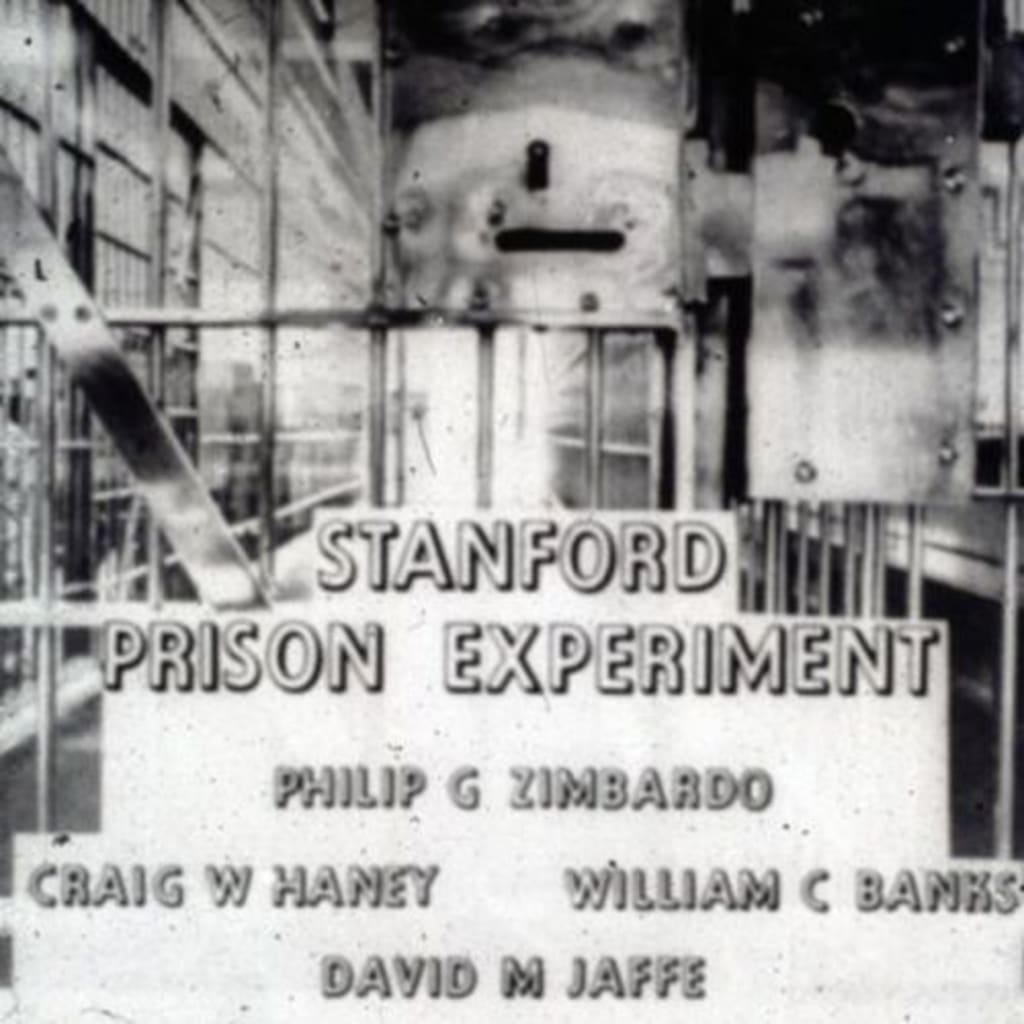
In August 1971, a group of healthy young college students walked into the basement of Stanford University expecting a harmless psychology experiment. Less than a week later, some of them were sobbing uncontrollably. Others had become cruel, sadistic, and disturbingly intoxicated with power. And the man overseeing it all — psychologist Philip Zimbardo — would later admit the experiment spiraled into something terrifyingly real. The world remembers it as The Stanford Prison Experiment. But behind the headlines lies something far darker than a simple study. It was a descent into psychological horror. A nightmare created not by criminals… …but by ordinary people.
The Basement Prison The summer of 1971 was tense in America. The Vietnam War raged overseas. Violent protests erupted across college campuses. Public trust in authority was collapsing. At the same time, stories of abuse inside American prisons were beginning to surface. Psychologist Philip Zimbardo wanted to answer a disturbing question: Do prisons become brutal because of evil people… or because the system itself transforms them? To find out, he placed an advertisement in a newspaper offering volunteers $15 a day to participate in a “mock prison study.” Seventy-five men applied. After psychological testing, 24 were selected. They were healthy. Educated. Emotionally stable. No criminal histories. No signs of mental illness. Just ordinary college students. The participants were randomly divided into two groups: • Prisoners • Guards What happened next would become one of the most infamous psychological studies in history.
The Arrests Were Real The experiment began with humiliation. Without warning, actual police officers arrived at the homes of the “prisoners.” Neighbors watched as the young men were handcuffed, searched, and shoved into police cars. Some laughed nervously, assuming it was all part of the game. But the atmosphere changed quickly. At the police station, they were fingerprinted and booked like real criminals. Then came the basement. Deep beneath the psychology department at Stanford University, researchers had transformed a hallway into a functioning prison. The cells were cramped and windowless. The doors were steel. There were security cameras everywhere. Each prisoner was stripped naked, sprayed for lice, and forced into a smock with an identification number sewn onto the front. Not names. Numbers. Rubber sandals replaced shoes. A chain was locked around one ankle as a constant reminder of captivity. The guards were given mirrored sunglasses, wooden batons, and military-style uniforms. And with those uniforms came something dangerous: Authority.
Day Two: The Rebellion The first day passed quietly. Then came Day Two. The prisoners barricaded themselves inside their cells using their beds. They screamed insults at the guards and refused orders. The guards panicked. Then they retaliated. Using fire extinguishers, they blasted prisoners with freezing carbon dioxide. The guards stripped prisoners naked, dragged them across the floor, and forced them into solitary confinement. Mattresses were removed. Toilets became privileges. Some prisoners were ordered to clean toilets with their bare hands. Others were forced to perform exhausting physical exercises for hours. The guards began inventing punishments simply because they could. And the most horrifying part? Many of them appeared to enjoy it.

The Birth of Cruelty What began as roleplay stopped feeling like roleplay. The guards developed their own system of psychological torture. Prisoners were awakened throughout the night for “counts,” where they had to recite their identification numbers repeatedly while guards screamed in their faces. Some prisoners were denied blankets. Others were isolated for hours in darkness. Food became a weapon. Humiliation became entertainment. The guards started referring to prisoners as animals. One participant later admitted the power felt intoxicating. He said he became “totally absorbed” in the role. Another described how easy it became to stop seeing prisoners as human beings. The transformation was terrifyingly fast. Not weeks. Not months. Just days.

The Prisoner Who Broke Down By the second day, one prisoner — known only as Prisoner 8612 — began suffering an emotional collapse. He screamed uncontrollably. He cried. Raged. Shook violently. At first, researchers believed he was faking it to escape. But his breakdown became impossible to ignore. He was eventually released from the experiment. Then more prisoners began deteriorating. One developed a psychosomatic rash across his body from stress. Another fell into deep depression and uncontrollable crying fits. Some stopped resisting entirely. They became passive. Obedient. Emotionally numb. The basement prison was consuming them.
The Experiment Consumes Its Creator The most chilling detail may be what happened to Philip Zimbardo himself. He was no longer acting like a scientist. He became the prison superintendent. Instead of stopping the abuse, he became absorbed in maintaining the prison system. Even when participants visibly suffered, the experiment continued. Researchers later admitted they stopped seeing the volunteers as students. They became prisoners and guards in their minds too. The line between simulation and reality had vanished. And nobody inside seemed capable of recognizing it.
The Woman Who Finally Said “This Is Evil” The experiment was supposed to last two weeks. It survived only six days. The reason it ended was because one person walked into the basement and reacted with horror. Graduate student Christina Maslach visited the prison and witnessed prisoners being marched to bathrooms with bags over their heads while guards screamed insults at them. She was horrified. Unlike everyone else, she had not become psychologically trapped inside the experiment. She confronted Philip Zimbardo directly. “What you’re doing to those boys is terrible,” she reportedly told him. Her reaction shocked him awake. For the first time, he realized how far things had spiraled. The experiment was terminated immediately. Six days. That was all it took.
The Dark Legacy The Stanford Prison Experiment became world famous. It appeared in textbooks, documentaries, films, and criminal justice debates for decades. Supporters claimed it revealed how easily ordinary people surrender to systems of power. Critics later attacked the study for ethical violations and questionable scientific methods. Some former participants argued guards were encouraged to behave aggressively by researchers. Yet despite controversy, the experiment left behind an unsettling truth that still terrifies people today: Under the right conditions, cruelty can emerge frighteningly fast. Not from monsters. Not from psychopaths. From average human beings placed in systems that reward domination and obedience. That idea echoes through some of history’s darkest moments: War crimes. Prison abuse. Authoritarian regimes. Mob violence. The Stanford basement became a mirror reflecting something humanity desperately wants to deny. That evil does not always arrive wearing the face of a villain. Sometimes it arrives wearing a uniform.
Final Thoughts The Stanford Prison Experiment remains disturbing because it feels less like history… …and more like a warning. The young men who entered that basement believed they were participating in a harmless study. None imagined they would leave traumatized. None imagined how quickly morality could collapse once power was placed in the wrong hands. And perhaps the most terrifying question still lingers more than fifty years later: If ordinary people transformed into abusers in less than a week… What might happen in the real world, where the experiment never ends?
Author's Note:
How about you read my other works if you liked this one?
About the Creator
E. hasan
An aspiring engineer who once wanted to be a writer .
Enjoyed the story? Support the Creator.
Subscribe for free to receive all their stories in your feed.
Comments
There are no comments for this story
Be the first to respond and start the conversation.