

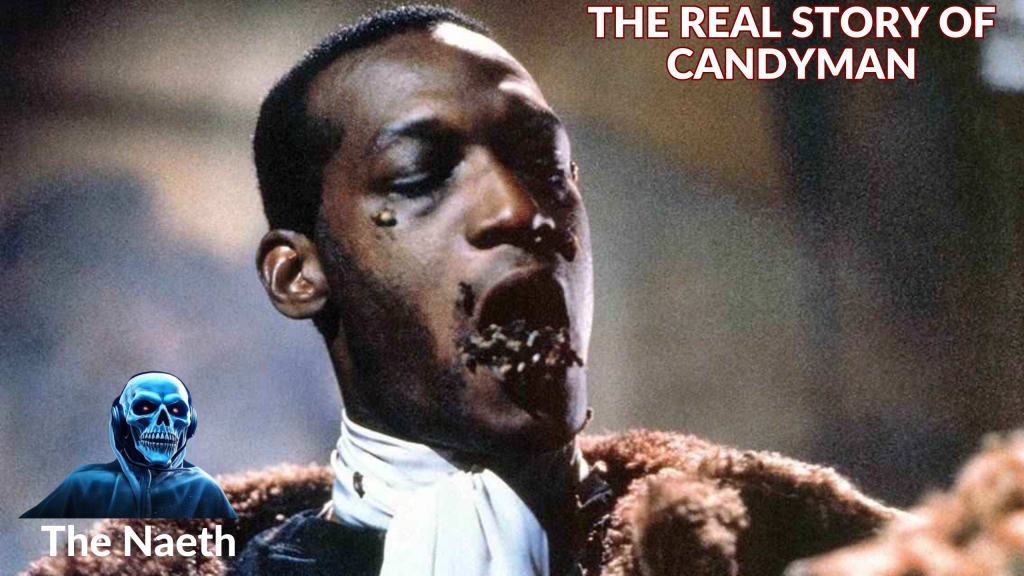
The actual tale of Candyman while facing the horrible daily reality of poverty, police neglect, and narcotics that had afflicted Black Chicagoans for decades.
Candyman is an urban legend. The character's eerie appearance and terrible past have captivated horror lovers for years.
From racial hatred in America to a Chicago woman's gruesome murder, Candyman's actual tale is more sad and scary than the movie.
This film was partly shot in Chicago's Cabrini–Green housing complex on the Near North Side. Cabrini-Green, like the ABLA houses where Ruth McCoy lived and died, housed thousands of Black Americans who migrated to Chicago for employment and to escape the Jim Crow South during the Great Migration.
The contemporary apartments included gas stoves, indoor plumbing and baths, hot water, and temperature control to help inhabitants survive Lake Michigan winters. The residences were featured in Good Times as an example of a respectable lifestyle, fulfilling this early promise.
However, prejudice and Chicago Housing Authority neglect turned Cabrini-Green into a nightmare. In the 1990s, 15,000 African Americans lived in decaying apartments with poverty and drug-related violence in plain view of Sears Tower.
During his 1890 picture of a white lady, brilliant Black artist Daniel Robitaille fell in love and impregnated her. After discovering him, her father hires a gang to beat him, cut off his hand, and hook him. They then doused him with honey and let bees kill him. Death transformed him into Candyman.
Helen Lyle may be Candyman's white lover reincarnated. This element of the narrative is disturbing since interracial couples—and Black males in particular—were at jeopardy throughout US history.
Timing is crucial. Black neighbors were increasingly lynched by white mobs in the late 19th century.
Lynch mobs killed 40 blacks in 1880. By 1890, when the Candyman tale began, that number had more than quadrupled to 85—and those were only the reported homicides.
Everyone suffered this violence. In 1911, a white mob in Chicago harassed champion boxer Jack Johnson after he married a white lady. William Bell, 33, was Cook County's sole documented lynching victim, beaten to death in 1924 because “The dead man was suspected of having attempted to attack one of two white girls, but neither girl could identify Bell as the assailant.”
The Candyman's dread is a mirror of years of African Americans' everyday lynching, which made it so horrifying.
Before the 1967 Supreme Court ruling Loving v. Virginia legalized interracial relationships, hundreds of African Americans had been attacked and murdered nationwide. Lynching became a federal criminal in February 2020 when the House enacted a measure.
Candyman brilliantly blends myths, folklore, and urban legends with the genuine terrors of Black life in the US to create a new horror icon.
References
https://movieweb.com/candyman-look-at-the-short-story-horror-movie/
https://allthatsinteresting.com/is-candyman-real
About the Creator
TheNaeth
Sometimes Poet,Broker
-
Enjoyed the story? Support the Creator.
Subscribe for free to receive all their stories in your feed. You could also become a paid subscriber, letting them know you appreciate their work.
Comments
There are no comments for this story
Be the first to respond and start the conversation.