
The Prison Designed to Break the Human Mind
Inside the Horrors of Eastern State Penitentiary

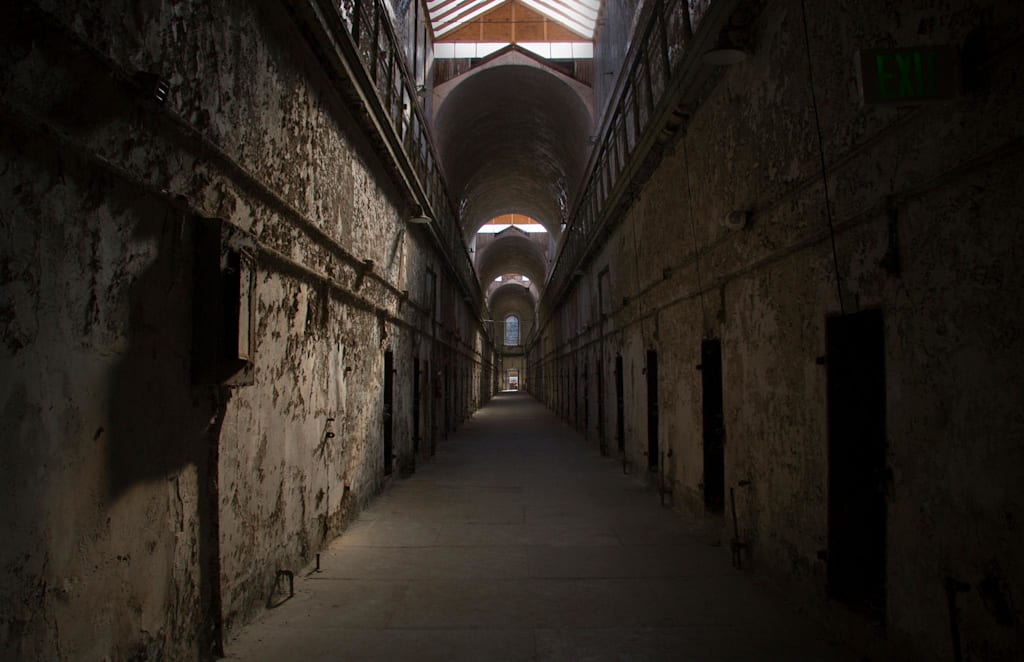
Rainwater still drips through the cracked ceilings.
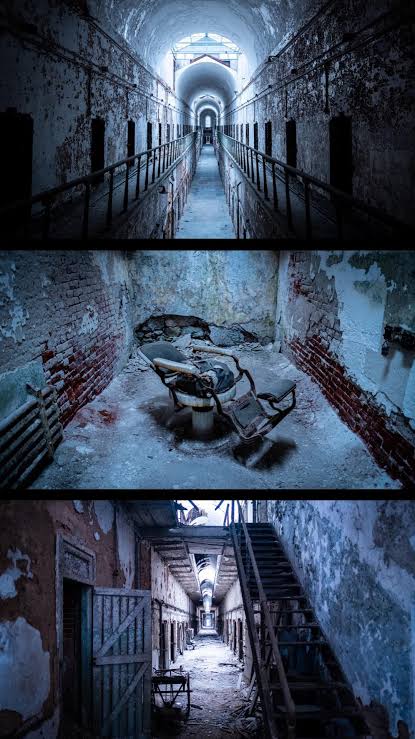
Rust crawls across iron bars like disease. Long, empty corridors stretch into darkness, interrupted only by peeling paint and collapsing stone. Visitors claim they hear whispering voices echoing through Cellblock 12. Others report shadow figures standing motionless at the ends of hallways before vanishing into the black.
But the true horror of Eastern State Penitentiary is not the ghost stories.
It is what human beings did to each other inside those walls.
Because long before paranormal investigators arrived with cameras and EVP recorders, this prison had already become a monument to suffering — a place where isolation was weaponized, sanity was systematically dismantled, and men disappeared into silence for years at a time.
The ghosts may only be echoes.
The cruelty was real.
A Prison Built on Psychological Torture
When Eastern State Penitentiary opened in 1829 in Philadelphia, it was considered revolutionary.
The massive Gothic structure looked more like a medieval castle than a prison. Its towering walls, vaulted ceilings, and radial design were intended to inspire fear. Reformers believed criminals could be redeemed through absolute isolation and forced reflection.
Instead, they created something closer to psychological annihilation.
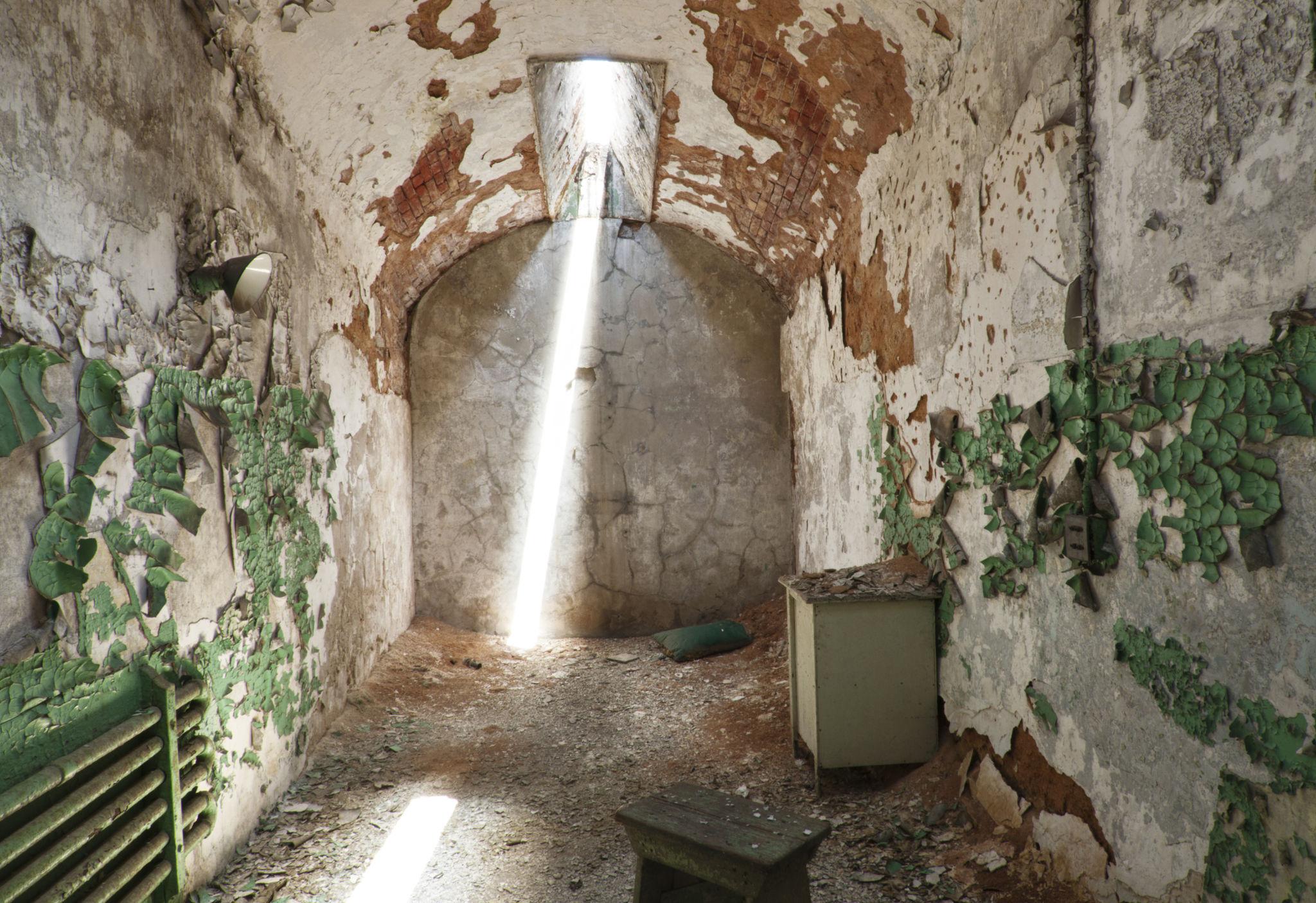
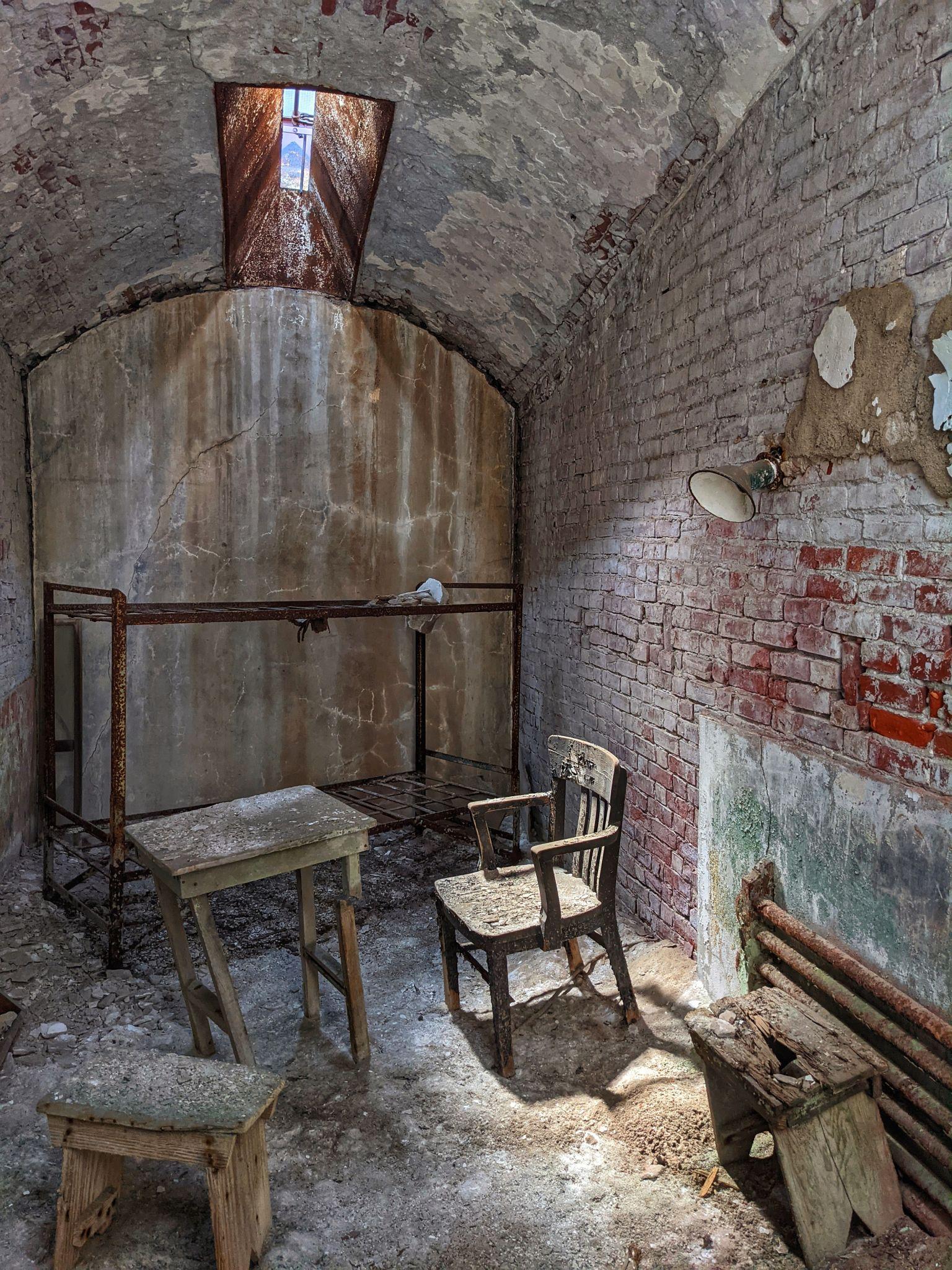
Every prisoner lived alone in a small stone cell equipped with a single skylight — called “The Eye of God.” Guards hoped inmates would spend their days reading scripture, repenting for their crimes, and confronting their sins in total silence.
No talking was allowed.
No interaction.
No human contact.
When prisoners left their cells, black hoods were placed over their heads so they could never see or communicate with one another.
Imagine that existence.
Days blurred into months.
Months blurred into years.
No voices. No touch. No identity beyond a number in a locked stone tomb.
At the time, even some observers were horrified by the conditions. The famous English writer Charles Dickens visited Eastern State in 1842 and described the system as a form of torture worse than physical punishment. He wrote that the slow destruction of the mind was immeasurably cruel.
And he was right.
Men Went Insane Inside These Cells
The prison’s “Pennsylvania System” quickly produced terrifying consequences.
Prisoners developed severe mental illness from prolonged isolation. Some became violently unstable. Others descended into catatonia. Many suffered hallucinations, paranoia, depression, and suicidal breakdowns.
Guards reportedly found inmates rocking in corners, whispering to themselves, clawing at walls, or staring blankly into space for hours.
Some men completely lost the ability to speak.
Others forgot how to function around human beings altogether.
Today, psychologists recognize prolonged solitary confinement as deeply damaging to the human brain. But in the 1800s, Eastern State continued experimenting with isolation despite mounting evidence that it was destroying people psychologically.
The prison eventually became overcrowded, violent, and infamous.
And the punishments grew even darker.
The Punishments That Terrified Inmates
Eastern State Penitentiary was not merely a prison.
It was a machine designed to crush resistance.
One of its most feared punishments was the “water bath.”
An inmate would be submerged in icy water and hung against a wall overnight during winter. By morning, a layer of ice could form on the prisoner’s skin.
Another punishment involved the “mad chair,” where prisoners were strapped tightly into a chair for days. Blood circulation would fail. Some prisoners reportedly went insane after extended restraint.
Then there was the “iron gag.”
A leather strap secured an inmate’s hands behind his back while a metal device was clamped onto his tongue. Any movement caused the tongue to tear and bleed.
These punishments were not hidden accidents of history.
They were deliberate.
Calculated.
Institutionalized suffering carried out in the name of reform.
And violence inside the prison only escalated as decades passed.
Bloodshed Behind the Walls
By the early 20th century, Eastern State had transformed from an experimental prison into a brutal and overcrowded institution.
Murder, assault, and inmate abuse became common realities.
One of the prison’s most famous inmates was Al Capone, the notorious Chicago mob boss who spent time there in 1929. Unlike ordinary prisoners, Capone reportedly furnished his cell with rugs, fine furniture, and a radio — a stark contrast to the misery surrounding him.
But many others suffered far worse fates.
Riots erupted over conditions. Beatings occurred behind locked corridors. Guards and inmates alike described an atmosphere saturated with tension and despair.
The architecture itself amplified the terror.
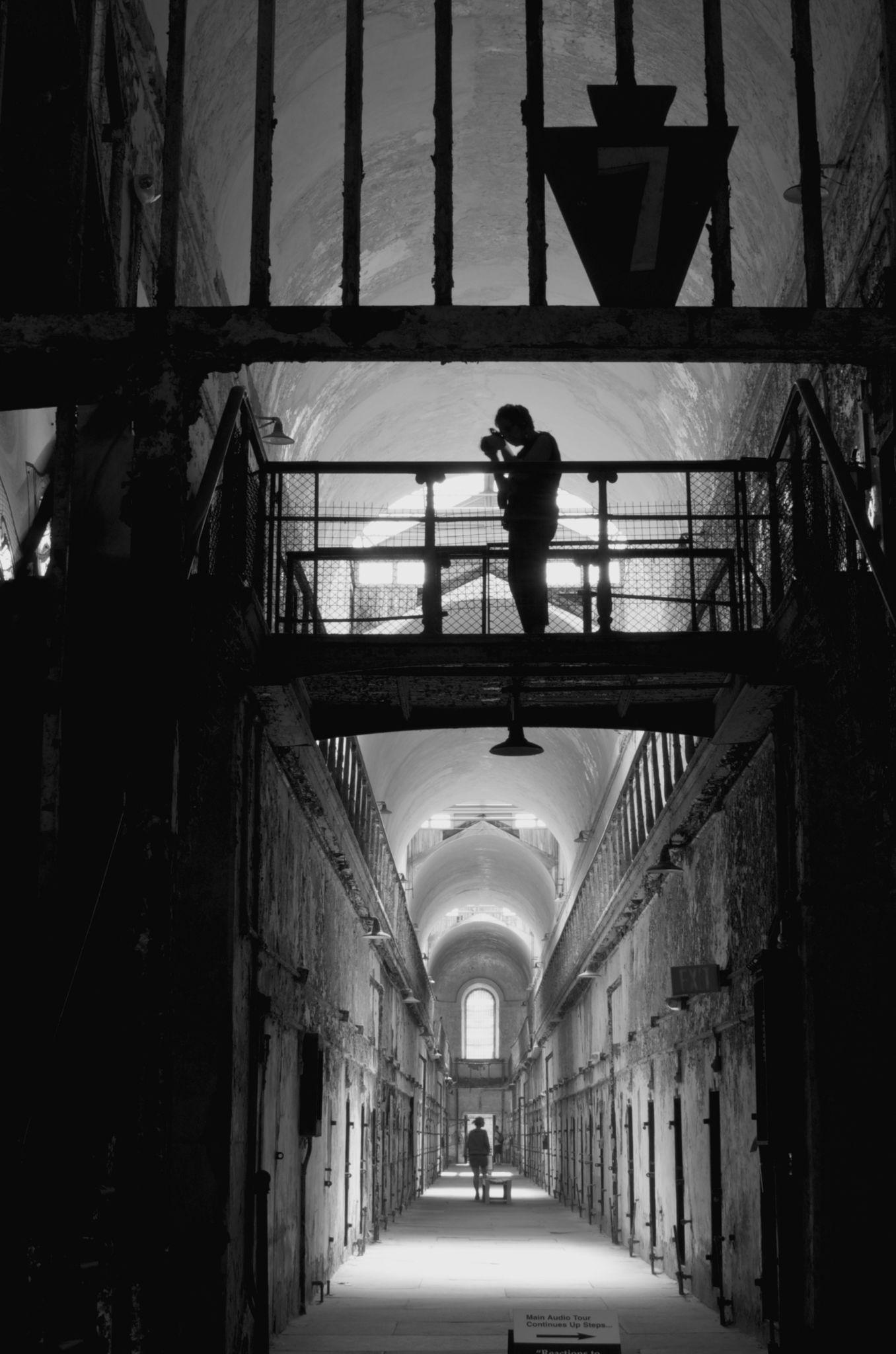
Seven long cellblocks radiated outward from a central surveillance hub like spokes on a wheel. Guards could watch prisoners constantly while inmates remained isolated from one another. The design inspired prisons worldwide, but it also created a suffocating sense of helplessness.
Every corridor felt endless.
Every cell felt buried alive.
The Shadow Figures of Cellblock 12
Eastern State officially closed in 1971.
But according to countless visitors, something never left.
Today, the abandoned prison is considered one of the most haunted locations in America. Paranormal investigators, former employees, tourists, and security staff have reported disturbing encounters for decades.
Cellblock 12 is infamous for shadow figures that appear suddenly and disappear into darkness.
Cellblock 6 is known for disembodied whispers and echoing laughter.
Visitors have described hearing footsteps behind them in empty corridors. Others claim unseen hands touched them while touring isolation cells.
One maintenance worker allegedly reported seeing a shadowy figure standing silently in a corridor before it dissolved into the wall itself.
Another frequently discussed area is Cellblock 4, where witnesses claim ghostly faces emerge briefly from cells.
Skeptics argue the experiences are products of suggestion, atmosphere, and fear.
But even skeptics admit the prison feels wrong.
Oppressive.
Heavy.
As if the suffering embedded itself into the stone.
Solitary Confinement Never Truly Ended
What makes Eastern State especially disturbing is that its legacy never disappeared.
The prison helped normalize solitary confinement practices that still exist around the world today. Modern studies continue to show severe psychological damage caused by prolonged isolation, including anxiety, hallucinations, emotional collapse, and increased suicide risk.
In many ways, Eastern State became the blueprint for a system humanity still struggles to confront.
Its crumbling walls are not merely relics of the past.
They are warnings.
Because beneath every ghost story lies something more terrifying than the paranormal:
proof of what human beings are capable of justifying in the name of punishment.
The Real Haunting
People visit Eastern State Penitentiary searching for ghosts.
And maybe they find them.
Maybe the screams reported in empty hallways are nothing more than imagination colliding with darkness and history.
Or maybe places absorb suffering.
Maybe years of fear, madness, violence, and isolation leave scars behind that never truly disappear.
But whether the hauntings are real almost feels irrelevant.
The true horror already happened.
Men entered Eastern State alive and emerged psychologically shattered — if they emerged at all.
Some lost their sanity.
Some lost their humanity.
And some were forgotten entirely inside stone cells built to erase them piece by piece.
That is the real haunting of Eastern State Penitentiary.
Not the shadows in the corridors.
But the darkness human beings willingly created there.
About the Creator
E. hasan
An aspiring engineer who once wanted to be a writer .
Enjoyed the story? Support the Creator.
Subscribe for free to receive all their stories in your feed.
Comments
There are no comments for this story
Be the first to respond and start the conversation.