
The Phantom Killer of the South
The Summer Texarkana Became Afraid of the Dark!

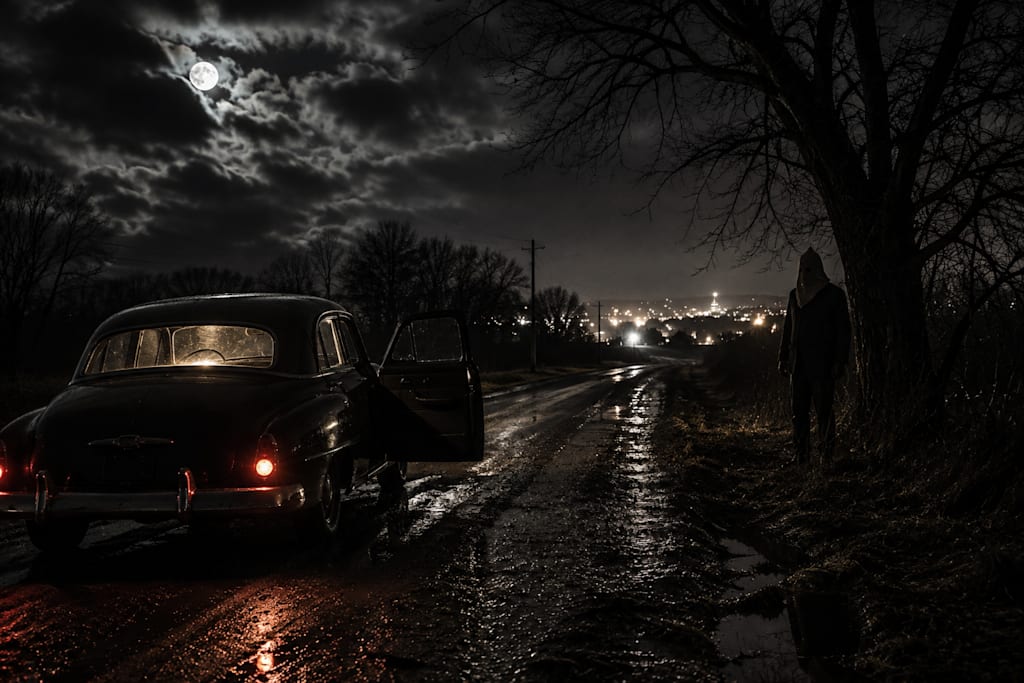
As evening settled over Texarkana in the spring of 1946, something unusual began happening: people went home, not eventually, not after dinner, not when the bars closed, or the movie theaters emptied. They went home because darkness itself had become frightening. Doors were locked, curtains were drawn, families checked windows that had never concerned them before, guns appeared beside beds, and police cruisers prowled roads that only months earlier had been favorite destinations for young couples seeking privacy. Somewhere beyond those locked doors, people believed a killer was waiting. No one knew his name. No one knew where he lived. Most terrifying of all, no one knew where he would appear next. The newspapers eventually gave him a name: The Phantom Killer. More than eighty years later, his identity remains uncertain.
The nightmare began shortly before midnight on February 22, 1946, when twenty-five-year-old Jimmy Hollis and nineteen-year-old Mary Jeanne Larey parked on a secluded road outside Texarkana after seeing a movie. It was an ordinary date until a flashlight appeared and a man approached the vehicle. According to the survivors, his face was concealed beneath what Larey described as a white covering resembling a pillowcase or sack with openings cut for the eyes and mouth. The stranger ordered the couple from the car. What followed was a brutal assault. Yet both survived: Hollis suffered serious injuries, and Larey managed to escape and eventually found help. Their description of the attacker immediately disturbed investigators. A masked man, a flashlight, a lonely road, and no obvious motive. At that moment, however, Texarkana had no reason to believe the attack represented the beginning of anything larger.
That changed one month later. On March 24, another young couple disappeared into the darkness. Richard Griffin and Polly Ann Moore were found dead near Griffin's automobile on a secluded road outside town. Now, detectives had two attacks involving young couples and automobiles occurring approximately one month apart. Coincidence was becoming harder to accept. Then came April 14…
Paul Martin, seventeen, and Betty Jo Booker, fifteen, had spent the evening at a local social event where Booker played saxophone with a band, and Martin arrived to pick her up afterward. Neither made it home. Martin's body was discovered first; Booker's was found later, some distance away. Texarkana understood that there was someone out there, and suddenly the night belonged to him.
The press began calling the unknown attacker the Phantom Killer, and the name spread rapidly. It was perfect newspaper language, but it was also psychologically devastating. A murderer is a human being; a phantom is something you cannot see coming. Reports of the earlier survivor's description added another layer of terror. The image of a faceless attacker concealed beneath a crude hood became inseparable from the case, although descriptions and details surrounding the attacks varied and later retellings would inevitably sharpen the mythology. The reality needed little assistance.
Young couples stopped visiting secluded roads. Parents demanded that children return home early. Residents who had rarely thought about personal security suddenly fortified their houses. Firearms and ammunition reportedly became highly sought-after as frightened citizens armed themselves. Businesses that depended on nighttime customers suffered. Texarkana had not merely become the site of a murder investigation; it had become a city waiting for another attack.
Police responded accordingly. Local officers joined forces with county authorities and investigators from both Texas and Arkansas. Texas Rangers became involved. Roads were watched, suspicious strangers were questioned, and officers patrolled isolated areas hoping the killer might return. Some investigators reportedly disguised themselves as courting couples and parked in locations resembling those previously targeted. Imagine that assignment: sitting in a dark automobile on an empty road, knowing that somewhere in the surrounding countryside might be a man who had already attacked three couples. Every snapping branch would sound different. Every approaching set of headlights would matter. Every shadow would deserve another look. But the Phantom remained invisible.
Then, on May 3, the nightmare changed. Virgil Starks was sitting inside his farmhouse northeast of Texarkana when gunfire suddenly erupted through a window, and Starks was killed. His wife, Katie, was attacked moments later. Wounded, she managed to escape the house and seek help from neighbors. She survived.
For residents already terrified by the earlier attacks, the implications were horrifying. Until then, people could construct rules for themselves: don’t park on lonely roads, don’t remain outside after dark, don’t sit in secluded automobiles, stay home, lock the door and you’ll be safe. The Starks attack shattered that illusion. Now someone had been attacked inside his own home. The boundary between the dangerous outside world and the supposed safety of the living room had disappeared.
Fear intensified. Nightfall became something to prepare for. Police received reports of suspicious noises, prowlers, strange vehicles, and imagined intruders; some were undoubtedly products of frightened minds, but others demanded investigation. That is what widespread fear does: it changes the way people hear things. A branch scraping a window is no longer a branch. A dog barking at midnight is no longer simply a dog. A stranger walking down the road is no longer merely someone going home. Every ordinary sound acquires another possible meaning. And somewhere within that atmosphere, investigators desperately searched for a human being.
There were suspects. The most famous was Youell Swinney, a career criminal whose name became closely associated with the investigation. Authorities considered Swinney a serious possibility, particularly after statements attributed to his wife appeared to implicate him. But the situation quickly became complicated... her accounts reportedly changed, and she ultimately would not provide the testimony prosecutors would have needed to build a murder case against her husband. Swinney was never convicted of the Phantom killings; he later went to prison for other crimes. For some investigators, he remained the strongest suspect; for others, the evidence simply never crossed the enormous distance between suspicion and proof. That distinction matters. History has a habit of turning suspects into killers once enough decades have passed, but suspicion is not conviction. No court ever established that Youell Swinney was the Phantom Killer.
Other names and theories surfaced as well, but none produced the answer Texarkana desperately wanted. Then something almost as disturbing as the attacks themselves happened: they stopped. There was no dramatic arrest, no shootout, no body discovered with evidence tying it to the murders, and no confession that conclusively solved the case. The Phantom simply disappeared.
Perhaps the killer left the area, perhaps he died, perhaps he was imprisoned for an unrelated crime, perhaps investigators had already questioned him without realizing who stood before them, perhaps Swinney really was responsible, or perhaps the truth lies somewhere else entirely.
Texarkana never received certainty. What it received instead was memory. Thirty years later, those memories helped inspire the 1976 film The Town That Dreaded Sundown, transforming the Phantom Killer into something larger than a regional criminal mystery. The movie introduced generations of viewers to the hooded murderer of Texarkana. But movies simplify, dramatize, combine events, and create images powerful enough to replace history in the public imagination. The real story is more unsettling precisely because it lacks a screenplay's conclusion. There was no final scene in which the mask came off, no detective explained everything, no audience discovered the killer's name before the credits rolled. There were simply frightened people waiting for darkness and police officers searching for someone they could not find.
In that respect, the Phantom Killer foreshadowed another American nightmare that would emerge two decades later. The Zodiac Killer would also target young couples, generate enormous public fear, frustrate investigators, and ultimately disappear behind an identity that remains disputed to this day. There is no evidence connecting the cases, but the resemblance is difficult to ignore. Long before California learned to fear a killer without a face, Texarkana already knew what that felt like.
Today, the twin cities straddling the Texas-Arkansas border bear little resemblance to the frightened community of 1946. Cars still travel the highways after midnight, couples still go on dates, and families sleep without wondering whether the stranger everyone fears might be outside the window. The Phantom is history now, but imagine Texarkana during those weeks. Imagine watching the afternoon sun sink toward the horizon, the temperature cooling, streetlights flickering on, stores beginning to empty, a police cruiser rolling slowly past, someone checking the front door, someone else loading a shotgun, somewhere, a mother calls her children inside. And across an entire community, thousands of people quietly wonder the same thing: Who is he? Where does he live? What does he look like beneath the hood? And above all, where is he tonight?
Morning would eventually come. The doors would open. Texarkana would breathe again. But every evening brought another sunset. And for one terrifying season in 1946, darkness along the Texas-Arkansas border meant something it had never meant before. Somewhere beyond the porch lights might be a man without a name. A man the police could not catch, a man history would remember only as a shadow. The Phantom Killer disappeared decades ago. The fear he created never entirely did. And somewhere behind the Veil of Shadows, one question remains unanswered: Who was the man beneath the hood?
About the Creator
Veil of Shadows
Ghost towns, lost agents, unsolved vanishings, and whispers from the dark. New anomalies every Monday and Friday. The veil is thinner than you think....
Enjoyed the story? Support the Creator.
Subscribe for free to receive all their stories in your feed.
Comments
There are no comments for this story
Be the first to respond and start the conversation.