
The Lost One
The truest love at the mightiest cost

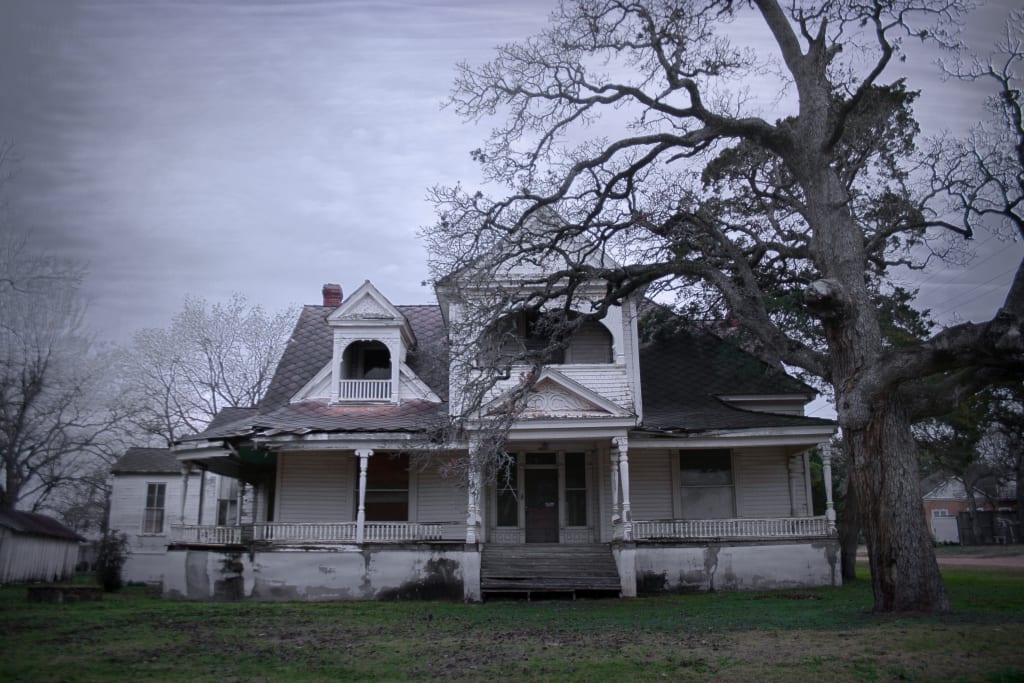
They lived on the corner, facing the road which led onto the freeway. It was, in my opinion, the most perfectly placed house in the neighborhood; the ice cream truck would only stop in front of their mailbox, forcing the rest of the kids to scramble breathlessly from their own porches to reach it. Behind the house was exposed and bare; the earth grew soft and boggy the farther you ventured, until it sloped down to marshland and the brown, bubbling Elmswere Creek. The thick redwood trees thrusting up from the ground on one side constantly shrouded it in darkness, their impenetrable leaves forming a canopy over the roof.
Despite its enviable location, the building itself hadn’t been desirable to any potential buyers. The third ‘For Sale’ sign that had been erected out front now lay in the dirt, half-heartedly chewed by a dog or fox. It wasn’t hard to see why the Heminglys had never shifted from town, since they arrived abruptly when I was about seven years old. The house was so covered in dirt and grime it was almost black. Three huge windows jutted from the pitched roof like spikes—so many angles, so sharp and forbidding. The remnants of dead birds and spiders’ long forgotten homes clung to the eaves and rafters. The curtains were forever drawn, throughout the day and night.
Nora Hemingly was my best friend. I spent most of my waking moments with her. Her fingernails were never without grime; dirt fused around the skin she would bite at as we trailed sticks through the mud on her yard, pretending it was sand and we were at a beach. Her clothes smelt like cat urine, and her ears were always full of wax. My own ears pricked up when I heard my mother talk about Mrs. Hemingly—when, if ever, we saw her venture from the house. Mrs. Hemingly didn’t tend to socialize with the other mothers—she did her socializing with other men. Not that I could see anything wrong with that. There was no Mr. Hemingly, not since I could remember, and Nora was adopted.
Until the morning of my eleventh birthday, despite our endless adventures around the bleak house, I’d never been inside it. It wasn’t as if I’d never hinted for a tour—on the contrary, I asked almost every day. Mrs. Hemingly was also a source of intense fascination for me. I had seen her from afar, clattering down the uneven, groaning porch steps to her beat up old Sedan. A flash of scarlet nails, so different from her daughter’s, and ebony hair, too long and wild for her age. She always seemed to be rushing, not quite put together, and always, without fail, grasped a leather notebook, as if it was her most prized possession. I asked Nora time and again to tell me about her mother, questions which were often met with sighs of frustration.
“Don’t know why you seem to think my mom pisses glitter,” she’d mutter in the summer when we were ten, crouching, frog-like, over fretting bees and bugs she’d trap under cups. Those long, bright days seemed to last forever, and I never thought they’d end. The day of my eleventh birthday, everything changed.
On August 11th, I ate a haphazard pile of pancakes dripping with golden syrup for breakfast, permitted my parents to serenade me with Happy Birthday, and eyed the beautifully wrapped present at the end of the kitchen table. Inside were a pair of brand-new sneakers I’d seen at the mall weeks before, with pink ribbon laces and tiny gems dotting the tongue. I was in love with them. But when Nora came bounding toward our porch steps at midday, I knew she would want to try them on, stick her dirty bare feet into my birthday shoes, twirl around and scuff the soles. Without a second thought, I ran upstairs and buried them in the back of my closet. Nora burst through our door as I returned to the hallway, proceeded to give me birthday bumps (which always exceeded the necessary dose), and complained about the lack of present while my mother slathered sun lotion on her nose.
“What did you get? Come onnn, let’s see!” Nora scanned the floor, the hallway table, and peered into the dining room.
“My present’s a secret,” I muttered, battling to not meet her incredulous gaze.
“A secret? Why’s it a secret? You have to tell me, I’m your favorite,” she whined. I squirmed in embarrassment, conjuring up an acceptable reply.
“Let’s go hang out in your yard to wait for the ice cream truck for now,” I stalled, pulling open the screen door and sprinting across the road to the Hemingly house. Nora was hot on my heels.
“Hey, you’re not getting off that easy!” she hollered. When I settled on a tree stump in the shade of the blazing sun, she sank down next to me, pouting.
“Ok, so if I have a better secret than yours, you have to show me your present,” she bartered.
“You haven’t got any secrets,” I said. It was true, at least to my knowledge. Nora told me everything.
“I sure do,” she said defiantly, “and it’s way, way better than whatever you got for your birthday.” This, I very much doubted.
“Go on then, tell me. I’ll trade you a secret.” Perhaps I could just offer her a pair of socks before she tried on my sneakers.
“You’ll have to come with me so I can show you. It’s in my attic.”
I gazed up at the ominous pitched roofs of the house, the filthy windows I’d never seen the inside of, and thought that this was the best birthday present ever. I tried to remain indifferent and nodded nonchalantly, before scrambling to my feet as Nora took off to the front door I’d only seen open from afar. As we climbed the porch steps, Mrs. Hemingly suddenly burst through it, in the same manic fashion as her daughter.
“Nora, got to dash. Don’t know when I’ll be back. Don’t break nothin’? Bones nor furniture. Fuck-fuck-fuck.”
I gulped at the sound of her curse words and a flash of heat ran up and down my back. If only my mother could hear . . . .
Moments later, the Sudan burst into life and screeched away from the kerb. Nora glanced at me wickedly.
“Last one up there is a rotten egg!”
*
I’d barely had time to drink in my surroundings before I was squashed into the dusty, suffocating loft-space at the top of the Hemingly house, ahead of Nora, who poked my butt up the ladder to quicken my pace. She peeled back the lid of a cardboard box and took a dramatic deep breath.
“Ta-daaa!” She pulled a doll from the box. Underneath it lay what seemed to be a photo album, satisfyingly sandwiched perfectly into the bottom square of the box. I lifted it out curiously.
“No, this is the secret! This doll is haunted. Weird stuff has been happening in the house for ages. Doors slam! And cups fly off the counters! How cool is it? Look!” But I was transfixed by the album. Something drew me to it. I opened the first page, which was filled with newspaper clippings. They were over seven years old and seemed to all relate to the same story. The headlines seemed to bellow in their thick, bold letters. ‘MISSING GIRL. PARENTS DISTRAUGHT. VANISHED WITHOUT A TRACE.’ I gazed at the photograph of the small child, smiling, holding a fistful of candyfloss. I was quiet for a long time, then my heart started to thump a little and my cheeks grew hot.
“What’s it say?” Nora asked, grasping the edge of the book. “Read it to me. Anything juicy?”
Nora didn’t know how to read. I’d always put this down to Mrs. Hemingly being a lousy home-tutor and could never figure out why Nora couldn’t just come to school with the rest of the kids in the neighborhood. I’d never really paid too much attention to this until now.
“I . . . I gotta go,” I muttered, shutting the album and dropping it back into the box. It didn’t sit snugly like it had when I removed it.
“What’s up? Tell me what it said!” Nora moaned, but my legs were already halfway down the stepladder. She yelled to me again as I ran for the stairs, focusing on the front door. When I reached it, I wrenched the knob; in doing so, I knocked Mrs. Hemingly’s black notebook from the window ledge. It landed with an echoing thud. This book spent more time with Mrs. Hemingly than her own kid did. Surely it contained something important? My hands quivering, I opened delicately, as if it would crumble to ash through my fingers. The ribbon bookmark lay at a page almost destroyed by angry scribbles.
N 10,000 X
ANON D 15,000 X
20,000!!!
Nora was breathing down my neck in seconds. “Tell me what’s going on!” she whined. I furrowed my brow at the numbers on the page. My stomach felt like a surging ship. I shut the book and pulled the door wide open. Sunlight poured in and engulfed us.
“Nora. I need to go. I’ll see you later.” I ran across the porch and down the steps. The well-trekked route to my house, across the road and four doors down, felt like an eternity of a journey. I barely heard Nora’s calls in my wake, and the familiar sight of my mother standing at the kitchen counter forced a sob from my lips.
“MOM!”
*
The phone rang so often in the following weeks that the silence in between calls felt eerie and unnatural. Mom had run out of vases for the steady procession of bouquets which were delivered every other day, from relieved family members and hungry journalists. Mom gently encouraged me to call the strangers to thank them for the flowers. But I felt numb. I just wanted my friend back. I wanted Nora back.
I was told I’d done a brave thing. The right thing. I’d reunited a family who had almost given up hope. TV stations reported on nothing else. I was hounded at school. It had been seven years since Nora went missing from her front yard, and now she was back where she belonged. But I had lost my best friend. She wasn’t from my town, my city, or even my state. I hadn’t seen her since. When we called her parents, they cried and cried until I could stand it no longer. I asked to speak to her, but they said she was ‘healing’. I pleaded for a call back. The call never came.
A tall, imposing, well-dressed man knocked on our door on Day 23. My mom ushered him in, fussed with the coffee table, and offered tea, cake, and apologies for the mess. I floated in the shadow of the doorway as he unpacked his briefcase and delicately pinched the sides of a document. My mom rushed back in and sank onto the sofa to his left. Without looking up, he murmured, “Your daughter is welcome to join us. This does concern her, after all.”
I slid into the room and nestled next to Mom, clinging to her arm. The man looked up at us, grinned warmly and widely, and proceeded to say that a cheque for $20,000 had been made out to me, the reward money that Mrs. Hemingly hoped to claim as her own, and it was to be deposited into a savings account set up in my name as soon as my mother was able. She let out a croaked gasp, her wild eyes swivelled toward me. I stared blankly back at the stranger.
“I don’t want it,” I whispered. “I want Nora instead.”
About the Creator
Alexandra Chapman
Children's book editor. Aspiring writer ever since I was climbing trees. Challenging myself to be a genre adventurer!
Enjoyed the story? Support the Creator.
Subscribe for free to receive all their stories in your feed.
Comments
There are no comments for this story
Be the first to respond and start the conversation.