
The Legend of the Nachzehrer
The legend of the Nachzehrer is more than just a horror story. It is a mirror of the spirit of plague‑stricken ages — when humans faced deaths that no one could explain.

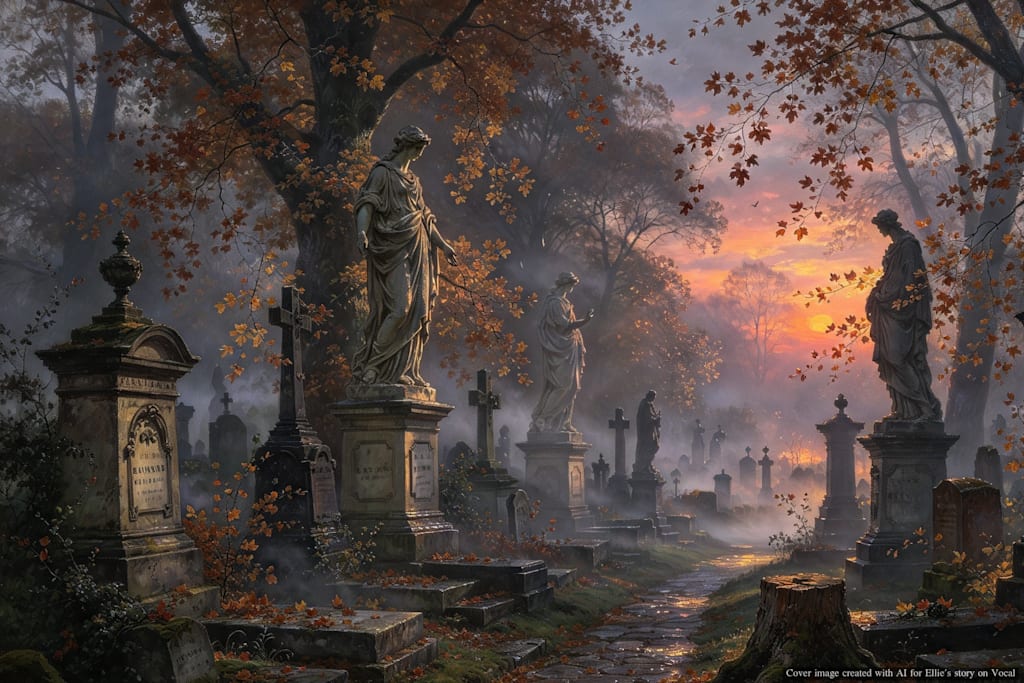
When we speak of German folk undead, many picture vampires rising from graves to hunt and drain the living of their blood. But the Nachzehrer is nothing like that. It is an ancient belief steeped deep in the terror of communities ravaged by plague — a time when no one could understand why people who had been strong only the day before kept falling dead, one after another.
First, we must understand its name. Nachzehrer derives from old German roots: nach, meaning “after” or “following,” and zehren, meaning to consume, devour, or waste away. Folklore scholars interpret this as “that which devours afterward” or “that which consumes the lives of those left behind.” It is not a pretty name invented for storytelling; it was born from the observation that once one person died, others followed as though being eaten away completely.
According to folk belief, a Nachzehrer forms when someone dies suddenly or perishes during a plague. The old folk thought such deaths left the soul incompletely released. The corpse found no peace, remaining bound to this world by endless hunger and rage — torn from life too quickly, denied full absolution, denied passage into the afterlife.
What sets the Nachzehrer apart from other undead is that it does not rise from the coffin to wander the village. It stays beneath the ground, still inside the coffin — yet within that closed space, the corpse begins chewing. First it chews its own shroud, then its own flesh. Folk tradition says that although the living above may not clearly hear it, that chewing sound becomes a curse spreading outward: a signal of death calling others to follow.
This is the key point to repeat: according to the legend, the corpse does not regain conscious will or plot maliciously. It is a force of hunger radiating outward. As it chews itself away underground, it seems to draw the living down after it — a continuing death, a chain of ruin beginning beneath the earth.
In those times, when plague swept through villages, people understood nothing of germs, contagion, or how exhaustion, famine, dampness, and overcrowding weakened bodies. They saw only the reality before their eyes: one dies, then close relatives die, then neighbours follow — until once‑lively villages fall silent, swallowed by fear.
So they interpreted it this way: something beneath the soil was pulling them down — the Nachzehrer chewing itself inside its coffin, sending its curse outward. Family members were the first affected, then the rest of the village one by one. It was not an obvious attack; it crept into life like darkness slowly settling over everything.
German folk records tell how people began suspecting after a burial: soon afterward, relatives fell ill — fever, vomiting, utter exhaustion leading to death. Instead of understanding this simply as spreading disease, they believed the corpse had become a Nachzehrer: chewing itself underground and dragging their lives after it.
This deepened their terror, for if it truly lay beneath the ground, it was near them — beneath the village soil, beneath the graves they had respectfully tended. The sanctity of burial turned into horror; what should have been rest became the birthplace of a curse.
Again, it must be stressed: this is folklore, not historical proof that such a creature actually existed. Yet it reflects the ancient human mind struggling to explain the cruelty of death — when lives are suddenly torn away, families destroyed one by one, villages silenced. They created this belief to answer the terrible question: why is this happening?
As fear spread across the village after one family after another fell dead, ancient villagers sought ways to identify and stop what they believed was a curse draining their lives away. According to folk records from northern and central German regions, the legend held that so long as the Nachzehrer continued chewing inside its coffin, death would keep claiming one after another. This was not a walking creature attacking openly; it was a wave of ruin rising from beneath the earth — carried by the sound of chewing, driven by an endless hunger.
The legend says villagers first had to discover which corpse had become a Nachzehrer, for not every plague victim turned into one. Only those who died suddenly, their souls never fully released, were thought to become bound to this fate. The sign they watched for was the pattern of deaths: when close relatives died rapidly in sequence, they suspected one corpse below ground was already chewing away.
Folk accounts continue that once suspicion fell on a grave, villagers would open it — an act filled with dread and guilt, for disturbing the dead was considered sacrilege. Yet terror of losing those still left alive pushed them forward. They expected to find proof: the corpse chewing its shroud or gnawing its own flesh. In reality, what the ancients interpreted this way may simply have been natural decomposition or post‑mortem movement they lacked the knowledge to explain.
Once they believed they had found the Nachzehrer, they turned to rituals meant to end the chewing and halt the curse. Folk tradition records several methods: placing obstacles near the corpse’s mouth so it could not chew further; cutting parts of the body; or burning the remains to destroy the source of that consuming force. They believed that once the chewing stopped, the curse would end — not because they thought the corpse possessed fully conscious malice, but because they sought to sever the current of hunger dragging others down after it.
Crucially, the Nachzehrer should not be confused with the vampires of novels and films. Modern vampires are often depicted as walking undead who hunt for blood with deliberate evil intent. The Nachzehrer of folk legend remains trapped beneath the ground — a consuming force born of an unfinished death. It symbolises the fear that death does not truly end at the grave, but may still reach those left behind.
As science advanced in later centuries, people began to understand plague, contagion, and decomposition far better. The legend came to be seen more clearly as a reflection of the ancient mind: people living amid overwhelming uncertainty, not knowing who would fall next or whether their family would survive. They created this belief to give meaningless death a shape, an origin, and something to fight — even if that “battle” was only ritual.
And so the Nachzehrer legend was preserved through folk tales, old scholarly writings, and oral tradition. Though few today truly believe corpses chew themselves underground and send curses spreading plague, the legend still matters. It shows how humans facing incomprehensible ruin build stories to create the sense that they understand — that there is something to resist, and meaning behind loss.
Thus the Nachzehrer is far more than just a ghost story for thrills. It is a record of ancient communal terror, a mirror of suffering during plague times, and proof that European undead folklore was never one single thing. While modern vampires became symbols of desire and deliberate evil, the Nachzehrer remains quiet yet deeply frightening — something below ground that never walks out, yet keeps chewing, and keeps calling others down until nothing remains.
That is why the legend survives to this day. It touches the primal fear that death may not truly be an end — that when one falls, others may follow as though dragged beneath the soil; and that even the grave, meant to be a place of rest, may become the very source of ruin.
About the Creator
Ellie
I do not merely tell stories… but invite you to step into a world of feelings — a small realm filled with memories, imagination, and secrets.
[ My words are mine, not a robot’s! ]
_______________
IG: @Ellie.15111
Enjoyed the story? Support the Creator.
Subscribe for free to receive all their stories in your feed. You could also become a paid subscriber, letting them know you appreciate their work.
Comments
There are no comments for this story
Be the first to respond and start the conversation.