

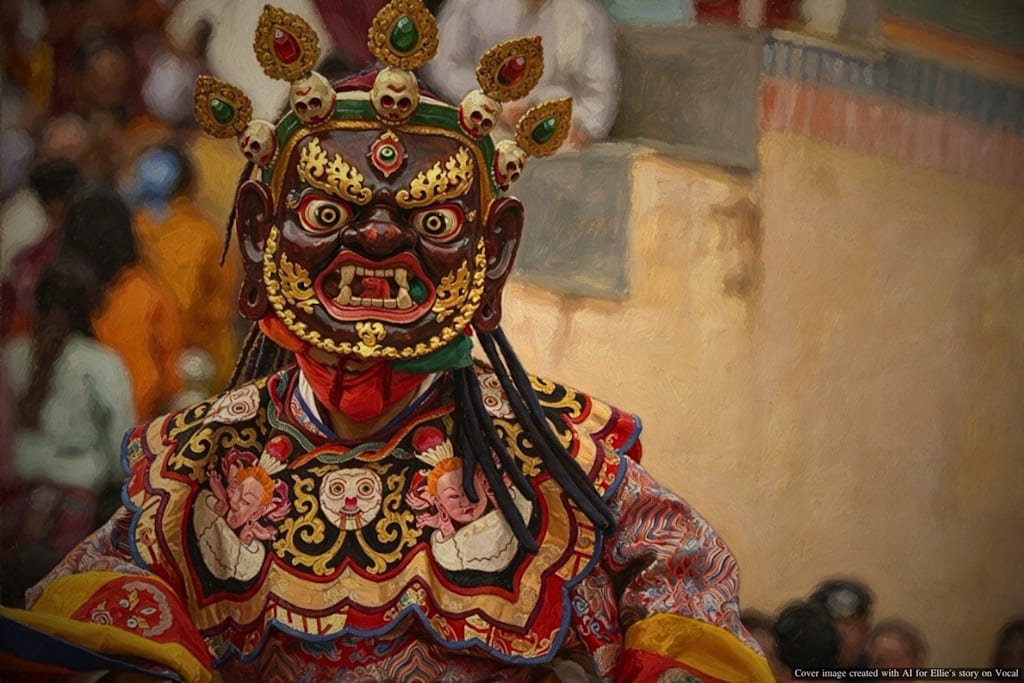
The Land of the Thunder Dragon and Shadows on High Peaks
When we speak of the Kingdom of Bhutan, a mystical realm hidden within the embrace of the Himalayas, the first images that come to mind are emerald valleys wrapped in thick mist, sacred monasteries perched on sheer cliffs, and the serene calm of a land often celebrated for its happiness.
Yet beneath the quiet sweep of mountain winds and the distant murmur of prayer chants along the slopes, Bhutan preserves ancient, formidable spiritual truths rooted in Vajrayana Buddhism. The Bhutanese believe that the valleys and deep forests are not inhabited solely by humans and wild beasts; they are also domains of fierce deities, ancestral spirits, and dark entities lurking within the shadows of drifting clouds.
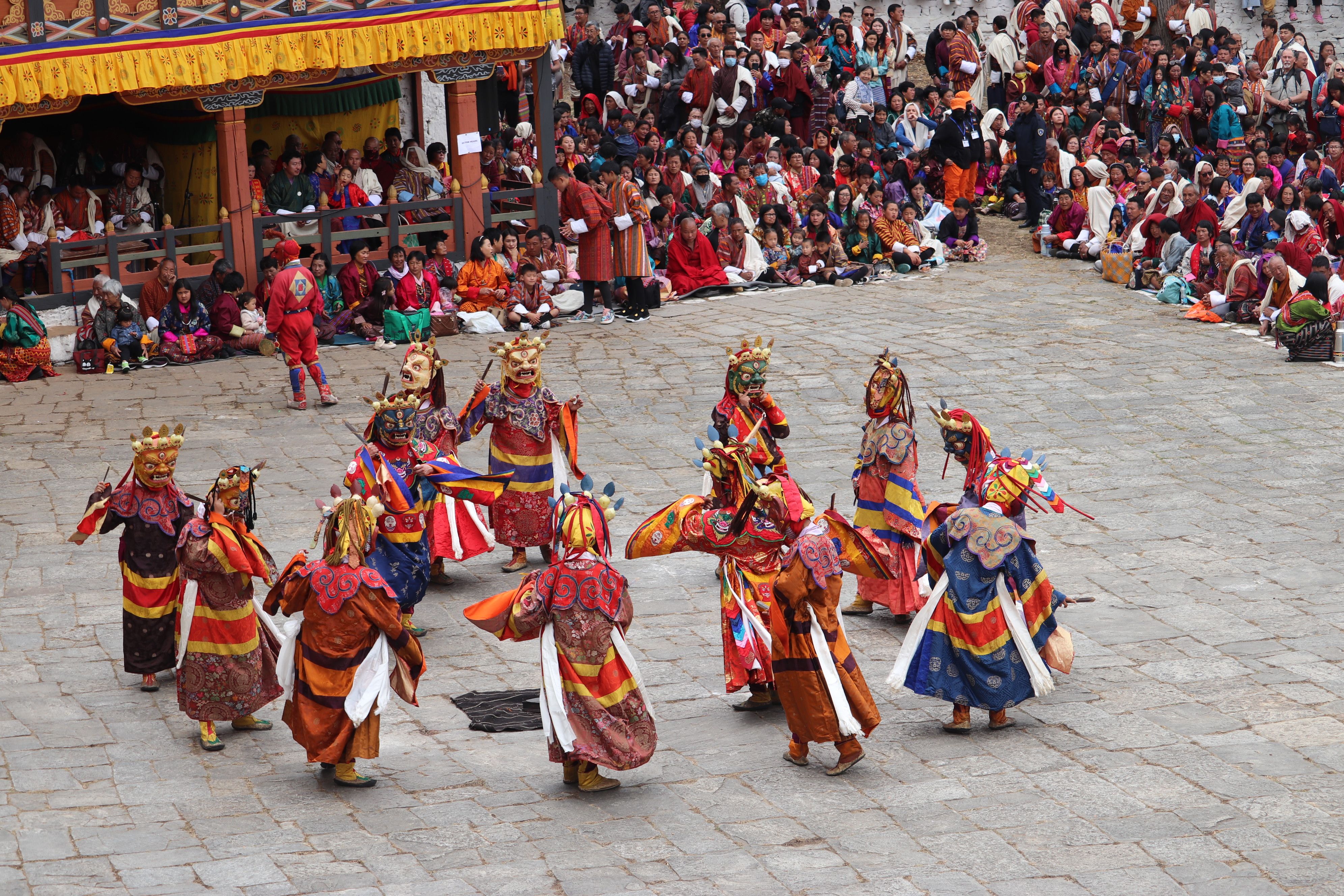
Once a year, when major religious festivals known as Tshechu arrive, the courtyards of ancient fortresses and monasteries transform into stages for solemn, spine-chilling rituals.
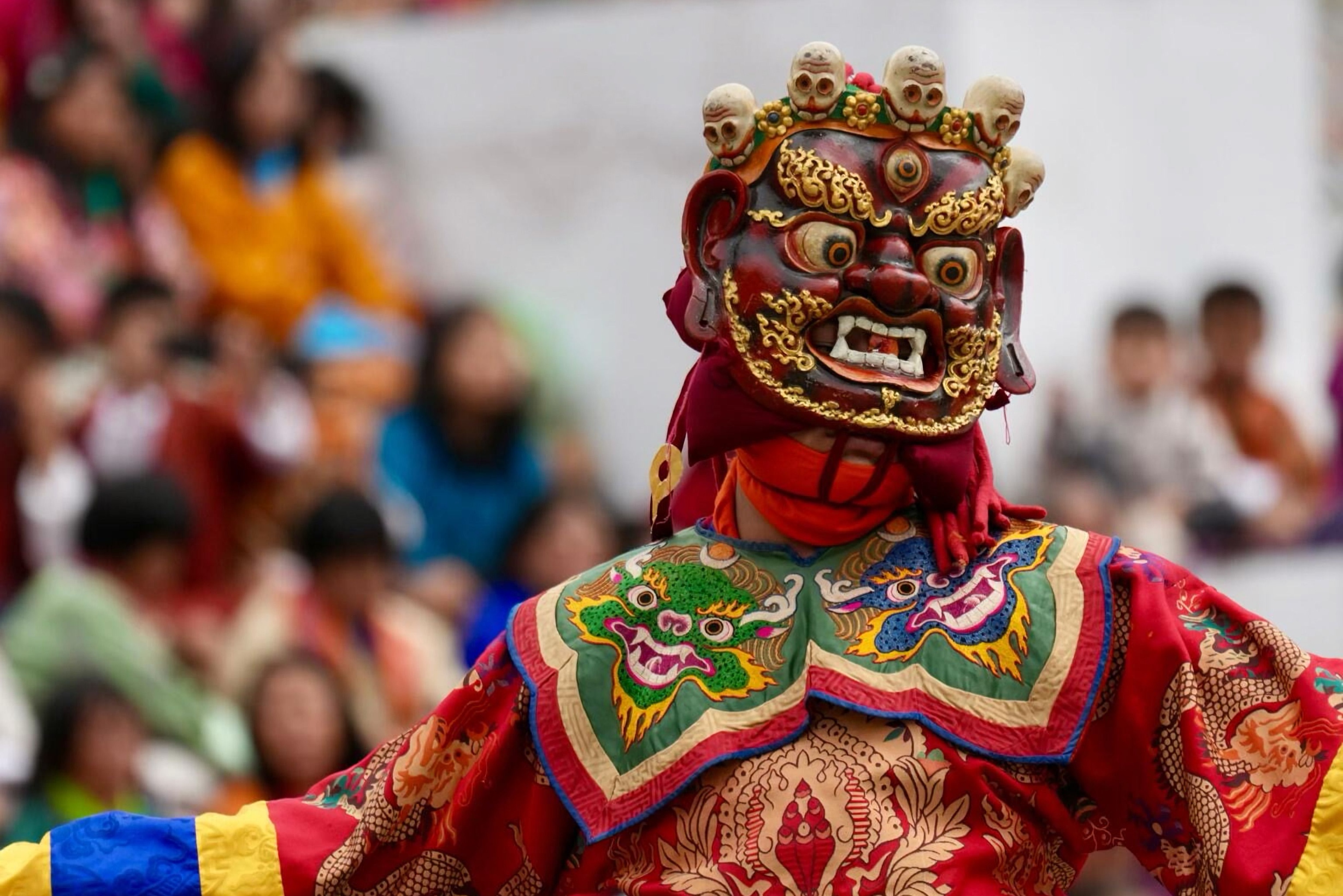
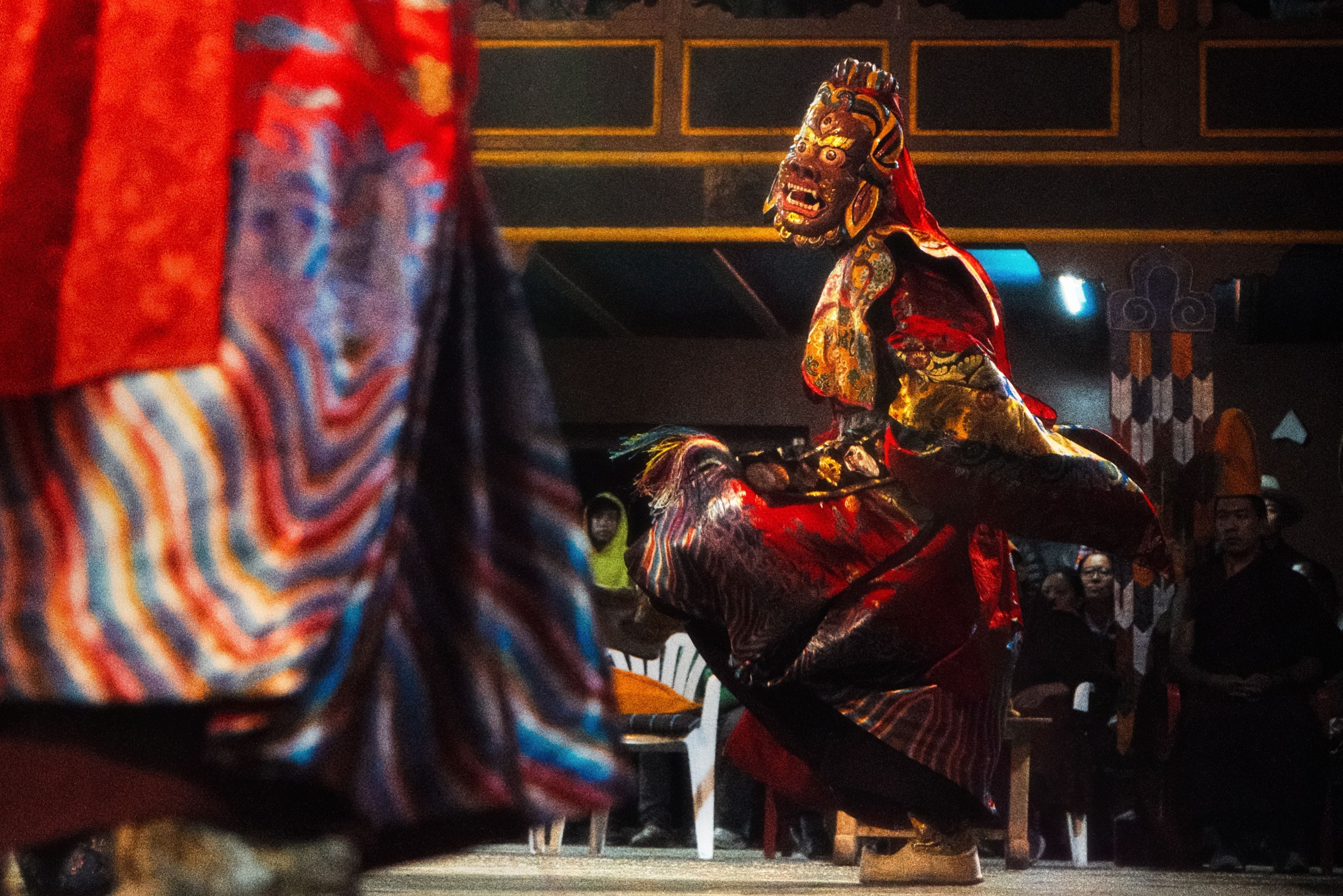
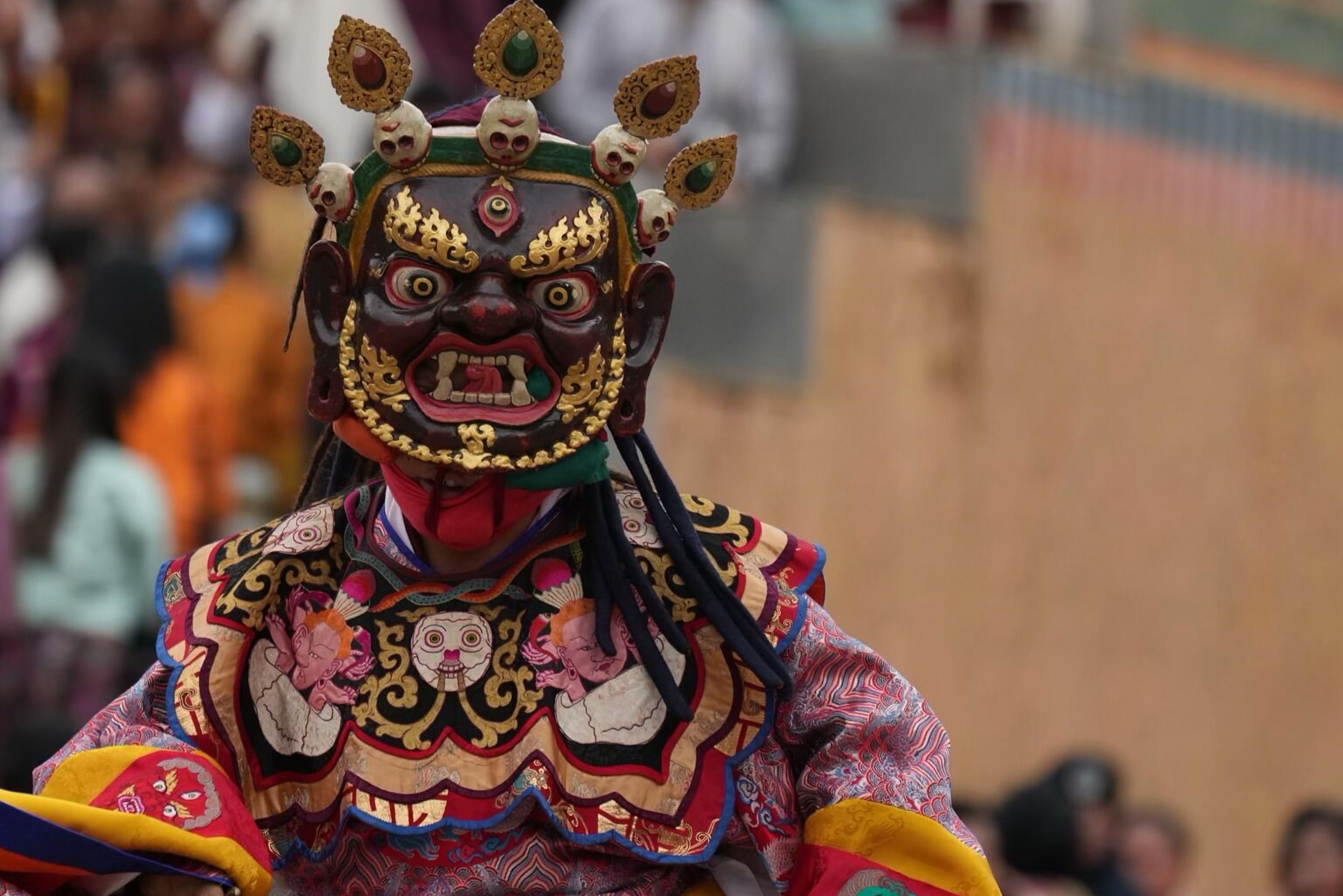
It is a time when monks and lamas don colorful silk robes and oversized carved wooden masks—twisted, fierce, and terrifying—dancing to the resonance of long horns and booming drums that echo across the entire valley.
This ritual is known as the Cham Dance.
To travelers from afar, the Cham Dance may look like an ornate cultural spectacle. Yet to Bhutanese raised on local folklore, it is far more than entertainment—it is a ritual of spirit binding and demon banishment that tests the sanity of those who wear the masks and hides a chilling question inside dark monastery rooms: What happens if the spiritual forces summoned into the wooden masks refuse to return above? And what unfolds when an ordinary mortal slips on a forbidden mask without purifying the mind?
When Compassion Wears the Mask of a Demon
To grasp the essence and dread of the Cham Dance, one must step into the esoteric philosophy of Himalayan Vajrayana Buddhism.
In Bhutanese belief, Dharmapalas—wrathful protector deities—do not always appear with gentle smiles. On the contrary, when confronting malice, ignorance, craving, and vengeful spirits embedded in the human world, gentleness alone cannot subdue the dark.
Therefore, protector deities manifest in forms "fiercer and more terrifying than demons," using dread to conquer dread and fierce energy to shatter negative forces completely.
The Cham Dance traces its origins back to the eighth century and Guru Rinpoche, who brought Buddhism to the Himalayas. According to legend, the land was once overrun by malevolent spirits and demons obstructing temples and spreading plagues. The guru devised sacred dance movements to subdue the demons, bind them to their vows, and turn them into guardians.
In the eyes of ordinary mortals, however, the masks used in these rites look unmistakably like faces from the underworld.
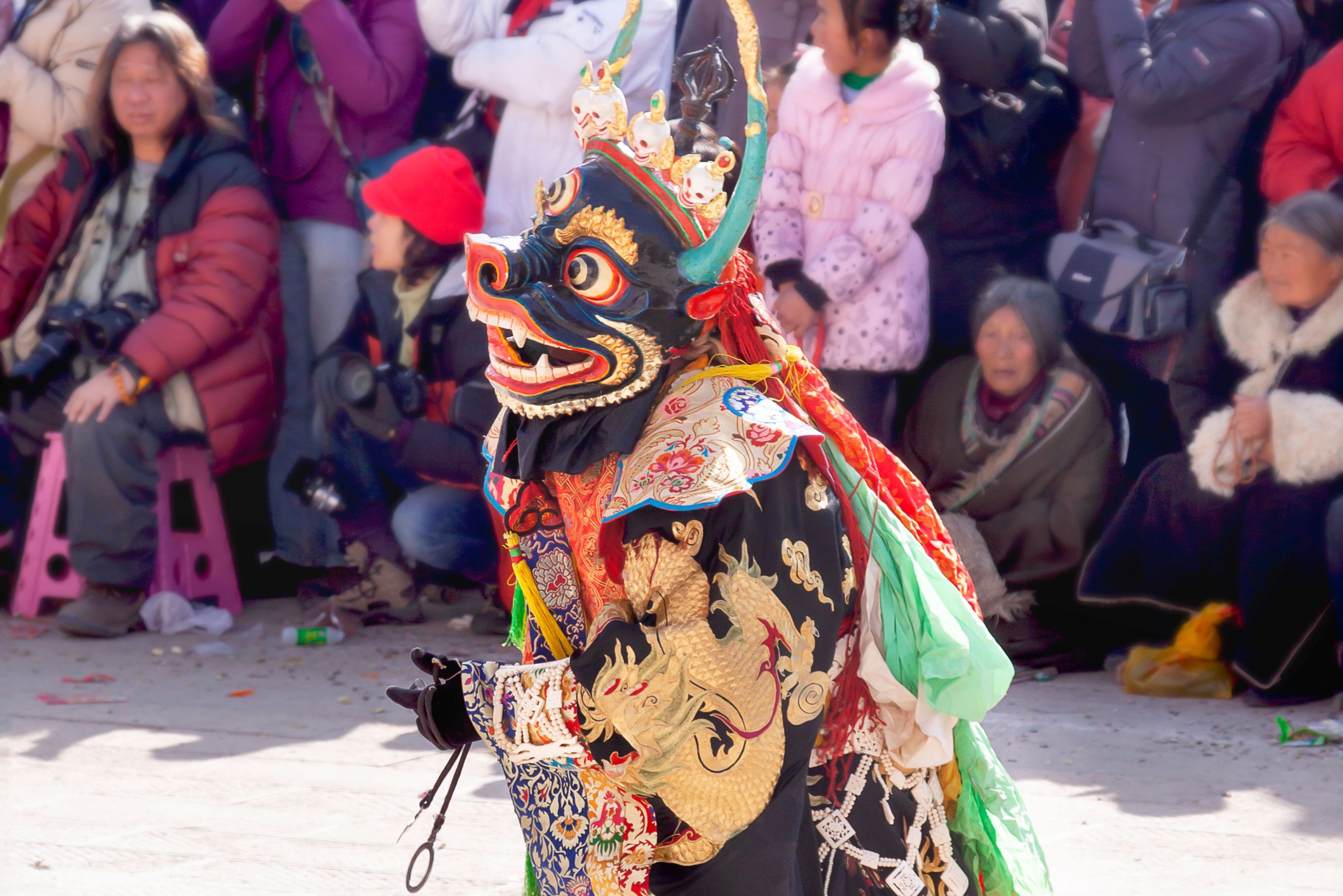
There is the mask of Shinje, the lord of death, bearing the dark head of a wild bull, eyes wide with wrath, and a crown of human skulls. There is Durdag, lord of the cemetery, a pale skeletal visage grinning wide in a stark reminder of mortality. And there are masks of hellish attendants with protruding fangs and crimson tongues.
When a lama places one of these masks over the head, belief holds that they are no longer merely "acting out" a deity or demon; their body and spirit become a living vessel so sacred power and ancient forces may inhabit the form fully.
The Anatomy of Sacred Dread: Secrets of the Monastery Mask Room
Inside old monasteries clinging to steep Bhutanese cliffs lies a special chamber kept locked with heavy iron padlocks and dark cloth curtains year-round. This room stores ancient Cham Dance masks, some centuries old.
These masks are not made of plastic or modern composites. They are carefully carved from rare hardwoods such as Himalayan pine, or sculpted from clay mixed with handmade paper and silk, then lacquered, gilded, and painted with natural mineral pigments.
What sets these old masks apart from ordinary art, however, is consecration and accumulated power.
Over generations, each mask has been worn by lamas during deep meditation and rites of banishment. The Bhutanese believe the wood and clay absorb spiritual energy, incense smoke, mantras, and the friction of subdued spirits until saturated.
Elders and monastery caretakers keep strict rules regarding these masks in mind:
1. No one outside the ritual practitioners may enter the mask room alone, especially after nightfall.
2. Never set a mask face-down or leave it resting on the bare ground, as doing so disgraces the spiritual force dwelling within.
3. Never wear a mask playfully or without prior meditative purification of the mind.
A folk tale whispered in remote mountain villages speaks of the curse of a "thirsty mask." In an old monastery stood a single-eyed demon mask with an unnaturally warped grin. Rumor held that its carver in ages past had secretly mixed the ashes of a deceased practitioner into the clay used to shape the piece so it could bind unruly spirits with absolute force.
The result was a mask of astonishing potency—far stronger than an ordinary mind could govern.
Novice monks often whisper that on nights when snowstorms howl like human screams, anyone passing the mask room door may hear a faint wooden tap—knock... knock... knock...—from inside. And if they peer through a narrow crack in the timber door, the mineral-painted eyes on those ancient masks seem to stare straight toward the gap in silence.
The Cadence of the Underworld: When Horns Awaken Spirits
When the day of the ritual arrives, the stone courtyard of an ancient dzong fills with people arriving from across the valley. Morning air is cold enough that every breath turns to white vapor, while gray clouds and mist hang heavy over high peaks.
Suddenly, the Dungchen—massive brass horns stretching over three meters long—sound out.
The voice of the dungchen is no sweet melody; it is a low, vibrating rumble that shakes the spine, groaning like an underworld beast waking from slumber. Layered with giant cymbals and heavy leather drums beating a slow, deliberate pulse that quickens the heartbeat, the sound fills the gorge.
Amid swirling clouds of incense, heavy wooden monastery doors swing open—and the dancers in Cham masks step out.
Their movements are not light or graceful like ordinary dance. They step heavily, spinning in wide arcs until silk robes flare like flames, while the wide eyes of the wooden masks gaze across the crowd with an expression devoid of human warmth.
During the dance, the rite reaches its most chilling climax: the ritual handling of the Lingka.
A lingka is a small effigy shaped from barley dough and butter, formed like a bound human figure resting on a wooden tray at the center of the courtyard. In Vajrayana ritual, the lingka serves as a lure crafted to draw together and trap evil energies, illness, hatred, and vengeful spirits lingering in the community into a single form.
Dancers wearing demon and skeleton masks circle the lingka, growing more intense as drums and horns accelerate until tension stretches taut as a wire about to snap.
At last, the presiding lama steps forward with a Phurba, a three-sided ritual dagger. At the peak of the music, the blade drives straight into the lingka effigy to "execute" malice and release bound forces from the dark.
Shouts and horns ring out across the valley, signaling that the old year's evils have been vanquished—at least in the sight of the crowd.
The Wearer's Curse: When the Mask Refuses to Come Off
Yet the horror stories told in the shadows of Bhutan's valleys focus on what happens after the drums fall silent.
One chilling tale from a remote eastern village tells of a young monastery assistant named Dorji, who became obsessed with the power of ancient Cham masks. Rather than viewing them as sacred instruments, he saw them as a source of dominance over others.
On the night before a ritual, while the lamas meditated in the main hall, Dorji secretly unlocked the forbidden mask room. He passed dozens of guardian masks watching from wooden walls; in dim oil-lamp light, he reached into an inner wooden chest and lifted out the oldest Demon of the Dark mask hidden inside.
The moment his fingers touched the cold wood, a faint scent like rusted iron and damp earth brushed his nose. Without meditating, chanting, or preparing any spiritual protection, Dorji pulled the mask over his own face.
At first, everything was quiet save for his own breath echoing inside the narrow wooden hollow.
Then an icy chill, sharp as Himalayan snow, surged from the mask into his eyes and sank deep into his mind. Through the narrow eye slits, he no longer saw a dark storage room, but scores of black shadows spinning and shrieking around him.
Dorji raised his hands to pull the mask off—only to find the wooden rim clamping tight against his cheekbones and jaw as if fused into flesh.
His fingernails scratched the wood until blood trickled, yet the mask did not budge a fraction. Instead, his arms and legs began moving on their own beyond his control. His body twisted rigid, stepping out in heavy, distorted strides—the fierce, wrathful rhythm of the Cham dance pushed past any ordinary human limit.
At dawn, when lamas opened the mask room door, Dorji was not inside. Following bloodstained footprints along the stone monastery paths, they found him spinning and dancing alone in the center of the stone courtyard amid thick fog.
He danced frantically with no music, no horns, and no audience. Exhaustion left him pale and trembling, yet his feet kept pounding the stone without rest, as if an unseen force worked a living marionette until his last breath gave out.
When an elder lama performed prayers and finally pried the mask free, everyone stepped back in revulsion: beneath the mask, Dorji's face was twisted, eyes wide open, with a grin stretched nearly to his ears—mirroring the Demon Mask down to the last line.
Epilogue: Eyes Watching from Behind the Wood
Today, the Cham Dance remains part of the living soul and heritage of Bhutan and the Himalayan highlands. Thousands still gather to watch the sacred dance, receive blessings from protector deities, and purify their minds.
Yet those who know the quiet secrets of these valleys understand that carved wooden masks are not mere lifeless objects. Whenever drums and horns thunder out, the threshold between the human world and the realm of spirits opens.
And when the ritual ends, when the sun sinks behind high peaks and leaves old monasteries to the dark and cold of night, the masks return once more to their dim room.
So if you ever journey to this land on the roof of the world, watch the Cham Dance with respect and reverence—and avoid locking eyes with those ancient masks too long.
You can never be certain whether the gaze watching back through narrow wooden slits belongs to a dancing monk—or to a wrathful spirit waiting for a new vessel.
About the Creator
Ellie
I do not merely tell stories… but invite you to step into a world of feelings — a small realm filled with memories, imagination, and secrets.
_______________
IG: @Ellie.15111
Enjoyed the story? Support the Creator.
Subscribe for free to receive all their stories in your feed. You could also become a paid subscriber or give them a one-off tip, letting them know you appreciate their work.
Comments
There are no comments for this story
Be the first to respond and start the conversation.