
The Legend of the Banshee: The Wailing Omen of Death – Ireland
Cries in the Mist, Ancient Bloodlines, and an Unavoidable Warning on the Emerald Isle

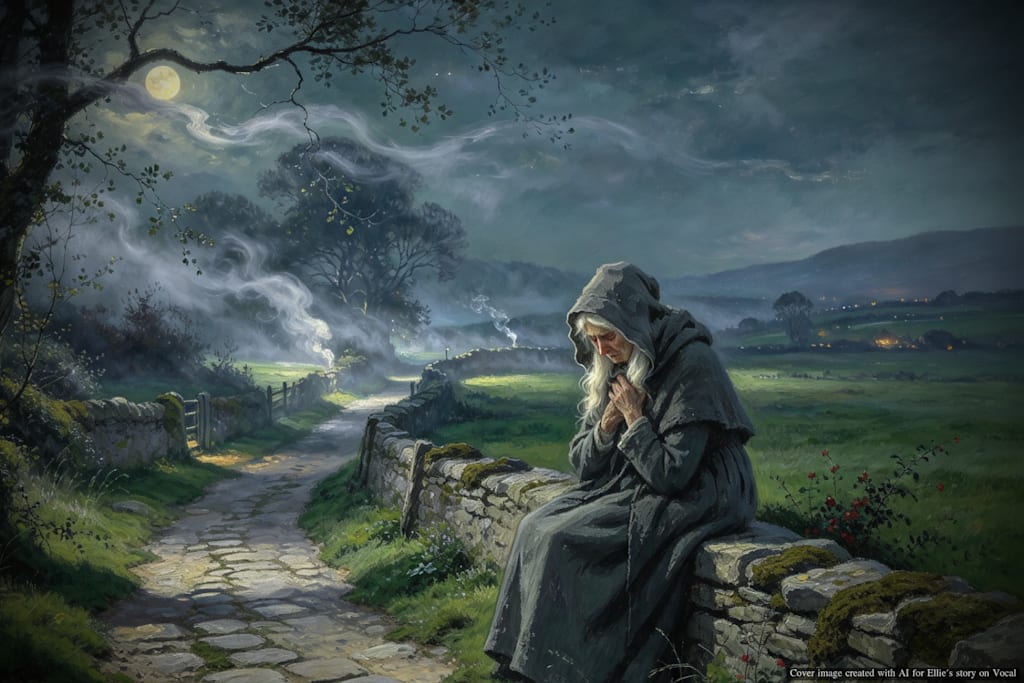
Introduction: When Night’s Silence Is Torn by a Wail
Across Western horror traditions, ghosts and monsters usually appear driven by a desire to hunt, harm, or steal human life. Yet on the island of Ireland—a land draped in green pastures, ancient stone hills, fierce Atlantic winds, and thick mist lingering over bogs and old graveyards—the legend that has taken deepest root for over a thousand years is not a tale of a bloodthirsty beast.
Instead, it is the weeping of a woman whose face may never be seen—a cry rising in the dark solely to announce that death has reached your doorstep.
In Old Irish, she is called Bean Sidhe (pronounced ban-shee), which later passed into English as Banshee. Bean means "woman," and Sidhe refers to the fairy mounds or the hidden underworld of Celtic lore. A banshee is neither a witch nor a zombie; she is literally "the woman of the fairy mound."
For generations in older Ireland, the banshee was never treated as a mere bedtime tale told to frighten children. She was an enduring belief bound tightly to family bloodlines, ancestral history, and mortality. Over the centuries, historical chronicles, noble family memoirs, and rural testimonies have recorded cold nights when silence was shattered by a piercing, unearthly wail—a sound unlike any human voice or animal cry—and whenever that wail faded into the dark, death followed.
________
Historical Roots: From Hired Mourners to Spectral Messengers
To understand why the banshee's cry held such profound power over the Irish imagination, it helps to look at a real mourning custom practiced across ancient Ireland and Scotland known as keening (caoineadh).
In centuries past, whenever someone died in a village, the family held a wake and hired older local women known as Bean Chaointe ("keening women") to weep and chant laments for the deceased. Letting their hair fall loose beneath shawls, these women knelt beside the coffin, rocked back and forth, and let out high, sorrowful wails interspersed with rhythmic clapping and poetic praise for the dead. Their voices carried far across hills and valleys, announcing the loss to the entire community.
Keening was a real, living pillar of Irish funeral culture. Even when church authorities later tried to discourage the practice as overly dramatic, the tradition persisted well into the nineteenth and early twentieth centuries.
In Irish folklore, the legend of the banshee fused seamlessly with this custom. People came to believe the banshee was a spectral mourner attached to a lineage—an ancestral woman watching over her descendants. Yet rather than weeping after a relative died, she wept in advance, signaling that death was already on its way.
Even more chillingly, folk belief held that a banshee's wail could be heard at home even when a family member died oceans away in England, America, or Australia. If relatives in Ireland heard her crying beneath their window at night, they braced themselves for a letter or telegram bearing dark news from abroad in the days or weeks ahead.
________
Bound by Blood: The Families Linked to the Wail
According to traditional Irish lore, the banshee does not appear for everyone on the island. She is said to follow only old Irish families tracing their lineage back to ancient Gaelic clans and nobility.
In particular, folklore associates her with surnames beginning with "O'" (meaning "grandson" or "descendant of") or "Mac" / "Mc" (meaning "son of"), such as O'Neill, O'Brien, O'Connor, O'Grady, MacCarthy, or Kavanagh.
Legend says that in ancient times, these great clans kept devoted seers or family mourners whose loyalty outlasted their mortal lives. Centuries later, long after ancestral castles crumbled into ivy-covered ruins, those spirits remained bound to their original vow: watching over every generation of that bloodline.
For certain prominent clans with turbulent, blood-soaked histories, tradition even claimed that a single banshee was not enough. When a chieftain or major figure neared death, multiple banshees were said to wail together across the night sky in a chorus signaling a great fall.
________
Shapes in the Dark: The Grey Hag, the Pale Maiden, and the Washer at the Ford
Although most people know the banshee through her terrifying voice, accounts from those who claimed to see her describe three distinct appearances, each carrying its own unsettling atmosphere:
1. The Hag in Grey
The most common form in rural folklore is that of a small, stooped old woman wrapped in a tattered grey or black hooded cloak. Her face is deeply lined and corpse-pale, framed by wild white hair, with eyes swollen and bloodshot from endless weeping. Witnesses described her peering through windowpanes or perched silently atop low stone walls along country lanes.
2. The Pale Maiden
In traditions tied to older noble houses, the banshee sometimes appears as a hauntingly beautiful young woman dressed in flowing white or pale green. Her silver or fiery red hair falls to her ankles, and she is seen combing it slowly with a silver comb in the moonlight while silent tears stream down her pale cheeks.
3. The Washer at the Ford
The darkest and most ominous manifestation connects Irish lore with wider Celtic tradition (known in Scotland as the Bean Nighe). Travelers crossing lonely streams or river fords at night might hear quiet splashing through the mist, only to find a woman kneeling in the freezing water washing garments and burial shrouds.
Approaching closer reveals the clothes soaked in fresh blood, turning the current crimson. Looking closely at the stitching or family crest on the garments delivers the final shock: they belong to the traveler—or someone dear to them at home—who will die within hours.
________
The Sound of Doom: When Hearing Touches the Unseen
Those who recorded hearing a banshee's cry insisted it could never be mistaken for wind or wildlife.
Irish tradition distinguishes several tones in her voice—from a soft sobbing like a draft slipping under a door, to a mournful humming drifting across fog, to a piercing shriek described as "a scream that cuts straight to the soul."
Nineteenth-century accounts report that when the cry rang out, village dogs would howl in terror or cower beneath beds, horses panicked in their stables, and human listeners felt an icy chill shoot down their spines accompanied by sudden, crushing dread.
What unsettled witnesses most was how the sound moved. Families inside stone cottages described the wailing circling the house—starting far out across dark fields, drawing closer to the gate, lingering beneath a sick person's bedroom window, rising toward the roof, and vanishing into the dark with three faint claps of hands.
Irish folklore also carried a strict warning about the banshee's comb. If you walked past a spot where she had been seen combing her hair and found a silver or bone comb lying on the ground, you were never to pick it up. Legend warned she would return at night to reclaim it—and if her icy hand slipped through a window to touch yours, it would leave a black mark and bring swift death.
________
Footprints in History: Recorded Accounts That Defy Easy Answers
What gives the banshee legend enduring weight is that mentions of death-heralding spirits appear not only in oral folklore, but also in historical chronicles and personal memoirs across centuries:
1. The Doom of King James I of Scotland (1437)
In February 1437, as King James I of Scotland traveled with his retinue toward Perth during dark, rainy weather near the Firth of Forth, an gaunt Irish woman stepped into his path.
Dressed in ragged grey garments, she cried out a stark warning: "If you cross this water, you shall never return again alive!" The king hesitated briefly before pressing onward. On the night of February 20, conspirators broke into his quarters and assassinated him with sixteen stab wounds. Scottish chronicles preserved the encounter as an appearance of a Celtic death-seer.
2. The Memoir of Lady Anne Fanshawe (1642)
One of the most famous written accounts in English comes from the Memoirs of Lady Anne Fanshawe, wife of an English diplomat, who stayed at an O'Brien family castle in Ireland in 1642.
Lady Fanshawe wrote that she awoke around midnight to a terrible, unearthly scream outside her upper-floor window. Pulling back the curtain in the moonlight, she saw a pale woman in white with long red hair hovering outside the glass, weeping bitterly before fading into the darkness.
When she recounted the sight the next morning, her host turned pale and informed her that an elderly relative of the O'Brien family had died inside the castle at two o'clock that very morning—the exact hour of the cry outside her window.
3. Wartime Letters and Twentieth-Century Memories
Even into the twentieth century, banshee accounts surfaced during times of upheaval. During World War I and World War II, numerous Irish families shared letters and testimonies claiming they heard a woman wailing outside their homes on the very night a son or husband fell on battlefields in France or Belgium—weeks before official military telegrams arrived.
________
Mysteries in the Wind: Nature or Something Beyond?
Modern naturalists, scientists, and psychologists have offered several physical explanations rooted in Ireland's landscape and wildlife:
• Barn Owls: Ireland is home to the barn owl, which does not hoot like typical owls but lets out a long, eerie, high-pitched screech at night. Paired with a pale, heart-shaped face and silent white wings gliding through mist, a barn owl could easily be mistaken for a spectral woman in white.
• Red Foxes: During nocturnal mating seasons, female red foxes produce a sharp, piercing scream that sounds startlingly like a woman crying out in distress across quiet countryside.
• Coastal and Valley Acoustics: Ireland's limestone cliffs, ruined towers, and narrow valleys funnel strong Atlantic winds through crevices and old chimneys, creating resonant, human-like moans and wails.
• The Psychology of Grief: When a loved one lies critically ill, families endure intense stress and anticipatory grief. Under such strain, the human mind readily interprets night winds or distant animal cries as mourning voices confirming its deepest fears.
Yet for generations across Ireland, rational explanations never erased the visceral shock of hearing that cry in the dark. To them, it was never merely wind against stone—it was a thread linking the living to their ancestors and an unalterable fate.
________
The Psychology of Dread: The Terror of Inevitable Death
Why does the legend of the banshee remain as psychologically haunting as any tale of vengeful ghosts or demons?
The answer lies in helplessness.
In most horror stories, confronting a spirit still leaves room to fight back—you can flee the house, call an exorcist, recite prayers, or burn a cursed object.
With the banshee, no ritual drives her away, and no distance lets you outrun her.
She bears no grudge against you, demands no bargain, and seeks no vengeance. She arrives solely to announce a verdict already sealed in the unseen world. Hearing her cry is like hearing the executioner's footsteps outside a locked cell: you know the door is about to open, yet you cannot bar it, hide from it, or alter what comes next.
Irish folk horror thrives not on gore or sudden violence, but on a slow, creeping chill—the heavy silence of a family gathered beside a peat fire, no one daring to speak as faint weeping drifts past the window in a rainstorm, each person quietly praying the cry is not meant for someone in that room.
________
Epilogue: Whispers Still Drifting Through the Mist
Even in modern Ireland, where city streets glow with electric lights and traffic, older memories endure in quiet western villages, the valleys of Connemara, and vine-draped castle ruins wrapped in sea mist.
People still treat the legend with quiet respect—not out of simple superstition, but from an enduring awareness that human life is fragile and ancestral ties run deeper than sight.
If you ever find yourself in the Irish countryside on a moonless night when cold wind sweeps across empty fields, and a high, sorrowful wail drifts out of the distance—
Do not throw open the window to look for its source, and do not follow the sound into the dark. She may not be calling for you—she may already be mourning someone setting out on their final journey before dawn.
About the Creator
Ellie
I do not merely tell stories… but invite you to step into a world of feelings — a small realm filled with memories, imagination, and secrets.
_______________
IG: @Ellie.15111
Enjoyed the story? Support the Creator.
Subscribe for free to receive all their stories in your feed. You could also become a paid subscriber or give them a one-off tip, letting them know you appreciate their work.
Comments
There are no comments for this story
Be the first to respond and start the conversation.