
The Legend of Melusine
Echoes from the stream, recalling a promise once broken.

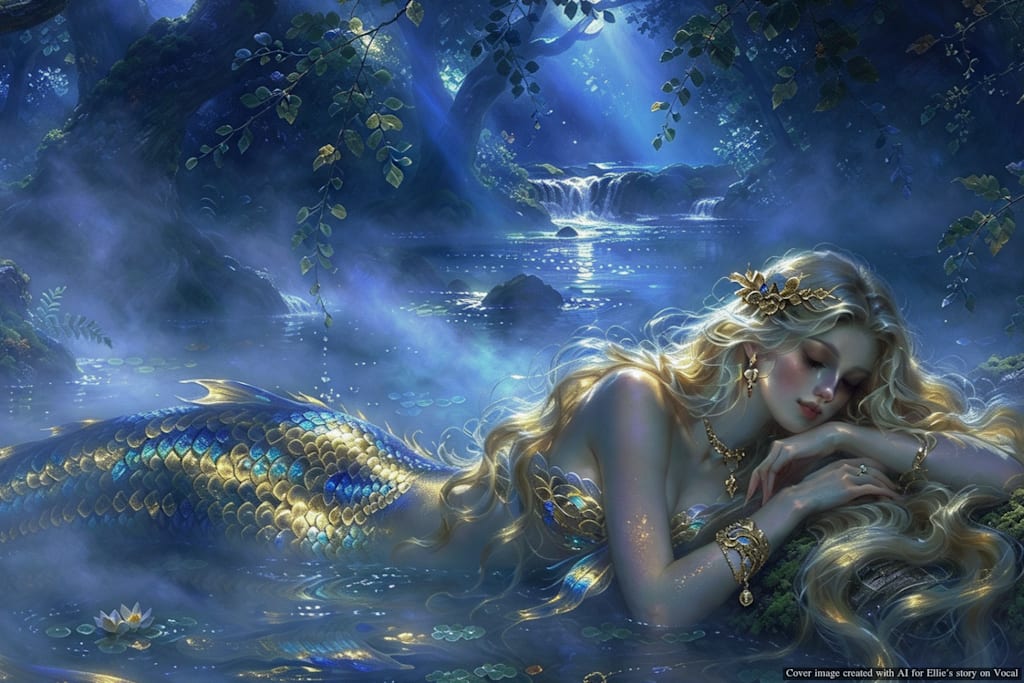
A thousand years ago, in Western Europe, where thick forests wrapped around clear streams flowing down toward great rivers, medieval people often told tales of a mysterious woman named Melusine. She was not the ocean‑going mermaid many know — she was a water‑being bound by a curse passed down from her mother.
The story began in an age when kingdoms were still divided. The earliest written legend, recorded by a French author in the 14th century, tells that Melusine’s mother was a water‑fairy named Pressine, who had married a human king called Elinas. But when the king broke the promise he had made to her, she was separated from her three daughters — and passed the terms of the curse on to Melusine, her eldest child.
The condition was strict: every Saturday, the medieval day of rest, Melusine would shift from a beautiful woman into a half‑human, half‑serpent form. She could live as a human for the rest of the week — yet no one was allowed to see her true shape. If this secret were revealed by someone she trusted, she would have to leave forever, never to return.
In the early years after she grew up, she chose to dwell beside a deep stream in a quiet forest, far from any village. Lost travellers might sometimes catch sight of a pale, flowing figure sitting by the water in the afternoon, or hear soft singing drifting along with the sound of running water — yet no one dared draw near, for rumour said this woman kept a great secret within herself.
Early story‑collectors also note that in the oldest beliefs, Melusine was not an evil‑powered being — she was one trapped by fate. She loved the peace of the woods and streams, and had special gifts to help crops grow strong and keep waters flowing well. Still, she could not erase the fear people felt toward her secret.
When the sun sank below the horizon and shadows began to cover the forest, elders from nearby villages would warn their children: if you pass the great stream in the woods, do not call out to the mysterious woman sitting on the bank — and do not spy on her on Saturdays, for those waters may hold tales that were never meant to be known.
No one knew how long Melusine had lived there — until one day, a young man lost his way in the forest and found her by that stream — the beginning of a story that would change her life for ever.
In an age when forests stretched far to the edge of the horizon, there lived a prince named Raymond, who had fled into the great woods while escaping enemies at his heels. He walked until he was weary and lost his way, until he reached a clear‑flowing stream in the soft afternoon sun. Looking toward the bank, he saw a beautiful woman sitting there — her light‑brown hair stirring in the wind, her white gown catching sunlight upon the water’s surface, her toes touching the current as she sat quietly. It was Melusine.
Raymond was struck by her beauty, yet also felt the quiet loneliness lingering around her. He stepped forward to greet her carefully, and Melusine turned to answer him in a soft, sweet voice. She eased his weariness, showed him the way to safety, and told him tales of the forest and the stream. As they spoke, Raymond fell quickly in love, and asked her to become his wife.
Melusine felt affection for the prince, yet she knew the terms of her curse. She agreed, but first set a most important promise: “I shall stay with you, help build your kingdom to prosperity, and give you children to carry on your line — yet you must swear one thing to me: every Saturday, you shall not enter my chamber, nor spy upon me, nor ask what I do that day. If you break this vow, our promise will be broken, and I shall have to leave and never return.”
Raymond gave his solemn word. They were married, and began an unexpectedly prosperous life together. Melusine possessed special power from the waters; she helped raise a new castle swiftly, ensured the land had plenty of water and rich harvests, and drove danger away from the kingdom. Before long, she and Raymond had several sons, who grew strong and brave.
But as time passed, doubt crept slowly into the prince’s heart. He noticed that every Saturday, his wife would go into her room and shut the door tightly, seeing no one and letting no one enter. Sometimes he heard the soft sound of running water coming from within, yet no one could explain what was happening. Some close friends and courtiers began to whisper that this woman might be hiding something dangerous. The prince grew torn between the trust he had sworn to keep and the curiosity pressing heavier upon him each day.
For months he tried to hold back his doubts, yet his curiosity never faded. He began to think: if she had nothing to hide, why keep such strict secrecy? He did not stop to remember Melusine’s warning, or what would happen if he broke their promise.
As time went by, Raymond’s doubts never faded — even though he had solemnly sworn never to spy on Melusine on Saturdays. According to the old written tale, his suspicion was stirred by the words of his relatives and court nobles, who never understood his wife’s secret. They whispered that this woman who hid herself every week might not be human at all, and could bring ruin to the kingdom.
One Saturday, Raymond could no longer hold back his curiosity. He walked to Melusine’s chamber door and peered through a narrow crack along its edge. Inside stood a large basin of water at the centre of the room — and there was Melusine, transformed: human from the waist up, her lower body a long serpent‑form spreading through the water.
Shocked beyond measure, he cried out aloud without thinking. The sound carried inside the room. Melusine turned toward the door, and at once she knew their promise had been broken. She was not fiercely angry — yet deep sorrow filled her heart.
In the old legend, she walked out of the room to the castle window and told Raymond he had destroyed all her trust. She could no longer stay with him. She called her sons’ names briefly to bid them farewell, then shifted into her half‑human, half‑serpent shape and drifted down the stream toward the great river — never to return to the castle again.
Raymond grieved deeply, regretting that he had not kept his vow — yet nothing could be undone. He ordered the castle doors and windows shut for a long time, and often went to the stream where he had first met her, waiting in vain.
Villagers nearby told that after that, soft singing could sometimes be heard drifting from the water, or a pale white shape seen far off along the bank — yet no one could find Melusine ever again. From that time onward, medieval people warned one another never to spy on another’s secret — especially when one has sworn to respect it.
After Melusine left Raymond’s castle, people in the kingdom went on telling tales of her appearances. According to old records, she had not vanished entirely — she would return to the river‑bank or hover above the castle roofs as a warning sign, when disaster, misfortune or loss was about to fall upon Raymond’s family. Sometimes soft, sorrow‑laden singing would drift along with the sound of running water before danger drew near.
The sons she had left behind grew up and inherited the rule. The legend says one of her sons built many castles, and the family long believed Melusine was their guardian — even though no one ever saw her close‑up again.
In medieval times, people took this story as a reminder about promises and trust: when someone shares a secret with you, you must respect it, even if doubts linger in your heart. As time passed, however, interpretations slowly shifted. In later tales, Melusine was sometimes seen more as a strange water‑monster than a being bound by a curse.
It is important to note that in Jean d’Arras’s original text, Melusine was not a fish‑tailed mermaid — she was a half‑human, half‑serpent being. The mermaid‑like image is a later change in modern art and storytelling, made to fit alongside other water‑spirit tales.
To this day, the legend remains widely known, especially in Luxembourg and western France — the lands where the story first took root. Some towns still have statues and old accounts of her. For those who study ancient folklore, Melusine stands as a symbol of the hidden part within every person — the side we cannot show to others, and the fear of being rejected once that secret is revealed.
When moonlight falls upon the forest stream, elders still say a pale shape may sometimes be seen drifting far off within the mist — yet no one should call out to her. For Melusine is only an echo from the past: the tale of trust that was once given, then broken forever.
About the Creator
Ellie
I do not merely tell stories… but invite you to step into a world of feelings — a small realm filled with memories, imagination, and secrets.
_______________
IG: @Ellie.15111
Enjoyed the story? Support the Creator.
Subscribe for free to receive all their stories in your feed. You could also become a paid subscriber, letting them know you appreciate their work.
Comments
There are no comments for this story
Be the first to respond and start the conversation.