
The Haunting Hour
Exploring Halloween's Supernatural Roots
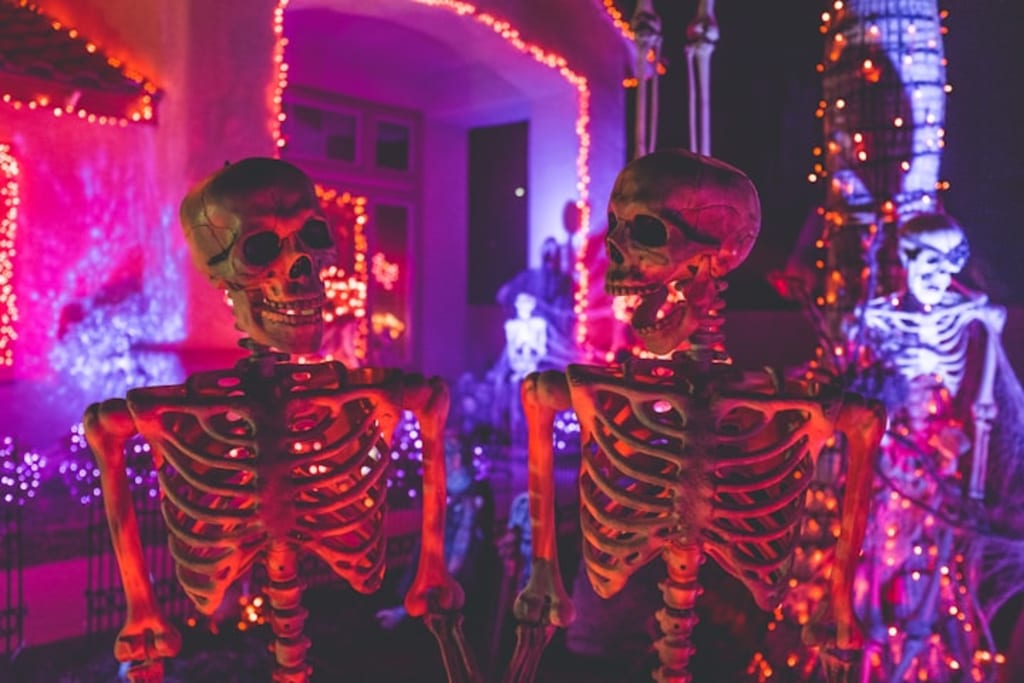
Every year, as the air turns crisp and the nights grow longer, Halloween arrives—ushering in a season of eerie festivities, haunted houses, and spine-chilling stories. But beyond the pumpkins, costumes, and candy lies a deep and complex connection to the supernatural, one that stretches back thousands of years. Halloween is not just a night for spooky fun and mischief; it’s a celebration that taps into ancient beliefs about the spirit world, the afterlife, and the thin boundary between the living and the dead.
To understand Halloween's supernatural roots, we must look beyond the commercialized version of the holiday and explore the age-old traditions and myths that have shaped it. From ancient Celtic rituals to the rise of supernatural folklore, Halloween is as much a time for confronting the supernatural as it is for celebrating with friends and family.
The Ancient Origins: Samhain and the Spirit World
The supernatural aspects of Halloween can be traced back to **Samhain**, an ancient Celtic festival that marked the end of the harvest and the beginning of winter. Celebrated from October 31st to November 1st, Samhain was a time when the veil between the living and the dead was believed to be at its thinnest, allowing spirits and other supernatural beings to cross over into the world of the living.
For the Celts, death was not an end but a transition to another realm. The spirits of the dead were thought to return to their homes, offering blessings or warnings for the coming year. To honor the deceased, the Celts built massive bonfires, where they offered sacrifices to appease the spirits and protect themselves from malevolent forces. They also wore costumes—often made of animal skins—to disguise themselves from any unwanted spirits that might cause harm.
The connection between Samhain and the supernatural is most evident in the Celtic belief that ghosts and spirits could wander freely on Halloween night. It was not uncommon for people to leave offerings of food or drink outside their homes, hoping to satisfy the restless souls of their ancestors and prevent them from wreaking havoc. The idea of “trick-or-treating” can be seen as a modern-day vestige of these ancient offerings—an effort to appease spirits with food and gifts, while avoiding their trickery or malevolence.
The Christian Influence: All Hallows' Eve and the Afterlife
As Christianity spread through Europe, the pagan festival of Samhain was gradually absorbed into Christian traditions. In the 8th century, Pope Gregory III designated November 1st as **All Saints’ Day** (also known as **All Hallows’ Day**), a time to honor saints and martyrs. The night before, October 31st, became **All Hallows’ Eve**, eventually shortened to **Halloween**.
Although the Christian church attempted to replace pagan customs with religious observances, many of the supernatural themes associated with Samhain endured. The idea of honoring the dead remained central, as did the belief that spirits might return from the afterlife. In medieval Europe, people lit candles and held vigils in honor of the dead, a practice that evolved into the modern tradition of **All Souls’ Day**, observed on November 2nd, which is still recognized in many cultures.
Yet, while Christianity reframed the celebration, it also introduced new supernatural elements. Ghosts, spirits, and the idea of purgatory became intertwined with the celebration of Halloween. These otherworldly beings, once seen as ancestors returning for one night, began to take on more sinister forms—such as vengeful ghosts or demonic entities—adding a darker layer to the holiday’s supernatural foundation.
The Witching Hour: Magic, Superstition, and the Fear of the Occult
One of the most enduring supernatural themes of Halloween is the association with witches, magic, and the occult. During the medieval and early modern periods, Europe was gripped by widespread fear of witchcraft. Thousands of people, mostly women, were accused of witchcraft and executed for allegedly making pacts with the Devil or practicing dark magic.
As Halloween became a night to celebrate the supernatural, it also became a time when the veil between the physical world and the world of magic and spirits was believed to be especially thin. Witches were said to be particularly powerful on Halloween night, able to cast spells, summon spirits, and manipulate the forces of darkness. Witches’ familiar creatures—black cats, owls, toads, and bats—became symbols of Halloween’s darker aspects, reinforcing the idea of the night as a time for sinister forces to roam free.
The image of the witch riding a broomstick, with a cauldron bubbling over a fire, became an iconic part of Halloween lore. This portrayal reflects the fear and fascination that witches and the occult held in the imaginations of people during the medieval period. Today, the witch remains a staple figure in Halloween costumes and decorations, symbolizing both the fear of the unknown and the enduring allure of magic and mystery.
Ghosts and Spirits: A Night for the Dead
At its core, Halloween has always been about the supernatural and the return of spirits. Ghost stories have been told for centuries around the time of Halloween, with people seeking to commune with the spirits of the departed, or at the very least, to appease them. The idea of the dead returning to the world of the living has a long and varied history in cultures around the globe, but Halloween became a focal point for these beliefs.
In Victorian times, the fascination with ghosts reached new heights, thanks in part to the rise of spiritualism—the belief that the spirits of the dead could be contacted by the living through mediums, séances, and other rituals. The late 19th century saw a surge in ghost stories and haunted house tales, many of which are still popular around Halloween. Authors like **Edgar Allan Poe** and **Henry James** wrote stories that blurred the lines between life and death, and the supernatural became an essential element of Halloween literature.
The association with ghosts also has roots in the ancient belief that the dead needed to be properly honored or they would return as vengeful spirits. The Irish legend of **Jack O'Lantern**, for example, tells of a miserly man who tricked the Devil and was condemned to roam the earth with only a hollowed-out turnip to light his way—later adapted into the pumpkin lanterns we carve today. In this story, the spirit of Jack is not just a ghost; it’s a warning of the restless dead who roam the earth if not appeased.
Modern Supernatural Elements: From Horror Films to Haunted Houses
In the 20th century, the supernatural aspects of Halloween found new life in popular culture, particularly through **horror films**, **haunted houses**, and **urban legends**. Halloween’s dark roots were embraced by filmmakers, with classics like **“Nosferatu”**, **“Frankenstein”**, and **“Night of the Living Dead”** shaping modern perceptions of the supernatural. These films helped cement Halloween as a time when the dead come to life, the monsters lurk in the shadows, and the unknown lurks just beyond the veil.
In parallel, haunted houses and Halloween-themed attractions became a staple of the holiday. These places are designed to evoke fear and thrill, drawing on centuries-old themes of ghosts, ghouls, and things that go bump in the night. The modern haunted house experience is an interactive, immersive journey through the world of the supernatural, encouraging participants to confront their deepest fears.
Conclusion: Embracing the Supernatural
At its core, Halloween is a night that invites us to confront the supernatural—to face our fears of death, spirits, and the unknown. Whether through ancient Celtic rituals, ghost stories, or modern horror films, Halloween has always been a time for celebrating the thin divide between the living and the dead. It is a night when the dead are honored, the supernatural is acknowledged, and the boundaries between the realms are temporarily blurred.
In this sense, Halloween is not just a holiday; it is a gateway—a time when the world beyond the veil feels closer than ever. Whether we are donning costumes, telling ghost stories, or simply marveling at the eerie atmosphere, Halloween reminds us that the supernatural is never far away, lurking just beyond our awareness, waiting for us to step into its haunting embrace.
About the Creator
Enjoyed the story? Support the Creator.
Subscribe for free to receive all their stories in your feed.
Comments
There are no comments for this story
Be the first to respond and start the conversation.