
The Dybbuk: The Possessing Spirit That Refuses to Die
In the villages of Eastern Europe, there was once a terror so feared that families nailed holy verses above doorways and rabbis were summoned in the dead of night to perform violent exorcisms. They called it the dybbuk — a wandering human soul twisted by sin, rage, or unfinished suffering. And according to Jewish folklore, once it entered a body, it did not leave quietly.

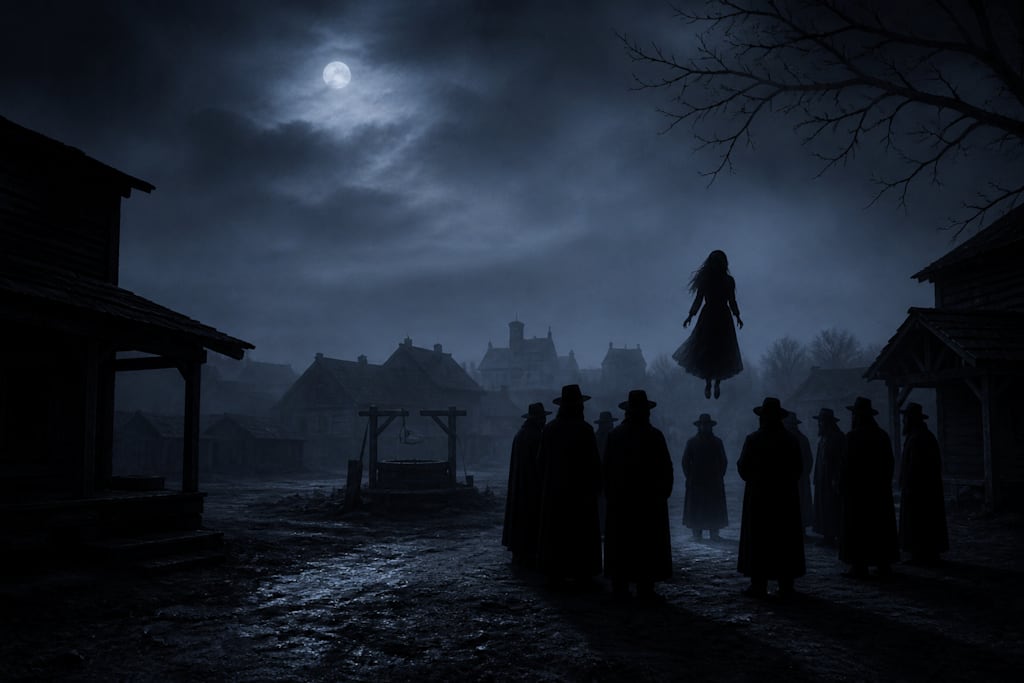
There are monsters that kill from the shadows. And then there are monsters that wear your face. The Dybbuk is one of the oldest and most terrifying entities in Jewish mysticism — not because it tears flesh apart like a beast, but because it crawls into the human body and slowly destroys a person from within. According to centuries of folklore, a dybbuk is the restless spirit of a dead person, too corrupted or tormented to move on after death. The word itself comes from the Hebrew term meaning “to cling”nor “to attach.” That single definition captures the horror perfectly. A dybbuk does not haunt a house. It clings to a living soul.
The Birth of a Nightmare Stories of dybbuks became widespread in 16th and 17th century Eastern Europe, particularly among Jewish communities deeply influenced by Kabbalistic mysticism. Scholars believed certain souls could become trapped between worlds after committing terrible sins or dying with unresolved hatred. Instead of passing peacefully into the afterlife, these spirits wandered endlessly. Hungry. Angry. Desperate for a body to inhabit. Unlike demons in Christian mythology, the dybbuk was believed to have once been human. That detail made it far more disturbing. A dybbuk still carried memories, obsessions, jealousy, and bitterness from its previous life. Some accounts described them as violent spirits seeking revenge. Others were said to be driven by forbidden love, unfinished business, or unbearable guilt. And according to old folklore, vulnerable people became targets. Young brides. The grieving. The mentally fragile. The isolated. Many historical accounts describe women suddenly collapsing into seizures, speaking in unfamiliar voices, screaming obscenities, or revealing secrets they could not possibly know. In terrified communities with little understanding of mental illness, these episodes were often seen as proof that a dybbuk had entered the victim. But the stories did not stop there. Witnesses claimed possessed victims displayed unnatural strength. Some reportedly spoke languages they had never learned. Others screamed in deep masculine voices while their bodies convulsed violently. The most horrifying part? The possessed person was often still conscious. Trapped inside themselves. Listening as something else used their mouth.
The Exorcisms That Terrified Entire Villages In Jewish folklore, removing a dybbuk was not a simple blessing. It was war. Historical records mention rabbis conducting elaborate exorcism rituals involving prayer circles, ram’s horns, sacred smoke, and repeated chanting of holy names. Some rituals lasted hours. Others stretched through entire nights. According to old accounts, the spirit would scream through the victim during the ceremony, bargaining, threatening, mocking everyone present. Witnesses claimed the possessed body twisted unnaturally while the voice inside identified itself and confessed its sins. One of the earliest printed accounts of a dybbuk exorcism appeared in Basel in 1602. More reports surfaced later in the 1600s. These were not isolated ghost stories whispered around fires. Communities documented them. People believed them. Feared them. In some traditions, the dybbuk would only leave after announcing why it had possessed the victim in the first place. The idea was horrifyingly intimate: the spirit wanted to be heard before it would release its grip. And if the ritual failed? The victim was believed to deteriorate mentally and physically until death. The Dybbuk’s Cruelty What makes the dybbuk uniquely terrifying is its psychological brutality. It does not merely attack the body. It erodes identity. Traditional stories describe victims becoming increasingly detached from loved ones. Personalities changed. Sleep vanished. Violent outbursts erupted without warning. Some accounts described victims laughing during funerals or mutilating themselves while insisting another presence controlled them. The dybbuk was believed to feed on emotional suffering. Fear strengthened it. Isolation empowered it. Some folklore even claimed the spirit entered through openings in the body while the victim was spiritually weakened. Whether viewed as supernatural or psychological, the terror experienced by the victims was real. Imagine waking up unable to trust your own thoughts. Imagine hearing your voice speak words you never intended to say. Imagine your family believing something dead is staring at them through your eyes. That is the horror the dybbuk represents. Not death. Possession. The Dybbuk Box: Internet Horror or Real Curse? Modern fascination with the dybbuk exploded after the infamous “Dybbuk Box” story spread online in the early 2000s. The object — an old wine cabinet supposedly haunted by a malicious spirit — became one of the internet’s most viral paranormal legends. Its owner, Kevin Mannis, claimed the box caused nightmares, illness, shadow figures, and terrifying paranormal events. Later owners repeated similar claims. The story eventually inspired the horror film The Possession. But there is a twist darker than the legend itself. Years later, Mannis admitted the story was fabricated as part of a fictional horror narrative for an eBay listing. Even many Jewish commentators online have openly dismissed the “dybbuk box” concept as modern paranormal fiction rather than authentic folklore. Yet the legend refuses to die. That says something unsettling about human fear. People want to believe certain objects can carry evil. They want to believe curses linger. And perhaps most disturbingly, they want to believe something invisible can still crawl into a human life and destroy it from the inside. Why the Dybbuk Still Haunts Modern Horror The dybbuk survives because it taps into a primal fear older than religion itself: The fear of losing control over your own mind. Long before psychiatry existed, possession stories became humanity’s explanation for mental collapse, trauma, psychosis, and emotional suffering. Today, many historians and scholars believe numerous dybbuk cases were likely misunderstood psychological conditions interpreted through religious belief systems. But even knowing that does not erase the terror of the stories. Because the dybbuk is more than folklore. It is a symbol of invasion. A reminder that the human mind can become a battlefield. And unlike vampires or werewolves, the dybbuk never needed claws or fangs to inspire fear. Only a voice. A whisper. A sudden change in someone you love. Final Thoughts Across centuries, the Dybbuk has remained one of the most disturbing entities in supernatural mythology because it attacks the one thing humans cling to most desperately: Identity. In ancient villages, terrified families believed a dybbuk could hollow a person out from the inside and wear them like a mask. Today, skeptics dismiss the stories as superstition, misunderstood illness, or deliberate hoaxes. But the legend still spreads. Still evolves. Still terrifies. Because somewhere deep within the human psyche lives a fear no science has ever fully erased: That one day, the face staring back in the mirror may no longer belong to you.
About the Creator
E. hasan
An aspiring engineer who once wanted to be a writer .
Enjoyed the story? Support the Creator.
Subscribe for free to receive all their stories in your feed.
Comments
There are no comments for this story
Be the first to respond and start the conversation.