
The Disappearance of Keith Reinhard: The Writer Who Became His Own Mystery
Mystery Monday Edition

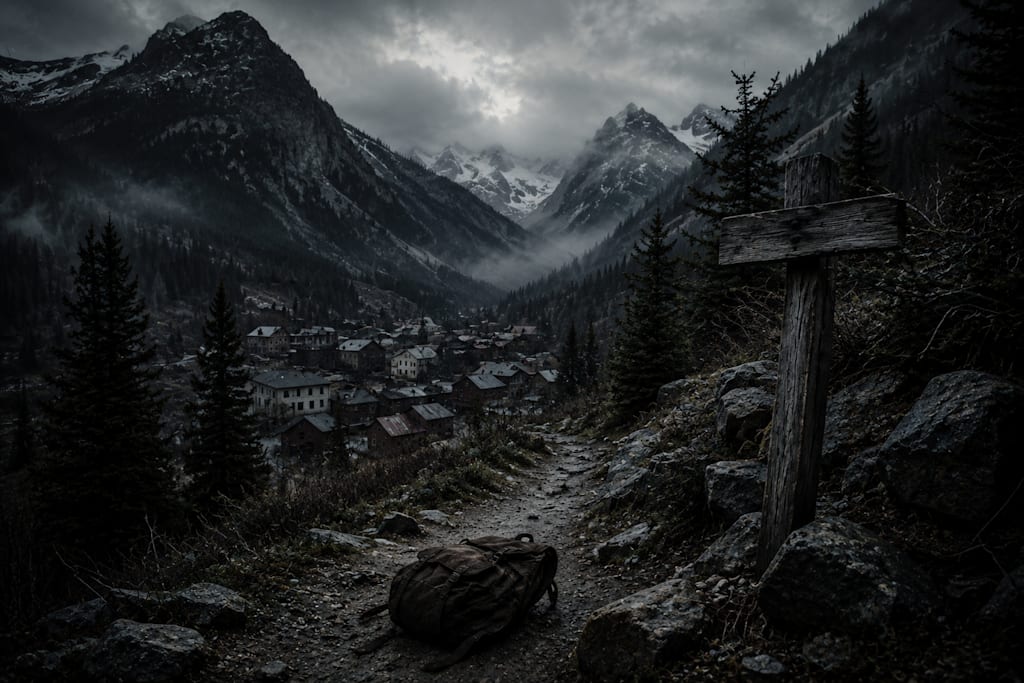
There are certain stories that feel too perfectly constructed to be true, tales that echo the logic of fiction rather than the messiness of real life. Imagine a novelist vanishing from his desk, an explorer disappearing into uncharted wilderness, or a detective consumed by the very case he set out to solve. The disappearance of Keith Reinhard belongs in that category. A mystery so steeped in irony that, had it appeared in a work of fiction, readers might dismiss it as unbelievable. Yet every element of it is real.
In 1988, Keith Reinhard, a respected sportswriter from Chicago, vanished into the mountains outside the tiny town of Silver Plume, Colorado. Search teams combed the wilderness, friends retraced his final steps, and investigators pursued theories ranging from accidents to foul play. No trace of him was ever found.
Ordinarily, that alone would be enough to secure a place in the annals of unsolved disappearances. But what transformed Reinhard's story into something stranger was the reason he had come to Silver Plume in the first place: he had moved there to write a novel. A novel about a man who disappears in the mountains. And before he could finish it, the mountains claimed him as well.
Silver Plume sits high in the Colorado Rockies, nestled along Interstate 70. A place that seems to belong as much to the nineteenth century as to the modern world. Once a booming mining town, it had long since lost its glory by the late 1980s. Weathered wooden buildings lined the streets, abandoned mines riddled the hillsides, and snow-capped peaks towered over everything. Even today, Silver Plume has an air of isolation about it. In winter, the mountains feel immense and indifferent; in summer, the forests stretch endlessly beyond the town's edge. It is a place where history lingers. For Keith Reinhard, it must have seemed ideal.
Born in 1941, Reinhard had built a successful career as a sportswriter in Chicago. By all accounts, he was talented, intelligent, and well-respected in his profession. But somewhere along the way, he became dissatisfied with the life he had built. Like many people approaching middle age, he began to wonder whether the road he had traveled was the one he truly wanted. He dreamed of becoming a novelist.
So, in the mid-1980s, Reinhard left behind the familiarity of Chicago and relocated to Silver Plume, hoping that the mountains would provide inspiration. He rented an old house and immersed himself in the rhythms of small-town life. Exploring abandoned mining sites, hiking the surrounding peaks, and getting to know the locals. Most importantly, he began working on his book. The premise was simple enough: a man disappears in the Colorado mountains. It was exactly the sort of story the landscape seemed designed to tell. But somewhere along the way, Reinhard's research took on a darker dimension.
Years earlier, another Silver Plume resident had vanished… Tom Young. Young had disappeared under circumstances that were never fully explained, leaving behind a mystery that lingered in local memory. Reinhard became fascinated by the case: he spoke to townspeople, examined old accounts, and walked the same trails. At first, this was merely research; writers do such things all the time, seeking out details and immersing themselves in the worlds they hope to recreate on the page. But as months passed, some people began to wonder whether Reinhard's interest had evolved into something deeper. He spent increasing amounts of time alone in the mountains, and friends later recalled that he seemed preoccupied by the disappearance he was investigating. The boundary between storyteller and subject began to blur. Most writers study their material from a safe distance. Reinhard stepped inside it.
And then, on July 7, 1988, the line disappeared entirely. That day began without drama. Reinhard was living alone in Silver Plume. Like countless other summer mornings in the Rockies, the air was crisp, and the mountains beckoned. He told friends he intended to hike Pendleton Mountain, a rugged peak rising above town. A hike that was not unusual, as Reinhard knew the area well and had explored it repeatedly. Then he left, and never came back.
At first, no one panicked. People disappear into the mountains for hours at a time; hikers take wrong turns; trails prove more difficult than expected; afternoon storms force delays. But as the day wore on, concern mounted, and soon concern gave way to alarm. Search-and-rescue teams assembled, volunteers combed the slopes, helicopters scanned the forests from above, and friends retraced Reinhard's intended route. Nothing: no backpack, no clothing, no notebook, no sign of a fall, no indication that anyone had ever been there at all.
The Rockies have a way of swallowing evidence. Steep ravines, dense forests, abandoned mine shafts, and sudden weather changes create ideal conditions for disappearances, and people vanish in mountain ranges with unsettling regularity. And yet Reinhard's case resisted even the most ordinary explanations. As days became weeks, theories began to multiply. The simplest explanation was that Reinhard had suffered an accident. Pendleton Mountain is unforgiving terrain, and a single misstep can send a hiker tumbling into places that searchers may never examine. Hidden crevices and old mining tunnels dot the region, and it is entirely possible that Reinhard fell somewhere beyond the reach of rescuers. Many investigators still believe this to be the most likely explanation. But the absence of evidence left room for doubt. Search teams covered an enormous area and experienced rescuers participated, but despite their efforts, not a single trace of Reinhard emerged: no belongings, no remains, nothing.
Other possibilities soon surfaced. Some speculated that Reinhard had chosen to disappear voluntarily; after all, he had uprooted his life before. Perhaps he had decided to begin again somewhere else. Yet those who knew him found this explanation difficult to accept: he had invested years in his writing, maintained relationships with friends and family, and there was no obvious indication that he intended to abandon everything. Then there were darker theories: could someone have harmed him? Silver Plume was small, but even small towns contain rivalries, grudges, and secrets. Rumors circulated that Reinhard's investigation into Tom Young's disappearance may have uncovered something dangerous. The evidence for such claims was thin. Still, mysteries thrive in silence, and the silence surrounding Keith Reinhard was profound.
As the years passed, his disappearance attracted wider attention; journalists revisited the case, amateur investigators explored the mountains, and true-crime enthusiasts dissected every known detail. Again and again, people returned to the same haunting coincidence: Keith Reinhard had come to Colorado to write a novel about a missing man. Then he became one. The irony is almost unbearable.
Imagine sitting at a desk, staring out at the mountains beyond Silver Plume. Imagine sketching scenes in which your protagonist vanishes into the wilderness, walking the trails in search of authenticity, and then unknowingly rehearsing your own ending. That symmetry is what gives the case its peculiar power. Without it, Keith Reinhard would still represent a tragic mystery; with it, his story acquires an almost mythic quality.
The mountains become more than geography; they become characters: cold, patient, and utterly indifferent. The American West is filled with stories like this. Prospectors vanish into canyons, hunters disappear into forests, hikers step off trails and are never seen again. The wilderness has always inspired two conflicting emotions: wonder and fear. We romanticize mountains because they appear timeless; they offer solitude, beauty, and the promise of escape from ordinary life. But mountains are also reminders of how small we truly are. A wrong turn, an unexpected storm, a hidden drop concealed by trees. The difference between adventure and catastrophe can be frighteningly thin. In Reinhard's case, the mountains seem almost cruelly symbolic. He arrived in Silver Plume searching for meaning and reinvention, found inspiration in an old mystery, and hoped to transform it into art. Instead, he became woven into the same fabric of unanswered questions.
Decades later, the people who remember him are left with an unsettling thought: how much of his fascination with disappearance was professional curiosity, and how much was personal longing? Did he see himself in the stories he pursued, or are we simply imposing patterns on a tragedy because the coincidence feels too extraordinary to ignore? The truth is that we do not know, and perhaps we never will. That uncertainty is what has kept the mystery alive for more than thirty years.
Because Keith Reinhard's story is not merely about a missing person; it is about the strange relationship between human beings and the stories they tell themselves. Writers spend their lives chasing mysteries; they search for meaning in coincidence, impose structure on chaos, and transform random events into narratives with beginnings, middles, and endings. Reality offers no such guarantees. Sometimes there is no final chapter. Sometimes the clues lead nowhere. Sometimes a man walks into the mountains and simply vanishes.
Today, Silver Plume remains much as Reinhard would recognize it. The old buildings still stand, the mountains still loom over the town, and tourists pass through, often unaware that one of Colorado's strangest mysteries unfolded there. Pendleton Mountain remains where it has always been, silent and unmoved. Somewhere among those slopes, perhaps, lies the answer. Or perhaps the answer disappeared with Keith Reinhard on that summer day in 1988.
He came to the Rockies hoping to tell a story about a man lost in the wilderness. Instead, he became the story himself. And in one of history's cruelest ironies, the novel he set out to write remains unfinished, its final chapter carried away by the very mountains that inspired it. The writer vanished. The mystery endured. And the peaks above Silver Plume kept their secret.
About the Creator
Veil of Shadows
Ghost towns, lost agents, unsolved vanishings, and whispers from the dark. New anomalies every Monday and Friday. The veil is thinner than you think....
Enjoyed the story? Support the Creator.
Subscribe for free to receive all their stories in your feed.
Comments
There are no comments for this story
Be the first to respond and start the conversation.