
The Cat in the Hat Is "Haunting" TikTok: What's Real, What's Fake, and What Parents Should Know
A children's classic became an internet horror legend. Police had to say the Cat wasn't in your driveway. Here's the full story.

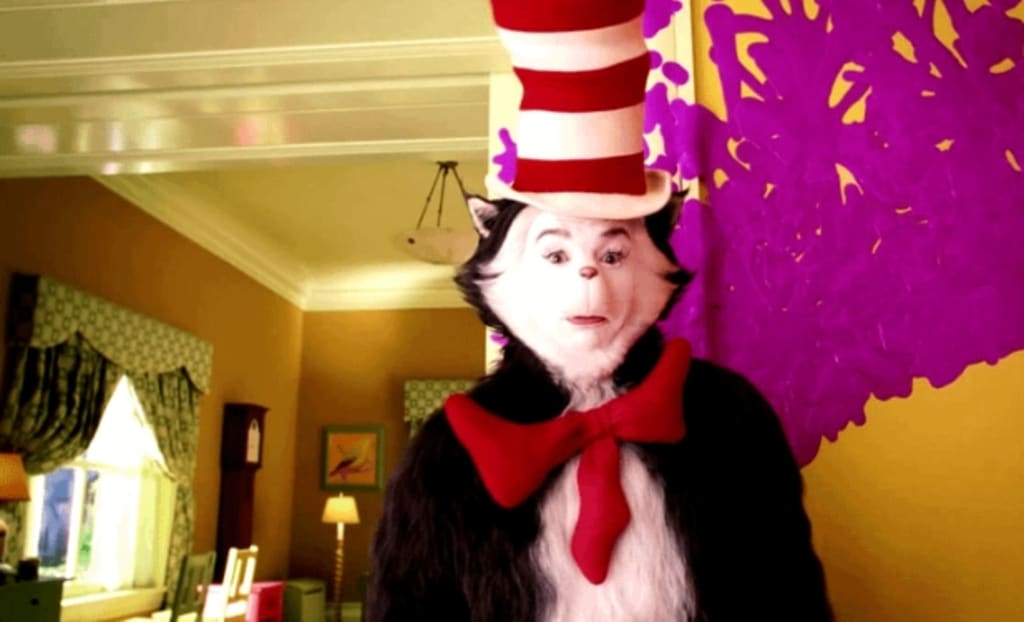
The Cat in the Hat Is "Haunting" the Internet: The Full Story Behind 2026's Strangest Viral Horror Trend
How a cheerful children's character became a late-night legend, why police had to step in, and what the whole thing says about the way we scroll, scare and share.
Introduction: Something Strange Is Happening on Your For You Page
There are things you expect to see while scrolling at midnight: makeup tutorials, recipe hacks, someone reviewing a questionable fast-food order. What you do not expect is a six-foot version of the Cat in the Hat, wearing his red-and-white striped top hat and a bow tie, creeping through a suburban driveway.
Yet in the summer and autumn of 2026, that is exactly what millions of people have been seeing. Videos styled as doorbell footage, dashcam clips and shaky phone recordings have shown a figure in the famous costume lurking outside homes after dark. Some of them were made as jokes. Some were made to scare. And some were so convincing that teenagers genuinely began to believe the character was real.
The panic became serious enough that police in Ireland issued public statements. One became instantly famous for how strange it sounded: the Cat in the Hat was not in your driveway, and he was not hiding out in Curracloe.
This is the full story: where the trend came from, how it grew, what is true, what is fake, and why a children's book character from 1957 turned into one of the most talked-about internet legends of the year.
Part One: Who Is the Cat in the Hat?
To understand why this trend is so strange, it helps to remember how innocent the character is supposed to be.
The Cat in the Hat was first published in 1957, written and illustrated by Dr. Seuss. The book was designed to help children learn to read, using a limited vocabulary and a bouncy rhythm. The story is simple: two bored children are stuck inside on a rainy day when a tall, mischievous cat in a striped hat arrives and turns their house upside down with games and chaos. He is a trickster, but a friendly one, and the mess is cleaned up by the end.
For generations, the Cat has stood for imagination, fun and a little harmless rule-breaking. He has appeared in sequels, a long-running animated series and a huge range of merchandise that stretches from school libraries to lunchboxes. That is exactly why the horror version works so well online. Horror often depends on contrast: take something warm and familiar, twist it slightly, and it becomes unsettling.
Part Two: The 2003 Movie That Never Quite Went Away
The second ingredient in this story is the 2003 live-action film The Cat in the Hat, starring Mike Myers as the Cat, with Dakota Fanning and Spencer Breslin as the children.
The film is remembered for its heavy prosthetics, its fur-covered costume and its uneven mix of slapstick and adult-leaning jokes. Many viewers who watched it as kids remember it as bizarre, and many of them have joked about it for years as a source of childhood confusion. It has a reputation as one of those movies that people find uncanny: familiar and strange at the same time.
That reputation matters. Internet culture runs on shared memories, and a film that millions of people remember as "weird" is ready-made material for a meme. Add to that the fact that the costume itself became an object of online fascination, including a viral post about the outfit being put up for auction, which one user described as nightmarish, according to NME.
Part Three: How the Trend Began
According to Euronews, the trend traces back to late June 2026, when a TikTok user uploaded a clip of Mike Myers as the Cat dancing to an eerie soundtrack. That clip, since deleted, reportedly passed 4.4 million views within a week.
What happened next is a classic example of how internet trends evolve.
Stage 1: The creepy edit. People saw the clip and began making their own versions. Innocent scenes from the movie were recut with unsettling music, slowed down, zoomed in or filtered to look like found footage.
Stage 2: The "dark Cat" memes. Throughout July, the edits became a genre of their own. Creators reimagined scenes from the film through horror and true-crime styles. At this point, everyone involved understood it was a joke, and part of the fun was seeing how scary you could make a character who was never meant to scare anyone.
Stage 3: The fake sightings. Then the format changed. Instead of edited movie clips, creators began posting videos that looked like real-life security footage. A figure in the costume appeared on porches, in back gardens and at car windows. Many of these appear to have been produced with AI image and video tools, which can produce realistic night-time footage in minutes.
Stage 4: The panic. Once fake sightings were circulating, the story jumped from "scary meme" to "is this actually happening?" Posts began naming real towns, real neighbourhoods and even real schools. Some claimed the character was attacking people. Those claims are unverified rumours, and the police statements make clear that the sightings were not real.
Part Four: The Police Step In
By the second half of August, the story had reached Ireland and the UK in a big way. Many of the clips focused on counties such as Limerick and Wexford, and on places including Curracloe, a beach area well known to Irish locals.
Police forces issued statements confirming the videos were fake. The message, delivered with a straight face, was that the Cat in the Hat was not in your driveway while you were out, and was not hiding out in Curracloe. It was both a reassurance and, unintentionally, one of the funniest police statements of the year.
Reporting also described the effect on real people. NME, quoting BBC News, shared the account of a teenager who was at a sleepover where everyone began watching Cat in the Hat videos at 3 a.m. When she started to walk down her friend's driveway to go home, she was suddenly convinced the Cat would jump out at her.
That quote captures the whole phenomenon. She almost certainly knew the videos were fake. But fear is not always logical, and a dark driveway at 3 a.m. after an hour of scary clips is a very different environment from a bright afternoon.
CinemaBlend and other outlets reported that the trend spread beyond the UK and Ireland, including from the United States to Europe, and that some schools went on alert after local versions of the videos named their area. Some reports also mentioned arrests connected to hoaxes. If a version of the trend appears in your community, the sensible response is to check with your school or local police rather than rely on social media posts.
Part Five: Why Did This Trend Explode?
Plenty of creepy memes come and go. Why did this one grow so large? Several things lined up.
1. Nostalgia plus fear is a powerful mix
Adults and teenagers who grew up with the Cat in the Hat have an emotional connection to him. When something we loved as a child is twisted, it feels personal and disturbing in a way that a brand-new monster never could.
2. AI made the "evidence" cheap
In earlier eras, a hoax needed costumes, cameras and effort. Now anyone with a phone can generate a convincing doorbell-camera clip. When dozens of different accounts post similar videos, it begins to look like independent confirmation, even though it is just people copying the same idea.
3. We love shared legends
Humans have always told scary stories around the campfire. The internet version is a modern campfire where millions of people can add new details. Earlier online legends, from Slender Man to the Momo hoax, followed a similar pattern: a spooky image, a wave of rumours, worried adults, and then fact-checkers explaining it was invented.
4. The algorithm rewards strong emotions
Videos that make people feel fear, shock or curiosity tend to be watched, commented on and shared. Every comment saying "is this real??" pushes the clip to more people.
5. The season is perfect
The trend peaked as nights grew longer and Halloween approached. People were already in the mood for scares.
6. The new movie
Timing played a role too. A new animated The Cat in the Hat film from Warner Bros., with Bill Hader voicing the Cat, is scheduled for theatres on November 6, 2026. Whether or not the trend was planned (there is no evidence it was), it has certainly kept the character in the headlines.
Part Six: Fact Check: What Is True and What Is Not
With so many wild claims circulating, here is a simple breakdown.
True:
The trend began with a TikTok clip of the 2003 movie in late June 2026.
Many of the "sighting" videos appear to be AI-generated or staged.
Police in Ireland publicly stated the sightings were fake.
Some teenagers and children were genuinely frightened.
A new animated Cat in the Hat film is due on November 6, 2026.
Not supported by evidence:
That the Cat in the Hat figure is stalking neighbourhoods.
That there is a "killer" Cat.
That specific attacks in specific towns were caused by the character.
When you see a claim that includes a dramatic story but no named source, no police statement and no news report, treat it as a rumour.
Part Seven: What the Trend Teaches Us
It is easy to laugh at the Cat in the Hat panic. It is funny in many ways. But underneath the humour, there are some serious lessons.
Fake content can feel real. If a clip can scare us into avoiding a driveway, imagine the effect of fake footage about more serious subjects such as politics, health or crime. Learning to pause and verify is now an essential skill.
Kids and teens are especially vulnerable. Younger viewers may not understand that a video can be created by software. They also tend to scroll late at night, which is when fear feels strongest.
Local panic can have real consequences. When rumours name real schools and neighbourhoods, they can disrupt lessons, waste police time and cause genuine anxiety.
Humour and harm can overlap. There is nothing wrong with a spooky meme. The problem begins when a joke is presented as fact, or when someone uses it to frighten a specific person.
Part Eight: A Practical Guide for Parents, Teachers and Teens
For parents
Ask your child what they have seen, calmly and without judgement.
Explain that the videos are made-up stories, and that some are created by AI.
Keep devices out of bedrooms at night if your child is easily frightened.
Remind them they can always come to you if something online scares them.
For teachers
Be ready for students to bring the topic up in class. Treat it as a chance to teach media literacy.
Share official school or police updates if a local rumour appears.
For teens and adults
Check the source. Who posted it first? Is there any news coverage or official statement?
Look for AI clues. Strange lighting, odd movement, distorted hands or background details, and no clear location are all warning signs.
Search before you share. A quick search often reveals whether something has been debunked.
Don't tag real places or people in scary or fake posts.
Report harassment or threats to the platform, and contact police if you feel truly unsafe.
Take a break. If you are lying in bed scrolling at 3 a.m. and feeling scared, put the phone down.
Part Nine: The Bigger Picture
The Cat in the Hat panic is not the first viral hoax and will not be the last. What makes it remarkable is how perfectly it combines several features of modern internet life: a beloved childhood character, a half-forgotten movie, AI-generated visuals, a fast-moving algorithm and a worldwide audience ready to be entertained and alarmed at the same time.
It also shows how quickly a joke can escape the people who started it. Whoever uploaded that first eerie dance clip in June almost certainly did not imagine police statements and school alerts two months later. That is the nature of virality: once an idea leaves your hands, you do not control where it goes.
And yet there is something oddly comforting about the whole thing. Behind the fear, millions of people were really sharing the same joke, the same memory and the same strange sense that the world of the internet had become a little more bizarre than usual. If a children's book cat can scare the internet, perhaps the most important response is the simplest one: take a breath, check the facts, and remember that the only thing that jumped out of the driveway was the algorithm.
Conclusion
The Cat in the Hat trend of 2026 began as a creepy edit and became a case study in modern internet folklore. The sightings were fake, the fear was real, and the lessons are useful for everyone who spends time online.
So the next time something frightening appears in your feed, ask three quick questions: Who made this? Is there proof? Why does it want me to be scared? And if you happen to be walking down a dark driveway afterwards, you can reassure yourself with the most official statement of the year: the Cat in the Hat is not out there.
Did the Cat in the Hat trend appear on your feed? Did you believe it, or did you spot it was fake? Share your thoughts in the comments.
About the Creator
zenGaze
A person with a new idea is a crank until the idea succe!eds
Enjoyed the story? Support the Creator.
Subscribe for free to receive all their stories in your feed. You could also become a paid subscriber, letting them know you appreciate their work.
Comments
There are no comments for this story
Be the first to respond and start the conversation.