
The 15 Minutes That Erased a Family: The Sodder Children Disappearance
Five children vanished from a burning house in West Virginia on Christmas Eve 1945. The fire was extinguished by morning. The children's bodies were never found. Not even ash.

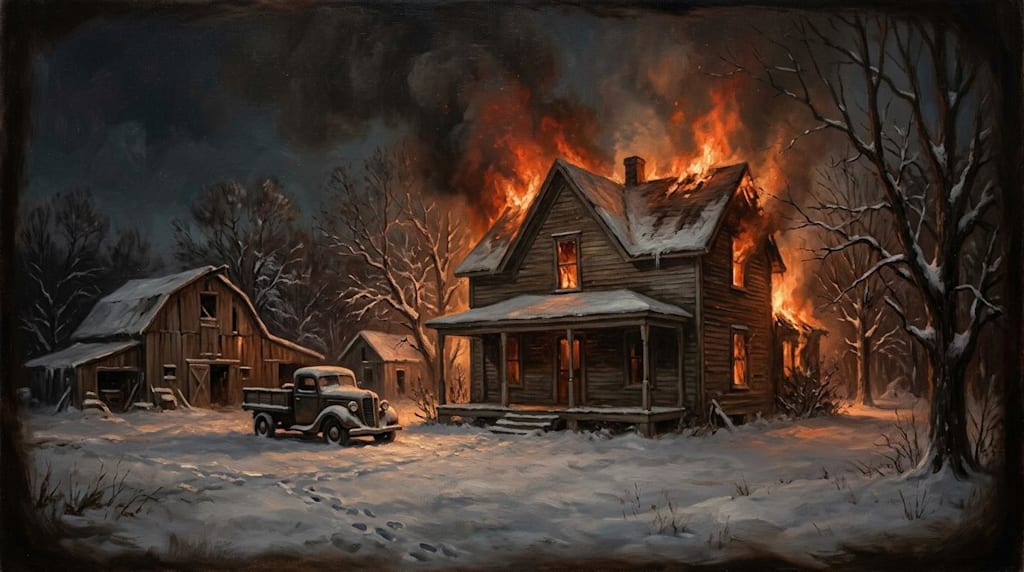
It is 12:30 a.m. on Christmas Day, 1945.
George and Jennie Sodder are asleep in their Fayetteville, West Virginia, farmhouse. The temperature outside has dropped below freezing. The coal fire in the living room has burned low. Their nine children, who had spent Christmas Eve playing with their new toys, are scattered across two floors.
The phone rings.
A woman's voice asks for someone who doesn't live there. Wrong number. Jennie hangs up and notices something strange: the lights are still on downstairs. She goes back to bed.
At 1 a.m., something wakes her up. The smell hits first.
The house is on fire.
Everything That Should Have Worked, Didn't
George Sodder threw open the bedroom door and found that the staircase was already engulfed in flames. He grabbed the four children nearest him and helped them escape through a window. Jennie followed with the baby.
They stood in the frozen yard and counted.
Four children were missing. Then they realized: five were missing.
Maurice, fourteen. Martha, twelve. Louis, nine. Jennie, eight. Betty was five.
George ran back toward the house. The flames pushed him back. He ran to his truck, pulled it around, and used the ladder to reach the upper windows.
But the truck wouldn't start. It had started fine the day before.
He ran to his neighbor's house to call the fire department. The phone was dead.
He ran back and tried to climb the embankment to reach the second-floor windows with his bare hands. The embankment crumbled.
The fire department arrived seven hours after the first call, at 8 a.m.
Seven hours.
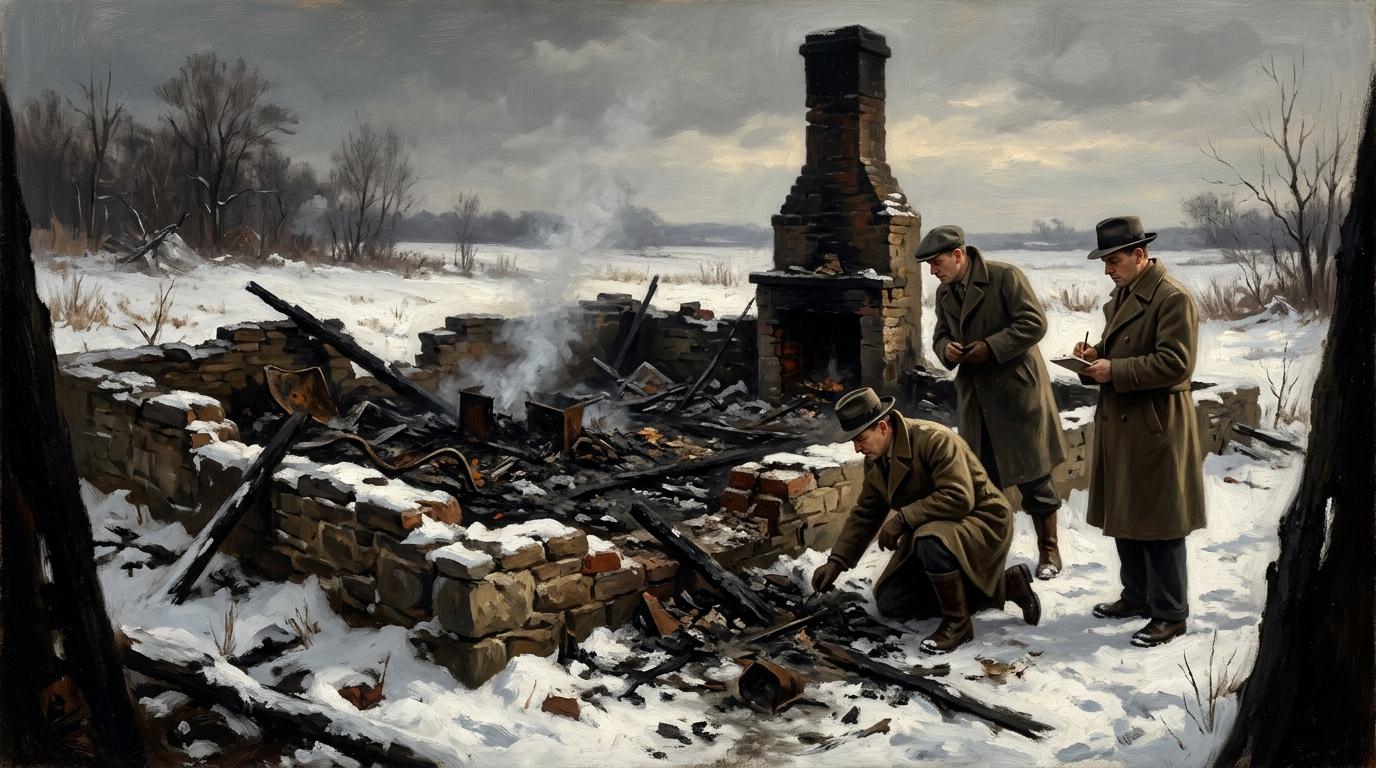
By then, the house had burned to the ground. Nothing remained except the chimney and a pile of ash.
The Fire That Left Nothing Behind
According to the official report, the children died in the fire. Their bodies were consumed by the heat. Case closed.
But the official version cannot explain everything.
A house fire, even an intense one, does not consume human remains. Bones do not burn. Even cremation, which uses temperatures ranging from 1,400 to 1,800 degrees Fahrenheit in a controlled furnace for two to three hours, leaves behind several pounds of bone fragments. House fires burn cooler and for a shorter period of time.
The Sodder home burned for approximately forty-five minutes before collapsing.
When investigators sifted through the ash, they found metal springs from a sofa. They also found the ceramic toilet. They found fragments of the chimney.
However, they found no bones. No teeth. No belt buckles. No shoes. Not even the toys the children had been playing with hours before.
Not one fragment of the five children was found.
The state fire marshal ruled the cause to be faulty wiring and closed the investigation the same day.
He spent less time at the scene than it took the fire department to arrive.
The Things That Kept Happening Afterward
The Sodders did not accept the ruling. They couldn't.
In the weeks after the fire, witnesses began coming forward.
A woman at a hotel in Bluefield, seventy miles away, reported seeing a group of children matching the descriptions of the missing Sodders on Christmas morning. The children were being driven by adults she didn't recognize. The children looked frightened. When she tried to speak to them, one of the adults stepped between her and the car.
A woman in Charleston reported seeing the same thing. Different hotel. Same description.
A bus driver recalled picking up a family matching the description on Christmas Day. He remembered because a little girl in the group pressed her face against the window and stared at him the entire time the bus was stopped. He thought she looked like she wanted to say something.
He didn't stop to ask her.
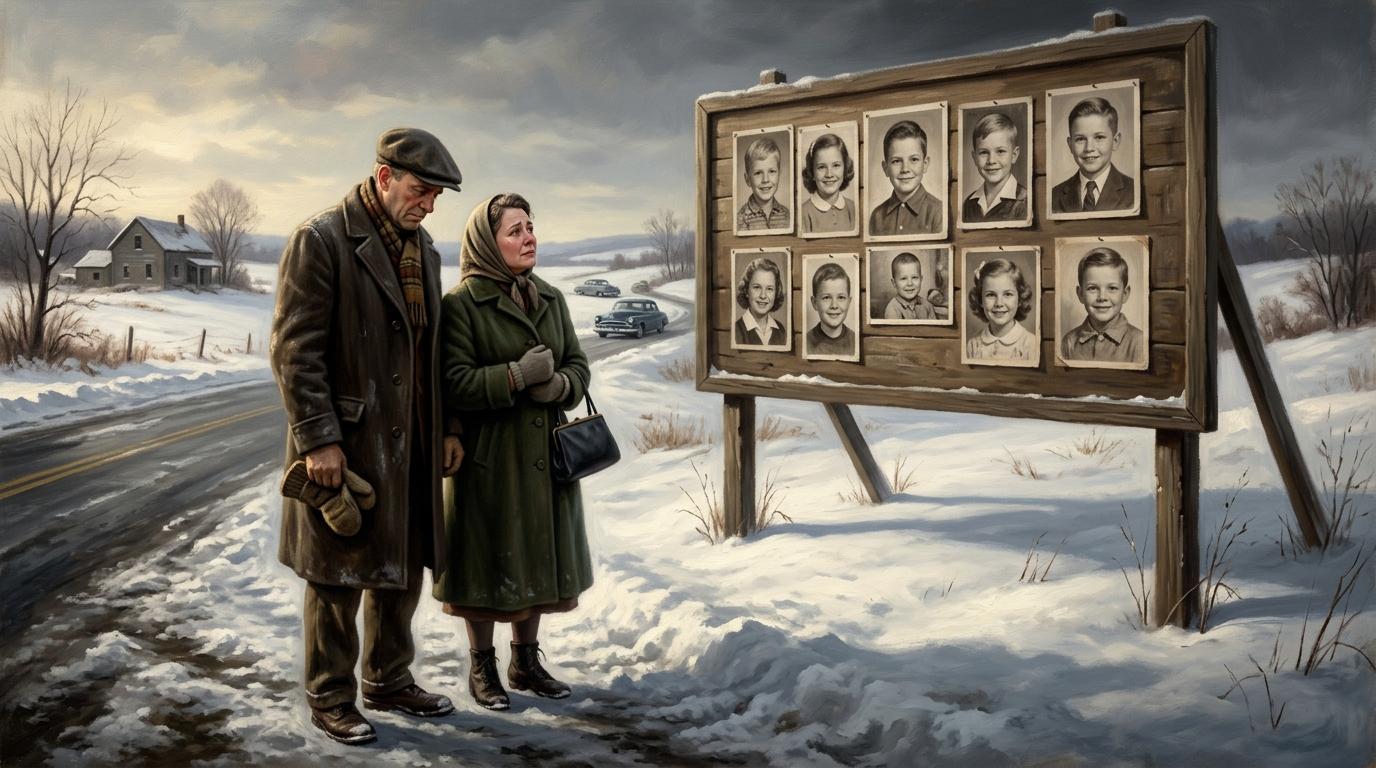
George and Jennie put up a billboard on the highway outside of Fayetteville. The billboard displayed photographs of their five missing children alongside age-progressed drawings of what they might look like as adults. The billboard stood for decades.
In 1967, twenty-two years after the fire, Jennie received a photograph in the mail.
It showed a young man in his mid-twenties. On the back, in an unfamiliar handwriting, were four words:
Louis Sodder. I love my brother.
There was no return address. There was no explanation. The postmark was from Kentucky.
She sent the photograph to a private investigator. He traveled there to follow up on the lead.
He was never heard from again.
The Part Nobody Talks About
George Sodder, an Italian immigrant, had publicly criticized Benito Mussolini in the months before the fire, when Italian-American community politics were at their peak. He had received at least one threat before Christmas of 1945.
After the fire, an insurance investigator noticed something in the rubble that the state fire marshal had not recorded: a device near the fuse box that he described as a timing mechanism for starting a fire.
However, the state fire marshal's report does not mention it.
In 1949, George hired a contractor to dig up the remains of the foundation. Deep beneath where the children's bedroom had been, they found a liver intact and undamaged by fire. A local pathologist identified it as human.
The state took possession of it for testing.
The results were never made public.
The case was never reopened.
Count the Coincidences
Take a step back and look at the sequence without the official explanation layered over it.
The phone rings at 12:30 a.m. — a wrong number — which keeps Jennie awake long enough for her to notice that the lights are still on. The fire starts thirty minutes later.
The truck that started fine on Christmas Eve won't start now. The phone at the neighbor's house is dead. It takes the fire department seven hours to arrive.
Five children vanish. There are no remains. Multiple witnesses saw children matching the missing children's descriptions being transported by unknown adults on Christmas morning.
Twenty-two years later, a photograph arrives with a name written on the back.
A private investigator disappears.
A piece of physical evidence is placed into state custody and is never heard from again.
Each of these facts has an innocent explanation. It's a coincidence. A misidentification. A bureaucratic failure.
The question is, how many coincidences are you willing to accept before the word "coincidence" stops meaning anything?

The Last Thing
George Sodder passed away in 1969. He never stopped looking for them.
Jennie Sodder died in 1989. The family requested that the billboard on the highway be taken down only after her death.
The official cause of the fire was faulty wiring. The five missing children are officially presumed deceased. No law enforcement agency has ever reopened the case.
The photograph of the young man who may or may not have been Louis Sodder is still in the family's possession.
Nobody has ever identified who sent it.
No one has ever explained what happened to the bones.
Five children were in that house on Christmas Eve. The fire was out by morning.
They were gone.
If you were the investigator standing in the ashes in December 1945 with no bones, teeth, belt buckles, or shoes, what would you have written in your report?
If you found this worth reading, you might also enjoy:
— The Man on the Beach Had No Name, No Past, and One Impossible Clue
— The Perfect Heist That Broke the King: The Mystery of the Templar Treasure
About the Creator
Chronicle and Void
Every collapse has a cover story. Every war has a cause that didn't make it into the history books. History is not an accurate record of what happened. It's a record of what they allowed to survive.
Enjoyed the story? Support the Creator.
Subscribe for free to receive all their stories in your feed.
Comments
There are no comments for this story
Be the first to respond and start the conversation.