vintage
Special effects may be lacking, but vintage horror films still manage to keep our palms sweating and blood pumping; a look back at retro horror films, stories, books and characters that prove everything is scarier in black and white.
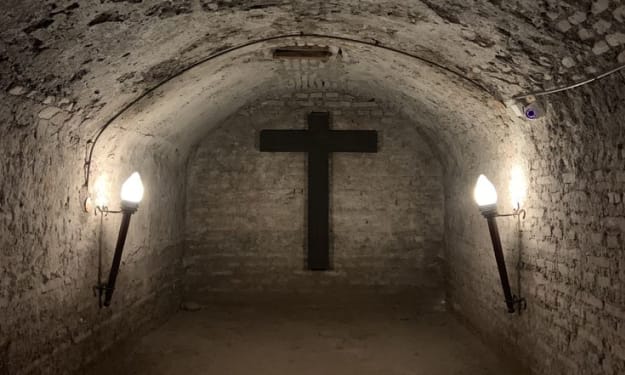
The Capuchin Crypts
Introduction Beneath the unassuming Church of Santa Maria della Concezione dei Cappuccini in Rome lies one of the most hauntingly beautiful sites in the world—the Capuchin Crypts. This subterranean ossuary contains the skeletal remains of over 3,700 Capuchin friars, meticulously arranged into intricate patterns, chandeliers, and even full-body displays. Created between the 17th and 19th centuries, the crypts serve as both a sacred burial site and a memento mori, reminding visitors of life’s fleeting nature.
By Silas Blackwoodabout a year ago in Horror
The Tarim Mummies
Introduction Deep in the arid deserts of China’s Xinjiang region lies one of archaeology’s most fascinating mysteries—the Tarim mummies. These remarkably preserved corpses, some over 4,000 years old, exhibit striking Caucasian features—blonde hair, tall stature, and woven woolen clothing—completely unlike the region’s modern inhabitants. Discovered along the ancient Silk Road, these mummies have sparked debates about prehistoric migration, lost civilizations, and cultural exchange. Were they early Indo-European settlers? A forgotten branch of humanity? This article explores their discovery, scientific analysis, cultural significance, and enduring mysteries. 1. Discovery of the Tarim Mummies A. First Encounters (Early 20th Century) European explorers like Sven Hedin and Aurel Stein first reported mummies in the Tarim Basin in the early 1900s. Local Uyghur and Kazakh herders had long known of the preserved bodies but considered them sacred. B. Major Archaeological Finds (1970s–1990s) Chinese archaeologists began systematic excavations in the 1970s. The Beauty of Loulan (1800 BCE), a 3,800-year-old woman with delicate European features, became the most famous mummy. Other key sites: Xiaohe, Qäwrighul, and Cherchen. C. Preservation Conditions The Tarim Basin’s dry, salty soil naturally mummified the dead. Some mummies were buried in boat-shaped coffins with felt coverings. 2. Who Were the Tarim Mummies? Physical & Genetic Evidence A. Unexpected European Features Tall stature (some men over 6 feet). Light hair (blonde, red, brown). High noses, deep-set eyes (resembling early Europeans or Indo-Iranians). B. DNA Studies: A Genetic Puzzle 1990s–2000s: Initial tests suggested European (Tocharian) ancestry. 2021 Harvard Study: Revealed they were a local, isolated population with ancient North Eurasian roots, not direct migrants from Europe. Controversy: Some Chinese scholars argue they were proto-Tocharians, linked to the later Tocharian languages of the region. C. Clothing & Textiles Woolen fabrics with tartan patterns (similar to Celtic designs). Felted hats, leather boots (indicating a pastoral lifestyle). Advanced weaving techniques (suggesting trade links). 3. The Tocharian Connection: A Lost Indo-European People? A. The Tocharians of History The Tocharians were an ancient Indo-European-speaking people in the Tarim Basin (1st millennium CE). Spoke Tocharian A & B, related to Celtic, Germanic, and Latin. Their origins were unknown until the mummies were discovered. B. Were the Mummies Proto-Tocharians? Some scholars believe the mummies represent an early Indo-European migration (before Tocharian languages developed). Others argue they were indigenous people who later adopted Indo-European culture. C. Linguistic Clues Later Tocharian texts (Buddhist manuscripts) suggest a long-established presence. No written records from the mummies’ era, so their language remains unknown. 4. Cultural & Historical Significance A. Evidence of Early Silk Road Exchange The mummies show trade connections between East and West long before the formal Silk Road. Textiles, tools, and burial customs resemble those of the Afanasievo culture (Siberia) and Andronovo culture (Central Asia). B. Challenging Historical Narratives Their existence contradicts the idea that ancient Xinjiang was solely East Asian. Suggests early multicultural interactions in Central Asia. C. Political Controversies The Chinese government downplays their "Western" features, emphasizing local origins. Uyghur activists sometimes claim them as ancestors, complicating modern ethnic politics. 5. Ongoing Mysteries & Research A. Unanswered Questions Where did they come from? (Local evolution or migration?) Why did they disappear? (Assimilation, climate change, or conflict?) What was their society like? (No large cities found, possibly nomadic.) B. New Scientific Techniques Isotope analysis (to trace diet and migration). Ancient protein studies (to understand health and lifestyle). More advanced DNA sequencing (to clarify ancestry). C. Future Excavations Many sites remain unexplored due to political sensitivities in Xinjiang. New discoveries could rewrite early Eurasian history. Conclusion: A Window into a Lost World The Tarim mummies are more than just preserved bodies—they are ghosts of a forgotten past, challenging our understanding of ancient migration, trade, and cultural exchange. Whether they were early Indo-Europeans, a lost branch of humanity, or an isolated indigenous group, their legacy continues to intrigue scientists and historians. As research advances, these enigmatic figures may yet reveal more secrets about the deep connections between East and West—long before empires and Silk Road caravans shaped history. Would you like additional details on any section, such as specific mummies or political debates?
By Silas Blackwoodabout a year ago in Horror
The Best Horror Books of All Time – Frankenstein
Introduction: Published in 1818, Frankenstein; or, The Modern Prometheus is not just a Gothic horror novel—it’s the foundation of science fiction and a profound exploration of human ambition, isolation, and monstrosity. Written by Mary Shelley at just 18 years old, the novel has endured for over 200 years, inspiring countless adaptations, debates, and philosophical discussions.
By Silas Blackwoodabout a year ago in Horror
Aradale: Australia’s Asylum of Anguish
Looming ominously on "Madman's Hill" in Ararat, Victoria, Aradale Mental Hospital (also known as Ararat Lunatic Asylum) unleashed its imposing gates in 1865. Constructed as one of three massive facilities to deal with Victoria's surplus of "lunatics" – a term remarkably applied to everything from the criminally insane to epilepsy, autism, or postpartum depression sufferers – its 130-year history cemented a reputation of utter misery. And this history of hardship fuels its assertion as Australia's spookiest location.
By Kyrol Mojikalabout a year ago in Horror
The Psychology of Fear
Introduction One of the most fundamental and universal human emotions is fear. It raises our senses, activates our fight-or-flight response, and gets us ready for danger. Yet, despite its unpleasant nature, many people actively seek out fear-inducing experiences—whether through horror movies, haunted houses, extreme sports, or chilling ghost stories. Why do we enjoy being scared when fear is supposed to be a negative emotion?
By Silas Blackwoodabout a year ago in Horror
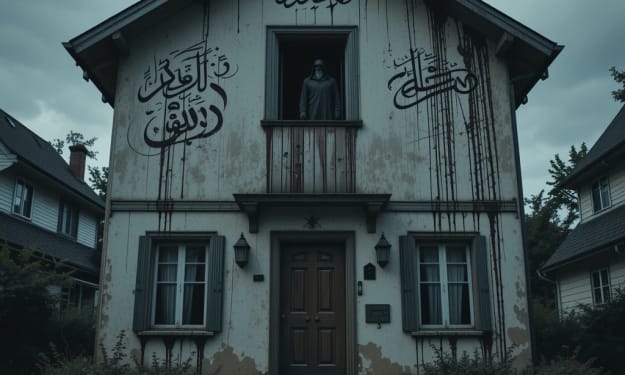
Where the Jinn Waited: The House That Recited the Kalima
Season 1 THE CALLING The Tenant Who Didn't Exist : The first night, time itself seemed to fracture at exactly 3:03 AM. Mehvish's eyes snapped open, her body drenched in a cold sweat that had nothing to do with the Turkey's summer heat. The digital clock's crimson numbers pulsed like a warning: 3:03. Not 3:00. Not 3:05. 3:03.
By Tales That Breathe at Nightabout a year ago in Horror
The Bermuda Triangle
Introduction One of the world's greatest unsolved mysteries is the Bermuda Triangle, also known as the "Devil's Triangle." Stretching between Miami, Bermuda, and Puerto Rico, this infamous region of the western Atlantic Ocean has been linked to the disappearance of ships, planes, and hundreds of lives under bizarre circumstances. Numerous theories, from scientific explanations to supernatural conspiracies, have been sparked by the Bermuda Triangle's vanishing aircraft and ghost ships with no crew. In this deep dive, we’ll explore: ✔ The most famous disappearances in the Bermuda Triangle Paranormal theories versus scientific theories Aviation and government reports on the phenomenon Is there still a mystery to be solved? The Legend of the Bermuda Triangle,
By Silas Blackwoodabout a year ago in Horror
The Silent Feed
Introduction: By 2025, it will be impossible to tell the difference between digital illusion and reality. Social media will be dominated by livestream culture, AI-generated influencers, and deepfake technology. But what happens when the internet itself becomes haunted?
By Silas Blackwoodabout a year ago in Horror