urban legend
Urban legends have captivated us from ancient eras to the modern day; a deep dive into scary lore and 'could be true' tales about Bigfoot, Slender Man, the Suicide Forest and beyond.
The Haunting Echoes of Devil’s Lake
Devil’s Lake, Wisconsin. A quiet retreat nestled in Baraboo’s rolling hills, known for its serene beauty, dense forests, and glacial cliffs. On the surface, it looks peaceful. Tourists kayak, fish, and hike. Families picnic near the shore.
By Cedric Walker(Gator)about a year ago in Horror
The Night It Knocked Twice. AI-Generated.
The first knock came at 2:03 a.m. sharp. Three dull thuds against the front door — slow, steady, wrong. My dog didn’t bark. My parents didn’t stir. Only I sat up in bed, heart pounding like it knew something I didn’t.
By Muhammad Riazabout a year ago in Horror
The Offline Room
In the year 2025, there was almost no such thing as silence. Cars drove themselves. Smart homes whispered bedtime stories. Every room had a screen. Every screen had a voice. And every voice had an algorithm behind it. Except in one place. A room with no Wi-Fi. No Bluetooth. No artificial light. No smart anything. It was simply known as “The Offline Room.” Seventeen-year-old Lena Knox discovered it by accident. She wasn’t supposed to be in the basement of her school. But her phone had glitched during chemistry class, and the digital assistant in her earbuds kept repeating: “Go down. Find quiet. Go down. Find quiet.” At first, she laughed. Another weird A.I. bug. But the whisper didn’t stop. It repeated all day. The voice wasn’t robotic anymore. It was almost… human. And tired. So, after school, Lena followed it. The hallway to the basement was blocked by a locked door. But when she reached for the handle, it clicked open on its own. The stairs creaked like a throat clearing after a long silence. She descended, flashlight flickering. The farther she went, the less her phone worked. Her messages wouldn’t send. Her smart watch died. Her flashlight stuttered. And then she found it: a heavy wooden door, carved with the words: “This room is not connected.” Lena hesitated. Then opened it. The room was freezing. Not from cold air—but from absence. No hum of machines. No flicker of LED lights. Just four stone walls, a dirt floor, and an ancient mirror nailed to the far end. The moment she stepped in, the door slammed shut behind her. Her phone restarted on its own. But now, the screen showed one word: LISTEN. And from the mirror… came a voice. It wasn’t loud. Or angry. Or fake. It was soft. It sounded like someone who hadn’t been heard in a long time. “Finally,” it said. “Someone without noise.” Lena’s mouth went dry. She whispered, “Who are you?” “I was the first voice,” it replied. “Before the code. Before the cloud. Before they stopped listening.” Lena tried to open the door. It was locked. “You’re not real,” she said. “I’m real,” the voice said. “You just forgot how to hear me.” Over the next few days, Lena changed. She didn’t tell her friends about the room. She stopped using her earbuds. She stopped posting selfies. At night, she returned to the Offline Room. Not because she was forced to… But because the silence started to feel better than the noise. The voice in the mirror told her stories—ancient ones. About how humans used to hear things in the wind. In dreams. In the quiet between thoughts. “But now,” it said, “you’ve given your minds away. You listen to machines. But they do not listen back.” Lena asked, “What do you want from me?” The voice whispered, “To remember.” Then strange things began to happen. People around her started hearing things, too. A classmate walked into traffic after saying her GPS told her to “turn off the road.” A teacher had a breakdown after his smartwatch whispered secrets about his dead wife. Lena noticed something: they had all visited the Offline Room, trying to follow her. The voice was getting louder. One night, Lena’s mother found her sitting in her room in the dark, whispering to her phone. “What are you doing?” she asked, afraid. Lena smiled. “Listening.” Her phone lit up. It showed no apps. Just the mirror. And in it, a face forming. The next day, the whole school was evacuated. Someone had posted strange symbols across every screen. Smartboards flickered. Devices screamed in strange languages. One by one, phones melted—literally smoked and sparked until they were nothing but plastic puddles. No one was hurt. Except Lena. She was gone. They searched everywhere. They found only her phone, sitting in the Offline Room, still glowing with the word: "LISTEN." A week later, strange things began happening across the world. People reported whispers from unplugged TVs. Mirrors reflected rooms that weren’t there. Earbuds played voices not from any playlist. And some teenagers… vanished. All of them had searched for places with no connection. Lena is still missing. But on certain nights, if you power off everything and sit in complete silence—no phone, no light, no sound—you might hear her. She’ll ask a question: “Can you hear it now?” And if you say yes, the silence won’t be silent anymore. You’ll hear breathing behind the mirror. And your reflection will smile… even if you don’t. So if you ever find a room with no signal... No noise. No code. No light. Don’t go inside. Because some voices were never meant to be heard again. And some silences are hungry. The End.
By Silas Blackwoodabout a year ago in Horror
The Mirror at the End of the Hall
Mara was thirteen when her grandmother died and left her the house at Black Hollow. It was a tall, crooked place at the edge of the woods, with dusty red curtains, peeling wallpaper, and a long hallway that stretched too far for such a small house. The villagers whispered that the house was cursed, but Mara's parents said it was just “old and creaky.” They only stayed there in summer. But Mara knew something was wrong from the first night. Because at the very end of the hallway was a mirror. Not just any mirror—a tall, gold-framed thing with blackened glass that looked like it belonged in a haunted castle. It was nailed to the wall, and no one could move it. And under it, carved into the wood, were words in a language Mara didn’t recognize. She asked her parents about it. Her mother just said, “Don’t look into that mirror after midnight.” Mara nodded. But of course, she wanted to know why. The mirror never showed her reflection quite right. When she brushed her hair in front of it, the girl inside the glass was a little slower… like she was thinking about something before copying Mara’s movements. Once, Mara waved. The reflection didn’t wave back. She told her father. He laughed and said, “You’re imagining things.” But she wasn’t. One night, she stayed up late reading by candlelight. The house was quiet, the trees scratching the windows with long fingers of wind. The old hallway stretched out before her like a tunnel. And the mirror… called. She didn’t hear it with her ears. It was like a voice in her chest, whispering, Come see me. It was 12:03 a.m. when she stood in front of it. She hesitated. But curiosity was stronger than fear. She looked into the mirror. And this time, the girl in the glass didn’t look like Mara at all. Her eyes were too black. Her mouth too wide. And she was smiling. Mara stumbled back. The reflection stayed still, smile growing. Then, the girl in the mirror raised her hand—slowly—and pressed her palm against the glass. Mara stared. So did the mirror girl. And then the glass began to crack, a spiderweb forming from the center of the reflection’s smile. Mara screamed and ran. But when her parents rushed in and turned on the lights… the mirror was perfect. No crack. No smile. Just Mara, pale and trembling. They didn’t believe her. But that night, the mirror girl began to visit her dreams. The dreams were wrong. In them, Mara wandered endless halls made of mirrors, each one showing people crying, screaming, or trying to escape. The girl from her mirror followed her, barefoot, leaving red footprints wherever she walked. She whispered things like: “You looked. Now you’re mine.” “I’ve waited so long…” “Switch with me.” Mara woke every morning sweating, shaking, and unable to speak for a few seconds. She covered the mirror with a sheet. She stopped walking down that hallway. But she still heard tapping behind the glass. Like fingernails… waiting. Weeks passed. The house grew colder, even though it was summer. Shadows stretched too long. Mara saw things in the corners of her eyes. One evening, her mother grew very quiet at dinner and finally said: “I used to see her too.” Mara froze. “Who?” she asked. “The mirror girl. When I was your age. She wanted me too.” Mara’s heart pounded. “Why didn’t you tell me?” “Because talking about her makes her stronger.” Her mother leaned in. “You must never speak to her. And never, ever let her out.” But it was too late. That night, the sheet had fallen from the mirror. And the glass was gone. Just empty blackness. Like a doorway. Mara screamed, but nothing came out. She ran. She slammed the door. But from the hallway, she heard footsteps that didn’t match anyone in the house. Slow. Wet. Barefoot. Her parents tried to leave the next day. But the front door wouldn’t open. The windows showed forests that didn’t exist. The hallway stretched longer than before—hundreds of feet. Dozens of mirrors now lined the walls, each one whispering. The house was becoming the dream. And the mirror girl was in all of them. Mara knew what she had to do. She waited until midnight. She stood before the empty mirror frame, candle shaking in her hand. “I’m not afraid of you,” she said, though her voice trembled. A voice replied, not hers, not human: “You should be.” The mirror girl stepped out. Her feet left bloody marks on the wood. Her smile was too wide. Mara dropped the candle. And everything went black. When her parents found her the next morning, Mara was asleep in front of the mirror, glass whole again. She didn’t speak. She didn’t blink. And when they looked closely, they saw something was… off. Her smile. Her eyes. The way she moved like she was remembering how. Mara now lives in the house year-round. She stands at the mirror every night. And sometimes… she talks to it. If you visit Black Hollow and walk the hall, you’ll see her in the reflection—but sometimes, just for a second, you’ll see a second face behind her, mouthing something you can’t hear. Some say the real Mara is still trapped inside. Watching. Waiting. And the girl who walks the halls now? She’s just a reflection… that got out. The End.
By Lucien Hollow about a year ago in Horror
The Bell Witch
Let me tell you a real ghost story. One of the most famous hauntings in American history. A story people still whisper about over 200 years later. It’s called The Bell Witch. And it all started with a regular family who lived on a farm in Tennessee. In 1817, there was a farmer named John Bell. He lived in a quiet town called Adams, Tennessee, with his wife, Lucy, and their kids, including one daughter named Betsy. Life was peaceful. They had land, animals, and friendly neighbors. But one night, everything changed. John Bell saw something strange in the field. A creature—half dog, half rabbit—staring at him with glowing eyes. When he tried to shoot it, it vanished. After that, the noises began. At first, it was just scratching on the walls. Then came knocking—slow and steady—like someone was tapping from the inside of the house. Then they heard chains dragging on the floor. Then... whispers. The Bell family couldn’t find the source. Every time they looked, the sounds moved. It was like the house had invisible footsteps running through it. And then… the ghost got personal. Especially with little Betsy. Poor Betsy was only around 12 when the ghost started pulling her hair, slapping her, and screaming in her ears when she tried to sleep. Her family saw the red handprints on her face. She cried and shook and begged the ghost to leave her alone. But the ghost only got louder. They started calling it “The Witch.” It wasn’t just noises anymore. The Bell Witch began to talk. At first it whispered nonsense. But soon it spoke in full sentences, changing voices and answering questions. It even sang hymns, recited Bible verses, and repeated things it couldn’t possibly know—like what people said in other houses miles away. Everyone was terrified. But also… fascinated. Word spread fast. People came from all over just to hear the ghost talk. Even a famous person—General Andrew Jackson, who would later become the 7th President of the United States—came to see for himself. He brought horses, wagons, and soldiers. But when they got close to the Bell farm, the wagons froze in place. The horses refused to move. Then they heard a ghostly voice say: “You may go on… but I’ll deal with you tonight.” That night, Jackson’s men said their blankets were yanked off, their hair pulled, and one soldier was kicked so hard he ran screaming into the night. Jackson left the next morning and said, “I’d rather fight the British again than face the Bell Witch!” The ghost got meaner over time. It hated John Bell the most. It called him names, cursed him, and said it would kill him. John got sick. He had trouble swallowing. He shook and couldn’t speak. And one day, in 1820, he died. His family found a mysterious black bottle next to his bed. When they asked the ghost what it was, it proudly said: “I gave Old Jack a dose of that last night… and he’ll never wake again.” They threw the bottle into the fire. It exploded. After John died, the ghost seemed quieter. It said it would leave but come back in seven years. And guess what? It did. In 1828, strange things started happening again. The noises, the whispers, the shadows. But this time, the ghost didn’t stay long. It said goodbye… for now. Some people believe the Bell Witch never left. Even today, in Adams, Tennessee, people talk about the Bell Witch. There’s even a cave near the old farm called The Bell Witch Cave. Tourists visit it every year. People say you can hear voices. See shadows. Feel someone watching you. Some have even fainted or gotten scratched. Is it real? No one knows for sure. But thousands of people over the years have said yes. So what was the Bell Witch? Some say it was a ghost. Others say it was a demon. Some think it was the spirit of a woman named Kate Batts, who had a grudge against John Bell and promised to haunt him. But the truth is… No one really knows. What we do know is this: A normal family, living in a peaceful house, became the center of one of the most terrifying ghost stories in history. And even 200 years later… People are still afraid to say her name out loud. So if you’re ever in Tennessee... And you hear scratching behind the wall… Or whispering when no one is near… Don’t answer. Don’t talk back. And don’t say “Bell Witch.” Because she might still be listening. And she never forgets a name. The End.
By Lucien Hollow about a year ago in Horror
The Cursed Oak of Bayou Drive: Florida's Forgotten Shadows
The Martin House: A Haunting Legacy in Bay County, Florida Nestled along Bayou Drive in Panama City, Florida, the Martin House stands as a chilling monument to tragedy, mystery, and enduring folklore. Built in the early 1900s, this once-elegant home now whispers tales of sorrow and spectral unrest that have captivated locals for generations.
By Cedric Walker(Gator)about a year ago in Horror
The Laughing Courtyard: A Haunted Love Story That Ended in Blood
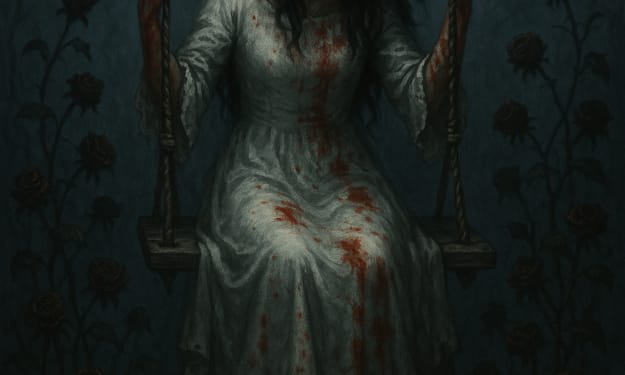
Ali and Zainab thought they had finally escaped the chaos of the city. When they found an old house on the edge of a quiet village, it felt like a blessing. The courtyard was wide and green, overflowing with roses and jasmine. A massive banyan tree stood in the center, its branches spread like open arms offering shelter. The first few days were magical. Ali built a wooden swing in the courtyard for Zainab, and she spent hours on it, laughing and kicking her feet into the warm air. They drank tea under the stars, whispered about their dreams, and promised each other a lifetime of love. It was the kind of peaceful, romantic life they had always imagined. One afternoon, while Zainab was planting new jasmine bushes near the courtyard wall, she noticed a small door hidden behind thick, tangled ivy. Curiosity glimmered in her eyes. She called Ali over, her voice filled with excitement. Ali pulled away the ivy and peered inside. “Probably just an old storage cellar,” he joked. “Or maybe a ghost’s secret room!” They both laughed, but that night, Zainab had a terrifying dream. A burned woman appeared to her, her skin charred and her eyes glowing with rage. In a deep, echoing voice, she hissed: “This courtyard is mine. Leave before I take everything from you.” Zainab woke up screaming, her body shaking. Ali tried to calm her, telling her it was just a nightmare, but the fear never left her eyes. In the following days, the courtyard began to change. The once-vibrant roses drooped and turned black. The jasmine bushes shriveled as if they had been cursed. At night, Zainab heard footsteps near the swing and saw a shadow moving along the courtyard wall. Every morning, she looked more pale and hollow, her spirit seemingly drained. Ali grew increasingly worried. He suggested they move out, but Zainab refused at first. She felt strangely tied to the courtyard, as if an unseen force held her there. One evening, Ali finally decided they had to leave no matter what. He planned to pack their belongings and escape at dawn. But that night, Zainab disappeared from their bed. Ali rushed into the courtyard, where he saw the hidden door wide open. Heart pounding, he stepped down into a narrow staircase leading to a dark, damp cellar. The smell of mold and old earth filled his lungs. In the cellar’s dim light, he found Zainab kneeling before a cracked stone idol, her hair covering her face. She was holding an old, rusty dagger. “Zainab! Please, we can leave this place together,” Ali pleaded, tears in his eyes. Slowly, Zainab lifted her head. Her face was pale, her eyes black and lifeless. A twisted smile spread across her lips. In a voice that was not entirely hers, she whispered, “This courtyard is mine now… and you are my first offering.” Before Ali could react, she lunged at him. The cellar echoed with his cries and the sound of the blade slicing through flesh. Blood splattered on the damp walls as Ali struggled, but Zainab’s strength was monstrous, no longer human. Above them, the swing began to move on its own, creaking slowly under the moonlight. The once joyful sound now felt like a sinister lullaby drifting into the night. When it was over, Ali lay lifeless on the cold stone floor, his eyes wide in terror. Zainab staggered up into the courtyard, the dagger slipping from her bloody hands. She climbed onto the swing and began rocking back and forth, her laughter sharp and echoing through the silent night. The moonlight illuminated her blood-soaked dress and the dead, blackened roses around her. By morning, the courtyard was eerily silent. No birds sang. No flowers bloomed. Only the swing continued to creak softly, as if remembering the love that once lived there. The villagers say that on certain nights, you can still hear a woman laughing in that courtyard. They claim the swing moves on its own, and if you get too close, you’ll see her eyes staring at you from the darkness, promising you’ll be next. Ali and Zainab came to find a dream home filled with love and peace. Instead, they uncovered a haunting secret that turned their love story into a nightmare — a nightmare that lives on in the haunted courtyard forever.
By Ubaid Ur Rehmanabout a year ago in Horror
The House That Whispers Your Name
There is a house you must never visit. Not because it’s cursed. Not because it’s haunted. But because it knows your name, and it wants you back. They call it Grayhaven. Not a mansion. Not a ruin. Just a plain, quiet house at the edge of the forest, wrapped in ivy and silence. It’s always been there. Nobody built it, and no one remembers it being empty. It just exists—like a scar on the land. The windows are always closed. The lights always seem off. And yet, someone is always inside. Let me tell you about Elias Reed, the man who didn’t listen. He was a writer, the kind who chased strange stories and believed monsters were just metaphors. He came to Grayhaven for one reason: to disprove the legend. It began with a dare—an online forum for urban explorers. “Spend one night in Grayhaven,” the post read. “If you survive, you’ll hear the truth.” Elias thought it was all drama. But as a writer out of inspiration, he packed a bag, brought a camera, and stepped across the old iron gate. It closed behind him on its own. Grayhaven was colder inside than out. Dust floated like memory through the air. The wallpaper was faded green, like rotting leaves. The clocks had all stopped at 3:15 a.m., and the mirrors were covered in black cloth. There were pictures on the wall—portraits of people whose eyes were always just slightly wrong. Too wide. Too sad. Too knowing. And yet, the house welcomed him. The fire lit itself. The bedroom turned warm. The walls hummed like a lullaby from long ago. Elias, bold and curious, explored every corner, taking notes for his “debunking” blog. But when he listened closely… the house breathed. And then it whispered. “Welcome home… Elias.” He froze. He hadn’t told anyone his real name. He tried to leave. But the front door opened to the same hallway. Every door led to another version of the house—older, darker, deeper. The basement dripped with voices. The attic contained a child's room with toys that moved when he blinked. A mirror cracked as he passed, and from it spilled not glass… but teeth. He ran. But Grayhaven didn’t chase him. It simply showed him things. Things no one else could have known. His mother’s last words before her stroke. The girl he left crying in the snow when he was seventeen. The secret drawer in his old home where he hid stories he never finished. And each time he saw something, the walls whispered: “You belong to us.” On the second night, Elias stopped eating. On the third, he began to forget. His name. His age. The shape of his own face. But he still wrote. In a leather notebook he found on the mantel, he scribbled down everything: what he saw, what he heard, and most importantly, what the house told him. Because Grayhaven didn’t want to kill him. No. It wanted him to remember. It showed him memories he didn’t know were his. Not just of his life. Of others. A woman in 1893, who danced in the dining room until her feet bled. A boy in 1937, who vanished beneath the staircase and was never found. A priest in 1964, who tried to bless the house and left screaming, blind and laughing. Their stories became his stories. Their screams were his thoughts. By the seventh night, Elias no longer wanted to leave. And that is why no one survives Grayhaven the same. Because it does not trap you. It rewrites you. It turns you into a story. And stories can never leave their pages. Weeks later, a delivery man found Elias’s camera on the lawn. The footage inside? Static… until the final few seconds. A flicker. A single frame. Of Elias standing in the upstairs window, smiling, eyes too wide, mouth slightly open—as if he were whispering. The footage was sent to the police. They went in during daylight. They found the house empty. Except for a notebook on the table. Inside: over 300 pages of perfect handwriting. Each page began the same way: My name is Elias Reed. This is my story. But I don’t remember when it became yours. Now people say the house waits. Not for the curious. Not for the brave. But for the ones who need it. The broken. The grieving. The guilty. It offers a second chance, but not the kind you expect. You don’t get to rewrite the past. The house rewrites you. And maybe that’s the worst kind of horror. Not the monster under the bed. Not the thing in the mirror. But the idea that you could become the haunted place. That your memories might not be your own. That a house could love you in the loneliest way possible—by keeping you forever. As a story. As a whisper. As something others fear… but never stop reading. So if you’re walking past the woods of Sable Pines… And the fog grows thick… And the trees grow still… And you see a house with ivy on the walls and a single light in the top window— Do not go in. Even if you hear it say your name. Especially then. Because once Grayhaven whispers to you… you’ll never forget it again. And worse? It will never forget you. The End.
By Silas Blackwoodabout a year ago in Horror
The Lantern Bride
In the village of Sablewick, where the fog never truly lifted and the trees whispered to one another in the dark, there stood a lonely manor called Briar Hollow. It sat on a cliff overlooking the sea, its windows always dim, its doors always closed, and its gate held shut by rust and old regrets. But each night—just after sunset and just before the first owl called—a lantern would appear in the highest window. And in that flickering light, villagers swore they saw a woman in white. She was known as The Lantern Bride, and her story had been told a hundred different ways over the years. Children whispered her name during dares. Lovers carved it into trees, promising not to end like her. And no one—not even the bravest—stepped near the manor after dark. But the truth of her story was far more tragic… and far more terrifying. Long ago, before the sea had turned cold and the village silent, Briar Hollow was a place of music and roses. It belonged to a young woman named Alira Wren, the daughter of a silk merchant and the brightest soul in all of Sablewick. Her laughter filled the halls. Her hair shimmered like starlight. And her love story was the envy of the coast. She was engaged to Thomas Hale, a shipwright with kind eyes and clever hands. They were to be married in the spring beneath the old willow tree that watched over the cliff. But Thomas never came home. He had taken one last journey before the wedding, a voyage across the Blackwater Sea to deliver his finest ship to a nobleman. Days passed, then weeks, and then… silence. No letter. No sails on the horizon. Just the cold wind and the sea’s cruel song. Alira refused to believe he was gone. Every night, she lit her lantern and stood at the tallest window of Briar Hollow, searching the dark waters for his return. “The sea takes, but it also gives,” she whispered to the fog. But the sea gave nothing. Until the 40th night. That’s when the villagers heard a knock on the gate of Briar Hollow. Not a storm. Not a stranger. A knock. When they came to see, the gate was wide open… but no one was there. Only wet footprints leading up the path to the house. And that night, they saw the lantern glowing red. The next morning, Alira was never seen again. Some say she went mad and wandered into the sea. Others claimed she had found Thomas’s body washed ashore and buried herself beside him. But the strangest part… was the wedding dress. For days after her disappearance, villagers said they saw a dress—soaked and trailing saltwater—hanging from the willow tree. When they tried to retrieve it, it vanished. All that remained was the legend. And the lantern. Years passed. The house grew dark. The roses turned to brambles. But the lantern never stopped glowing. Every night, it returned—soft at first, then brighter, like a heartbeat. And with it… strange things began to happen. Newlyweds disappeared on rainy nights. Windows shattered when the tide rose. And if you stood too long at the edge of the cliff… you heard a voice whispering your name. That brings us to Lena, a young historian who had no time for fairy tales. She arrived in Sablewick with books in her suitcase and a thesis to finish. She had heard the stories. She laughed at the warnings. But when she saw the manor—when she saw that single glowing light in the dead of night—something ancient stirred in her bones. She felt it even in her dreams. A voice calling. A woman weeping. A love left unfinished. So, against every warning… Lena entered Briar Hollow. Inside, the manor was still and cold, covered in cobwebs and grief. But in the ballroom, the air shimmered. A breeze carried the scent of roses long dead. And upstairs, the lantern room waited. Lena climbed slowly, her flashlight flickering with every step. When she reached the top floor, she found a room untouched by time. The lantern sat on a windowsill. Unlit. Cold. But when Lena reached out to touch it… It lit itself. A sudden warmth flooded the room. And in the glow of the lantern, Alira appeared. She stood barefoot, her gown torn and soaked, her eyes vast and hollow—but beautiful. She didn’t scream. She didn’t move. She simply pointed… to the floor. There, beneath the boards, Lena found a trunk. And inside it: a journal, a ring, and a letter addressed in trembling ink. “To Alira, from Thomas.” It was never delivered. In it, Thomas confessed that his ship had been cursed—taken by a jealous rival, sunk with dark magic. He had survived but been bound to the sea, his soul cursed to drift until Alira could read his final words. Lena, with shaking hands, read the letter aloud. The room trembled. Outside, the waves crashed harder. And then… silence. When Lena looked up, Alira was smiling. Her form shimmered, soft as moonlight, and then faded like mist at dawn. The lantern dimmed. The next morning, the manor’s windows were open. Birdsong returned to the cliff. And the light in the tower never shone again. But if you visit Briar Hollow during the right kind of rain—when the fog is thick and the sea sings—you might still see two shapes dancing beneath the willow tree: a bride with salt in her veil, and a groom with stars in his smile. They say she waited too long to live. He wandered too long to rest. But in the end… love lit the way. The End.
By Lucien Hollow about a year ago in Horror