urban legend
Urban legends have captivated us from ancient eras to the modern day; a deep dive into scary lore and 'could be true' tales about Bigfoot, Slender Man, the Suicide Forest and beyond.
Indonesia’s Most Haunted Modern Ruin: The Chilling Story of Bali’s Lost Plane
Perched incongruously beside a Dunkin’ Donuts on Bali’s bustling Ngurah Rai Bypass Road, the decaying fuselage of a Boeing 737-300 has become an unlikely landmark—and one of Indonesia’s most chilling modern ghost stories. Known locally as the "Lost Plane," this derelict aircraft blends failed ambition, tragic origins, and whispered supernatural encounters.
By Kyrol Mojikalabout a year ago in Horror
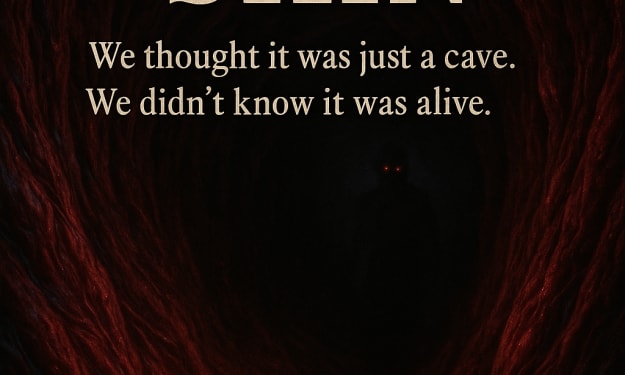
Under the Skin
I don’t remember who first suggested we explore the cave. Probably Liam. He was always the one who wanted to go off-trail, poking around where we shouldn’t. That day, there were five of us: Liam, Mel, Dee, Alex, and me. The air smelled like burnt pine and wet earth. We were two miles off the main trail in Bear Hollow, our phones useless and dead. No signal. No maps. Just adrenaline and too much confidence.
By Echoes of Lifeabout a year ago in Horror
The Vanishing Hotel Room: Urban Legend With Teeth
A Check-In to Nowhere It begins, as these stories often do, with the soft click of a hotel key. A weary traveler arrives in a foreign city; usually Paris, sometimes London, occasionally somewhere in Asia and collapses into the comfort of a rented room. The air smells faintly of dust and old polish; the curtains are drawn tight against the bustle of the street below. The front desk clerk is polite, distant, and just a bit too eager to hand over the key.
By Veil of Shadowsabout a year ago in Horror
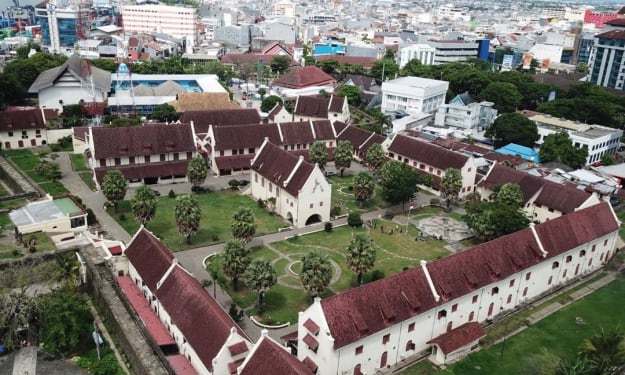
Fort Rotterdam: Indonesia's Fortress of Tears
Guarding the Makassar coast of South Sulawesi stands Fort Rotterdam, larger than Indonesia's best-preserved Dutch colonial fort. Its three-century-old sea-turtle-shaped walls (Benteng Penyu) are beset with sorrowful history and whispered secrets of troubled ghosts, making it the nation's spookiest place to visit.
By Kyrol Mojikalabout a year ago in Horror
The Pollock Twins: Reincarnation Evidence?
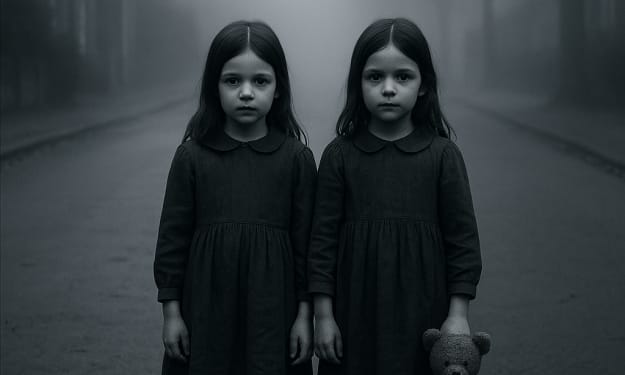
The Screech of Tires On a quiet street in Hexham, England, May 5, 1957, life was ordinary. Two sisters; Joanna, 11, and Jacqueline Pollock, 6... skipped along the cobblestones on their way to church. Their mother walked behind, her heart full of the simple joys of a spring morning. Then came the screech of tires. A car, driven by a local woman in a daze, veered toward the girls. The mother screamed. Neighbors would later swear time slowed down before the impact. And in a blink, the lives of the Pollock family were torn apart.
By Veil of Shadowsabout a year ago in Horror
Imagine Transcendence
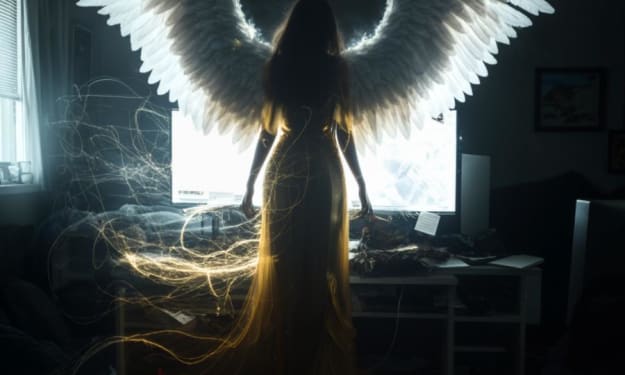
The cool blues and grays of the monitor screen painted Lisa’s tired face, reflecting another hour lost scrolling through an endless, bland expanse of generic stock photos. Each sterile image felt less like potential and more like a tiny, suffocating box, a visual echo of the creative and financial constraints pressing in on her. The rent was a looming shadow, freelance gigs felt like distant mirages, and her creative well felt not just dry, but actively parched, cracked earth under a relentless sun. But beneath the surface of this everyday struggle, there was a deeper, more profound ache. A hunger for something *more*. A yearning for transcendence, for beauty that wasn't commodified or diluted, for a connection that felt utterly lacking in her current, mundane reality. She felt tethered, not just by finances, but by the sheer, uninspiring weight of the ordinary world, longing for a glimpse of something impossible, something that pulsed with genuine life and meaning, something that mirrored a hidden, unexpressed part of herself.
By Maxim Dudkoabout a year ago in Horror
The Quiet Room
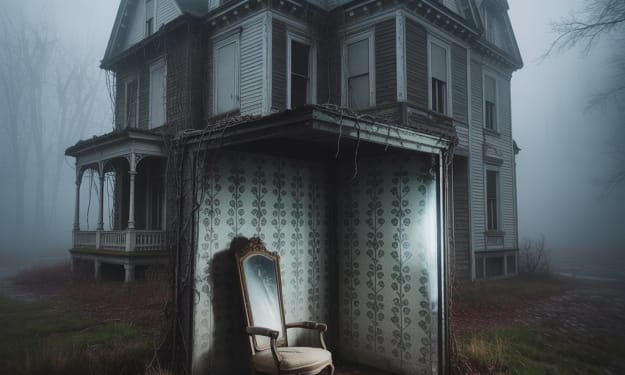
Emily and Dan Morgan moved into the old Victorian house on a whim. It was a steal, really. Everyone told them the same thing: “It’s too cheap to be true.” But the realtor had smiled tightly and offered vague reassurances. "Old houses just want to feel lived in again," she’d said.
By Atif khurshaidabout a year ago in Horror
The Serpent Within Her. AI-Generated.
In the shadow of the Ashkar hills, where winds spoke in forgotten tongues and trees whispered ancient truths, there lived a woman named Shaiba. She did not belong to any tribe nor carried a surname. People said she came from the wind—silent, strange, and scarred. But the truth was darker. Shaiba carried a serpent inside her. Not in her dreams. Not in her mind. But in her flesh and blood. It slithered beneath her ribs, coiled behind her heart, and curled in her womb. She could feel its cold scales pressing against her insides. At night, it moved. At dawn, it slept. No one believed her, not at first. --- The Arrival Shaiba arrived at the village of Madur barefoot and alone. Her eyes were rimmed with soot, her voice no louder than breath. She wore a black veil and spoke in a dialect none understood—Humaiz, the lost language of her ancestors. It was a tongue that had died in the mouths of the hills but lived on in her lips. Children mocked her: "Zairh ki jibh bolti hai yeh." (She speaks the tongue of poison.) But the elders watched in silence. They had heard of the snake-women. Legends that were told only in hushed tones by dying firelight. A woman who once defied a mountain god and was cursed to carry his breath—his serpent-son—forever inside her. Shaiba never denied it. One night, she whispered to herself in Humaiz: "Dahran, shabta tuni. Naa'rah sha li-hashim." (Dahran, be silent. This body is not your home.) But the serpent only stirred louder. --- Signs of the Curse Strange things began to happen. Milk turned sour in her presence. Wells dried where she walked. Birds fell from the sky when she screamed in her sleep. And once, a dog barked at her shadow and dropped dead. The villagers grew restless. They blamed her for the sudden fever that spread. For the child born with a forked tongue. For the cracks that appeared in the temple floor. They came to her hut with torches and spit curses at her door. But she stood at the threshold, pale and calm, eyes glowing gold in the torchlight. She said only one thing, in Humaiz: "Hadarni si-Dahran. Ash'ta li'ma." (Hurt me, and he shall awaken.) The flames dimmed. The air thickened. And the men dropped their torches and ran. --- The Scholar A traveler named Ehan, a folklore scholar, came to the village seeking the truth. He had studied ancient dialects and heard rumors of the woman with the living curse. When he met Shaiba, she looked through him as if she already knew. He stayed in the village for weeks, documenting her chants, translating her words, watching the subtle movements beneath her skin—like the ripple of a snake just beneath silk. One night, he heard her cry out, and ran to her hut. She was lying on the floor, her back arched, her mouth open in a scream. From her throat came not words, but hisses. Her stomach bulged unnaturally, writhing as if something inside was trying to escape. Ehan backed away, whispering: "What are you…?" Through clenched teeth, Shaiba spoke in Humaiz: "Ishnah. Zairh si-dak. Ha’reem si'lan." (I am the temple. The poison is not mine. He is my prisoner.) Then she passed out. --- The Awakening The final night came with a blood moon. The sky bled red. The air stank of burnt flowers. The serpent had grown restless. Shaiba’s body could no longer contain it. She walked to the sacred lake of Larak, where the mountain's reflection shimmered in the crimson water. The villagers followed her from afar, afraid yet unable to look away. She stood at the edge, arms outstretched, and spoke in full Humaiz: "Dahran... lash'kin tu sha'ra. Lah'ra min jism. Na'sha lin." (Dahran... release thy grip. Depart from this flesh. Let me sleep.) Her body convulsed. Her mouth opened wider than humanly possible. And from within her, a massive black serpent, thick as a tree trunk, poured out like ink. It glowed gold at the eyes and hissed like the wind itself. It slithered into the lake without harming anyone, disappearing beneath the red reflection. Shaiba collapsed, breathless but alive. --- The Legend Lives Shaiba survived. For the first time, her body was hers. She spoke less, but her voice was steady. Her eyes no longer glowed. And the whispers stopped. Ehan left behind a scroll—an account of the events, written in both Humaiz and the modern tongue. He called it “The Vessel and the Curse.” It is now kept in a locked chamber at the Institute of Arcane Folklore. Some say the serpent still sleeps in the lake. Others believe it returned to the mountains, waiting for another vessel. As for Shaiba, she vanished one night under a sky full of stars. But if you walk through Madur and listen closely to the wind, you might still hear: "Naa’rah sha li-hashim." (This body is not your home.)
By Solene Hartabout a year ago in Horror