tv review
TV reviews for horror aficionados; from vampire slayers to streamable spooks, explore horror-inducing television series from the discomfort of your living room.
The House That Whispers Your Name
There is a house you must never visit. Not because it’s cursed. Not because it’s haunted. But because it knows your name, and it wants you back. They call it Grayhaven. Not a mansion. Not a ruin. Just a plain, quiet house at the edge of the forest, wrapped in ivy and silence. It’s always been there. Nobody built it, and no one remembers it being empty. It just exists—like a scar on the land. The windows are always closed. The lights always seem off. And yet, someone is always inside. Let me tell you about Elias Reed, the man who didn’t listen. He was a writer, the kind who chased strange stories and believed monsters were just metaphors. He came to Grayhaven for one reason: to disprove the legend. It began with a dare—an online forum for urban explorers. “Spend one night in Grayhaven,” the post read. “If you survive, you’ll hear the truth.” Elias thought it was all drama. But as a writer out of inspiration, he packed a bag, brought a camera, and stepped across the old iron gate. It closed behind him on its own. Grayhaven was colder inside than out. Dust floated like memory through the air. The wallpaper was faded green, like rotting leaves. The clocks had all stopped at 3:15 a.m., and the mirrors were covered in black cloth. There were pictures on the wall—portraits of people whose eyes were always just slightly wrong. Too wide. Too sad. Too knowing. And yet, the house welcomed him. The fire lit itself. The bedroom turned warm. The walls hummed like a lullaby from long ago. Elias, bold and curious, explored every corner, taking notes for his “debunking” blog. But when he listened closely… the house breathed. And then it whispered. “Welcome home… Elias.” He froze. He hadn’t told anyone his real name. He tried to leave. But the front door opened to the same hallway. Every door led to another version of the house—older, darker, deeper. The basement dripped with voices. The attic contained a child's room with toys that moved when he blinked. A mirror cracked as he passed, and from it spilled not glass… but teeth. He ran. But Grayhaven didn’t chase him. It simply showed him things. Things no one else could have known. His mother’s last words before her stroke. The girl he left crying in the snow when he was seventeen. The secret drawer in his old home where he hid stories he never finished. And each time he saw something, the walls whispered: “You belong to us.” On the second night, Elias stopped eating. On the third, he began to forget. His name. His age. The shape of his own face. But he still wrote. In a leather notebook he found on the mantel, he scribbled down everything: what he saw, what he heard, and most importantly, what the house told him. Because Grayhaven didn’t want to kill him. No. It wanted him to remember. It showed him memories he didn’t know were his. Not just of his life. Of others. A woman in 1893, who danced in the dining room until her feet bled. A boy in 1937, who vanished beneath the staircase and was never found. A priest in 1964, who tried to bless the house and left screaming, blind and laughing. Their stories became his stories. Their screams were his thoughts. By the seventh night, Elias no longer wanted to leave. And that is why no one survives Grayhaven the same. Because it does not trap you. It rewrites you. It turns you into a story. And stories can never leave their pages. Weeks later, a delivery man found Elias’s camera on the lawn. The footage inside? Static… until the final few seconds. A flicker. A single frame. Of Elias standing in the upstairs window, smiling, eyes too wide, mouth slightly open—as if he were whispering. The footage was sent to the police. They went in during daylight. They found the house empty. Except for a notebook on the table. Inside: over 300 pages of perfect handwriting. Each page began the same way: My name is Elias Reed. This is my story. But I don’t remember when it became yours. Now people say the house waits. Not for the curious. Not for the brave. But for the ones who need it. The broken. The grieving. The guilty. It offers a second chance, but not the kind you expect. You don’t get to rewrite the past. The house rewrites you. And maybe that’s the worst kind of horror. Not the monster under the bed. Not the thing in the mirror. But the idea that you could become the haunted place. That your memories might not be your own. That a house could love you in the loneliest way possible—by keeping you forever. As a story. As a whisper. As something others fear… but never stop reading. So if you’re walking past the woods of Sable Pines… And the fog grows thick… And the trees grow still… And you see a house with ivy on the walls and a single light in the top window— Do not go in. Even if you hear it say your name. Especially then. Because once Grayhaven whispers to you… you’ll never forget it again. And worse? It will never forget you. The End.
By Silas Blackwoodabout a year ago in Horror
The Lantern Bride
In the village of Sablewick, where the fog never truly lifted and the trees whispered to one another in the dark, there stood a lonely manor called Briar Hollow. It sat on a cliff overlooking the sea, its windows always dim, its doors always closed, and its gate held shut by rust and old regrets. But each night—just after sunset and just before the first owl called—a lantern would appear in the highest window. And in that flickering light, villagers swore they saw a woman in white. She was known as The Lantern Bride, and her story had been told a hundred different ways over the years. Children whispered her name during dares. Lovers carved it into trees, promising not to end like her. And no one—not even the bravest—stepped near the manor after dark. But the truth of her story was far more tragic… and far more terrifying. Long ago, before the sea had turned cold and the village silent, Briar Hollow was a place of music and roses. It belonged to a young woman named Alira Wren, the daughter of a silk merchant and the brightest soul in all of Sablewick. Her laughter filled the halls. Her hair shimmered like starlight. And her love story was the envy of the coast. She was engaged to Thomas Hale, a shipwright with kind eyes and clever hands. They were to be married in the spring beneath the old willow tree that watched over the cliff. But Thomas never came home. He had taken one last journey before the wedding, a voyage across the Blackwater Sea to deliver his finest ship to a nobleman. Days passed, then weeks, and then… silence. No letter. No sails on the horizon. Just the cold wind and the sea’s cruel song. Alira refused to believe he was gone. Every night, she lit her lantern and stood at the tallest window of Briar Hollow, searching the dark waters for his return. “The sea takes, but it also gives,” she whispered to the fog. But the sea gave nothing. Until the 40th night. That’s when the villagers heard a knock on the gate of Briar Hollow. Not a storm. Not a stranger. A knock. When they came to see, the gate was wide open… but no one was there. Only wet footprints leading up the path to the house. And that night, they saw the lantern glowing red. The next morning, Alira was never seen again. Some say she went mad and wandered into the sea. Others claimed she had found Thomas’s body washed ashore and buried herself beside him. But the strangest part… was the wedding dress. For days after her disappearance, villagers said they saw a dress—soaked and trailing saltwater—hanging from the willow tree. When they tried to retrieve it, it vanished. All that remained was the legend. And the lantern. Years passed. The house grew dark. The roses turned to brambles. But the lantern never stopped glowing. Every night, it returned—soft at first, then brighter, like a heartbeat. And with it… strange things began to happen. Newlyweds disappeared on rainy nights. Windows shattered when the tide rose. And if you stood too long at the edge of the cliff… you heard a voice whispering your name. That brings us to Lena, a young historian who had no time for fairy tales. She arrived in Sablewick with books in her suitcase and a thesis to finish. She had heard the stories. She laughed at the warnings. But when she saw the manor—when she saw that single glowing light in the dead of night—something ancient stirred in her bones. She felt it even in her dreams. A voice calling. A woman weeping. A love left unfinished. So, against every warning… Lena entered Briar Hollow. Inside, the manor was still and cold, covered in cobwebs and grief. But in the ballroom, the air shimmered. A breeze carried the scent of roses long dead. And upstairs, the lantern room waited. Lena climbed slowly, her flashlight flickering with every step. When she reached the top floor, she found a room untouched by time. The lantern sat on a windowsill. Unlit. Cold. But when Lena reached out to touch it… It lit itself. A sudden warmth flooded the room. And in the glow of the lantern, Alira appeared. She stood barefoot, her gown torn and soaked, her eyes vast and hollow—but beautiful. She didn’t scream. She didn’t move. She simply pointed… to the floor. There, beneath the boards, Lena found a trunk. And inside it: a journal, a ring, and a letter addressed in trembling ink. “To Alira, from Thomas.” It was never delivered. In it, Thomas confessed that his ship had been cursed—taken by a jealous rival, sunk with dark magic. He had survived but been bound to the sea, his soul cursed to drift until Alira could read his final words. Lena, with shaking hands, read the letter aloud. The room trembled. Outside, the waves crashed harder. And then… silence. When Lena looked up, Alira was smiling. Her form shimmered, soft as moonlight, and then faded like mist at dawn. The lantern dimmed. The next morning, the manor’s windows were open. Birdsong returned to the cliff. And the light in the tower never shone again. But if you visit Briar Hollow during the right kind of rain—when the fog is thick and the sea sings—you might still see two shapes dancing beneath the willow tree: a bride with salt in her veil, and a groom with stars in his smile. They say she waited too long to live. He wandered too long to rest. But in the end… love lit the way. The End.
By Lucien Hollow about a year ago in Horror
The Midnight Dressmaker
In the quiet village of Gallowmere, where the moon always seemed just a little too full and the air always smelled faintly of roses and ash, there was once a woman named Elara. She was known far and wide as The Midnight Dressmaker. She wasn’t called that because she worked late. No—Elara only opened her boutique at midnight. That was when her shop lit up with soft candlelight, and she’d welcome anyone who knocked on her tall, black wooden door. By dawn, the shop would vanish into darkness again—shutters closed, windows covered, as if it had never opened. Elara was beautiful. Not in a warm, friendly way, but in the kind of beauty that made your heart skip—icy and elegant, like snow that had never been touched. Her eyes were grey, like storm clouds, and her voice was soft as silk. But what truly made her famous were her dresses. People claimed her gowns could make anyone breathtaking. If you wore one of Elara’s creations, you’d be the center of any room, the dream of every eye. Brides came from miles away. Actors begged for her designs. No matter how rich or poor you were, if she accepted your request… she never charged a coin. She only asked for something personal—something that "held a memory." A necklace, a diary, even a single teardrop on a handkerchief. And people always gave it. They said she worked with shadows and lace, with whispers and dreams. But those who wore her dresses never talked about them afterward. Not even once. That would’ve been the end of the story—just an eerie village rumor—if not for Maera, a curious 17-year-old girl who lived down the lane from Elara’s shop. Maera loved fairy tales, especially the ones that ended badly. She had a heart full of wonder and just enough foolish bravery to think she could solve any mystery. One night, when the air was thick with summer and the stars blinked like watchful eyes, Maera did something nobody else had dared: she snuck into Elara’s shop. She waited until the bell chimed midnight and the shop’s windows glowed golden. Then, wearing her father’s dark coat and her own trembling courage, she slipped through the side door that Elara had forgotten to lock. Inside, the boutique was like a dream stitched together by nightmares. Mannequins stood frozen like statues, all wearing half-finished gowns. Some dresses shimmered with golden thread, others were made of dark, feathery silk that seemed to breathe. There were mirrors—tall, warped, and dusty—lining the walls. None of them showed her reflection. At the center of the room, Elara stood with her back turned, humming a lullaby no one had heard in years. On a pedestal was her latest work: a gown so beautiful it almost made Maera cry. It glittered like midnight waves and smelled like old flowers and ink. But then Maera saw something that made her knees shake. The hem of the dress—dripping. Not with paint. Not with dye. With something darker, thicker. Blood. Elara turned slowly, her fingers still holding a silver needle threaded with red. “You shouldn’t be here,” she said, her voice as soft as snow. Maera tried to run, but her feet were rooted. Her voice didn’t come. Elara smiled—not cruelly, but with a sadness that filled the room like fog. “You’re just like I was,” she whispered. “Curious. Bright. Foolish.” Then she told Maera the truth—the truth that stitched everything together like seams no one ever saw. Elara had once been a simple girl too. Many, many years ago. She was in love. But her village had burned during a war, and she lost everything—her home, her family, her love. In her grief, she cried by the ruins until a stranger approached her. He was cloaked in black, with eyes like coals. He offered her a gift: The Needle of Remembrance. With it, she could sew beauty from pain, create gowns that captured memory, desire, sorrow… even life. But magic always comes at a cost. For every dress she made, a little piece of her soul was stitched inside. And for each masterpiece, someone had to pay—in blood, or in time. The dress would steal something from its wearer: their voice, their dreams, sometimes even their shadow. That’s why they never spoke afterward. And now, the needle had begun to whisper. It was hungry again. Tired of old memories. It wanted new ones. Maera’s. Elara pleaded with the needle to spare the girl. But the needle had rules. Only one way out: if Elara gave herself entirely to the final stitch. And she did. In front of Maera, Elara pricked her finger, whispering an ancient word. The thread blazed red, and the dress curled around her like vines. Her body shimmered, then folded into the fabric. She vanished—forever sewn into her last creation. The dress fell limp. Still beautiful, but empty now. Quiet. Maera dropped to her knees, breathless. The next morning, the boutique was gone. Just an old, boarded-up house, filled with cobwebs and dust. People say Maera was never the same after that. She stopped speaking for a year. But then one day, she began to sew. Just simple things at first. Scarves. Ribbons. Shawls. But with every stitch, her hands moved like they’d done it a thousand times before. She never used red thread. She never sewed at night. And if anyone asked why she kept a silver needle locked in a glass case on her shelf, she’d only smile and say: “Some dresses are too beautiful to wear. And some beauty... is better left unfinished.” The End.
By Silas Blackwoodabout a year ago in Horror
Whispers in the Jungle. AI-Generated.
It was supposed to be the perfect getaway. Three friends, Ayaan, Bilal, and Usman, had been planning their jungle adventure for months. The idea was simple: to escape the busy city life, explore the unknown, and challenge themselves to survive in the wilderness. Ayaan had heard stories of a forgotten jungle, nestled deep in the mountains — untouched, mysterious, and waiting to be explored.
By nasir shahabout a year ago in Horror
Echoes in the Code
It began with a gift. Jared Nichols was a reclusive freelance app developer—one of those brilliant minds who preferred code to conversation. His apartment in the upper floors of an aging San Francisco building echoed with silence and flickering blue light from rows of screens. He didn’t do small talk, didn’t host parties, and didn’t like things he hadn’t programmed himself.
By Silas Graveabout a year ago in Horror
The Voice at the Door
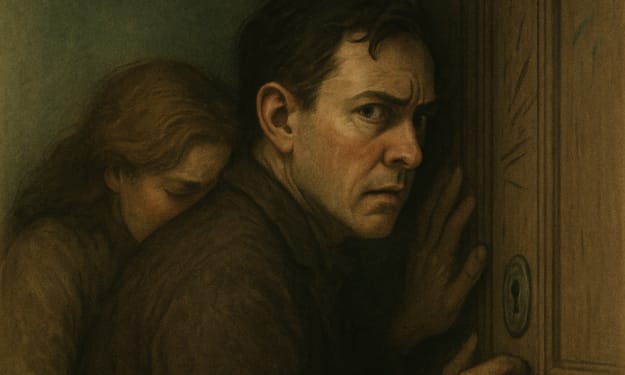
The rain was a steady, mournful rhythm against the windows, a soundtrack to the oppressive silence inside our small cottage. Three days. It had been three days since we’d buried my mother, Clara. Three days since her vibrant laughter, her comforting presence, had been reduced to a cold, sterile memory. The grief was a physical weight, pressing down on my chest, making every breath an effort. My wife, Sarah, sat across from me, her face pale and drawn. She hadn't cried much, not openly, but I could see the sorrow etched in the lines around her eyes, the way she clutched the steaming mug of tea, as if seeking warmth against an internal chill. She had loved my mother, truly loved her, and her quiet suffering was almost harder to bear than my own. A sudden, sharp rap echoed through the house, cutting through the rain and our unspoken grief. We both stiffened, our eyes meeting across the dimly lit room. It was late, past midnight. Who could it be? Another rap, louder this time, more insistent. I pushed myself up from the armchair. “I’ll get it,” I murmured, my voice raspy. “No!” Sarah’s voice was sharp, a sudden tremor in her tone. She stood up, her eyes wide, almost pleading. “Don’t, Daniel. Don’t open it.” I paused, surprised by her vehemence. “Sarah, it’s probably just a neighbor, or someone lost. It’s pouring outside.” “No,” she repeated, stepping towards me, her hand reaching out to grasp my arm. Her fingers were cold. “Please, just… don’t.” Before I could question her, a sound, faint but unmistakable, drifted from the front door. A voice. A voice that sent a jolt of ice through my veins, making the hairs on my arms stand on end. “Daniel? Are you there, my son? It’s your mother. Let me in, it’s so cold out here.” My blood ran cold. It was Mother’s voice. Her gentle, slightly reedy tone, the familiar way she elongated the ‘so’ in ‘so cold.’ Impossible. My mind screamed in protest. This had to be a cruel, sadistic prank. But who would do such a thing? I turned to Sarah, my face a mask of disbelief and dawning horror. “Sarah… did you hear that? It’s Mother! But… how?” Sarah’s grip on my arm tightened, her nails digging into my skin. Her eyes, usually so warm, were filled with a profound, terrifying dread. “Don’t open the door, Daniel!” she hissed, her voice barely a whisper, yet filled with an urgency that terrified me. “Please, for God’s sake, don’t!” Another series of knocks, more frantic now, accompanied by that voice, pleading, cajoling. “Daniel, darling, please. My old bones are freezing. Just a moment, let me come in. I need my son.” My heart was a war drum in my chest. Every fiber of my being yearned to rush to the door, to throw it open, to embrace the mother I had just buried. My grief-stricken mind wrestled with the horrifying reality. She was dead. We had stood by her grave just three days ago, watched the coffin lowered into the earth. “It’s not her, Daniel,” Sarah choked out, tears finally streaming down her face. “It can’t be. It’s… it’s something else. Something trying to get in.” Her words made a chilling kind of sense, even as my emotions fought against them. The raw, desperate need in that voice, the way it played on my deepest sorrow, felt predatory. But the resemblance was uncanny. Every inflection, every nuance, was exactly like Mother. The knocking escalated into a frantic pounding, rattling the doorframe. And the voice changed, subtly. The soft pleading took on a sharper edge, a hint of impatience, even anger. “Daniel! Are you going to leave your mother out in the storm? After all I’ve done for you? After all these years?” A shiver of genuine fear ran down my spine. Mother, for all her love, had never resorted to emotional manipulation, not like this. This was a twisted mimicry, a violation of her memory. “Who are you?” I yelled back, my voice trembling, cracking. “Leave us alone!” A silence fell, thick and unnerving, broken only by the relentless rain. My heart pounded so loudly I thought Sarah must hear it. Then, a low, guttural chuckle emanated from the other side of the door. It wasn't Mother’s laughter. It was something else. Something ancient and malevolent, devoid of humor, filled with contempt. And then the voice returned, but this time, it was a chilling, distorted parody of my mother’s voice, stretched and deepened, laced with a faint, gurgling sound, like water bubbling through mud. “You buried me, Daniel. You put me in the cold, dark ground. But I’m still here. And I need to come home.” The pounding on the door intensified, becoming violent, as if something heavy was slamming against it. The entire frame shuddered. Sarah let out a strangled cry, burying her face in my shoulder. I could feel her shaking uncontrollably. “It knows,” I whispered, my eyes fixed on the trembling wood of the door. “It knows we buried her.” “It’s not her, Daniel,” Sarah sobbed into my shirt. “It's using her… to get to us.” Suddenly, the pounding stopped. Another silence, even more terrifying than the last. Then, a scratching sound began, slow and deliberate, like long, sharp nails dragging across the wood, moving from the doorknob, upwards. And then, I heard it. A faint, wet sniffing sound from directly outside the keyhole, followed by a soft, almost inaudible sigh. Then, the voice again, a whisper now, right at the keyhole, raw and intimate, filled with a horrific intimacy that turned my stomach. “I can smell your fear, Daniel. And I can smell your grief. Such a heavy grief. It’s almost as heavy as the earth on my coffin.” I stumbled back, pulling Sarah with me, away from the door. My mind reeled. This wasn't some trick of sound or light. This was real. Something was out there. Something that had taken on my mother’s voice, her memories, to gain entry. Something that was preying on my sorrow. The scratching continued, now higher up the door, then lower, as if whatever was outside was circling, testing, searching for a weakness. A faint, earthy scent, like damp grave soil, began to seep through the cracks around the doorframe, mixing with the clean smell of rain. Sarah clung to me, her face buried against my chest. “What does it want?” she whimpered. The voice answered, a low, satisfied murmur from the other side of the door. “I want to be warm again, my son. And you are so warm. You held my hand when I was cold. Now, let me hold yours. Forever.” A chilling sound, like a wet, sucking noise, came from the keyhole, followed by a faint, clicking sound, as if something was attempting to turn the lock from the outside. Panic surged through me, cold and absolute. It wasn't just a voice. It was trying to get in. It was trying to claim me, just as it had claimed Mother’s voice. I dragged Sarah back, away from the door, towards the deepest part of the house, the small, enclosed pantry where we kept emergency supplies. We huddled there, in the oppressive darkness, listening to the rain, and to the faint, persistent scratching that continued at the front door. It went on and on, punctuated by the chilling whispers of a voice that was both familiar and utterly alien. I knew then, with a sickening certainty, that the grave had not held her. And now, the thing that had followed her back was patiently waiting, clawing at the door, to finally claim what it believed was its due. My mother's voice, transformed into a siren's call from the abyss. And the night was long. So very long.
By Noman Afridiabout a year ago in Horror
The Soundproof Room
At the end of the upstairs hallway, just past the crooked family portraits and the dusty linen closet, stood a door no one ever opened. It was painted a pale yellow once, but time and silence had faded it into something closer to bone. No one in the family talked about the room behind it. Not directly. When Sophie had asked her mother about it at age seven, she’d been met with a tight smile and a change of subject.
By Ahmad shahabout a year ago in Horror
"I Found a Hidden Room in My House"
I Found a Hidden Room in My House I never expected to inherit anything from my great-uncle. He was the kind of relative you heard about only at funerals—quiet, distant, strange. When he passed away in 2022, I received a letter from his lawyer informing me that I’d inherited his house. No explanation, just a key and an address scribbled on thick parchment.
By Ali Asad Ullahabout a year ago in Horror