travel
Haunted locales and houses of horror from the Amityville home to the Tower of London; travel tips for those seeking a trip filled with fun and evil.
The Road That Remembered My Name
The first rays of morning touched the small village road like golden paint. I had come there to take a break from the noise of the city — no schedules, no phones, no rush. Just silence, sunshine, and maybe a little adventure. The road ahead curved between green hills, and for the first time in months, I felt light.
By hamad khanabout a year ago in Horror
The Gurdon Spook Light of Gurdon, Arkansas
If you travel to the small town of Gurdon, Arkansas, about 85 miles south of Little Rock, and look out towards a certain stretch of railroad tracks surrounded by wooded area, you might see a strange ghostly light hovering above the tracks.
By Jasmine Aguilarabout a year ago in Horror
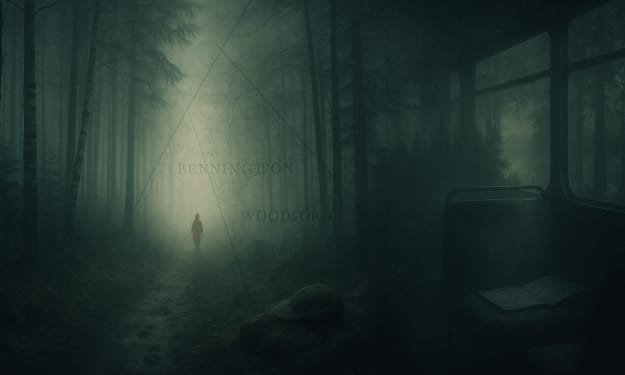
The Vanishing: Five Lost in the Bennington Triangle
Prologue — Cold Wind Over Glastenbury The wind comes down off Glastenbury Mountain like a long, patient breath. It moves through the black spruce and red maple, rattles the old logging roads, and combs the cleared lines where a town used to be. If you stand quiet enough, you can hear it whistle through things that are no longer here: clapboard houses, mill wheels, footfalls. Voices.
By Veil of Shadowsabout a year ago in Horror
Steve Jobs Death: The Shocking 2011 Passing of Apple's Visionary CEO at Age 56
Steve Jobs Death: The Shocking 2011 Passing of Apple's Visionary CEO at Age 56 On October 5, 2011, the world stopped for a moment. Steve Jobs, the brilliant mind behind Apple, passed away at 56 from respiratory arrest tied to his long fight with cancer. News hit like a thunderbolt, shocking fans, leaders, and tech lovers everywhere. His death marked the end of a key figure in modern tech, but it also sparked talks about his huge role in shaping gadgets we use daily.
By Story silver book about a year ago in Horror
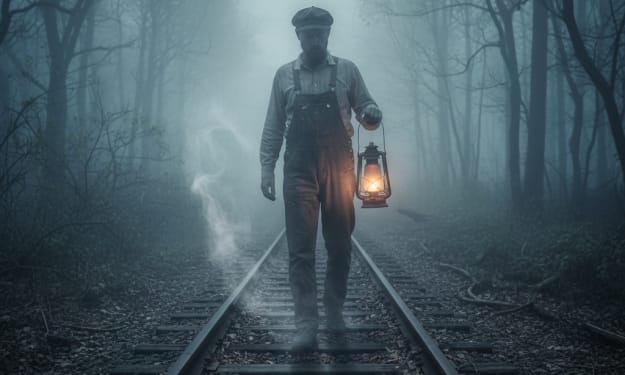
The Lantern House
In the quiet countryside of Ohio, there stood an old wooden house at the end of a dirt road. Locals called it The Lantern House. No one lived there for more than fifty years, not since the Dawson family vanished one stormy night in 1974. People said that if you passed by after midnight, you could see a light moving inside, as if someone was still walking through the rooms with a lantern. In 1981, a man named Henry Collins bought the property. He was a retired postman who had always dreamed of living somewhere peaceful. He didn’t believe in ghost stories and thought the talk about the Lantern House was just small-town gossip. The first few weeks were quiet. Henry spent his days cleaning, fixing old doors, and repainting the porch. But every night, the same thing happened. Around midnight, he would hear soft footsteps in the hallway. Slow, steady, and heavy. He tried to tell himself it was just the house settling, or maybe a raccoon in the attic. But the sound was too clear. It sounded like boots. One night he decided to find out for himself. He sat in his chair with a lantern lit, waiting for the sound. When the old clock struck twelve, the air in the room turned cold. Then he heard it — step… step… step… coming from upstairs. He grabbed his lantern and climbed the creaking staircase. The sound grew louder until he reached the second-floor hallway. There were four doors. He opened the first one — empty. The second — empty. When he opened the third, the sound stopped. Inside was an old rocking chair, slowly moving on its own. Henry froze. He wanted to run, but his curiosity held him in place. The lantern’s flame flickered and dimmed. Then, from behind him, a whisper brushed against his ear. “Don’t sit in my chair.” He spun around, but there was no one. The next morning, he packed his bags and drove into town to ask about the Dawson family. An old woman at the diner told him their story. “George Dawson was a quiet man,” she said. “He worked the fields and kept to himself. But after his wife died, he changed. Folks say he started seeing shadows, talking to someone who wasn’t there. He carried a lantern every night, walking from room to room, saying he had to ‘keep her warm.’ Then one night, the light went out, and nobody ever saw him or his children again.” Henry returned to the house that evening, feeling uneasy. He decided he would leave in the morning. But that night, the storm came. The wind howled through the trees, and the windows rattled. Around midnight, the light in his lantern went out again. The air filled with the smell of smoke. Then he saw it — through the dark hallway, a faint orange glow moving toward him. It wasn’t fire. It was a lantern, swinging gently in the air, carried by someone unseen. Henry backed away as the light came closer. In the glow, he could make out a tall shadow of a man wearing an old coat and hat. The figure stopped just a few feet away. “Why are you here?” the voice asked. Henry couldn’t answer. The voice came again, deeper this time. “This house is not yours.” The lantern’s flame flared suddenly, lighting up the whole room. For just a second, Henry saw faces — a woman and two children behind the man, pale and silent, watching him with hollow eyes. Then the light went out completely. The next morning, the sheriff found Henry’s truck still in the driveway, but the house was empty. His tools, clothes, and food were all there, but there was no sign of him. Only his lantern, sitting on the kitchen table, still burning faintly. A few years later, a new family tried to move in. They lasted one night. The father claimed that just after midnight, someone knocked on their bedroom door and whispered, “It’s my turn to keep the light.” They left before sunrise and never came back. Today, the Lantern House still stands, leaning against time. Travelers say they sometimes see a warm light glowing through its windows late at night, swaying gently from room to room. No one knows if it’s the Dawson family, Henry Collins, or someone new trapped inside. But one thing is certain — the light never goes out.
By kashif khanabout a year ago in Horror
The Night the Mountain Screamed . AI-Generated.
The year was 1959. Nine young hikers set out into the frozen wilderness of the Ural Mountains, Russia. They were strong, experienced, and fearless — led by Igor Dyatlov, a man who believed that no mountain was unconquerable. None of them came back alive. The Beginning of the Journey: It was supposed to be a routine winter expedition — skiing, camping, and survival training. The group included engineers, students, and hikers, all in their twenties. They carried cameras, journals, and supplies for two weeks. They laughed, sang, and wrote in their diaries about the thrill of the adventure ahead. Their last photo — taken on February 1st — shows them smiling in the snow, setting up tents beneath a white, silent mountain called Kholat Syakhl. In the language of the native Mansi tribe, that name means “Mountain of the Dead.” The Camp That Became a Tomb: When they didn’t return on schedule, a search party was sent. What rescuers found shocked even the toughest soldiers. The hikers’ tent was ripped open from the inside — as if they had cut their way out in panic. Their shoes, jackets, and gear were still inside. Yet their footprints — barefoot, in the snow — led down toward the forest. Some were found frozen stiff near the tree line, wearing only underwear. Others had skulls cracked open, ribs crushed, and one girl, Lyudmila Dubinina, was missing her tongue. But there were no signs of an animal attack. And no other footprints. The Unexplainable Evidence: Investigators were baffled. How could healthy young hikers run half-naked into a snowstorm — and die miles apart? One of the hikers had internal injuries equal to a car crash, yet no external wounds. Some of their clothes were found radioactive. Their faces showed terror — eyes wide open, mouths frozen mid-scream. And then there was the final logbook entry: “The snowstorm howls… the mountain seems alive… it’s screaming.” The Official Silence: The Soviet authorities quickly sealed the case. The official report said: “The hikers died due to a compelling natural force.” But no one ever explained what that “force” was. For decades, the site remained off-limits. Rumors spread — secret military experiments, UFO sightings, even the Yeti. Some said the hikers saw something they were never meant to see… and were silenced by the government. But locals from the Mansi tribe whispered a different story. They said that mountain was cursed. And those who disturb it — hear the Scream of the Dead. Theories That Refuse to Die: Over the years, experts, scientists, and conspiracy theorists have all tried to explain what happened. One theory blames an avalanche, forcing the hikers to flee their tent. But the slopes were too gentle, and there was no sign of snow movement. Another theory speaks of infrasound — low-frequency vibrations from the wind that can cause panic, hallucinations, even death. Could the mountain itself have produced a sound that drove them insane? Others believe it was a Soviet weapons test — that the group accidentally entered a restricted area and died from secret explosions or radiation. Yet, none of these explain the strangest detail — why one hiker was found clutching a camera, as if trying to capture something… and why the final photograph showed a blinding light in the sky. The Haunting Legacy: Today, the place is known as Dyatlov Pass, named after the group’s leader. No one lives near it. Every winter, a few brave souls visit the site — to leave flowers, or to feel the weight of silence that never ends. Some report hearing whispers carried by the wind. Others claim they’ve seen shadows moving on the snow, or lights dancing above the mountain — the same lights seen in that last photograph. Even modern hikers admit: “When night falls on Dyatlov Pass, it feels like the mountain is watching you.” The Final Mystery: In 2020, the Russian government reopened the case. Their conclusion? “Avalanche.” But those who have studied the details know better. The slope was too stable. The footprints too calm. And the injuries — too brutal, too precise. Whatever happened that night, it wasn’t just the cold. Something else moved in that darkness. Something ancient. Something that still whispers when the wind crosses Kholat Syakhl. Final Words: Maybe it wasn’t the mountain that screamed. Maybe it was the hikers — crying out as something unseen took them one by one. And now, when the snowstorm rises and the wind howls across the pass… the mountain screams again.
By Mr. Jackieabout a year ago in Horror
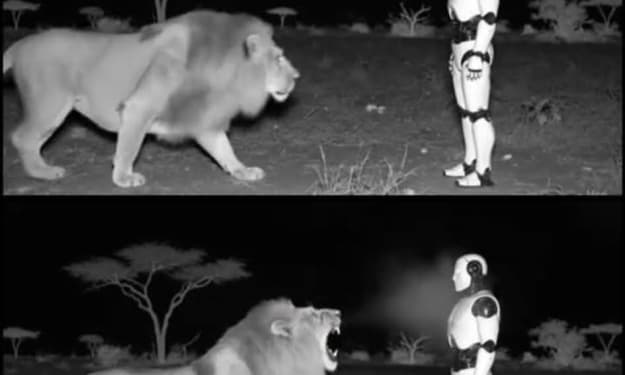
When Machines Feel Trauma
In a dusty research site somewhere in Africa, a famous AI company attempted an experiment that was supposed to push the boundaries of machine intelligence. The plan was simple, at least on paper: take a prototype robot, trained on thousands of animal images and countless books about emotions, and test its ability to recognize, react, and adapt in real life.
By Izhar Ullahabout a year ago in Horror