travel
Haunted locales and houses of horror from the Amityville home to the Tower of London; travel tips for those seeking a trip filled with fun and evil.
The Mysterious Disappearance of Malaysia Airlines. Content Warning.
Few mysteries in modern aviation history have captivated the world like the disappearance of Malaysia Airlines Flight MH370. On March 8, 2014, a Boeing 777 carrying 239 passengers and crew vanished without a trace while flying from Kuala Lumpur to Beijing. Despite one of the largest search operations in history, the fate of MH370 remains one of aviation’s most baffling unsolved mysteries. The Flight That Vanished At 12:41 a.m., Flight MH370 took off from Kuala Lumpur International Airport. Everything appeared normal as it climbed to cruising altitude. But less than an hour later, at 1:19 a.m., the final words were heard from the cockpit: “Good night, Malaysian three-seven-zero.” Minutes later, the plane’s transponder—which communicates with air traffic control—was mysteriously turned off. From that moment, MH370 disappeared from radar, beginning a global mystery that still sparks speculation today. A Vanishing Act Over the Indian Ocean Military radar data later revealed that after communication was lost, the plane changed direction, veering sharply west across the Malay Peninsula before heading south over the Indian Ocean. This deviation from its planned route has led to countless theories, ranging from technical malfunction to pilot involvement or even hijacking. For weeks, rescue teams from more than 20 countries scoured the seas and skies, focusing initially on the South China Sea, where the aircraft was last detected. When evidence surfaced suggesting the plane had flown for hours beyond its last contact, the search area shifted to the remote southern Indian Ocean—one of the most difficult and desolate regions on Earth. The Search That Changed Aviation Forever The search for MH370 became the most expensive in aviation history, covering nearly 120,000 square kilometers of ocean floor. Sophisticated underwater drones and sonar mapping technology were deployed to find any trace of wreckage. After two years of intensive searching, investigators found no definitive debris at the primary search site. However, pieces later washed ashore on the coasts of Reunion Island, Madagascar, and Mozambique, confirming the plane’s tragic end somewhere in the southern Indian Ocean. Despite these discoveries, the main wreckage and black boxes—the key to understanding what happened—have never been found. Unanswered Questions and Theories The mystery of Flight MH370 has fueled numerous theories and endless debate. Mechanical failure: Some experts suggest a sudden fire or decompression event rendered the crew unconscious, allowing the plane to fly on autopilot until fuel exhaustion. Pilot suicide: Another theory speculates that Captain Zaharie Ahmad Shah deliberately diverted the aircraft in a planned act of murder-suicide. Hijacking or cyberattack: Others believe the plane was hijacked, or its systems remotely controlled. Government cover-ups: Some conspiracy theories even claim hidden military involvement or secret knowledge withheld from the public. Despite years of investigation, no theory has been conclusively proven. The truth remains locked beneath the waves, leaving families and the world desperate for closure. The Emotional Toll For the families of the 239 souls on board, the disappearance of MH370 is not just a mystery—it’s a living nightmare. With no remains, no wreckage, and no concrete answers, their grief remains suspended in time. Each new discovery brings a flicker of hope, followed by renewed heartbreak when the truth remains elusive. Vigils and memorials continue to be held, especially in Malaysia, China, and Australia, where most of the victims’ families reside. The words “Remember MH370” have become a symbol of resilience and the relentless pursuit of truth. Legacy and Lasting Impact The tragedy of MH370 changed the aviation industry forever. In its aftermath, international aviation authorities introduced new rules requiring aircraft to automatically report their positions more frequently, even over remote oceans. Satellite tracking systems have also been improved to prevent another disappearance of this scale. Still, the loss of MH370 serves as a haunting reminder of the limits of modern technology and the vast, untamed nature of our planet. Even in the age of satellites, GPS, and instant communication, an airliner carrying hundreds of people can still vanish without a trace. The Enduring Mystery Over a decade later, Flight MH370 remains a chilling symbol of the unknown. Its story continues to inspire documentaries, books, and investigations, all seeking to answer the same question: How does a modern aircraft simply disappear? Until the wreckage is found and the black boxes are recovered, MH370 will remain an enduring enigma of the skies, a mystery that haunts the oceans and continues to capture the world’s imagination.
By Haunted Secrets12 months ago in Horror
Healing Beyond Walls
The hospital had always been seen as a place for the sick — a space where pain and anxiety lingered in the air. But over the years, that perception began to change. What was once a sterile building filled with hurried footsteps and silent waiting rooms was now becoming a place of hope, innovation, and compassion. Sunrise Hospital stood as a shining example of this transformation. Located in the heart of the city, it wasn’t just a center for treating illness — it was a hub of healing and humanity. Its gleaming glass exterior reflected the morning sun, but it was the warmth inside that truly set it apart. Every morning, as the automatic doors slid open, a soft melody played in the lobby. The air smelled faintly of fresh flowers placed near the reception desk. Patients who once feared hospital visits now found comfort in the gentle smiles of nurses and the encouraging words of volunteers. Dr. Ayesha, a senior physician who had served for nearly two decades, remembered the old days vividly. “Hospitals used to focus only on curing diseases,” she said, standing by the pediatric ward’s window. “Now, we focus on healing lives.” Her words reflected a powerful truth. Modern hospitals like Sunrise had shifted from being centers of treatment to centers of transformation. Beyond medicines and machines, the focus was now on emotional support, mental health, and patient empowerment. One such example was young Ali, a 10-year-old boy battling leukemia. When he first arrived, he was withdrawn and afraid of every needle and test. But the hospital had recently launched a “Healing Through Art” program, where children could paint, draw, and express their feelings. Every afternoon, a volunteer named Mr. Rahim would bring in boxes of colorful paints and paper. Slowly, Ali began to open up. He painted bright suns, blue skies, and trees full of life. Within weeks, the change was visible not just in his artwork but in his attitude. He smiled more, talked freely, and even encouraged other young patients to join. “It’s not just medicine that heals,” Mr. Rahim often said, “it’s love, laughter, and little acts of kindness.” The hospital also focused heavily on community outreach. Every month, a team of doctors and nurses would visit nearby villages to conduct free health camps. They screened for common diseases, taught mothers about nutrition, and spread awareness about hygiene. For many people, it was the first time they had ever received proper medical advice. One such visit changed the life of Fatima, a mother of three. She had been suffering from untreated diabetes for years, unaware of the risks. The hospital’s mobile clinic detected her condition and provided her with care and education. “They didn’t just give me medicine,” she said later, tears in her eyes. “They gave me another chance at life.” Behind all these efforts was the hospital’s director, Dr. Kamal. He believed that hospitals should not be islands of recovery, but bridges that connect health to humanity. Under his leadership, Sunrise Hospital introduced green spaces, meditation rooms, and patient-support groups. “A healthy environment is part of healing,” he often said. The hospital’s emergency department, once a place of chaos, was now a model of calm efficiency. With trained trauma teams, advanced technology, and compassionate care, lives were saved every single day. But what truly made a difference was the culture — every staff member treated patients as family, not as files. By evening, as the golden light faded and the hospital corridors grew quieter, a deep sense of peace filled the air. Visitors walked out with smiles, doctors shared lighthearted conversations, and nurses hummed softly as they checked on resting patients. Sunrise Hospital was no longer just a building of walls and wards — it had become a living symbol of hope. It showed that true healing isn’t only about curing the body, but also about touching the heart, lifting the spirit, and restoring faith in humanity. And in that gentle harmony of science and compassion, the hospital continued to stand — a beacon of light, healing far beyond its walls.
By Muhammad Saad 12 months ago in Horror
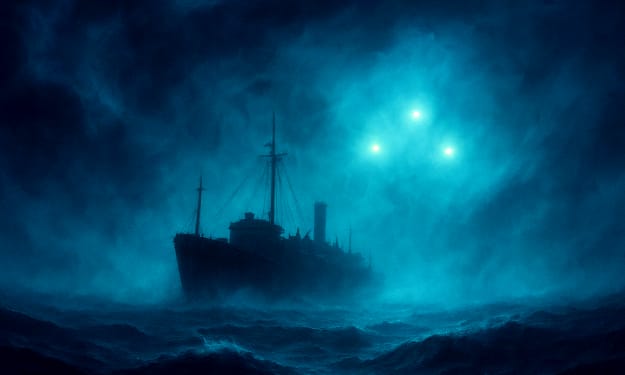
The Bermuda Triangle: The Atlantic’s Greatest Mystery. Content Warning.
Hidden in the vast blue expanse of the Atlantic Ocean lies one of the most mysterious regions on Earth — the Bermuda Triangle. This area, often called the “Devil’s Triangle,” has fascinated scientists, sailors, and conspiracy theorists for decades. Stretching between Miami (Florida), Bermuda, and San Juan (Puerto Rico), the Bermuda Triangle covers roughly 500,000 square miles of ocean where countless ships and aircraft have reportedly vanished without a trace. The Origins of the Legend The mystery of the Bermuda Triangle began to attract global attention in the mid-20th century. One of the earliest and most famous incidents occurred in 1945, when Flight 19 — a squadron of five U.S. Navy bombers — disappeared during a training mission. The pilots radioed in, reporting that their compasses were malfunctioning and that they were lost over the ocean. The rescue plane sent to find them also vanished, leaving behind no wreckage or survivors. Stories like these spread rapidly through the media, sparking the legend of a haunted oceanic zone where navigation fails, time distorts, and strange forces drag vessels into the deep. The term “Bermuda Triangle” itself was popularized in 1964 by journalist Vincent Gaddis, who wrote about the mysterious disappearances for Argosy Magazine. Unexplained Phenomena and Theories What makes the Bermuda Triangle so terrifying — and fascinating — is that no single explanation can fully account for all the reported events. Over the years, researchers and enthusiasts have proposed a variety of theories, ranging from scientific to supernatural. 1. Magnetic Anomalies: Some scientists believe the Triangle lies on a region where Earth’s magnetic field behaves unusually. This could cause compass readings to become unreliable, leading ships and aircraft dangerously off course. 2. Methane Gas Hydrates: Another popular theory suggests that methane gas bubbles trapped under the ocean floor could occasionally erupt, reducing water density and causing ships to sink suddenly without warning. 3. Human Error and Weather: Skeptics argue that most accidents are caused by human mistakes, storms, and rapid weather changes common in the region. The area is part of a major hurricane corridor, which could easily explain some of the mysterious disappearances. 4. Aliens and Time Portals: For believers in the paranormal, the Bermuda Triangle is more than a physical place — it’s a gateway to another dimension. Some claim UFOs use it as an entry point to Earth, while others believe it’s a portal in time and space that swallows anything unlucky enough to pass through. Famous Disappearances Over the decades, dozens of high-profile cases have been linked to the Triangle. Among them are: USS Cyclops (1918): A massive U.S. Navy cargo ship carrying 309 crew members vanished without a distress call. No wreckage was ever found. Star Tiger and Star Ariel (1948–1949): Two British airliners disappeared while flying near Bermuda in clear weather conditions. The Witchcraft (1967): A luxury yacht owned by Dan Burack disappeared just one mile off the coast of Miami. Burack had called the Coast Guard to report a minor issue, but by the time rescuers arrived, the yacht had completely vanished. Each of these cases adds to the Triangle’s dark reputation — a place where logic and science seem to fail. Scientific Investigations In recent decades, scientists have tried to demystify the Bermuda Triangle. Satellite data, modern GPS systems, and oceanic studies have found no consistent pattern of disappearances beyond statistical averages. The U.S. Coast Guard officially states that there is nothing supernatural about the region, and the number of incidents is proportionate to the amount of traffic passing through one of the world’s busiest shipping lanes. Yet, despite scientific explanations, the myth refuses to die. The Bermuda Triangle has been the subject of documentaries, books, movies, and endless online debates, fueling public fascination and fear. Cultural Legacy and Modern Mystery The Bermuda Triangle isn’t just an oceanic region — it’s a symbol of the unknown. It represents humanity’s enduring curiosity about what lies beyond our understanding. From Hollywood thrillers to YouTube conspiracy channels, the Triangle continues to inspire storytellers and investigators alike. Even with modern navigation and satellite tracking, strange incidents are still reported. Ships vanish, planes lose contact, and eerie lights are sighted dancing across the waves. Whether these are coincidences, natural phenomena, or something truly otherworldly, the legend of the Bermuda Triangle remains alive. Conclusion The Bermuda Triangle endures as one of the great unsolved mysteries of the modern world. Whether viewed through the lens of science or superstition, it captures our collective imagination — a place where the ocean guards its secrets fiercely. Beneath its shimmering surface, something ancient and unexplained seems to whisper: “Enter, if you dare.
By Haunted Secrets12 months ago in Horror
Watching horror films can burn up to 200 calories, the same as a half-hour walk.. AI-Generated.
Thrills and Fitness: How Watching Horror Movies Can Torch Calories Like a Workout Picture this: you're plopped on the couch for a night of chills but are actually burning calories as if you hit the gym. That's right: watching horror movies can jack up your heart rate and burn as many as 200 calories in just an hour, which is the same burn you'd get from taking a half-hour walk. This secret workout comes from your body's natural fear response, turning passive viewing into active energy use.
By Story silver book 12 months ago in Horror