monster
Monsters and horror go hand in hand; explore horrific creatures, beasts and hairy scaries like Freddy Krueger, Frankenstein and far beyond.
The Midnight Dressmaker
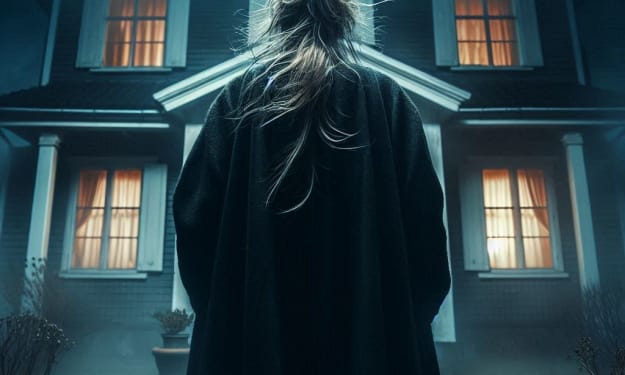
In the quiet village of Gallowmere, where the moon always seemed just a little too full and the air always smelled faintly of roses and ash, there was once a woman named Elara. She was known far and wide as The Midnight Dressmaker. She wasn’t called that because she worked late. No—Elara only opened her boutique at midnight. That was when her shop lit up with soft candlelight, and she’d welcome anyone who knocked on her tall, black wooden door. By dawn, the shop would vanish into darkness again—shutters closed, windows covered, as if it had never opened. Elara was beautiful. Not in a warm, friendly way, but in the kind of beauty that made your heart skip—icy and elegant, like snow that had never been touched. Her eyes were grey, like storm clouds, and her voice was soft as silk. But what truly made her famous were her dresses. People claimed her gowns could make anyone breathtaking. If you wore one of Elara’s creations, you’d be the center of any room, the dream of every eye. Brides came from miles away. Actors begged for her designs. No matter how rich or poor you were, if she accepted your request… she never charged a coin. She only asked for something personal—something that "held a memory." A necklace, a diary, even a single teardrop on a handkerchief. And people always gave it. They said she worked with shadows and lace, with whispers and dreams. But those who wore her dresses never talked about them afterward. Not even once. That would’ve been the end of the story—just an eerie village rumor—if not for Maera, a curious 17-year-old girl who lived down the lane from Elara’s shop. Maera loved fairy tales, especially the ones that ended badly. She had a heart full of wonder and just enough foolish bravery to think she could solve any mystery. One night, when the air was thick with summer and the stars blinked like watchful eyes, Maera did something nobody else had dared: she snuck into Elara’s shop. She waited until the bell chimed midnight and the shop’s windows glowed golden. Then, wearing her father’s dark coat and her own trembling courage, she slipped through the side door that Elara had forgotten to lock. Inside, the boutique was like a dream stitched together by nightmares. Mannequins stood frozen like statues, all wearing half-finished gowns. Some dresses shimmered with golden thread, others were made of dark, feathery silk that seemed to breathe. There were mirrors—tall, warped, and dusty—lining the walls. None of them showed her reflection. At the center of the room, Elara stood with her back turned, humming a lullaby no one had heard in years. On a pedestal was her latest work: a gown so beautiful it almost made Maera cry. It glittered like midnight waves and smelled like old flowers and ink. But then Maera saw something that made her knees shake. The hem of the dress—dripping. Not with paint. Not with dye. With something darker, thicker. Blood. Elara turned slowly, her fingers still holding a silver needle threaded with red. “You shouldn’t be here,” she said, her voice as soft as snow. Maera tried to run, but her feet were rooted. Her voice didn’t come. Elara smiled—not cruelly, but with a sadness that filled the room like fog. “You’re just like I was,” she whispered. “Curious. Bright. Foolish.” Then she told Maera the truth—the truth that stitched everything together like seams no one ever saw. Elara had once been a simple girl too. Many, many years ago. She was in love. But her village had burned during a war, and she lost everything—her home, her family, her love. In her grief, she cried by the ruins until a stranger approached her. He was cloaked in black, with eyes like coals. He offered her a gift: The Needle of Remembrance. With it, she could sew beauty from pain, create gowns that captured memory, desire, sorrow… even life. But magic always comes at a cost. For every dress she made, a little piece of her soul was stitched inside. And for each masterpiece, someone had to pay—in blood, or in time. The dress would steal something from its wearer: their voice, their dreams, sometimes even their shadow. That’s why they never spoke afterward. And now, the needle had begun to whisper. It was hungry again. Tired of old memories. It wanted new ones. Maera’s. Elara pleaded with the needle to spare the girl. But the needle had rules. Only one way out: if Elara gave herself entirely to the final stitch. And she did. In front of Maera, Elara pricked her finger, whispering an ancient word. The thread blazed red, and the dress curled around her like vines. Her body shimmered, then folded into the fabric. She vanished—forever sewn into her last creation. The dress fell limp. Still beautiful, but empty now. Quiet. Maera dropped to her knees, breathless. The next morning, the boutique was gone. Just an old, boarded-up house, filled with cobwebs and dust. People say Maera was never the same after that. She stopped speaking for a year. But then one day, she began to sew. Just simple things at first. Scarves. Ribbons. Shawls. But with every stitch, her hands moved like they’d done it a thousand times before. She never used red thread. She never sewed at night. And if anyone asked why she kept a silver needle locked in a glass case on her shelf, she’d only smile and say: “Some dresses are too beautiful to wear. And some beauty... is better left unfinished.” The End.
By Silas Blackwoodabout a year ago in Horror
The Ghoul’s Cave – Curse of Blood
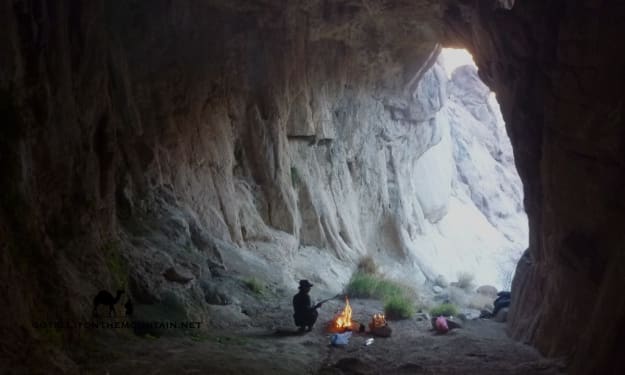
Part One: The Ghoul’s Cave In a remote village surrounded by dense forests and silent mountains, there was an old legend passed down for generations, warning people never to enter the Black Cave on the western slope. They said whoever entered never returned, and their screams echoed through the mountains for days.
By Alaa Atallahabout a year ago in Horror
Rise of the Fallen Lion
The Kingdom of Vaeloria was once the shining jewel of the East — a land of honor, tradition, and unbreakable bloodlines. At the heart of its glory stood General Arion Varyan, known across the lands as “The Lion of Vaeloria.” Feared by enemies and revered by his people, Arion was more than a warrior; he was a symbol of loyalty, courage, and sacrifice.
By Masih Ullahabout a year ago in Horror
Season 3 - The Bone-Light: How an Orphaned Village Became a Mouth for Something Older
CHAPTER 9: The Child Who Sang With No Mouth : How The Orphanage Fire Left Three Survivors With a God’s Song April 4th, 1980 - Borsk Regional Hospital (Secure Burn Ward, Room 12-C)
By Tales That Breathe at Nightabout a year ago in Horror
The Mirror of Mirah
Once, nestled between the jagged peaks of a forgotten mountain range, there stood an ancient mansion known as "Mirah's Keep." This was not a place whispered about in the bustling towns below, nor was it known to those who dared venture too far into the desolate wilderness. It was a relic, an enigma, existing in a realm untouched by time and civilization. Some claimed it was abandoned long ago, while others believed it was still inhabited, not by the living, but by the spirits of the long-dead. The legend of the mansion was as old as the mountains themselves, and it all centered around a peculiar, ornate mirror that hung in the grand hall—a mirror that could not only show your reflection but also the reflection of your deepest, darkest desires. Mirah, the lady of the house, was said to be as beautiful as the dawn and as haunting as the moonlit night. She had been married to a nobleman of vast wealth, but it was her beauty, not her wealth, that captured the attention of all who met her. People traveled from distant lands to glimpse her face, but none ever spoke of her eyes—not until it was too late. For Mirah’s eyes, deep and endless, held a secret—one that no one was meant to discover. Beneath the soft, porcelain surface of her flawless skin and the delicate curve of her lips was a soul stained by dark, unspoken things. She was not simply beautiful, she was cursed, and the mansion in which she lived was as much a prison as it was a sanctuary. Her marriage, once full of promise, began to decay with the years. Mirah’s noble husband became obsessed with the idea of immortality, and his obsession led him to the very mirror that hung in their hall. The mirror, according to ancient texts, was said to grant a glimpse into the future, to show the soul’s truest desires, and to unlock the deepest secrets of the universe. But no one knew the full price of such knowledge. One evening, as a storm raged outside, the nobleman stood before the mirror, gazing deeply into it. His reflection shimmered with an eerie glow, but there was something off. The face staring back at him was not his own. It was a pale, gaunt figure with hollow eyes, its skin cracked like old parchment. As he stared, entranced, he felt a sudden chill creep over him—then, with a gasp, he realized the figure was reaching out from the depths of the mirror. Its fingers were long and bony, stretched impossibly thin, and it beckoned him with a call that promised endless life, but at a terrible cost. The mirror had offered him immortality, but it came at the price of his soul. The nobleman tried to pull away, but it was too late. The reflection in the mirror reached out and seized him. Mirah, hearing his screams, rushed into the hall, but by the time she reached him, the nobleman had already disappeared—swallowed whole by the mirror, his body lost to time and space. Mirah, heartbroken and terrified, stood frozen in front of the glass. The mirror, now calm, reflected nothing but the soft glow of the storm's light as it flickered through the windows. She dared not look too long, for fear of seeing her own reflection—a reflection that, over the years, had begun to twist into something... wrong. In the days that followed, Mirah was consumed by grief and guilt. She spent her nights weeping, searching for a way to undo the curse that had claimed her husband. It was during these desperate hours that she realized the truth of the mirror—it did not just show what you wanted to see, it took what you loved most, until there was nothing left of you but emptiness. The mansion, once alive with the sounds of laughter and music, fell silent. Mirah’s once radiant beauty began to fade. Her face grew pale and gaunt, her eyes sunken as if the mirror had already begun to claim her. But what was most unsettling was her reflection. It grew darker, shifting each day, her image no longer her own. As Mirah spiraled into madness, the mansion itself began to change. The once-grand hall grew cold, the walls blackened, and strange, haunting whispers filled the empty corridors. The villagers, who had heard of the strange occurrences within Mirah’s Keep, began to speak of the house as a cursed place. It was said that anyone who dared look into the mirror would be trapped within its depths, doomed to spend eternity staring at their own shattered soul. Years passed, and the mansion decayed. The world moved on, and the whispers of Mirah’s story became little more than a faint echo in the wind. But the mirror—oh, the mirror—remained. Then, one day, a young traveler named Eamon, seeking shelter from a storm, stumbled upon the mansion. He was weary and lost, his journey having taken him far from his home. As he entered the mansion, the heavy door creaking open, he felt a strange chill fill the air. The dust that had settled over the place gave off a musty scent, and the floorboards groaned beneath his feet as he explored the empty rooms. It was when he entered the grand hall that he saw it—the mirror. Its surface was clouded with age, but still, it stood majestic, towering over him like a sentient being, waiting. Drawn to it, Eamon approached, not knowing the history it carried. As his reflection appeared in the glass, he froze. For a moment, he didn’t recognize the person staring back at him. It wasn’t just his face that seemed off, it was... his eyes. They were wide, terrified—haunted by something he could not understand. But the reflection didn’t stop there. Slowly, impossibly, the figure in the mirror began to change, its features warping, twisting into something dark, something alien. The face morphed into that of a gaunt, pale woman, her eyes hollow and unblinking. Eamon gasped as her lips curled into a smile. “You should not have come here,” the figure whispered, her voice like the rustling of dry leaves. “Now you are mine.” The air grew cold, the walls seemed to close in, and Eamon’s heart pounded in his chest. He tried to turn and flee, but the reflection in the mirror reached out with long, bony fingers, pulling him into the glass. The last thing Eamon saw was his own terrified expression as the world around him went dark, the mirror’s surface rippling with his own trapped soul. And in that forsaken mansion, the mirror waited, its surface calm once more—silent, patient, as it had always been. The End
By Lucien Hollow about a year ago in Horror
The Whispering Shadows
It was a cold autumn night when Emma and her friends decided to take a shortcut home. They had spent the evening at a late Halloween party, surrounded by laughter, costumes, and way too much punch. But as the clock ticked past midnight, the fun began to wear thin. Emma, feeling both the excitement and the eerie emptiness of the night, suggested that they cut through the woods behind her house to get home faster. "You know, it's just a quick walk. We won’t even get dirty!" Emma had said, already thinking about the warm bed waiting at home. Her best friend, Mia, hesitated. "Are you sure? I don’t like walking through the woods after dark… It’s creepy." "Oh, come on. We’ll be fine. We’ve walked through there a hundred times," Emma laughed, pushing her hood up over her head. The trees, tall and dense with their fiery orange and red leaves, seemed to loom even darker as the wind started to pick up. Despite Mia’s concerns, the group of four—Emma, Mia, and their two other friends, Jason and Sam—set off into the woods. The path was narrow, a dirt trail flanked by towering trees that made the moonlight barely visible through the branches. The cool night air mixed with the scent of fallen leaves, and the further they walked, the quieter everything seemed. They spoke less, their steps becoming quieter, as though the woods themselves were swallowing their voices. As they walked, Emma began to feel something shift in the air. The silence seemed too thick, almost oppressive. Her usual sense of adventure was gone, replaced with a creeping sense of unease. It was like the trees were closing in, watching them. "Alright, who’s playing pranks?" Sam suddenly asked, his voice unnervingly loud in the stillness. "What are you talking about?" Jason asked, looking back at Sam, confused. "I heard something," Sam replied, his voice lower now. "A whisper, like someone was talking just behind me." "Stop messing around," Mia said, her eyes darting nervously to the side. "It’s just the wind." But Sam wasn’t convinced. "No, seriously… I swear someone was right behind me." Emma felt a chill race down her spine. It wasn’t just the temperature—it was the feeling of being watched. She turned to Jason, who was ahead of her, and saw that his face was pale. "Guys… I think we need to hurry up," Jason said, his voice tight. "I don’t know why, but… something feels off." The group quickened their pace, but the atmosphere of the woods only seemed to grow thicker, heavier. The shadows around them began to shift, almost as if they were moving independently of the trees. Emma could swear she saw something flitting just beyond her peripheral vision, something tall, with long limbs. She spun around to look, but there was nothing there—just the empty darkness of the forest. A twig snapped loudly behind them. Everyone froze. "Did you hear that?" Mia whispered, her voice trembling. "Yeah," Jason said, his eyes wide with fear. "Someone’s following us." The group began to walk faster, but no matter how quickly they moved, it felt like the woods were stretching further and further, their path becoming more and more winding. The rustling of leaves grew louder, but no one was there. It felt like the trees were closing in on them, each shadow more ominous than the last. Suddenly, Mia screamed. Emma whipped around to find Mia standing stock-still, her face frozen in terror. She pointed a trembling finger toward a thick stand of trees. "Something’s there!" she gasped. Emma strained her eyes to see, but there was nothing. Just darkness, and then… a shadow. It was tall, but so tall that it didn’t seem to fit with the trees. The limbs, if you could call them that, were unnaturally long, stretching out from the body in a twisted, grotesque way. The shadow seemed to ripple, its form not quite human, not quite anything Emma could describe. "Run!" Emma yelled, but the words came out strangled, like they had been caught in her throat. The group sprinted through the woods, branches slapping against their faces, leaves crunching underfoot. But the faster they ran, the further the dark figure seemed to chase them, getting closer and closer, until Emma could feel the chill of its presence on the back of her neck. It was like being pursued by a shadow that wasn’t bound by the rules of reality. "Where’s the way out?" Sam cried. "We’re going in circles!" "I don’t know!" Emma shouted, panic rising in her chest. "I thought we were almost out of here!" But the path was no longer familiar. The woods had changed. The trees, once standing like sentinels, now seemed to bend inward, blocking any hint of light. The sound of their footsteps was muffled, and the whispering began again. Soft at first, like a breeze through the leaves, but it grew louder and louder, a cacophony of voices, all muttering, all speaking at once. It wasn’t English, or anything Emma could understand—it was a language older than time, twisted and incomprehensible. "Help!" Mia screamed, her voice breaking through the whispers. "Help us, please!" But no one answered. Then, it happened. A hand, cold and skeletal, reached out of the shadows and grabbed Mia by the wrist, pulling her into the darkness. Emma screamed and tried to reach for her, but Mia’s hand slipped from hers like sand. There was no sound—no scream, no struggle, just a soft rustle of leaves as if Mia had never been there. "NO!" Sam yelled, his voice full of terror. "We have to get out of here!" "Don’t you understand?" Jason said, his voice hoarse. "It’s too late. We’re already trapped." The realization hit Emma like a physical blow. They weren’t lost. They weren’t being chased. They had crossed into something else. The woods were alive—alive in a way they could never understand. It had been watching them, waiting for the moment when they’d walk too far. The whispers grew louder, and Emma turned to face them, to confront whatever it was, but there was nothing there—just the endless shadows stretching out before her. Then, she saw it. A figure, standing at the edge of the forest. It was tall, its limbs elongated, its eyes glowing with an unnatural light. And in its hand, it held Mia’s lifeless body, her eyes wide open, staring at Emma with a look of absolute terror. It stepped forward, slowly, its shadow stretching far longer than anything in the moonlight. Its mouth opened, revealing sharp, jagged teeth. And as it spoke, Emma’s blood froze in her veins. "You shouldn’t have come," it whispered. "This is my forest now." And just like that, Emma was pulled into the shadows, her screams swallowed by the forest that had come to life. When the morning sun finally broke through the trees, the forest was silent once again. The path was empty, and there was no sign of Emma, Mia, or the others. Just the whispering of the wind through the trees, as though nothing had ever happened. But if you listen closely, just as the sun sets and the shadows grow long, you might still hear the whispers—calling, waiting for the next unsuspecting soul to wander too far into the woods.
By Lucien Hollow about a year ago in Horror
The House That Listens
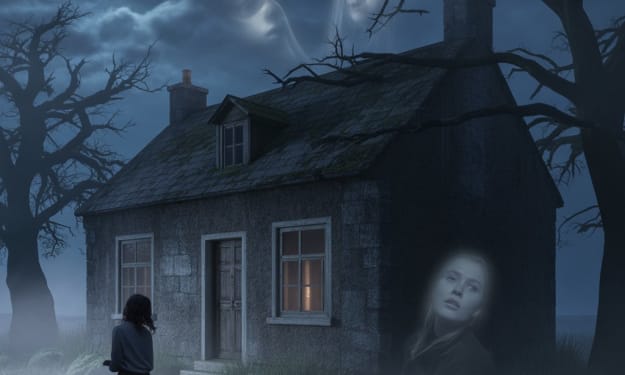
Eliza Thorne arrived at the old cottage just after sunset, her car tires crunching over gravel as a cold wind stirred the surrounding pines. She had rented the place for an entire month—no neighbors, no distractions, just her and her stubborn manuscript. The listing promised it was “perfect for writers,” and she desperately needed that now more than ever. Her novel was overdue, her creative well had run dry, and her agent’s calls had stopped. Yet, standing before the house, with ivy crawling up the cracked stone walls and the scent of damp earth heavy in the air, Eliza felt a strange stirring inside her chest—was it hope? Or something darker, something ancient?
By Musawir Shahabout a year ago in Horror
The House That Hums at Night
The House That Hums at Night I wasn’t looking for a miracle when I moved into the house at the end of Halverstone Lane—just something cheap, quiet, and temporary. The rent was suspiciously low, of course, but the landlord chalked it up to “market timing” and “last-minute availability.” I didn’t ask questions. After the year I’d had—losing my job, my partner, and most of my friends—I figured the silence might be good for me. But silence wasn’t what I got. The first night, it was faint. A distant hum, almost like a lullaby played through broken speakers, drifting down the hallway just after midnight. I’d just finished unpacking the essentials and was lying on the couch, too tired to deal with the creaking old bed upstairs. At first, I assumed it was an old appliance, maybe an old fridge cycling on and off, or the plumbing whining through ancient pipes. But the sound had… rhythm. It pulsed. It sang. And it was coming from the walls. I pressed my ear to the living room wall just to confirm it wasn’t my imagination. There it was again—soft, low, melodic. Not in any language I recognized, but not exactly gibberish either. Like something forgotten, something pre-human. I didn’t sleep that night. By the third night, I’d started recording it on my phone. The audio was barely audible, but it was there: a warbling series of tones, almost like chanting underwater. I uploaded a clip to a paranormal forum out of curiosity. One user commented immediately: > “Stop playing with that. That’s a summoning pattern. You’re not supposed to hear that unless something wants you to.” I laughed and closed the tab. Internet weirdos. But by the fifth night, I started hearing the voice even when I left the house.In the grocery store freezer aisle, as I reached for a bag of peas, a single note rang out inside my skull. I dropped the bag and stumbled back, heart racing. It only lasted a second. No one else reacted. But it was the same tone, the same unearthly hum from the walls. I was sure of it. Back home, I began exploring the source. The sound was strongest near the base of the stairs, where the wallpaper peeled slightly at the corners. I tore at it, revealing mold-stained plaster and an old symbol carved directly into the wall—a spiraling, spoked circle with tiny marks radiating outward. Beneath that, hidden behind the drywall, was a hollow space. That night, I didn’t sleep at all. Instead, I dug. Behind the wall was a narrow crawlspace, dark and choked with dust. I forced myself inside, phone flashlight in hand. It wasn’t long before I found what I wish I hadn’t. A child’s music box. Ornate. Unmarked. Its gears still warm, though I hadn’t wound it. When I opened the lid, a tune played—not mechanical, but rich and harmonic, as though a choir were trapped inside. The melody was identical to the one I’d heard humming from the walls. Then the house moaned. A deep vibration ran through the floorboards, followed by a gust of air that carried a foul, wet odor—like rotting lilies and copper. My flashlight flickered. Something whispered behind me. I spun around, but the crawlspace was empty. The next morning, my front door was wide open. Dirt trailed in across the floor in strange patterns, like someone had walked in barefoot, dragging one leg. I checked the locks. Nothing was broken. There were no signs of forced entry. But the music box had moved. It now sat perfectly centered on my kitchen table. It was still playing. I tried to throw it away—twice. The first time, I dropped it off a bridge. The next morning, it was back on my nightstand. The second time, I smashed it with a hammer. That night, I woke to the sound of dozens of voices humming in unison, vibrating through every surface in the house. The pieces of the box were gone. Something was inside the walls now. Not just humming. Breathing. I can’t bring people here anymore. My sister visited last week, stayed for two hours, and left without a word. She won’t return my calls. The few friends I had left blocked me after hearing the recording I tried to share. One even sent a single text: > “It heard me. I’m not sleeping. Don’t contact me again.” I don’t know what’s coming next. The humming has grown louder—constant now, like a living heartbeat under the floors. It syncs with mine. When I get scared, it gets louder. When I cry, it sings. Last night, the house sang with words. I finally understood them. > “You are the key. The door opens through you.” I don’t know what that means. But my dreams are not mine anymore. I wake up humming. I wake up standing. I wake up smiling in mirrors I didn’t place. If you’re reading this, stay away from Halverstone Lane. The house is not empty. It never was. And it is so glad I moved in.
By Abdul Basitabout a year ago in Horror
Whispers in the Jungle. AI-Generated.
It was supposed to be the perfect getaway. Three friends, Ayaan, Bilal, and Usman, had been planning their jungle adventure for months. The idea was simple: to escape the busy city life, explore the unknown, and challenge themselves to survive in the wilderness. Ayaan had heard stories of a forgotten jungle, nestled deep in the mountains — untouched, mysterious, and waiting to be explored.
By nasir shahabout a year ago in Horror