monster
Monsters and horror go hand in hand; explore horrific creatures, beasts and hairy scaries like Freddy Krueger, Frankenstein and far beyond.
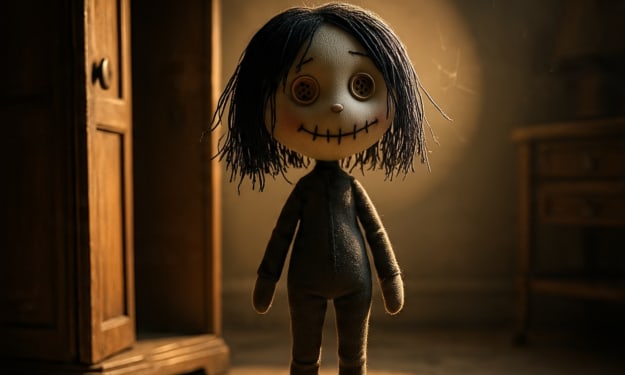
Labubu Doll
It began with a box at the back of an antique shop so old the sign above the door had peeled into unreadable curls. The shopkeeper, a gaunt man whose eyes seemed to live elsewhere, claimed it had arrived anonymously, packed in straw, wrapped in a silk cloth faded with age. Saira didn’t plan to buy anything that day. She was only wandering, killing time between lectures. But when her gaze fell on the doll—its wide, stitched grin and button eyes glinting dully under the dusty glass—she felt something pull at her, an invisible thread that tightened with every breath. "Old one, that," the shopkeeper rasped, watching her too closely. "Been around longer than me, longer than you could guess." Saira hesitated. The doll was oddly shaped, with stubby limbs and cloth patched in places where the original fabric had worn through. Its hair, made of black yarn, was matted and uneven. Yet the grin on its face seemed alive, almost amused by her curiosity. Without quite knowing why, she bought it. The shopkeeper didn't name a price, just nodded once, wrapped the doll again in silk, and handed it over like a secret he was relieved to be rid of. --- At her small apartment that night, Saira unwrapped the doll and set it on a shelf above her bed. It looked almost comical there, its head slightly tilted as if it were listening. She took a few photos to send to her friend Mariam, captioning them, “Look what followed me home lol.” Mariam replied with a string of laughing emojis and a final message: “It’s creepy but cute. What’s it called?” Saira stared at the doll. The name slipped into her mind without warning, as if whispered by a voice she couldn’t quite hear: Labubu. Labubu, she texted back. --- That night, Saira dreamed of a child’s laughter echoing in an empty room. Shadows danced along cracked walls, and the Labubu doll sat at the center, its grin wider, its button eyes reflecting something darker than light. She woke before dawn, heart racing, only to find the doll had fallen from the shelf, landing face-up on her pillow. She blamed the breeze through the cracked window, though it was barely ajar. --- The days blurred. Small things began to happen. Keys misplaced, only to appear in strange places: the freezer, under the rug. The TV turned on by itself at night, always to static. Saira tried to laugh it off, telling Mariam it was probably stress from exams. But the doll’s grin felt different now. Hungrier. One evening, Saira returned home to find the doll sitting on her desk chair, facing the door, as if waiting. She distinctly remembered leaving it on the shelf. Shaken, she put it back, this time inside her wardrobe, buried under clothes. At 3 a.m., a loud thump jolted her awake. The wardrobe door hung open. Labubu lay on the floor, its button eyes catching the moonlight. --- Terrified, Saira finally decided to get rid of it. At dawn, she wrapped the doll in the silk cloth, tied it tightly with twine, and took it to the river outside town. Standing on the bridge, she threw it into the water, watching it vanish beneath the swirling current. Relief flooded her chest, and for the first time in days, she slept without nightmares. --- But the peace didn’t last. Three nights later, Saira returned from a late shift to find muddy footprints trailing from the front door to her room. On her bed, soaked but smiling, sat the Labubu doll. Its grin looked bigger now. The stitches were torn at the corners, as if something inside was trying to get out. --- Desperation gnawed at Saira. She researched late into the night, scrolling through obscure forums and occult blogs. She found old mentions of Labubu—a spirit doll from somewhere unnamed, said to trap sorrow and anger, feeding on fear until it could break free. Once chosen, the owner could never truly be rid of it. Saira reached out to Mariam for help, her voice shaking. Mariam offered to stay over, to keep her company. That night, they heard the laughter together. A soft, wet giggle from the corner where the doll sat. When Mariam moved closer, the room grew colder, breath misting in the air. Suddenly, the grin on the doll seemed to twitch, as if it were smiling at them, for them. --- Terrified, they decided to burn it. They went to an empty lot near the outskirts, poured lighter fluid over the cloth, and lit a match. Flames roared, smoke rising thick and acrid. For a moment, it felt like the nightmare might end. Then the fire died suddenly, as if smothered by unseen hands. The doll sat in the ashes, blackened but intact, its grin unchanged. --- They drove in silence back to Saira’s apartment. Mariam left soon after, promising to call. Saira, exhausted, locked the doll in a metal box and shoved it under her bed. --- At midnight, Saira awoke to a scraping sound from beneath her. She dared to look: the box was open, empty. The Labubu doll sat on her pillow, button eyes inches from her face, grin wider than ever, stitches torn so far it looked ready to speak. She heard a whisper, cold as winter: “You’re mine now.” And then, finally, Saira screamed. ---
By Mati Henry about a year ago in Horror
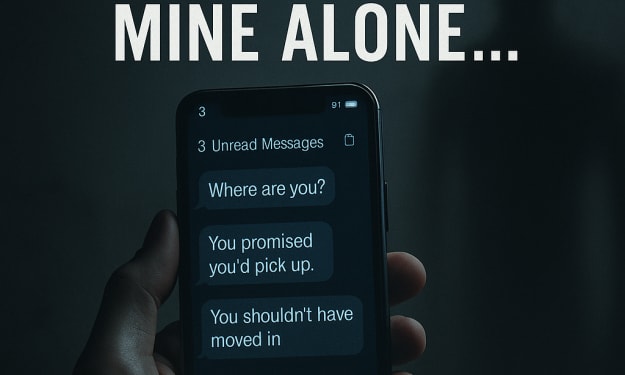
I Bought a Haunted Doll Off a Livestream
I’ve always had a strange relationship with fear. I don’t flinch at horror movies, I laugh at haunted house stories, and I’ve always thought that people who claim “spirits followed them home” were either lying or needed help. I thought I was immune.
By Mehtab Ahmadabout a year ago in Horror
The Girl Who Lived in My Mirror
When I was eight, my parents bought a century-old Victorian house. Creaky floors, drafty hallways, and mirrors—lots of mirrors. The house had them in every room. They were antique, beautifully carved, and—according to my mom—“full of character.”
By huzaifa Khanabout a year ago in Horror
"The Ghostwriter"
Chapter 1: The Manuscript The package arrived at midnight. Elliot Thorne wasn’t expecting anything—certainly not a battered manuscript box tied with twine, left on his doorstep without a note or return address. He carried it inside, the weight unsettling in his hands. Too light to be a full novel, too heavy to be empty.
By M ZOHAIB KHANabout a year ago in Horror
"I Spent the Night in the Abandoned Asylum Everyone Warned Me About — I Should've Listened"
Everyone in my hometown has a story about the old Blackridge Asylum. Some say it’s haunted by the patients who were forgotten. Others swear they've seen faces watching from the broken windows. There’s even an old urban legend that a nurse went mad and stitched patients’ eyes open so they’d “never stop watching.” I always chalked it up to small-town gossip and bored teenagers. I never believed any of it.
By Nizam khanabout a year ago in Horror
The Girl At No. 9 Part 3
We left the neighborhood when the circles began appearing in our yard—slowly at first, then faster. They weren’t just in the grass anymore; they showed up on the walls, in the dirt by the driveway, even pressed into the kitchen floorboards like some invisible weight had pushed through. My wife stopped sleeping. She stopped talking. Her eyes looked distant, hollowed out by sleepless nights and whispered prayers. My daughter didn’t complain. She didn’t cry. She just watched. Watched the shadows grow longer, watched the edges of the house shift as if breathing. She’d draw those endless loops—circles and eyes—and hum the same low tune Eira used to sing. The one that sounded like a nightmare made melody. One night, the humming pulled me from sleep. I found her in the hallway, pale and still, hands pressed flat against the wall. Her breath came in shallow, shaky gasps, but her eyes were wide open and unblinking, staring into the darkness beyond. I reached out to her. She didn’t turn. “Do you see it?” she whispered. I didn’t want to see whatever she saw. We packed what we could and left under the cover of darkness. The new town was supposed to be a fresh start. New schools, new friends, new everything. But the silence followed us. On quiet nights, when the house settled, I swear I hear the faint scratching of nails against wood—the slow, deliberate marking of circles into the floorboards beneath our feet. The dog whines at empty corners where nothing is there. My daughter’s eyes sometimes flash that same pale stillness—like she’s looking through me, or past me, into something only she can see. She still draws. Always circles. Always eyes. And sometimes, when she thinks I’m not looking, she hums. That terrible, broken lullaby. Years passed. My daughter slowly became normal again—or as normal as she could be. She laughed, played, even forgot the shapes in her notebooks for a while. The shadows retreated. The humming faded. The house seemed to breathe easier. But I didn’t. I felt the quiet tighten around me like a noose. The scratching in the wood didn’t stop. The dog’s whines turned into growls at empty spaces. I saw shapes in the dark—circles, eyes, impossible outlines just beyond vision. I started waking with bruises on my arms, scratches on my face, marks I couldn’t explain. I hear whispers too, sometimes just at the edge of hearing, telling me I’m losing myself. Maybe I am. Maybe it’s all in my head. Maybe I deserve it. There’s something I never told my wife. Never told the neighbors. Never told the police. Eira and I… we weren’t strangers. We weren’t just neighbors.
By Muhammad Shoaibabout a year ago in Horror
The House At No. 9 part 2
After the fire, after the ashes cooled, the lot remained barren. But strange things started again—not loudly, not with drama—just… wrong. At night, lights flickered in windows that no longer existed, casting brief, shaky shadows that seemed to dance, as if the house was still trying to breathe. Mail still arrived, worn and creased, addressed simply to “Eira.” I picked up one of the envelopes once, curiosity getting the better of me, but the ink on the stamps looked faded, almost drifting away, and the return address was a water-stained blur. I placed it back on the stoop. The next day, it was gone. On cold mornings, faint footprints would appear in the snow lining the edge of the lot—small, child-sized, each step pressed perfectly deep. They led up the walk and vanished at the patch of earth where the front door used to be. No one had walked there; I asked around. The mailman swore he never left his van. Sometimes—only sometimes—children would whisper about hearing humming carried on the wind, a lilting tune with no source. It curled around their ears, following them home, settling just long enough for them to doubt they’d heard anything at all. In the spring, my daughter started sleepwalking. We found her near the kitchen door, bare feet on cold tile, hands stretched out, whispering things none of us could remember come morning. The doctors told us it was stress. Growing pains. The kind of thing children eventually outgrow. But I remembered the humming. The attic window. The smile that hovered in memory, never quite fading, no matter how many times I blinked it away under a bright kitchen light. I didn’t tell my wife—not about the dreams, not about what I thought I heard outside our bedroom window. She wouldn’t have understood. Besides… what could I have said? One morning, a dead bird appeared on the porch. The same kind Eira used to cradle. Laid neatly on its back, wings folded like arms across its chest—as if someone had tucked it in for a final sleep. My daughter was still in bed, her face soft in the blue dawn. She swore later she hadn’t seen the bird, didn’t know how it got there. But that evening, as I passed her room, I heard her whispering through the wall—soft and steady, rhythmic as prayer. Only, it wasn’t entirely her voice. Underneath was something brittle and old, threading through her words, chilling the air outside her door. The neighborhood children started talking again. Not about Eira, not out loud, but the stories crept back. Someone claimed to see a pale girl in the field behind No. 9, her hair wild in the wind. Someone else found intertwined circles and jagged symbols scratched deep into the bark of the old elm. Circles mostly—linked, repeating, threading a silent path across the tree’s face. It was as if the trees were being marked, slowly persuaded to bend toward something waiting in the ground. One evening, just before dusk, I passed the lot. The light had that same sick orange tint as the day the house caught fire, pooling in the grass and staining the air. I saw my daughter standing at the very center—just where the living room once was. She didn’t notice me at first. Her hands moved in steady, slow arcs, like she was conducting an invisible symphony, drawing circles in the dying light. When she finally looked over, her eyes widened in surprise. For a moment, she seemed like she didn’t recognize me. “What are you doing here?” I asked, voice thick. “She wanted me to see where it lived,” she answered quietly. “Who?” “The girl. The one from before.” She looked back over her shoulder, as if expecting someone behind her. “She said it’s almost done being hungry.” I picked her up gently and carried her home. She didn’t fight. She barely blinked. She just watched the empty lot over my shoulder, her lips parted like she was listening to something far away. We took a vacation. A week away—somewhere warm, somewhere loud, with bright lights and crowded boardwalks. I hoped distance might break whatever spell had crept in. For a while, it helped. My daughter didn’t sketch any symbols. She laughed at little things, played in the surf, slept through the nights. But on the last night, she woke up screaming. I found her sitting upright, clutching the edge of the blanket. She said she dreamed of ash falling in spirals. She said she heard humming in the elevator shafts. She said she saw Eira, just for a second, watching through the hotel window. We were on the tenth floor. Back home, things got worse. The humming came first—a plaintive melody, almost beneath the threshold of hearing, weaving through the house in the dark. Then the cold. Not winter’s chill, but something raw, seeping into our bones no matter how high we set the heat. Sometimes, I’d wake to find frost crawling up the inside of the windows, swirling into faint, circular patterns. The dog began to bark at nothing, hackles raised in empty rooms. Always—always—that feeling of being watched, just beyond the edges of the ordinary. One night, the front door creaked wide. My daughter was gone again. I ran out in my slippers, feet numb, and found her standing in the near-moonless lot. She wasn’t alone. Around her, thin shadows circled—tall, silent, shifting at the edges of sight. I couldn’t move. My voice stuck. I watched as she lifted her hands and smiled at the ring of emptiness. The ground beneath her feet parted—not with violence, not with sound, but with a slow, deliberate unzipping, peeled open along an invisible seam. Pale, impossibly long fingers fluttered from the gap, reaching out. One hand touched hers. She blinked slowly, as if waking from a deep sleep. The shadows melted away. The hand vanished. My daughter turned to me, calm and clear-eyed. “It’s full now,” she said. “For now.” We don’t talk about No. 9 anymore. The lot remains empty, but I know something is buried deep beneath its quiet weeds. My daughter no longer sleepwalks, or whispers, or dreams aloud. Now, she just waits.
By Muhammad Shoaibabout a year ago in Horror