monster
Monsters and horror go hand in hand; explore horrific creatures, beasts and hairy scaries like Freddy Krueger, Frankenstein and far beyond.
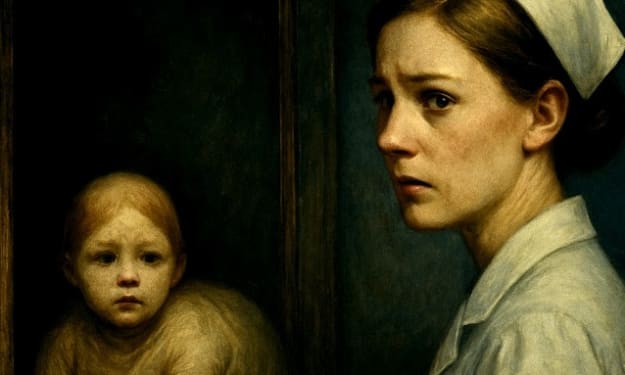
Room 214
The neon sign buzzed outside the motel like a dying insect: “Vacancy.” Elliot pulled his suitcase through the cracked parking lot, the air thick with the scent of damp carpet and stale smoke. He was tired, worn thin from a long day on the road and the weight of things left unsaid back home. The Sunset Inn looked like it hadn’t been updated since the seventies, but it was cheap and close enough to the highway.
By Junaid Shahid about a year ago in Horror
The Anatomy of Fear
Why We Crave the Fear Horror has always occupied a strange, shadowy corner of human imagination. It thrives on the things we fear most—death, the unknown, betrayal, and the loss of control. From ancient ghost tales told by firelight to modern psychological thrillers, horror stories grip us with a mix of dread and fascination. But why do we willingly subject ourselves to fear? The answer lies in the unique way horror manipulates our emotions, forcing us to confront what we’d rather avoid. --- The Anatomy of Fear Fear is primal. It’s an instinct passed down from our earliest ancestors, designed to keep us alive. Horror stories tap into that ancient reflex. A creaking door, a sudden shadow, or a distorted face in the mirror doesn’t just scare us—it activates our survival instincts. The most effective horror doesn’t just rely on gore or loud noises. It uses suspense, atmosphere, and the unseen to ignite a terror that lingers long after the story ends. In literature and film, the "less is more" approach often works best. Think of the haunting absence of the monster in The Blair Witch Project or the unseen terrors in Shirley Jackson’s The Haunting of Hill House. Our imagination fills in the blanks, and those imagined horrors are often far worse than anything shown outright. --- Monsters, Ghosts, and the Real Evil Horror’s villains come in many shapes: the bloodthirsty vampire, the vengeful ghost, the mindless zombie, or the deranged human predator. While supernatural creatures terrify us with their impossible nature, human villains unsettle us because they are all too real. Monsters like Dracula or Pennywise embody exaggerated fears—immortality turned predatory, innocence corrupted. On the other hand, killers like Norman Bates or Hannibal Lecter remind us that evil can hide behind polite smiles and ordinary appearances. In many ways, the human villain is far scarier than the supernatural one because they could be your neighbor, your coworker, or even your closest friend. --- The Role of Setting in Horror A good horror setting is not just a backdrop; it’s a character in itself. An abandoned asylum, a foggy forest, a creaking Victorian mansion—these places breathe unease into the story. The setting traps the characters and, by extension, the audience. Isolation is a powerful tool in horror. Whether it’s a snowbound hotel in The Shining or a spaceship drifting in Alien, cutting characters off from safety heightens the tension. Even a familiar setting, like a suburban home, can be twisted into something nightmarish when the horror invades the ordinary. --- Psychological Horror: The Terror Within While traditional horror focuses on external threats, psychological horror digs into the mind. It’s about paranoia, guilt, and the thin line between sanity and madness. Films like Black Swan or Hereditary and books like Misery by Stephen King prove that the human mind can be its own worst enemy. Psychological horror often leaves audiences questioning reality alongside the characters. Was the ghost real, or just a manifestation of trauma? Is the danger outside the door, or inside the character’s head? This ambiguity creates a lasting unease because the answers are never fully revealed. --- Why Horror Endures Horror has survived across centuries because fear is universal. Every culture has its myths, monsters, and cautionary tales. These stories reflect the anxieties of their times—plagues, wars, moral decline—and transform them into gripping narratives. In today’s world, horror continues to evolve. Technology has birthed new fears—artificial intelligence, surveillance, online predators. Social horror, as seen in films like Get Out, tackles real-world issues like racism, inequality, and cultural tensions, showing that the genre is not just about scares but also about reflection. --- The Catharsis of Being Scared One reason horror remains popular is the strange satisfaction we get from surviving it. Watching a terrifying film or reading a chilling book is like riding a roller coaster: we get the adrenaline rush without real danger. Fear in a controlled environment allows us to explore our darkest thoughts and then safely return to reality. For some, horror is also a way of processing personal fears. A person afraid of death might find a strange comfort in ghost stories. Someone dealing with betrayal might be drawn to tales of shapeshifters and impostors. Horror offers a space where our anxieties can play out in exaggerated, symbolic ways. --- Conclusion: The Shadows We Carry Horror is more than jump scares and blood. It’s a mirror reflecting our deepest insecurities, a safe space to confront danger, and a reminder that fear is as much a part of being human as love or joy. The next time you feel the urge to turn off the light after hearing a strange noise, remember: the shadows aren’t just outside. Sometimes, the scariest place of all is inside our own minds.
By Muhammad Ibrahimabout a year ago in Horror
**The Silent Fade**
**The Silent Fade** Ellie’s phone glowed in the dim light of her apartment, casting shadows on thah. Their last exchange was ten days ago—a playful back-and-forth about their favorite sci-fi movies, ending with his promise to pick a film fore walls. She scrolled through her messages, pausing at the thread with No their next date. Then, nothing. No calls, no texts, no sign of him. The word “ghosted” buzzed in her mind, sharp and cold, like a door slamming shut.
By Md Abul Kasemabout a year ago in Horror
The Vanishing Connection
The Vanishing Connection Lila sat at her favorite café, the one with the chipped mugs and the faint smell of burnt coffee.Her phone rested face-down on the table, a silent accusation. She stirred her latte, watching the foam swirl into nothingness, much like her connection with Sam had over the past two weeks. They’d met three months ago on a dating app, their chats sparking with wit and promise. Late-night texts turned into long phone calls, then dates—real ones, with laughter and lingering glances. But now, nothing. No calls, no texts, no explanation. Just a void where Sam used to be.She’d sent a message yesterday, casual but probing: Hey, are you okay? Haven’t heard from you in a bit. No response. Not even the three dots of a reply in progress. Ghosted. The word felt sharp, like a splinter under her skin. Lila wasn’t new to dating, but this was her first ghost, and it stung in a way she hadn’t expected.At first, she’d rationalized it. Maybe Sam was busy. Maybe their phone died. Maybe they were sick. But days stretched into a week, then two, and the silence grew heavier. She scrolled through their old texts, searching for clues. Had she said something wrong? Was their last date—a cozy night at a bookstore, sharing poetry—too much? She’d thought it was perfect, the way Sam’s eyes lit up reading Neruda aloud. But maybe she’d misread everything.Lila’s friend Mara, ever pragmatic, had shrugged it off over brunch. “People ghost because they’re cowards, not because of you. Move on.” But moving on felt like surrendering to the void. She wanted answers, not closure. Subsequently, she did what she swore she wouldn’t: she sent one last text. If you’re done, just say it. I deserve that much. She hit send, her heart pounding, and waited. Nothing.Across town, Sam sat in their cramped apartment, staring at Lila’s message. Guilt gnawed at them, a familiar ache. They hadn’t meant to ghost. At first, it was just a missed text—they’d been slammed at work, their new job demanding 12-hour shifts. They’d planned to reply, to explain, but the longer they waited, the harder it became. What could they say? Sorry, I got overwhelmed and bailed? It sounded pathetic. Lila deserved better than that, better than them. So, they’d let the silence stretch, hoping it would speak for them.Sam wasn’t a stranger to ghosting. They’d done it before, to others who’d gotten too close, too fast. It wasn’t malice; it was fear. Fear of vulnerability, of disappointing someone who saw them as more than they felt they were. Lila was different, though. Her laugh was unguarded, her questions sharp but kind. She made Sam want to be better, and that scared them most of all. So, they’d retreated, leaving her to wonder why.Back at the café, Lila’s phone buzzed. Her heart leapt, but it was just Mara, checking in. Are you okay? Don’t let this jerk ruin your vibe. Lila smiled faintly but felt no relief. She opened her dating app, thumb hovering over Sam’s profile. Their last message stared back at her: Can’t wait to see you again. The lie stung. She deleted the chat, then their number, each tap a small act of defiance against the hurt.But the questions lingered. Why was ghosting so easy for some? Was it the apps, making people disposable? Or was it deeper, a collective fear of honesty in a world that rewarded detachment? Lila didn’t know. She only knew the ache of being left without closure, like a book missing its final chapter.Days later, Sam walked past the bookstore where they’d last seen Lila. The memory hit hard: her reading poetry, her voice soft but sure. They pulled out their phone, typed a message, and then deleted it. What was the point? Too much time had passed. Instead, they walked on, the weight of their silence heavier than ever.Lila, meanwhile, started again. A new match, a new coffee date. She laughed, she listened, but a part of her stayed guarded, waiting for the next silence. Ghosting hadn’t just taken Sam; it had taken a piece of her trust, leaving her to wonder if every connection was just one text away from vanishing.In the end, neither found closure. Sam carried their guilt, Lila her questions. The space between them, once filled with possibility, was now just a ghost, haunting them both in its quiet absence.
By Md Abul Kasemabout a year ago in Horror
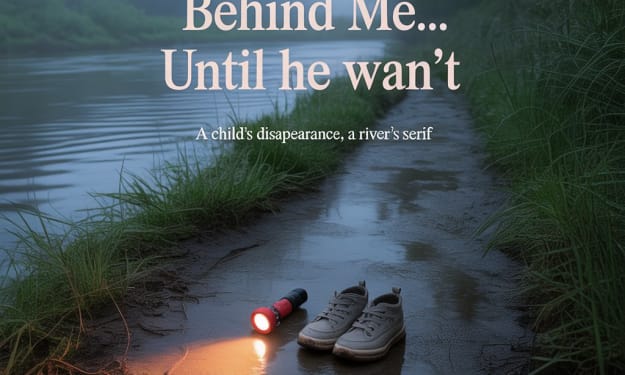
He was behind me... until he wasn't.
That path was never dangerous. There's a river path that runs behind my grandmother's property. We've been following it since we were kids—just a quiet dirt trail behind the water's edge, shaded by tall oaks and whispering grass. Birds chirped overhead. The water moved lazily. It never seemed threatening.
By Echoes of Lifeabout a year ago in Horror
Whispers Between Worlds
The first whisper came on the night of the frost. It slid through the crack beneath Mara’s bedroom door — not a draft, not the settling groan of the old farmhouse — but a voice. The words were soft, wet, almost bubbling up from deep underground.
By Hakeem Khan about a year ago in Horror
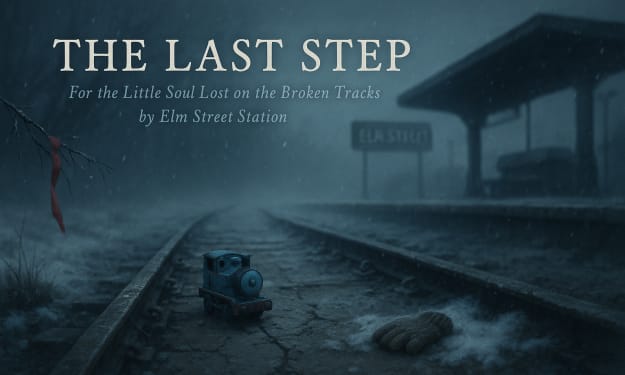
The Last Step
He loved the sound of trains. Tyrus loved trains. Not in the casual way most kids say they do—he lived for them. He could name every model from memory. He copied the sounds so precisely that even my father, a retired conductor, once stopped mid-coffee and said, “That boy has an engine in his chest.”
By Echoes of Lifeabout a year ago in Horror
The Hollow Guest
The Hollow Guest The fog enveloped the hills like a veil, muffling the outside world from the cabin. I had rented this place for a weekend of seclusion, a respite from the city's buzz and the burden of deadlines. The listing had promised a snug retreat, yet the images failed to convey how the forest appeared to encroach, branches scraping against the windows like fingers testing the glass. It was isolated as well—miles away from the nearest town, devoid of cell service, with a solitary dirt road winding through the trees. Perfect, I had thought. Now, as dusk faded into night, the silence felt less like tranquility and more like a breath held.
By Md Abul Kasemabout a year ago in Horror
The Stillness of the Night
The Stillness of the Night The small village was enveloped in thick fog, as if it were concealing itself from the outside world. In the darkness of the night, when the moonlight could not penetrate the misty shroud, the villagers secured their doors and windows. They understood that the stillness of the night was not merely quiet—it hid something mysterious, something malevolent.
By Md Abul Kasemabout a year ago in Horror