monster
Monsters and horror go hand in hand; explore horrific creatures, beasts and hairy scaries like Freddy Krueger, Frankenstein and far beyond.
The Disappearance of the Roanoke Colony – America’s Oldest Unsolved Mystery
In the annals of American history, few stories are as haunting and mysterious as the disappearance of the Roanoke Colony. Often called “The Lost Colony,” this 16th-century settlement vanished without a trace, leaving behind only a single cryptic word carved into a tree: “CROATOAN.” Over four centuries later, historians, archaeologists, and mystery lovers still wonder—what really happened to the people of Roanoke? The Dream of a New World In the late 1500s, England sought to expand its power and establish a foothold in the New World. Under the reign of Queen Elizabeth I, explorer Sir Walter Raleigh was granted permission to create a colony on the coast of what is now North Carolina. In 1585, the first group of English settlers arrived on Roanoke Island, but harsh conditions, poor supplies, and tense relations with local Native American tribes forced many to return to England. Determined to succeed, Raleigh organized a second expedition in 1587, this time including families who hoped to build permanent homes in the New World. A New Beginning Led by John White, the second Roanoke group consisted of about 115 settlers, including men, women, and children. Among them was White’s daughter, Eleanor Dare, who gave birth to Virginia Dare, the first English child born in the Americas. The colony began with hope and optimism, constructing homes and forming relationships with local tribes. However, their supplies soon dwindled, and conflicts with nearby tribes worsened. As the colony’s governor, John White decided to sail back to England to gather more provisions. He left his family and fellow settlers behind, promising to return within a few months. A Mysterious Silence White’s return was delayed—not by choice, but by history itself. England was at war with Spain, and nearly all ships were seized to defend against the Spanish Armada. By the time White finally returned to Roanoke in **1590—three years later—**the colony was gone. When he stepped onto the island, he found abandoned houses overgrown with weeds and no sign of struggle or violence. The settlers had simply disappeared. The only clue was the word “CROATOAN” carved into a wooden post, and the letters “CRO” etched into a nearby tree. White believed this referred to Croatoan Island (now Hatteras Island), home to friendly Native Americans the settlers knew. However, storms prevented him from searching the island, and he was forced to return to England—never knowing the fate of his family or the lost colony. Theories and Speculations Since that time, countless theories have tried to explain the mystery of the Lost Colony of Roanoke. 1. Integration with Native Tribes: The most widely accepted theory is that the settlers assimilated with local tribes, particularly the Croatoan (Hatteras) people. Some later reports from explorers described Native Americans with gray eyes and European features, possibly descendants of the colonists. 2. Mass Relocation or Migration: Another idea suggests the colonists moved inland in search of better resources and were later killed or absorbed by other tribes. 3. Spanish Attack: Some historians speculate the Spanish, who controlled nearby territories, discovered and destroyed the settlement to eliminate English presence. 4. Disease or Starvation: Harsh conditions, lack of food, and unfamiliar diseases could have led to the colony’s demise. 5. Supernatural Explanations: Over the centuries, folklore and legend have transformed the mystery into ghost stories, curses, and tales of haunted forests and vanishing spirits, making Roanoke a staple in American paranormal lore. Archaeological Clues Modern archaeologists continue to search for answers. In recent years, excavations on both Roanoke Island and Hatteras Island have uncovered English artifacts, including pottery fragments and tools that may belong to the lost settlers. However, none have provided definitive proof of what happened. In 2015, researchers revealed a hidden symbol on John White’s 1587 map, possibly marking the site of a secret settlement inland. This discovery reignited the debate and inspired further investigations, but the truth remains elusive. The Legacy of the Lost Colony Despite the uncertainty, Roanoke holds a permanent place in American history and culture. It represents the risks and dreams of early colonization, the fragility of human survival, and the enduring power of mystery. The story has inspired books, television shows, and films, including the popular “American Horror Story: Roanoke,” which blends history with horror fiction. Each year, thousands of visitors travel to Roanoke Island Festival Park to experience reenactments of the colony’s history and to stand where one of the world’s greatest mysteries began. An Unanswered Mystery More than 400 years later, the question still lingers: What happened to the Lost Colony of Roanoke? Were they absorbed by local tribes, destroyed by enemies, or lost to the wilderness? The silence of history has preserved their story, leaving behind only whispers and the word “CROATOAN”—a symbol of the unknown. Until definitive evidence is found, the fate of the Roanoke Colony remains an enduring enigma—a story that blends history, legend, and the haunting allure of the unexplained.
By Haunted Secrets11 months ago in Horror
The Tina Resch Story
It all began with a flash... not lightning, not supernatural energy, but the harsh glare of a newspaper camera. March 1984, a modest home in Columbus, Ohio. A teenage girl sits on a couch, eyes wide with terror, as a telephone flies across the room, captured midair by photographer Fred Shannon.
By Veil of Shadows11 months ago in Horror
"Echoes of the Past: The Haunting of Madison Mansion"
Echoes of the Past: The Haunting of Madison Mansion A long time ago, there was a house that stood on the bay near Mobile, Alabama. It was known as The Madison Mansion, a once grand estate that had been abandoned and boarded up for years. The mansion stood silent, its dark history whispering through the walls, sending a chill to anyone who passed by. Its eerie reputation kept people away, but for those brave enough to venture close, they would hear tales so chilling, they were almost beyond belief.
By The Insight Ledger 11 months ago in Horror
Dead Inside and Out
Mina, Jackie, Lily, and Fiona have been the best of friends since they were babies. At least, that is what all their parents say. The four girls have been inseparable, which sometimes drives their families crazy, especially older siblings. Through parents divorcing, loss of other friends, deaths of family, bad grades, heartbreaks, and all the ups and downs, they have supported each other. Starting high school was great for the girls; they got all the same classes and even joined the same clubs. This Halloween was unexpected, and it would change these young ladies.
By Debra Blau11 months ago in Horror
The Dyatlov Pass Mystery. Content Warning.
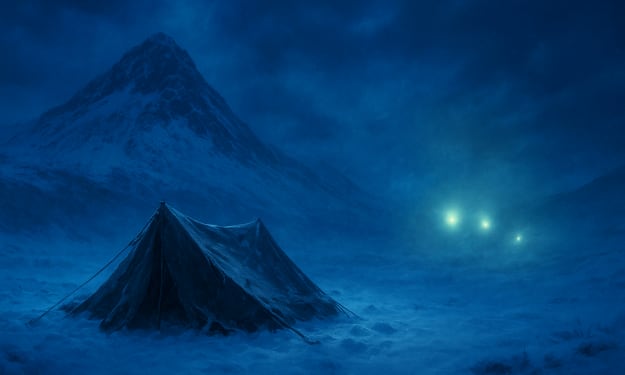
High in the icy wilderness of Russia’s Ural Mountains lies one of the most haunting mysteries of the 20th century — the Dyatlov Pass Incident. This case has baffled investigators, scientists, and conspiracy theorists for over six decades. It’s a story of courage, horror, and the unknown — a chilling reminder that even in our modern age, nature and mystery can still defeat logic. The Journey Begins In January 1959, a group of nine experienced hikers from the Ural Polytechnic Institute set out on a skiing expedition led by Igor Dyatlov, a 23-year-old engineering student. Their goal was to reach Otorten Mountain, a challenging but achievable route for seasoned adventurers. The team included seven men and two women, all skilled mountaineers. They carried journals, cameras, and supplies — documenting every step of their journey. But none of them would return alive. Days later, when they failed to make radio contact or return as scheduled, a rescue team was sent into the frozen wilderness. What they found still sends chills down the spine of anyone who hears the story. The Discovery of the Camp Searchers found the group’s tent abandoned and torn open from the inside on the snowy slope of Kholat Syakhl — a name that chillingly translates to “Dead Mountain” in the local Mansi language. Inside the tent were their belongings, boots, and warm clothing — everything they would have needed to survive in temperatures below -25°C. Yet, the hikers had fled barefoot or wearing only socks and light clothing into the snow. The first two bodies were discovered near a forest line under a cedar tree, barefoot and half-naked, as if they had been trying to start a fire. Three more bodies, including Dyatlov himself, were found between the tree and the tent — their positions suggesting they had been crawling back to camp. But the true horror lay ahead. A Scene of Unimaginable Horror It took two more months to find the remaining four hikers, buried under snow in a ravine deeper in the forest. Their deaths were far stranger than the others. One had a fractured skull, Another had severe chest injuries comparable to a car crash, A woman was missing her tongue and eyes, and Traces of radiation were found on some of their clothing. There were no signs of struggle or footprints from outsiders, and their injuries couldn’t be easily explained by an avalanche or animal attack. Investigators were left with more questions than answers. Theories That Shook the World Since 1959, dozens of theories have emerged — from the scientific to the supernatural — in an attempt to explain what really happened on that freezing night. 1. Avalanche Theory: In 2019, Russian authorities reopened the case and suggested that a small slab avalanche could have struck the tent, forcing the hikers to flee. However, the slope’s angle and the group’s experience made this explanation controversial. 2. Katabatic Wind: Some scientists propose that fierce, low-level winds (katabatic winds) may have caused panic and disorientation, forcing the group to abandon their tent in terror. 3. Soviet Military Experiments: Many believe the hikers stumbled upon secret Soviet weapons tests, such as parachute mines or radiological experiments, which could explain both the injuries and the radiation. 4. Infrasound Panic Theory: Another theory claims that infrasound — low-frequency sound waves generated by wind — caused intense fear, nausea, and irrational behavior, driving the group into a fatal frenzy. 5. Paranormal and Extraterrestrial Explanations: Others point to reports of orange orbs in the sky seen by witnesses that night. Could UFOs have been involved? Some believe so, arguing the hikers were victims of an encounter beyond human understanding. Why the Case Remains Unsolved Despite modern technology and countless investigations, no single theory perfectly explains every detail — the missing tongue, the radiation, the tent ripped from within, and the differing levels of trauma. The official Soviet investigation in 1959 concluded vaguely that the hikers died from “a compelling natural force.” This phrase only deepened the mystery and fueled global fascination. In recent years, forensic research and computer simulations have revisited the avalanche theory, suggesting that snow slabs could indeed cause blunt-force trauma similar to what was found. Yet even with these modern insights, many inconsistencies remain — leaving room for endless speculation. Legacy and Cultural Impact The Dyatlov Pass Incident has become a cornerstone of true mystery and horror storytelling. It has inspired books, documentaries, and films, including The Dyatlov Pass Incident (2013) and the Dead Mountain TV series. To this day, curious travelers trek to the remote site, where a memorial stone marks the final resting place of the nine victims. The pass itself was officially renamed Dyatlov Pass in honor of the group’s leader. But more than a memorial, it stands as a symbol of humanity’s eternal confrontation with the unknown — a place where bravery met something far beyond human comprehension. Conclusion The Dyatlov Pass Mystery endures as one of the most haunting unsolved enigmas of modern history. Whether it was a natural disaster, a secret experiment, or something supernatural, the truth remains buried beneath the snow. Over sixty years later, the icy winds of the Ural Mountains still whisper the same question — what really happened that night? Until someone finds the missing piece of the puzzle, the Dyatlov Pass will remain a frozen monument to fear, mystery, and the unexplainable power of nature.
By Haunted Secrets11 months ago in Horror
"Don't Go Into the Woods"
‘Don’t go into the woods.’ That was something my mother always said, offering no explanation except for the promise of closure when I ‘got older’. I’d followed her words diligently, never venturing past the run-down picket fence with the chipping white paint. Instead, I stayed within the confines of my backyard, kicking stones, picking daisies, and making mud pies, like any other nine-year-old.
By Max Chapman11 months ago in Horror
SEASON 3 - Whispers from the Lantern: The Keeper's Lament
Chapter 5 The drowned were not ghosts in the conventional sense. They were not transparent. They were not silent. They were wet, dripping apparitions of water and salt, their bodies bloated and decayed, their eyes hollow pools of despair. They moved with a slow, deliberate purpose, a profound, mournful sadness clinging to every movement. They were coming for them.
By Tales That Breathe at Night11 months ago in Horror
The Elevator That Never Closed:. AI-Generated.
The Cecil Hotel stood like a relic of forgotten nightmares—its partitions soaked in decades of tragedy. as soon as a glamorous destination, it had turn out to be infamous for suicides, murders, and visitors who checked in however in no way looked at. among them was Elisa Lam, a 21-year-old Canadian student who arrived by myself, complete of hope, curiosity, and a thirst for journey.
By The Writer...A_Awan11 months ago in Horror