monster
Monsters and horror go hand in hand; explore horrific creatures, beasts and hairy scaries like Freddy Krueger, Frankenstein and far beyond.
Nessie: The Enduring Mystery of the Loch Ness Monster
The Loch Ness Monster, lovingly known as "Nessie," is one of the most famous and intriguing urban legends of all time. This mysterious creature is said to dwell in the dark, deep waters of Loch Ness in the Scottish Highlands. Although the lake is in Scotland, the legend of Nessie has captured the imagination of people all over the world. For centuries, stories about the Loch Ness Monster have sparked curiosity, and even today, people are fascinated by the possibility that such a creature might exist. Physical Descriptions Descriptions of Nessie vary, but most say she is a large, snake-like creature with a long neck and one or more humps that rise above the water. Some accounts also mention flippers, giving her an appearance similar to a prehistoric reptile called a plesiosaur. These features give Nessie an almost mythical quality, as she seems like a mix of both ancient reptiles and modern-day sea creatures. This adds to her mysterious charm, making people wonder what could really be lurking in the waters of Loch Ness. The First Modern Sighting The legend of the Loch Ness Monster became widely known in 1933 when a couple claimed to have seen a large creature making a splash in the water. Their report, published in the *Inverness Courier*, caught the public's attention and led to a media frenzy. However, stories of strange creatures in Loch Ness go back much further. One of the earliest known mentions of a beast in these waters comes from a 7th-century manuscript written by Saint Columba. The story says that the saint came across a creature in the River Ness, which is connected to Loch Ness, and drove it away with his prayers. This ancient tale adds a layer of historical mystery to the legend. The Name and Popularity of Nessie While most people refer to her as "Nessie," she is also known as the "Loch Ness Monster." The name Nessie makes her sound friendly and even a bit playful, which might be why the legend has endured for so long. It gives the mysterious monster a more approachable, almost lovable, image. Yet, despite the cute nickname, the idea of a large, unknown creature living in the lake continues to intrigue and spark the imaginations of people around the world. Elusive Sightings Nessie is believed to live in the deep waters of Loch Ness, surfacing only on rare occasions. This makes sightings few and far between, adding to the mystery. Witnesses often claim to see her in the early morning or late evening, when the water is calm. Reports typically describe ripples, waves, or sudden splashes, followed by the sight of humps or a long neck rising from the water. Nessie is almost always spotted alone, reinforcing the idea that she is a solitary creature. These rare glimpses keep people hoping that one day, Nessie might show herself more clearly. Nessie in Pop Culture The legend of Nessie has left a lasting mark on pop culture. She has appeared in movies, books, TV shows, and even theme parks. In the 2007 film *The Water Horse: Legend of the Deep*, Nessie is portrayed as a magical, gentle creature. She has also been featured in popular shows like *Doctor Who* and *The Simpsons*, where her legend is often used for humor or mystery. Nessie’s fame even extends to a roller coaster at Busch Gardens called "The Loch Ness Monster." These pop culture appearances help keep Nessie in the public eye, ensuring that her legend continues to inspire new generations. Modern-Day Searches and Theories Even today, people are still searching for Nessie, hoping to prove once and for all whether the Loch Ness Monster is real. Technology like sonar and underwater drones have been used to scan the lake, but no clear evidence has been found. Despite this, Nessie continues to attract tourists from all over the world, contributing to the local economy. The mystery surrounding her makes Loch Ness a must-visit spot for those who are curious about what might be lurking beneath the water. Conclusion: The Legend Lives on The Loch Ness Monster remains one of the world’s most famous urban legends, and the mystery surrounding Nessie shows no sign of fading away. With each new sighting and every search expedition, people’s fascination grows. Whether Nessie is a real creature, a clever myth, or simply the result of people’s imaginations, she continues to inspire wonder and curiosity. For as long as the legend of Nessie exists, the deep, dark waters of Loch Ness will remain a symbol of mystery, drawing people in with the hope of catching a glimpse of the legendary monster.
By Viru Chauhan2 years ago in Horror
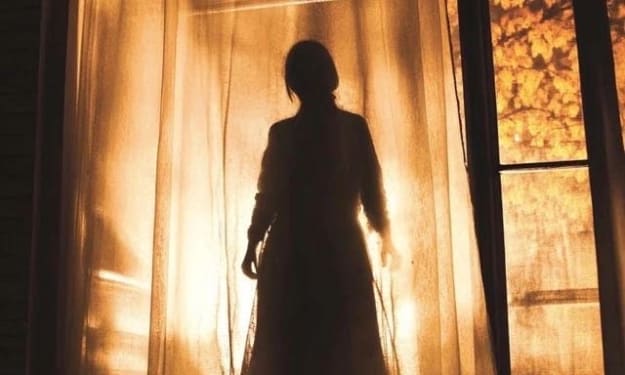
The Midnight Knock
(A spine-chilling story that will leave you with goosebumps) Late-night thumps on entryways are frequently agitating. However, imagine a scenario in which a thump came when nobody should be near. This is an anecdote about a chilling experience with the obscure — a story of interest, dread, and the sort of fear that stays with you. Assuming that you're somebody who loves unnerving stories, lock in. This one depends on a genuine episode.
By Bisma saeed2 years ago in Horror
Deep Sea Creatures
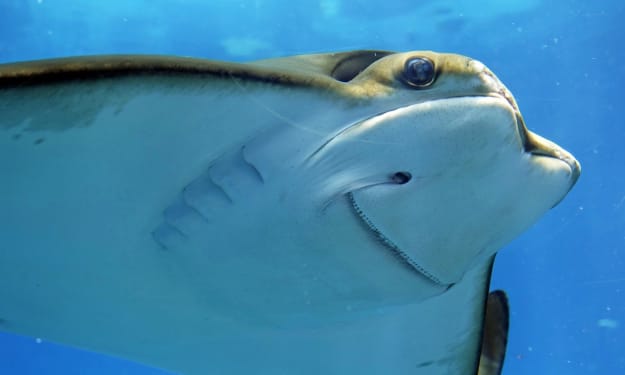
One of the planet's last big uncharted territories, the ocean is home to unimaginable species and secrets. Some of the strangest and most scary deep-sea species live in a dark, frigid realm located far below the surface. Let's explore the depths of the abyss and find these terrifying marine creatures that lurk there.
By Fast world engagement2 years ago in Horror
The Legend of Hachishakusama: The Eight-Foot Phantom of Japanese Folklore
Hachishakusama, meaning "Eight Feet Tall," is a terrifying figure from Japanese folklore and urban legends. Known for her eerie presence and sinister actions, she is said to target and frighten children. Imagine an unnervingly tall woman, eight feet in height, draped in a ghostly white dress. Her face is hidden in shadows, and all that escapes her lips is the chilling whisper, "Po...". This mysterious figure has become a symbol of fear in modern Japanese legends, leaving countless people terrified by her story. Appearance Hachishakusama gets her name from her towering height—eight feet tall. She is often depicted wearing a long, flowing white dress and a wide-brimmed hat that hides her face. Her long arms and legs only add to her frightening appearance, making her look even taller and more menacing. Though different versions of her appearance exist, the core image remains the same: a figure that blends horror and mystery. Her face is rarely seen, either cloaked in darkness or covered by long, dark hair. Some stories describe her with glowing red eyes or pale, ghostly skin. What makes her even more terrifying is her ability to change form. Witnesses claim she can take on the appearance of loved ones or ordinary people, making her hard to recognize until it's too late. A Lonely Spirit Unlike many mythical beings who have family ties or connections to other spirits, Hachishakusama is often seen as a lone figure. She carries out her haunting and abductions on her own. However, some interpretations link her to other famous female spirits in Japanese folklore, such as Kuchisake-onna, the slit-mouthed woman, or Teke Teke, a ghost with only half a body. These comparisons suggest a common theme of female spirits who seek revenge, but it remains speculative. Other Names and Connections Hachishakusama is known by various names, including "Hasshaku-sama," "The Eight Feet Tall Woman," and "The Tall Woman." Each of these names highlights her striking height, which is her most distinctive feature. In some regions, she’s even referred to as "Yubaba," drawing a connection to the towering witch in *Spirited Away*. Others compare her to "Nopperabo," a faceless spirit from folklore. These different names show how adaptable the legend is, with slight changes in each retelling. Powers and Abilities Hachishakusama’s supernatural powers are as frightening as her appearance. One of her main abilities is shape-shifting, allowing her to take on the form of a trusted relative or friend, tricking her victims into believing they’re safe. She’s also said to have mind control powers, pulling people toward her with an eerie whisper—her trademark "Po..." sound. Most of the stories about her describe how she preys on children, using her hypnotic voice to lure them away. She is incredibly fast and strong, able to capture her victims in an instant. Some tales also suggest that she can make people forget their encounter with her, erasing their memories to keep her presence a secret. Influence in Modern Culture In recent years, Hachishakusama has become a well-known figure in Japanese horror. Her story is told and retold in online forums, horror films, and even video games. As new versions of her legend surface, her eerie presence continues to grow in popularity, ensuring that her legacy lives on. Hachishakusama’s influence reaches beyond just horror stories and internet threads. She has also appeared in manga, anime, and even cosplay events. Her terrifying image is recreated by fans, spreading the legend further. In some regions, she has even become a part of local festivals and folklore, blending fiction and reality in fascinating ways. A Modern Urban Legend Despite her relatively recent origins, Hachishakusama has firmly established herself as part of Japan’s rich tapestry of urban legends. The internet has played a huge role in keeping her legend alive, with countless people retelling her story in their own words. Each new interpretation adds to her myth, ensuring that she remains a relevant and evolving figure of fear. Whether shared online or whispered about in small towns, Hachishakusama continues to captivate and terrify. Her enduring appeal lies in the mysterious nature of her story and the fear she instills. Whether she is real or simply a product of imagination, Hachishakusama reminds us of the power of storytelling and the hold that the unknown can have on us.Start writing...
By Viru Chauhan2 years ago in Horror
Horror Icons: Pinhead
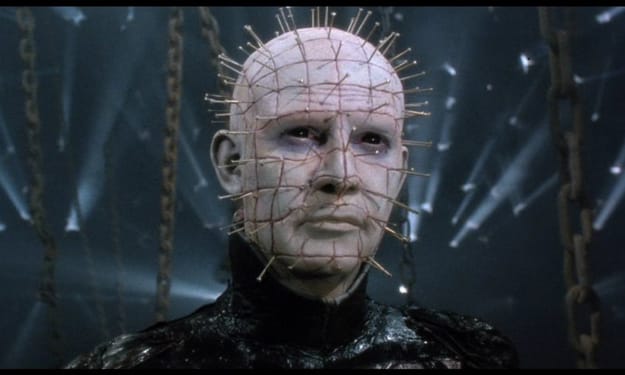
”We’ll tear your soul apart” - Pinhead. He has many names. Some call him the prince of pain, others call him the angel of suffering. His creator calls him the Hell Priest, but horror fans know him as Pinhead, Leviathan’s lord of Hell. He is the center figure of the Hellraiser franchise and he is one of the biggest icons of horror.
By Joe Patterson2 years ago in Horror
Alamoa
The Alamoa, a haunting figure in Brazilian folklore, embodies an enigmatic blend of mystery and sorrow. Celebrated for her ethereal beauty, the legend of Alamoa originates from Fernando de Noronha, a secluded island located off Brazil's northeastern shore. Enveloped in myth, she serves as both a chilling cautionary tale and a reflection of Brazil's rich cultural heritage, intertwining indigenous, African, and European elements into a captivating narrative. The legend of the Alamoa is rooted in the stunning yet remote island of Fernando de Noronha, which historically served as a prison colony due to its seclusion. The island's breathtaking landscapes, characterized by rugged cliffs and azure waters, have naturally inspired numerous ghostly tales. In Portuguese, "Alamoa" can be interpreted as "the white lady" or "foreign woman," though her backstory is more complex. According to folklore, the Alamoa manifests as an enchanting woman clad in white, with skin as pale as ivory and long, cascading hair.
By A História2 years ago in Horror
The Haunted History of Weed Must-Read Books About Cannabis. Content Warning. AI-Generated.
The Emperor Wears No Clothes by Jack Herer First published in 1985, "The Emperor Wears No Clothes" stands as one of the most influential books about weed ever written. Jack Herer spent over a decade meticulously researching and compiling evidence that would eventually shake the foundations of cannabis prohibition.
By Getglass.us2 years ago in Horror