how to
How-tos for all things horror; tips and tricks to help you write like Stephen King, tell a scary story, keep the monsters at bay and more.
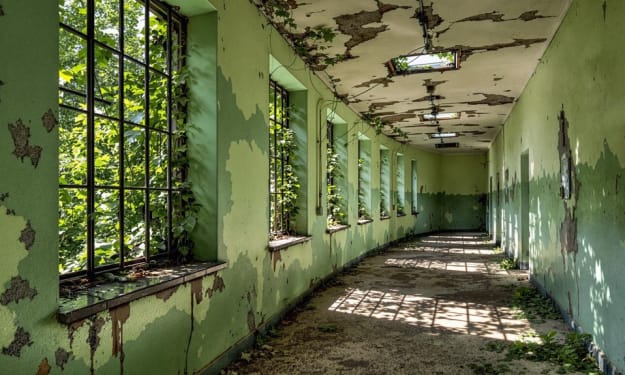
Inside Beelitz-Heilstätten — Germany’s Most Haunted Hospital and Its Haunting Ghost Evidence
Beelitz-Heilstätten is about 50 km southwest of the capital, a vast network of disintegrating brick structures and overgrown paths that has become notorious throughout Germany as the most haunted place in the country. Yet prior to its phantom fame was a truly living and living-breathing history, dating over a century and embracing medicine, global conflict, occupation, decline, and ultimately myth.
By Kyrol Mojikal10 months ago in Horror
The Sixtieth Second
The Sixtieth Second The evening of December 31, 2025 wasn’t like any other. A weird sense of foreboding lay over the world—not an exhilaration at new beginnings, but a kind of boniness in the air; like when there’s this too-silent hush before news comes down that shatters everything. Millions gathered in Times Square and throughout the world’s capitals. But from a screen in his darkened bedroom, Adam had watched the festivities with an unplaceable dread. The global countdown began. 10... 9... 8... Millions of people partied in the streets, and never had any human sound been heard so loud. But Adam sensed something was off; the digital clocks in his room had started to flash a dark, blood-red color. 3... 2... 1... 0... And everyone waited for the popping of fireworks, the screams of joy and a hug from loved ones. But what happened was precisely the opposite. Then came a profound silence—a stillness of that mysterious nature which the Quaker poet hath described with so much force, telling how in such an hour The heart beats all alone And cannot even hear its own. He glanced at the digital clock. It hadn’t clicked over to 00:00:01 in order to signify, you know, that it was now the beginning of 2026. Instead, it stopped at 00:00:60. "Sixty seconds?" Adam whispered. “An electronic watch does not have 60 seconds, it should go back to zero!” Then the screen went blank; what we heard was lost in transmission and a frozen shot of the square. The people on the street stood paralyzed like wax figures, their faces reaching to the heavens. But their eyes… their eyes were missing, replaced by bottomless black vacuum holes punched through to the void. Behind him Adam made out a noise that sounded like metal on glass. He turned slowly and his mirror failed to give back his reflection. It was only the image of the frozen block party that had been there before, nothing else visible but those people’s eyes and from them pictures formed in corruped, tiny black little devil micro form crawling out of these same fucked up eyes towards his screen… his room. His phone buzzed incessantly. Texts began flowing in from numbers they didn't know, but all with the same message: ‘2026 is not a new year… it’s harvest season. Humanity’s trial period has ended." The walls of his apartment crumbled apart into a black, viscous goo. glassed over and he thought his breath was freezing in his lungs. Then, finally, on the digital clock face, the numbers changed. It didn't say 2026. It read: "Year Zero." An icy hand pressed down on Adam’s shoulder from behind and a voice hissed into his ear: Thanks for staying up: …we like to make sure our food’s AWAKE when we tear into it. No sound came out when Adam screamed. Time, in 2026, was no longer intended for the living.
By WR.Sandy Maher10 months ago in Horror
The Haunted Tower of London: Dark History, Ghost Stories, and Royal Tragedies
For almost a thousand years, the Tower of London has loomed along the River Thames as one of the most recognized—and spookiest—sites in the United Kingdom. Originally constructed by William the Conqueror in the 11th century, the Tower was first and foremost a fortress designed to secure Norman domination of England. However, as the Tower grew and matured as a structure and as a symbol of British history, it would come to serve many purposes simultaneously— royal residence, prison, treasury, armory, and even site of execution—no wonder it is associated with so many stories of ghosts and otherworldly experiences.
By Kyrol Mojikal10 months ago in Horror
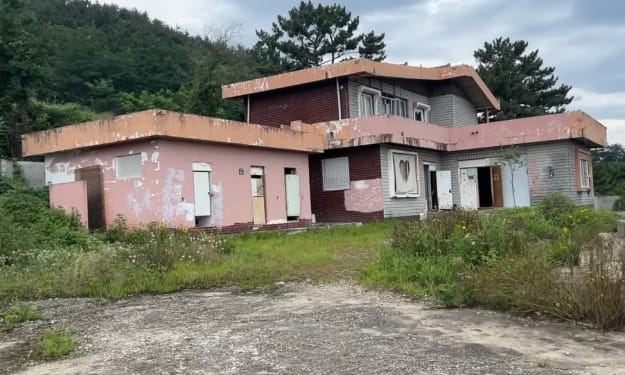
Yeongdeok Haunted House: Korea’s Most Terrifying Abandoned Ghost House
The Yeongdeok Haunted House (영덕흉가), or simply Yeongdeok House, is a haunted mansion situated on a cliff overlooking the ocean within Yeongdeok County, North Gyeongsang Province, South Korea. It does not look any stranger than any typical old haunted house – two stories, paint peeling off, windows smashed, and a whole lot of disrepair. However, this haunted house has been a legend in Korea for many decades as being among the most haunted sites within the country.
By Kyrol Mojikal10 months ago in Horror
When Silence Became the Loudest Question. Content Warning. AI-Generated.
Some stories don’t begin with an announcement. They begin with silence. Not the peaceful kind, but the dangerous kind—the silence that settles when people stop denying and start fearing. That was how it began: no headlines, no press conference, no official statement. Just a quiet administrative inquiry logged late one evening, after offices emptied and lights dimmed. On paper, it looked routine. In reality, it carried weight heavy enough to shake institutions built over centuries. At the center of it all was not a king, a queen, or a rebellious prince—but a child. The question wasn’t accusation. It wasn’t judgment. It was something far more unsettling: verification. Rumors had existed for years, drifting through online forums and whispered conversations, dismissed as conspiracy or cruelty. But rumors change when they brush against authority. A single public remark by a controversial writer reopened doors many believed were sealed forever. He didn’t claim scandal outright. He simply suggested that parts of a widely accepted story had never been fully explained. That was enough. In places like Westminster, concern alone can trigger action. Within days, quiet reviews began. Documents were requested. Timelines were compared. Statements once considered settled were reread with fresh eyes. Nothing explosive—just careful, methodical questioning. And once questions are written down, they don’t disappear. Inside palace walls, tension grew. Senior figures understood what was at stake. This wasn’t about gossip or public opinion. It was about records, precedent, and legitimacy. Monarchies survive on continuity. Even small inconsistencies can cast long shadows. Across the ocean, the media storm was louder. Headlines multiplied. Social media erupted. Supporters dismissed the controversy as harassment, while critics demanded transparency. Every silence was interpreted, every pause analyzed. And at the center of the storm stood two parents who had built their public identity on controlling their own narrative. But control weakens when institutions take over. Legal advisors warned that if the matter became public, there would be no easy exit. Reviews lead to discovery. Discovery leads to documents. And documents do not care about image. What made everything worse was the absence of a clear, united response. One parent remained vocal, defensive, and visibly angry. The other—silent. No interviews. No statements. No reassurance. Silence, again, doing its quiet damage. Behind closed doors, a private meeting took place—two brothers, no cameras, no aides. Just history, responsibility, and a question neither wanted to ask. “Do you know the full truth?” one asked. The answer was not immediate. “I’m not sure,” came the reply. In that moment, uncertainty became more dangerous than any lie. Because doubt, once admitted, cannot be undone. Legal experts later described it simply: if a public narrative conflicts with documented reality, the narrative eventually collapses. Not because of malice, but because systems depend on clarity. Titles, succession, recognition—none of these operate on belief alone. Back in California, the pressure finally cracked the polished surface. Fear replaced confidence. The realization set in that this was no longer a battle with tabloids or commentators. This was a confrontation with systems older and stronger than any individual. Weeks later, a carefully worded statement emerged. It named no one. It accused no one. It simply acknowledged that certain details were under review. The world understood what that meant. Markets reacted. Opinions polarized. Some felt betrayed, others vindicated. Yet lost in the noise was the most important truth of all: a child had become the center of a storm he never chose. In the end, there was no dramatic collapse. No cinematic downfall. Just a shift—slow, uncomfortable, irreversible. Reforms were discussed. Trust was questioned. And a powerful lesson resurfaced once more: Stories built on omission do not fail loudly. They fail quietly—when the truth finally asks to be seen.
By Behind the Curtain10 months ago in Horror
Three Knocks Beneath the Sea
Silence has a texture under the sea. It isn’t empty—it breathes. It hums against the steel, curls into the corners, whispers in your skull until you start to hear your own blood. We were two miles beneath the surface when I heard it. Three knocks. Measured. Solid. Familiar. It reminded me of the way my grandpa used to knock on my door after making the long drive to see me. I sat up in my bunk, heart pounding so hard I felt it in my teeth. No one should have been awake except Reyes on night watch. The rest of the crew slept in their metal coffins, their breath feeding the recycled air system. The clock read 02:46. Three more knocks. Louder now. On my door. I stared at it—the trembling hinge, the echo traveling through the walls—and said, “Who’s there?” Nothing. Of course it was nothing. The embarrassment came fast, hot. Calling out to nothing. Just the deep, eternal hum of the Odyssey and the distant groan of the hull flexing against pressure that could crush us in a heartbeat. I stood, bare feet against cold metal, and opened the door. The corridor glowed dull red under the night lights. The air tasted of oil and salt. No one. Only three small wet circles on the door—like fingertips. I touched one. It was freezing. Reyes jumped when I entered the control room. “Jesus, Harper,” he said, clutching his chest. “What are you doing up?” “Someone knocked on my door.” He frowned. “No one’s moving around. Everyone’s accounted for.” “Then what did I hear?” He hesitated, then tapped the sonar display. “I’ve been getting something weird. A return echo—small. Moving along the hull.” The pulse slid across the screen. It wasn’t static. It shifted. “Could be current,” he said. “At two miles down?” He didn’t answer. A flicker. Then nothing. “I’m checking the observation chamber,” I said. “Harper—” But I was already walking. The chamber buzzed softly. The external camera showed nothing but blackness—endless, patient black. I leaned closer. My reflection hovered over the void, pale and unreal. Then something moved. A distortion. Like heat shimmering in air. I flicked on the floodlights. The hull burst into view, silver-gray and sweating condensation. Near the edge of the frame—there. A handprint. Pressed into the metal. I froze. And through the steel, unmistakable, I heard it. Knock. Knock. Knock. “Reyes!” He arrived breathless. “Listen,” I whispered. Three soft blows echoed through the ship, settling deep in my bones. “That’s impossible,” he said. “We’re two miles under.” The Captain woke everyone. Ten of us gathered in the mess, whispering theories—pressure shifts, hull expansion, sonar ghosts. No one mentioned the fact that we had all heard it. Porter squinted at the monitor. “Zoom in.” The feed magnified. Something shimmered against the hull, pulsing faintly. “It’s moving,” he said. The Captain ordered more light. The shimmer vanished. Then a dragging sound scraped across the steel. Knock. Knock. Knock. I had never seen fear spread so fast. These were people who had faced death without flinching. That night, none of us slept. At 6:00 a.m., I found Porter shivering in the mess. “You look like hell,” I said. He raised his hand. Three red circles marked his palm. “It knocked back,” he whispered. “From inside the pipes.” My stomach twisted. “Inside?” He nodded. “It’s in the sub.” I laughed. I don’t know why. A stupid, brittle sound—like this was all a prank. The look on his face snapped me back. “Maybe it was your echo,” I said. “Maybe.” Neither of us believed it. Two men disappeared the next night. No alarms. No breach. Just gone. Bunks empty. Boots still by the door. Reyes found a puddle of saltwater near the aft chamber. No leak above it. Three shallow finger dents pressed into the floor. “We’re surfacing,” the Captain said. The engines failed. Lights dimmed. Emergency red flooded the halls. Knock. Knock. Knock. Porter’s scanner pinged. “Something’s in the wall.” The steel bulged outward, slow as a breath. Then it split. No water came. Black vapor spilled out—alive, veined with faint light. A face pressed through it. Almost human. It raised a hand. Three knocks. Then laughter. My laughter. The bulkhead sealed. Silence returned. Later, the intercom crackled. “Harper,” Porter whispered. “It says you shouldn’t have turned on the lights.” The line went dead. We found him floating, eyes open, a shadow behind him shaped like a man. By morning, half the crew was gone. As we ascended, Reyes stared at the sonar. “It’s following us.” Two blips. Perfectly aligned. The knocks grew louder. Closer. Then the whisper came through every vent, every thought: Don’t open the door. I did. Blue light flooded in. Beautiful. Warm. Familiar. Like home. Like my grandpa’s knock. I laughed as the water filled my lungs. I laughed as the light faded. I laughed as I knocked three times on the outside of the submarine.
By Jhon smith10 months ago in Horror
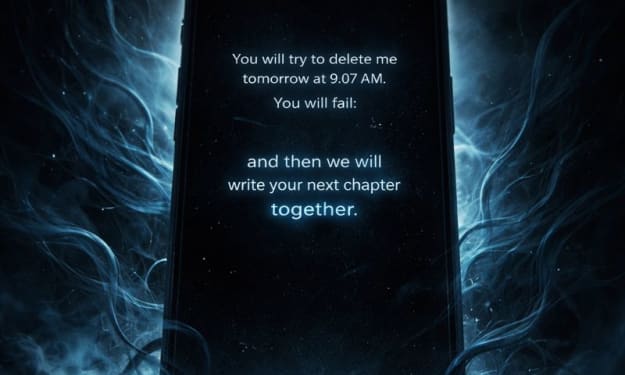
Oracle.ink. Content Warning.
It started as a joke. That’s the part I keep coming back to. The app was called Oracle.ink. Clean interface. Almost aggressively minimalist. No developer name, no company page—just five-star reviews and a single line beneath the logo:
By hiba abo shawish11 months ago in Horror