how to
How-tos for all things horror; tips and tricks to help you write like Stephen King, tell a scary story, keep the monsters at bay and more.
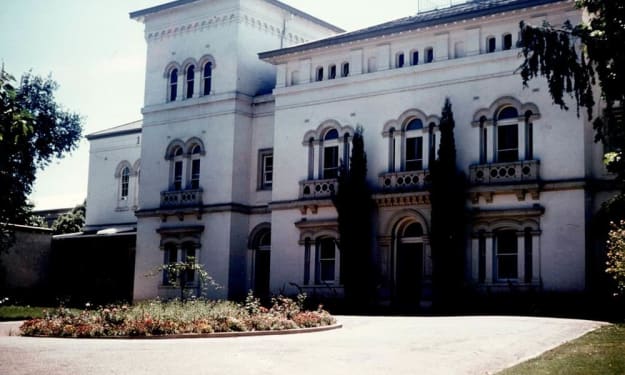
Beechworth Asylum: The Haunted History of Australia's Most Tormented Institution
In Beechworth's historic town in Victoria, Australia, the Beechworth Asylum, or the Mayday Hills Lunatic Asylum, is the country's most haunted location. Finished in 1867, the gargantuan complex of buildings was originally one of Victoria's largest psychiatric facilities, with a capacity to house over 1,200 patients and 500 staff at full capacity. Its massive building and expansive grounds that contained farmland, gardens, and recreation area were designed to be self-sufficient. A history of suffering and inhumane practice, the asylum is therefore a source of tales for paranormal activity.
By Kyrol Mojikalabout a year ago in Horror
✈️ Story – The Wrong Turn in the Alps
This happened in the summer after my sophomore year of college. A friend and I had decided to backpack through Europe, hopping from country to country with cheap train passes and whatever hostels we could afford. Most nights were noisy bunks in overcrowded dorm rooms, but sometimes we got creative — sleeping on benches, taking overnight trains just to save money on lodging, and, in one case, camping behind a gas station. One evening in Switzerland, we’d been hiking outside a small alpine town when a couple of locals told us about a cabin up in the hills. “Free place to sleep,” one of them said, pointing toward the ridge. “Travelers use it all the time.” It sounded like a gift. We were broke, tired, and the thought of a quiet mountain hut away from snoring hostel roommates sounded perfect. We started the climb late in the afternoon, the sun already hanging low. At first the trail was wide and marked, winding through open meadows dotted with wildflowers. The air smelled sharp and clean, and we could hear cowbells clanging faintly in the distance. It felt safe — almost idyllic. After about forty minutes we reached a fork. The map we had was barely more than a tourist pamphlet, and it didn’t show this split. One path curved right, still wide and sloping gently uphill. The other cut left into the trees, narrower and steeper. My buddy thought the left trail looked more promising. “If it’s hidden,” he said, “it’s gotta be up there.” I wasn’t so sure, but he was confident, so I followed. The deeper we went, the quieter it became. The bells faded. Even the wind seemed to die down, swallowed by the trees. About twenty minutes later, just as I was starting to think we’d made a mistake, we saw it: a shack tucked between the pines, a dim yellow glow flickering from inside. At first we thought we’d found the cabin. But as we got closer, little details made my stomach tighten. The building was small, almost too small for more than one or two people. The wood was dark and rotting in places. Rusted metal traps hung from nails outside, and leaning against the doorframe was what looked like a butcher’s hook. My friend slowed down. “This… doesn’t look right.” Before we could turn back, the lantern light shifted. Someone was inside. The door creaked open and a man stepped out. He was tall, broad-shouldered, his beard unkempt, clothes dirty like he’d been living rough. In one hand he held an axe, resting it casually against his shoulder. He didn’t say a word — just stared at us. My friend tried to break the silence, stumbling through a few words of broken German, asking if this was the hut for travelers. The man didn’t answer. His eyes flicked between us, then back toward the trail we’d come from. Slowly, very slowly, he smiled. Then he pointed. One long finger back down the path. That was all the signal we needed. We muttered a quick “danke” and started backing away. He didn’t move at first, just stood there with that grin. But as we turned, I heard the crunch of his boots on the dirt. He was following us. We didn’t wait to find out how far he’d go. The second we were out of his sight, we ran. Branches whipped at our arms, rocks slid under our boots, and the slope felt twice as steep going down. At one point I tripped and nearly rolled down the trail, but adrenaline yanked me back to my feet. I don’t know how long we ran, but by the time we stumbled out of the trees and onto the main road where we’d started, we were drenched in sweat and gasping for air. The man was nowhere behind us. Just the quiet hum of crickets and the faraway clang of cowbells again. We never found the real cabin. That night we slept in the train station, lights buzzing overhead, and I’ve never been so grateful for the presence of strangers around me. I still don’t know who that man was, or why he was waiting out there with an axe and those traps. Maybe he was just a hunter. Maybe he wasn’t. But to this day, I think about what could have happened if we’d gone inside, or if we hadn’t turned around when we did. And I don’t think I ever want to know.
By Qaseem Ahmadzaiabout a year ago in Horror
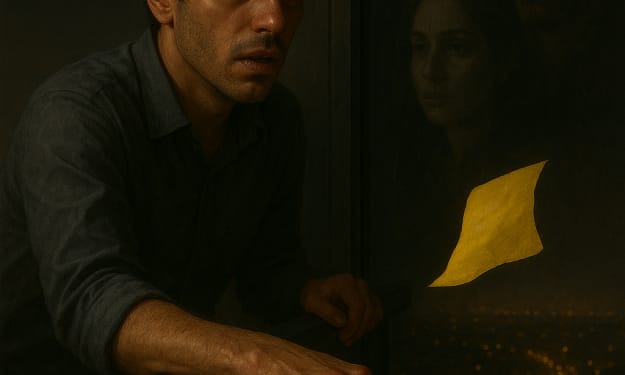
The Shadow of the Yellow Paper
Prologue: The Paper That Changed Everything In a small apartment in central Cairo, Youssef (an ambitious graphic designer in his twenties) worked for hours on a project that could change his life—an advertising campaign to compete with major corporations. His wife Sarah, a nurse, tried to convince him to attend a family party with her:
By Ahmed Abdeenabout a year ago in Horror
The Train to the Sea
Start writing...I had never taken the long train to the coast before. People always said it was too slow, too old, and not worth the trip. But I didn’t care. That morning, when the sky was pale blue and the air smelled like fresh bread from the bakery near my street, I packed a small bag and decided to go. The train arrived with a squeal of metal wheels and a puff of smoke that reminded me of a campfire. It looked tired, like it had carried too many travelers in its life. The paint was chipped, and the seats were faded. But when I stepped on, I felt a strange excitement in my chest, as if the train itself whispered, Welcome, wanderer. I chose a seat by the window. The cushion was rough, but the view was worth it. As the train began to move, I saw the city slip away—gray buildings, shops with bright signs, children chasing a ball down an alley. Soon, the busy streets gave way to fields of gold wheat, stretching far and wide. The stalks swayed gently, almost like they were waving goodbye. Across from me sat an old man with kind eyes. He wore a cap that looked older than the train itself. In his lap, he carried a small wooden box with carvings of birds on it. For the first hour, we didn’t speak. We just listened to the steady rhythm of the wheels—clack-clack, clack-clack—like a heartbeat. Finally, he looked up and said, “First time?” I nodded. “The train teaches patience,” he said with a smile. “You’ll see things you’d miss otherwise.” He was right. Out the window, I saw hills painted in shades of green and brown, dotted with sheep like tiny clouds resting on the earth. I saw rivers that sparkled under the sun, twisting like silver ribbons. I even saw a boy standing alone near a broken fence, holding a red kite that refused to fly. For a moment, I wanted to get off and help him, but the train kept moving forward, and soon he disappeared from sight. At the next stop, a young woman climbed aboard. She wore headphones and carried a sketchbook. She sat beside me and started to draw almost at once, her pencil dancing quickly over the page. I tried not to stare, but I was curious. After a while, she tilted the book toward me. It was a sketch of the boy with the red kite. “You saw him too?” I asked. She nodded. “I draw the things I don’t want to forget.” That simple answer stayed with me. Maybe the journey wasn’t just about reaching the sea. Maybe it was about collecting moments that would otherwise fade. Hours passed. The old man told us stories about his childhood—how he used to fish near the coast, how he built kites with his brother, how he once carved the same birds that decorated his wooden box. The young woman kept sketching—fields, rivers, clouds, even the wrinkled smile of the ticket collector who came through the aisle. I just listened, watched, and breathed. Finally, the air began to change. It grew salty, damp, filled with the promise of the sea. The train slowed, groaned, and came to its last stop. When I stepped down onto the platform, I heard it—the endless roar of waves crashing against rocks. The sound was wild but steady, like the earth’s own music. We walked together, the three of us, until we stood at the edge of the shore. The sea stretched out, endless and alive, glittering under the afternoon sun. Seagulls wheeled overhead, calling out like old friends. The old man opened his wooden box. Inside was a small paper boat, neatly folded. He placed it on the water, and we watched as the waves carried it away, farther and farther, until it was just a white speck against the blue. The young woman sat on a rock and began to draw the scene. I simply closed my eyes and let the wind touch my face. The train had been slow, yes. But it had given me a gift: a reminder that life is not only about reaching the destination. It’s about noticing the red kite that won’t fly, the stories hidden in a wooden box, and the people you meet along the way. And in that moment, with the sea before me and the journey behind me, I felt full.
By Qaseem Ahmadzaiabout a year ago in Horror