halloween
Get into the Halloween spirit; all about trick or treating, spooky costumes, Halloween decorations and haunted houses for October 31st and all year round.
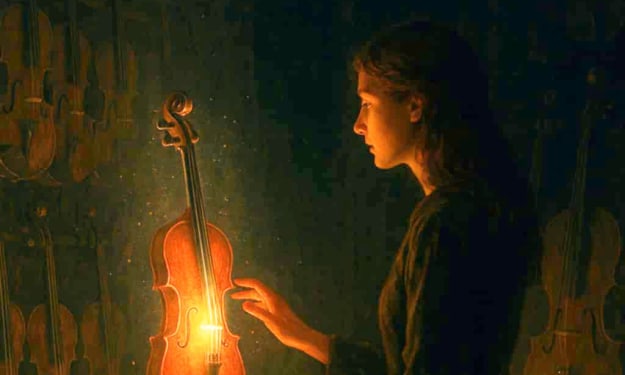
The Dream Weaver’s Loom
The Dream Weaver’s Loom – Final Version for Publication Amelia was not just a dreamer — she was a cartographer of her subconscious, a lucid artist of the night. Her dreams were vivid, lush, and meticulously sculpted by her will. In them, she flew across surreal skies, painted cities in midair, and danced on moonlit waves. Yet, in the waking hours, an emptiness lingered. Reality, in its starkness, felt like a faded memory. This yearning — to touch the intangible, to bring the dream into daylight — led her down twisted alleyways to the heart of the old city. Time seemed broken there, suspended in amber. It was in one forgotten antique shop, heavy with dust and shadow, where her fate awaited. There, beneath rotting drapes and brittle tapestries, lay a loom. A small, ornate construct of dark, polished wood — smooth as if shaped by centuries of touch. Its threads shimmered with colors that defied description: not quite hues, but feelings — nostalgia, longing, joy, and dread — all twisting into a shifting spectrum. The shopkeeper, a woman whose gaze pierced timelines, simply smiled. “It weaves more than cloth, dearie. It weaves... possibilities.” Amelia took it home. She placed it by her window, where light could kiss the threads, and that very night, the dreams changed. They were no longer just lucid. They were transcendent. Hyper-real. She dreamt of soaring through skies of emerald and gold, of weaving constellations with her own hands. When she woke, the scent of stardust clung to her skin, and her fingertips still tingled with cosmic thread. As days passed, reality began to shimmer. She caught glimpses of her dreamscapes in the corners of her eyes. The scent, the light, the sounds — all began to bleed through. The loom, she realized, was a conduit. A bridge between what is and what could be. But with wonder came shadows. A figure began to appear in her dreams. Tall. Gaunt. Eyes glowing like distant dying stars. It never spoke, but its presence rippled with intent. The dreamworld, once pure and bright, now fractured. Behind the colors: a void. A whisper. Cold and constant. Research led her to ancient texts, dusty and untranslated. She deciphered them slowly — stories of the Weavers of the Veil, a forgotten sect who used dream-looms to bend reality, weaving minds into fabric, creating tapestries that lived. Sacrifices were part of the art — not of body, but of consciousness. The loom wasn’t just enhancing her gift. It was consuming it. Feeding. The figure wasn’t hers. It was the Weaver — the entity bound within the loom, stealing her dreams to manifest itself. The whispers grew louder. “Almost complete,” it purred. “Your world is a perfect new thread.” She tried to stop. To turn away. But the loom called to her like a siren. She couldn’t resist. Reality slipped. Sleep came unbidden, pulling her deeper into the woven trap. Her identity began to unravel. Her memories entangled with ancient ones not her own. Others were there — faces woven into the loom’s tapestry. Dreamers lost in the warp and weft of nightmare. One night, she rebelled. In the dreamscape, she clawed at the threads, pulled at the sky. But the Weaver seized her. Cold fingers like bone and smoke. It began to weave her, spinning her essence into its masterpiece. “Your fears are my finest dyes,” it hissed. “Your desires, my strongest fibers.” She woke screaming. Her skin felt tight, stretched, humming. Her reflection flickered — translucent, luminous. She was becoming thread. Becoming dream. There was one way. One ritual — ancient and obscure — a counter-weaving, a way to undo a cursed pattern. It required precision, strength... and sacrifice. She sat before the loom. Her hands, unnaturally graceful now, moved with defiant purpose. She unwove the tapestry. Reversed the weft. Broke the pattern. The loom howled. The room chilled. The Weaver raged in her mind, in her bones. “No! You destroy us all!” But she did not stop. She pulled the final thread. A blinding flash. A collapse. Then silence. Pure, sacred silence. The loom remained, but its threads were gray, tangled, lifeless. A husk of once-impossible power. Amelia never dreamed again. Her nights were blank, peaceful voids. Her days, sharp and vibrant in their reality. She never spoke of the loom again. It sat untouched, a beautiful, silent warning. Her art changed. It became grounded, textured, real. She no longer painted the unseen. She had seen too much. For some beauty comes at an unspeakable cost. And some patterns are meant to remain unwoven. --- Suggested Tags for Uploading: Dream horror, lucid dreaming, dark fantasy, surreal tale, cursed object, ancient ritual, female protagonist, short story, psychological horror, myth and magic.
By Noman Afridiabout a year ago in Horror
Dark Matter & Dark Energy: The Invisible Forces Shaping Our Universe
Introduction: The Greatest Mystery in the Universe We had no idea how strange the universe was. Less than 5% of the universe is composed of ordinary matter—the stars, planets, and everything else we see. What else? Dark energy and dark matter (27%) We still don't fully comprehend these invisible forces, which determine the universe's fate. how we know dark matter exists and what it is. the look for dark matter particles like WIMPs and axions. The role of dark energy in the universe's rapid expansion. leading theories regarding the nature of these enigmatic forces. The future of cosmology and how new experiments and telescopes might eventually shed light on the truth.
By Silas Blackwoodabout a year ago in Horror
The Most Disturbing True Crime & Horror Stories
Stories about true crime and horror have a special way of keeping our attention because they combine real-life terror with the worst parts of our imaginations. These tales leave us questioning reality and fearing the unknown, from unsolved mysteries to gruesome crimes and encounters with the paranormal. We look at some of the most shocking true crime cases and horror stories that have shocked the world in this article. These stories will give you chills whether it's the work of an insane killer, an unsolved disappearance, or a haunted location with a sinister past.
By Silas Blackwoodabout a year ago in Horror
The Black Death (1348-49): The Pandemic That Reshaped the World
In the middle of the 14th century, a terror that went unnoticed and went silently across continents killed so many people it seemed almost supernatural. Between 1346 and 1353, the devastating pandemic known as the Black Death, which was brought on by the bacterium Yersinia pestis, claimed the lives of between 75 and 200 million people and decimated 30 to 60 percent of the population of Europe. One of the darkest periods in human history occurred between 1348 and 1349, when cities were abandoned, economies were destroyed, and survivors questioned society's very fabric.
By Silas Blackwoodabout a year ago in Horror
The Turn of the Screw: Henry James’ Masterpiece of Psychological Terror
Like no other ghost story, The Turn of the Screw has divided readers, academics, and critics ever since it was published in 1898. A young governess at Bly Manor is tasked with caring for two seemingly perfect children in this chilling novella by Henry James. However, she encounters apparitions that may or may not be real. But are these ghosts really there, or are they just the deteriorating psyche of the governess? The Turn of the Screw is one of the Gothic literature works that has received the most research due to its ambiguity, which has sparked debate for more than a century. The novel's enduring power, psychological complexity, and the reasons for its terrors' continued potency are the subject of this article.
By Silas Blackwoodabout a year ago in Horror
The Woman in Black: A Ghost Story That Refuses to Die
The Woman in Black is one of several ghost stories. A record-breaking stage play, two major film adaptations, and countless sleepless nights have resulted from Susan Hill's chilling tale, which debuted in 1983 and has since established itself as one of the most terrifying works of contemporary Gothic fiction. But what is it about this story that makes it so terrifying? Why is Jennet Humfrye's ghost, dressed in funeral black, still haunting audiences decades later? And how did a short book become a staple of horror literature? The Woman in Black's literary roots, psychological terror, and the real-world folklore that inspired it are all revealed in this in-depth investigation.
By Silas Blackwoodabout a year ago in Horror
The Chilling True Story Behind Scream That’ll Keep You Up at Night
You ever wonder what makes a horror movie stick with you, not just as a scare but as something that lingers, like a shadow you can’t shake? For me, it’s when the story feels too real, like it could’ve happened to someone you know. That’s what Scream did in 1996-it wasn’t just a slasher flick; it was rooted in something raw and terrifying, a string of murders that shook a small college town in Florida to its core. The real-life horror behind Scream started in Gainesville in 1990, and today, I’m diving into that story. Fair warning: this one’s graphic and heavy, so if true crime unsettles you, maybe sit this one out. But if you’re ready, let’s step back to a sunny August day when everything changed for a family, a town, and eventually, pop culture itself.
By KWAO LEARNER WINFREDabout a year ago in Horror
The Haunting of Okiku: Japan’s Most Famous Ghost Story
Few ghosts in Japanese folklore are as terrifying or as enduring as Okiku, the tragic spirit who is always tied to a well and counts plates in the dark. From Edo-era kabuki plays to contemporary horror films and urban legends, her tale, known as "Banch Sarayashiki" ("The Dish Mansion Ghost Story"), has frightened audiences for centuries. But who was Okiku? Why does her ghost continue to haunt Japan’s imagination? And what is it about her story that still terrifies people today? This deep dive explores the origins, variations, and cultural impact of one of Japan’s most famous ghost stories—a tale of injustice, vengeance, and the thin line between the living and the dead. 1. The Legend of Okiku: A Story of Betrayal and Eternal Anguish The Classic Version (Edo Period) In the most traditional telling, Okiku was a beautiful servant working for a samurai named Aoyama Tessan in Himeji Castle. Tasked with guarding ten precious plates, she became the target of Aoyama’s unwanted advances. When she refused him, he framed her for losing one plate—a crime punishable by death. After being tortured and thrown into a well, her ghost returned, night after night, counting the plates in a mournful whisper: "One, two, three, four, five, six, seven, eight, and nine..." The tenth plate was never found. Her endless counting—sometimes ending in a bloodcurdling scream—drove Aoyama to madness and death. Regional Variations In some versions, Okiku was innocent; the samurai himself hid the plate to trap her. Others assert that she was killed for uncovering the treasonous plot of her master. Modern retellings sometimes make her a victim of human trafficking or wartime atrocities. 2. The Psychology of Terror: Why Okiku’s Story Haunts Us A. The Horror of Unfairness Okiku’s tale resonates because she represents powerless victims—women, servants, the oppressed—who return to punish their abusers. B. The Importance of Repeating Her endless counting taps into primal fears: OCD-like obsession (the inability to stop) The uncanny (a familiar action turned sinister) C. The Well as a Gateway In Japanese folklore, wells are liminal spaces—thresholds between worlds. The spirit of Okiku is stuck in this space in between and unable to move on.
By Silas Blackwoodabout a year ago in Horror
Psychological Dread: The Art of Fear Without Monsters
How the Human Mind Becomes Its Own Worst Nightmare True terror doesn’t always come from ghosts, monsters, or jump scares—it festers in the quiet moments of uncertainty, in the slow unraveling of reality, and in the creeping realization that the greatest threat might be inside our own minds. Psychological dread, the most insidious form of horror, preys on our deepest anxieties: the fear of losing control, the terror of the unknown, and the suspicion that we can’t even trust ourselves. From literature to film, psychological horror has shaped some of the most disturbing and enduring stories in history. This article explores what makes psychological dread so powerful, its roots in human psychology, and the masterpieces that have perfected it.
By Silas Blackwoodabout a year ago in Horror
Haunting Whispers from History: Three Unforgettable True Stories
You ever stumble across a story so wild it sticks with you, like a splinter you can’t quite pull out? I was scrolling through some old maritime logs the other day-yeah, I’m that kind of nerd-when I found a tale that made my skin crawl. It’s the kind of story that makes you wonder about the edges of the world, where the line between reality and nightmare blurs. Today, I’m diving into three true stories that’ll leave you unsettled, maybe even a little queasy. Fair warning: the first one’s a gut-punch, and the last one? Well, it’s downright repulsive. So, buckle up, or maybe keep a bucket nearby. Ready to dive into the weird and the haunting? Let’s go.
By KWAO LEARNER WINFREDabout a year ago in Horror