halloween
Get into the Halloween spirit; all about trick or treating, spooky costumes, Halloween decorations and haunted houses for October 31st and all year round.
The Anatomy of Fear
Why We Crave the Fear Horror has always occupied a strange, shadowy corner of human imagination. It thrives on the things we fear most—death, the unknown, betrayal, and the loss of control. From ancient ghost tales told by firelight to modern psychological thrillers, horror stories grip us with a mix of dread and fascination. But why do we willingly subject ourselves to fear? The answer lies in the unique way horror manipulates our emotions, forcing us to confront what we’d rather avoid. --- The Anatomy of Fear Fear is primal. It’s an instinct passed down from our earliest ancestors, designed to keep us alive. Horror stories tap into that ancient reflex. A creaking door, a sudden shadow, or a distorted face in the mirror doesn’t just scare us—it activates our survival instincts. The most effective horror doesn’t just rely on gore or loud noises. It uses suspense, atmosphere, and the unseen to ignite a terror that lingers long after the story ends. In literature and film, the "less is more" approach often works best. Think of the haunting absence of the monster in The Blair Witch Project or the unseen terrors in Shirley Jackson’s The Haunting of Hill House. Our imagination fills in the blanks, and those imagined horrors are often far worse than anything shown outright. --- Monsters, Ghosts, and the Real Evil Horror’s villains come in many shapes: the bloodthirsty vampire, the vengeful ghost, the mindless zombie, or the deranged human predator. While supernatural creatures terrify us with their impossible nature, human villains unsettle us because they are all too real. Monsters like Dracula or Pennywise embody exaggerated fears—immortality turned predatory, innocence corrupted. On the other hand, killers like Norman Bates or Hannibal Lecter remind us that evil can hide behind polite smiles and ordinary appearances. In many ways, the human villain is far scarier than the supernatural one because they could be your neighbor, your coworker, or even your closest friend. --- The Role of Setting in Horror A good horror setting is not just a backdrop; it’s a character in itself. An abandoned asylum, a foggy forest, a creaking Victorian mansion—these places breathe unease into the story. The setting traps the characters and, by extension, the audience. Isolation is a powerful tool in horror. Whether it’s a snowbound hotel in The Shining or a spaceship drifting in Alien, cutting characters off from safety heightens the tension. Even a familiar setting, like a suburban home, can be twisted into something nightmarish when the horror invades the ordinary. --- Psychological Horror: The Terror Within While traditional horror focuses on external threats, psychological horror digs into the mind. It’s about paranoia, guilt, and the thin line between sanity and madness. Films like Black Swan or Hereditary and books like Misery by Stephen King prove that the human mind can be its own worst enemy. Psychological horror often leaves audiences questioning reality alongside the characters. Was the ghost real, or just a manifestation of trauma? Is the danger outside the door, or inside the character’s head? This ambiguity creates a lasting unease because the answers are never fully revealed. --- Why Horror Endures Horror has survived across centuries because fear is universal. Every culture has its myths, monsters, and cautionary tales. These stories reflect the anxieties of their times—plagues, wars, moral decline—and transform them into gripping narratives. In today’s world, horror continues to evolve. Technology has birthed new fears—artificial intelligence, surveillance, online predators. Social horror, as seen in films like Get Out, tackles real-world issues like racism, inequality, and cultural tensions, showing that the genre is not just about scares but also about reflection. --- The Catharsis of Being Scared One reason horror remains popular is the strange satisfaction we get from surviving it. Watching a terrifying film or reading a chilling book is like riding a roller coaster: we get the adrenaline rush without real danger. Fear in a controlled environment allows us to explore our darkest thoughts and then safely return to reality. For some, horror is also a way of processing personal fears. A person afraid of death might find a strange comfort in ghost stories. Someone dealing with betrayal might be drawn to tales of shapeshifters and impostors. Horror offers a space where our anxieties can play out in exaggerated, symbolic ways. --- Conclusion: The Shadows We Carry Horror is more than jump scares and blood. It’s a mirror reflecting our deepest insecurities, a safe space to confront danger, and a reminder that fear is as much a part of being human as love or joy. The next time you feel the urge to turn off the light after hearing a strange noise, remember: the shadows aren’t just outside. Sometimes, the scariest place of all is inside our own minds.
By Muhammad Ibrahimabout a year ago in Horror
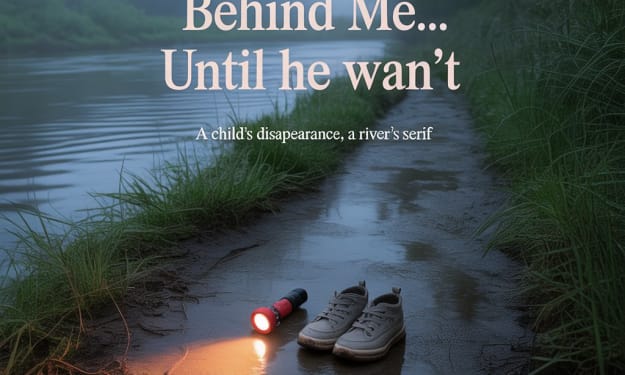
He was behind me... until he wasn't.
That path was never dangerous. There's a river path that runs behind my grandmother's property. We've been following it since we were kids—just a quiet dirt trail behind the water's edge, shaded by tall oaks and whispering grass. Birds chirped overhead. The water moved lazily. It never seemed threatening.
By Echoes of Lifeabout a year ago in Horror
The Whispers in the Walls
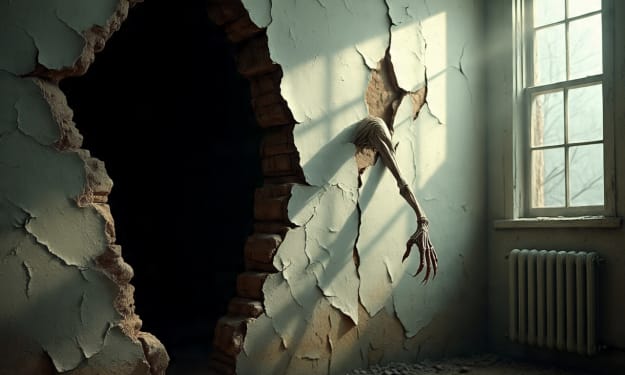
It began with the scratching. At first, Daniel thought it was just mice. The old countryside house creaked at night anyway, so a little rustling between the walls didn’t seem unusual. But this was different. The sound didn’t come in short bursts like rodents scurrying—it was slow, deliberate… almost like fingernails dragging along wood. Daniel had inherited the house from his late uncle, who had died alone. The family never talked about him much, except to say that he’d become “strange” toward the end. But Daniel didn’t care; the house was free, and he needed a fresh start. On the third night, the scratching turned into whispers. They were faint, almost lost beneath the hum of the refrigerator. He couldn’t make out the words, but they seemed to be coming from behind his bedroom wall. Whenever he pressed his ear to the plaster, the whispers stopped, as if they knew he was listening. By the end of the week, the voice—if it was a voice—had grown bolder. Sometimes it laughed, a low, rattling chuckle that made the hairs on Daniel’s neck rise. He tried ignoring it. He turned the TV up loud, wore earplugs, even slept on the couch downstairs. But the sound followed him, drifting through vents and doorways, never letting him rest. One night, at exactly 3:17 a.m., the whisper became clear enough to understand. "Daniel… let me out." The voice was wet, as though it came from a throat filled with thick fluid. Daniel froze in bed. “Who are you?” he whispered back before he realized how insane it was to talk to a wall. There was a pause. Then—"You know me." He didn’t. He was sure of it. But the way it spoke, like they shared a secret, made his stomach twist. The next day, he searched the attic. Dust clung to his hair, cobwebs brushed his face. In the far corner, he found something odd—two planks of the attic floor were newer than the rest, nailed down sloppily. Curiosity overpowered caution. He pried them up. Inside the hollow space was a small box. Its wood was blackened, as though scorched, and it reeked of rot. Daniel’s skin prickled. He lifted the lid. Inside were human teeth. Not in neat rows, but loose and rattling, some yellowed, some brown with dried blood. On top of them lay a folded note. It read: "Never open the wall." That night, the whisper was closer. "You found my teeth, Daniel… Now find me." He didn’t sleep. He couldn’t. The voice had moved from the wall to directly beside his bed. It breathed in his ear. Sometimes it hummed an unrecognizable lullaby. By morning, Daniel was pale and shaking. He called a handyman, desperate to check inside the wall. The man arrived, took one look at Daniel’s sunken eyes, and hesitated. “What exactly am I looking for?” Daniel lied. “Maybe mold. Just… something in there.” The handyman cut into the plaster. The smell hit them instantly—sweet, foul, unmistakable. Something had died in there. But when the section of wall came down, there was no animal. No body. Just darkness, stretching far deeper than the physical dimensions of the house should allow. The handyman swore and backed away. “I’m not touching this.” He left without even collecting payment. Daniel stood before the opening, his breath shallow. The blackness seemed to pulse, like it was breathing. And then… something moved. A pale hand, too long and too thin, slid from the darkness, resting on the edge of the wall. Its nails were cracked and bleeding. The voice came again, clearer than ever: "Thank you for opening the door." The hand gripped the plaster and another appeared, pulling the thing forward. Its head emerged—bald, skin stretched tight over bone, mouth split wide with missing teeth. Its eyes were pits of oozing black. Daniel stumbled backward. “Stay away!” It crawled out slowly, like it had all the time in the world. “I waited for you,” it rasped. “Your uncle kept me here, but you… you’re kinder.” Daniel turned to run, but the thing was fast. It seized his ankle, cold fingers digging into flesh. He kicked, screaming, but its grip was unbreakable. It pulled him toward the hole in the wall. “No! Please!” His nails scraped the floorboards, leaving desperate grooves. The blackness inside the wall seemed to swallow the light around it. The creature’s mouth split into something like a smile. “Home.” And then Daniel was gone. The house was silent again. For three weeks, nothing happened. The neighbors assumed Daniel had moved. The house sat empty, its windows dark. Until one night, a new sound came from inside. Scratching. Followed by a whisper. "Let me out."
By Muhammad Bilalabout a year ago in Horror
The Last Step
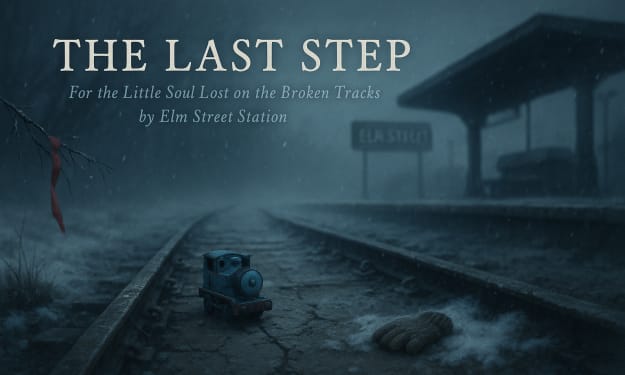
He loved the sound of trains. Tyrus loved trains. Not in the casual way most kids say they do—he lived for them. He could name every model from memory. He copied the sounds so precisely that even my father, a retired conductor, once stopped mid-coffee and said, “That boy has an engine in his chest.”
By Echoes of Lifeabout a year ago in Horror
The Loyalty of the Lion King
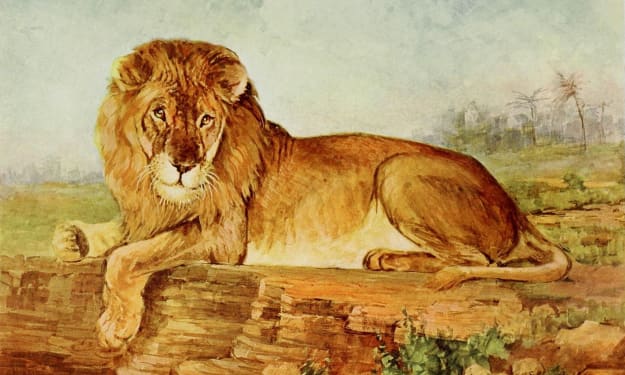
Deep in the heart of the golden savannah, where the sun kissed the earth and the wind whispered through tall grass, ruled a mighty lion known as Zahir the Lion King. His mane glowed like fire, his roar shook the heavens, and his heart beat with wisdom, courage, and most of all—loyalty.
By Ahmad shahabout a year ago in Horror
The Whispers Beneath the Floorboards
The village of Darnwood had always been an eerie place, wrapped in perpetual fog and silence that clung to its crooked cottages like a curse. Few dared to stay there long, and those who did often carried hollow eyes and voices that trembled. Among them was Arthur Gray, a middle-aged man recently widowed and desperate for solitude. He purchased an old, rotting house at the edge of the forest — a place the villagers called Hollow House. They warned him, of course. “Things live beneath,” old Marnie at the bakery whispered with eyes glazed in dread. “You’ll hear them scratching. Don’t answer them.” Arthur, lost in grief, only chuckled. Ghost stories didn’t scare a man who had watched cancer drain his wife’s life away, day by agonizing day. The house groaned as if alive. Floorboards creaked even when no one walked. Cold drafts snuck through sealed windows. And then, there were the whispers. It began on the third night. He was reading by lantern light — the electricity had failed again — when he heard it: a soft, rhythmic tap-tap-tap beneath the wooden floor. He paused. It continued, more insistent. Then came the whisper, faint but clear. “Arthur…” He froze. The voice was soft, broken — like a child weeping in the dark. He leaned down, pressing his ear to the floor. “Arthur… I’m cold… so cold…” He jerked back, heart pounding. Was someone beneath the floorboards? He tore at the wooden planks with a crowbar, desperate to uncover the source. But there was nothing beneath except earth and the old, crumbling stone foundation. The next day, the villagers avoided him. No one spoke when he passed. Even Marnie shuttered her windows as he approached. That night, the voice returned. This time, it wasn’t just whispers. It sang. A lullaby, broken and warped, coming from beneath his bed. The lyrics were wrong — words twisted into nonsense, but the melody was familiar. His wife used to hum it in her final days. “Who’s there?” Arthur demanded, voice cracking. “Join us…” the voices echoed in chorus now — dozens of them. “It’s warmer down here…” He smashed the floor again, ripping out plank after plank, deeper into madness. Dirt filled the room. Fingernails shredded. Still, nothing. And then he found the trapdoor. It was hidden beneath a false section of flooring near the fireplace. Thick chains wrapped around it, sealed with rusted iron. A smell seeped out — old, rotting, alive. The chains rattled when he touched them, though he hadn’t yet pulled. That night, he dreamed of a woman in black, her face covered in a veil of crawling insects. She hovered over him, whispering in his dead wife’s voice. “You opened the house. Now the house opens you.” He awoke screaming. In the morning, Arthur found bloody footprints leading from the trapdoor to the edge of his bed. Muddy handprints clawed the walls. The whispering never stopped. It came from the kettle, from the attic, from behind the mirrors. Then came the scratching. At first gentle. Then furious. Desperate. Something was beneath the floor — many things. The boards bent upward. Nails popped from the wood. And that voice — that same pitiful whimper — called his name over and over. One final night, Arthur gave in. He unchained the trapdoor and opened it. The darkness beneath pulsed like a living wound. The smell hit him — rot and sorrow, soaked in blood. He saw eyes staring back. Dozens. Hundreds. And then — fingers. Long. Broken. Bone-thin. They reached for him, not with violence, but need. “Cold… so cold…” The first hand touched his cheek, tender as a mother’s touch. Another grasped his wrist. A child’s voice whispered, “Don’t leave us alone again.” And Arthur, mad with grief and guilt, whispered back, “I won’t.” He stepped down. The trapdoor slammed shut behind him. They found the house weeks later, the front door wide open. No sign of Arthur, but every floorboard had been pulled up. Scratch marks — deep and jagged — covered every wall. The villagers sealed the house with bricks and prayers. They never spoke of Arthur again. But on foggy nights, if you press your ear to the ground, you might still hear the lullaby, drifting up from the dark: “Come sleep, come sleep, beneath the floor, The cold will hurt your bones no more…” And if you’re very unlucky, the house might learn your name too.
By Muhammad Bilalabout a year ago in Horror
The Shattered Veil
The Shattered Veil A Descent Into Light and Madness The personality changes again—just like that. Not in weeks or months, but in moments. One moment calm, the next unraveling. A transient soul, flickering between forms, between thoughts. There is a strange comfort in the instability. A familiarity in being lost.
By Saeed Ullah about a year ago in Horror
Whispers in the Floorboards
It was supposed to be a restoration project. Eli and Marla Winslow had bought the derelict house on the edge of Briar Hollow for next to nothing. Newly married and full of ambition, they saw potential in the century-old Victorian with its ornate woodwork and wide, echoing halls. It was their dream home, a fixer-upper with history and character. The townspeople, however, gave them strange looks when they mentioned the address.
By Atif khurshaidabout a year ago in Horror