halloween
Get into the Halloween spirit; all about trick or treating, spooky costumes, Halloween decorations and haunted houses for October 31st and all year round.
Welcome to the Hotel Canfield
"Dude, this is epic!" Cole's dazzling hazel eyes boggled out of his skull, his pale, freckly cheeks stretching in an absolutely giddy grin. The seventeen-year-old hadn't even gotten out of the car yet, and he was already about to wet himself from excitement. Just seeing that look on his face almost made this entire, crazy idea worth it.
By Natalie Grayabout a year ago in Horror
Why Horror Feels Safe When Real Life Doesn’t
When I tell people that horror is my comfort genre, I usually get one of two reactions: a polite smile that says “I don’t understand, but okay”, or a nervous laugh as if they’ve just been handed a red flag. The idea that something full of monsters, death, and dread could be soothing seems backwards—unless you’ve lived a life where the real world is already full of those things.
By No One’s Daughterabout a year ago in Horror
The Phone That Rang at 3:15 AM
It was an ordinary Thursday night. I had just finished scrolling through my social media feed and was ready to drift off to sleep. My phone lay on the table beside my bed, screen turned down, the room quiet except for the faint sound of the ceiling fan.
By Spondan Chowdhuryabout a year ago in Horror
The Anatomy of Fear
Why We Crave the Fear Horror has always occupied a strange, shadowy corner of human imagination. It thrives on the things we fear most—death, the unknown, betrayal, and the loss of control. From ancient ghost tales told by firelight to modern psychological thrillers, horror stories grip us with a mix of dread and fascination. But why do we willingly subject ourselves to fear? The answer lies in the unique way horror manipulates our emotions, forcing us to confront what we’d rather avoid. --- The Anatomy of Fear Fear is primal. It’s an instinct passed down from our earliest ancestors, designed to keep us alive. Horror stories tap into that ancient reflex. A creaking door, a sudden shadow, or a distorted face in the mirror doesn’t just scare us—it activates our survival instincts. The most effective horror doesn’t just rely on gore or loud noises. It uses suspense, atmosphere, and the unseen to ignite a terror that lingers long after the story ends. In literature and film, the "less is more" approach often works best. Think of the haunting absence of the monster in The Blair Witch Project or the unseen terrors in Shirley Jackson’s The Haunting of Hill House. Our imagination fills in the blanks, and those imagined horrors are often far worse than anything shown outright. --- Monsters, Ghosts, and the Real Evil Horror’s villains come in many shapes: the bloodthirsty vampire, the vengeful ghost, the mindless zombie, or the deranged human predator. While supernatural creatures terrify us with their impossible nature, human villains unsettle us because they are all too real. Monsters like Dracula or Pennywise embody exaggerated fears—immortality turned predatory, innocence corrupted. On the other hand, killers like Norman Bates or Hannibal Lecter remind us that evil can hide behind polite smiles and ordinary appearances. In many ways, the human villain is far scarier than the supernatural one because they could be your neighbor, your coworker, or even your closest friend. --- The Role of Setting in Horror A good horror setting is not just a backdrop; it’s a character in itself. An abandoned asylum, a foggy forest, a creaking Victorian mansion—these places breathe unease into the story. The setting traps the characters and, by extension, the audience. Isolation is a powerful tool in horror. Whether it’s a snowbound hotel in The Shining or a spaceship drifting in Alien, cutting characters off from safety heightens the tension. Even a familiar setting, like a suburban home, can be twisted into something nightmarish when the horror invades the ordinary. --- Psychological Horror: The Terror Within While traditional horror focuses on external threats, psychological horror digs into the mind. It’s about paranoia, guilt, and the thin line between sanity and madness. Films like Black Swan or Hereditary and books like Misery by Stephen King prove that the human mind can be its own worst enemy. Psychological horror often leaves audiences questioning reality alongside the characters. Was the ghost real, or just a manifestation of trauma? Is the danger outside the door, or inside the character’s head? This ambiguity creates a lasting unease because the answers are never fully revealed. --- Why Horror Endures Horror has survived across centuries because fear is universal. Every culture has its myths, monsters, and cautionary tales. These stories reflect the anxieties of their times—plagues, wars, moral decline—and transform them into gripping narratives. In today’s world, horror continues to evolve. Technology has birthed new fears—artificial intelligence, surveillance, online predators. Social horror, as seen in films like Get Out, tackles real-world issues like racism, inequality, and cultural tensions, showing that the genre is not just about scares but also about reflection. --- The Catharsis of Being Scared One reason horror remains popular is the strange satisfaction we get from surviving it. Watching a terrifying film or reading a chilling book is like riding a roller coaster: we get the adrenaline rush without real danger. Fear in a controlled environment allows us to explore our darkest thoughts and then safely return to reality. For some, horror is also a way of processing personal fears. A person afraid of death might find a strange comfort in ghost stories. Someone dealing with betrayal might be drawn to tales of shapeshifters and impostors. Horror offers a space where our anxieties can play out in exaggerated, symbolic ways. --- Conclusion: The Shadows We Carry Horror is more than jump scares and blood. It’s a mirror reflecting our deepest insecurities, a safe space to confront danger, and a reminder that fear is as much a part of being human as love or joy. The next time you feel the urge to turn off the light after hearing a strange noise, remember: the shadows aren’t just outside. Sometimes, the scariest place of all is inside our own minds.
By Muhammad Ibrahimabout a year ago in Horror
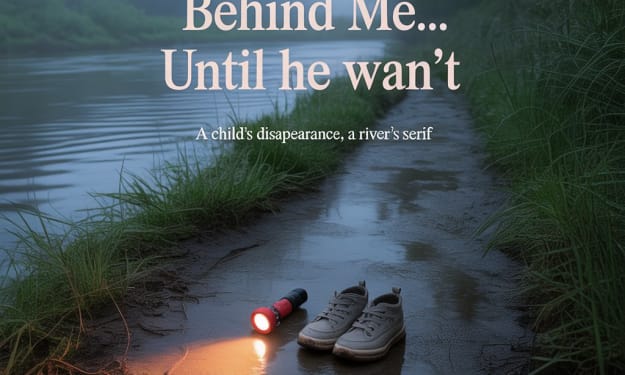
He was behind me... until he wasn't.
That path was never dangerous. There's a river path that runs behind my grandmother's property. We've been following it since we were kids—just a quiet dirt trail behind the water's edge, shaded by tall oaks and whispering grass. Birds chirped overhead. The water moved lazily. It never seemed threatening.
By Echoes of Lifeabout a year ago in Horror