halloween
Get into the Halloween spirit; all about trick or treating, spooky costumes, Halloween decorations and haunted houses for October 31st and all year round.
Titanic’s Ghost Passengers – Spirits Lost at Sea. AI-Generated.
When the RMS Titanic struck an iceberg on April 14, 1912, and sank into the icy waters of the North Atlantic, more than 1,500 souls were lost. It was called “the ship of dreams,” yet it became a floating graveyard. For over a century, the Titanic has been remembered as one of history’s greatest tragedies. But beyond the cold facts and historic records lies another layer of its legacy—one whispered in hushed voices and terrifying tales: the ghosts of Titanic’s passengers who never left the ship. The Night of the Tragedy: The Titanic was thought to be unsinkable. But when the iceberg tore through its hull, panic and chaos gripped the decks. Families were separated, lifeboats launched half-empty, and haunting cries echoed across the black ocean. Survivors later recalled that the last sounds they heard were desperate voices fading into silence. For many, it was the end. But some believe the spirits of those passengers remain—trapped in time, forever reliving their final night. Voices from the Deep: Decades after the disaster, when explorers finally reached Titanic’s wreck in 1985, strange stories began to emerge. Divers reported eerie sensations—like being watched. Some swore they heard faint cries or music in the crushing silence of the deep. A few even claimed to see shadowy figures drifting past broken corridors and empty cabins. Were these hallucinations caused by pressure and darkness? Or did the Titanic’s dead still roam their watery tomb? One diver described the experience chillingly: “It felt like hundreds of eyes were following us. The wreck wasn’t empty—it was alive with presence.” Ghost Sightings on Land: The hauntings were not limited to the ocean floor. Artifacts recovered from Titanic—furniture, jewelry, even small personal belongings—have been displayed in museums around the world. But with them came stories of paranormal activity. Visitors reported sudden chills, feelings of grief, and the sound of footsteps in empty exhibit halls. Some even claimed to see ghostly figures dressed in early 20th-century clothing, wandering among the displays. Museum staff have whispered of locked doors opening on their own, alarms triggered at night when no one was there, and a woman’s voice weeping near a child’s shoe recovered from the wreck. The Phantom Passengers: Among the most chilling stories are those of Titanic’s “phantom passengers.” In some hotels near Titanic memorials, guests claim to have seen a woman in a lifejacket dripping with seawater, who vanishes when approached. Psychics visiting the wreck have reported “contact” with terrified souls still calling for help. Survivors’ descendants have told stories of seeing their lost relatives in dreams, dressed in Titanic’s evening attire, silently staring through mirrors. One tale speaks of a Titanic exhibit worker who felt a cold hand grip her arm as she stood near a display. When she turned around, no one was there. Why Do the Ghosts Remain? Legends say spirits often linger where tragedy is greatest. The Titanic was not just a ship—it was a promise of luxury, wealth, and safety. For many, it ended in fear and betrayal as lifeboats launched with only the privileged while hundreds were left to perish. Perhaps the souls of the Titanic’s passengers linger because they never found peace. Their journey ended not with arrival, but with icy waters swallowing their dreams. Mysteries That Refuse to Sink: Even Hollywood could not resist the Titanic’s ghostly allure. After the 1997 film’s release, stories resurfaced of strange accidents on set—lights flickering, equipment failing, actors feeling watched. James Cameron himself, who dived to the wreck multiple times, admitted that the site carried an unexplainable presence. Skeptics argue that ghost stories are simply a way to process trauma. Survivors, overwhelmed by guilt, passed down legends that grew into haunting tales. But believers insist that so much sudden death could never fade quietly into history. Legend or Reality? Today, the Titanic rests nearly 12,500 feet below the surface. It is slowly being claimed by the ocean, its once-grand halls collapsing under the weight of time. Yet, its legend grows stronger. Ghost hunters, psychics, and even ordinary tourists still seek signs of its restless passengers. Some come away with photographs showing mysterious faces in the glass of display cases. Others hear whispers in recordings taken near the wreck. Is it all imagination? Or are the Titanic’s ghost passengers still sailing the ocean, waiting for someone to listen to their cries? Eternal Voyage: The Titanic was built to be unsinkable. Instead, it became immortal through its tragedy. The lives lost that night are etched in history—but perhaps also in the shadows of our world. The next time you hear the name Titanic, don’t just think of the iceberg. Think of the passengers who never made it home. Because some say they’re still here… drifting between worlds, forever passengers on a ship that never completed its voyage.
By Mr. Jackieabout a year ago in Horror
The Last Godfather: The Untold Story of Vito Rizzuto. AI-Generated.
When people think of the Mafia, images of New York or Sicily often come to mind. But one of the most powerful and feared Mafia bosses of modern times operated far from those legendary strongholds. His name was Vito Rizzuto, the so-called “Canadian Godfather,” who turned Montreal into a hub of international organized crime. His story is one of ambition, betrayal, and the heavy cost of power.
By shakir hamidabout a year ago in Horror
Bloody Mary Ritual – Does She Really Appear in the Mirror?. AI-Generated.
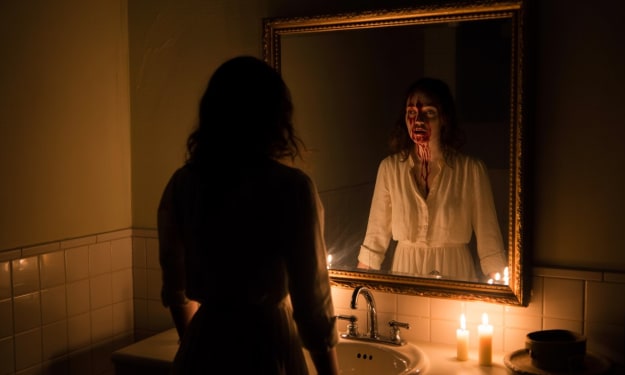
Mirrors have always carried a sense of mystery. They reflect our image, yet legends suggest they may also reveal something much darker. Among the most terrifying tales passed down for generations, one name echoes through sleepovers, horror stories, and daring dares: Bloody Mary. But who is Bloody Mary? And does she really appear when you whisper her name three times into a darkened mirror? The Origins of the Legend: The Bloody Mary ritual is an urban legend rooted in centuries of fear and folklore. Some believe it originated in England, tied to Queen Mary I—nicknamed “Bloody Mary” for her brutal persecution of Protestants. Others say the legend has nothing to do with history, but rather with ancient superstitions that mirrors could act as gateways to the spirit world. For centuries, mirrors were believed to trap souls. Covering mirrors during funerals, turning them to the wall during storms, and even breaking them being considered a curse—all come from this belief. The idea that a restless spirit might use a mirror as a doorway made the Bloody Mary tale feel all too real. How the Ritual Works: • The ritual is simple, yet chilling. • Go into a dark bathroom. • Light a single candle. • Stand in front of the mirror. • Whisper her name—“Bloody Mary… Bloody Mary… Bloody Mary”. According to the legend, she will appear. Her face, pale and twisted, sometimes covered in blood. Some say she screams, others say she reaches out from the glass to scratch you. Children at slumber parties have dared each other for decades to try it, laughing nervously as they face the mirror. But behind the laughter is always the fear: What if she really appears? Terrifying Encounters: Over the years, countless stories have surfaced of people who claim they saw something in the mirror. A girl who swore she saw a shadowy woman’s face, just before the glass cracked in front of her. A boy who ran screaming after feeling invisible hands claw at his neck. Groups of friends who all describe seeing the same figure, standing just behind them. While skeptics dismiss these as tricks of the mind, those who lived through them insist the terror was real. Some say Bloody Mary is not one spirit at all, but a demon who feeds on fear. Others believe she is the soul of a woman wronged, forever searching for revenge. The Psychology of Fear: Science, of course, offers its own explanation. Psychologists suggest that staring into a mirror in low light can cause the brain to distort images. This effect, called the “Troxler effect,” makes faces appear to warp, shift, or even change into someone else’s. Add to that the power of suggestion—whispering a terrifying name, expecting to see a ghost—and the mind creates an illusion that feels terrifyingly real. The rapid heartbeat, the goosebumps, the rush of adrenaline: all make the illusion unforgettable. So is Bloody Mary real? Or do we summon her through the darkest corners of our own minds? Urban Legend or Reality? Every culture has its own “mirror ghost.” In Japan, there is the legend of the Kuchisake-Onna, a vengeful spirit with a slit mouth. In Mexico, La Llorona, the Weeping Woman, is said to appear in reflections near water. Bloody Mary is the Western version of these age-old fears—proof that humanity has always feared what might be hiding behind the glass. What keeps the Bloody Mary legend alive is not proof, but the thrill of the unknown. Children dare each other not because they believe, but because what if it’s true? The fear itself becomes the attraction. Dare to Try? Today, millions still whisper the ritual in bathrooms, bedrooms, and even on TikTok challenges. Some laugh when nothing happens. Others swear they saw a flicker, a face, or a shadow move where no one stood. Maybe it’s all just psychology. Maybe it’s all just superstition. But then again… maybe the mirror is more than just glass. So the next time you find yourself standing alone in the dark, staring at your reflection, ask yourself: would you dare whisper her name three times? Because if you do—be prepared. For you may not be the only face staring back.
By Mr. Jackieabout a year ago in Horror
The World’s Most Haunted Diamond . AI-Generated.
The Hope Diamond’s origins trace back to 17th-century India. Deep inside the famous Kollur mine of Golconda, a large, violet-blue stone was unearthed. At first glance, it was breathtaking—over 115 carats of shimmering brilliance. But local whispers claimed it was stolen from a Hindu temple idol, taken from the very eye of a sacred deity. The legend says: disturbing a god’s jewel invites divine punishment. And soon, misfortune began to follow the stone wherever it traveled. The Curse Reaches France: In the 1660s, the diamond found its way into the hands of a French merchant, Jean-Baptiste Tavernier. He brought it to King Louis XIV of France, who fell in love with its brilliance. The king had the diamond recut into a smaller, yet even more dazzling stone, known then as the “French Blue.” But fortune did not smile for long. Tavernier, the merchant who first sold it, died in poverty, and some stories claim he was torn apart by wild dogs. King Louis XIV himself faced tragedy—his heirs dying young, his kingdom suffering. His descendant, King Louis XVI, and Queen Marie Antoinette, who both wore the diamond, met the guillotine during the French Revolution. Many came to believe that the diamond was no mere jewel, but a silent executioner. A Trail of Death and Misfortune: After disappearing during the chaos of the Revolution, the diamond resurfaced years later, this time in England. It passed from one owner to another, each facing ruin or tragedy. • A Dutch jeweler who handled the stone was brutally murdered. • A Russian prince who acquired it was mysteriously killed. • Wealthy owners saw their families destroyed by accidents, scandals, and early deaths. • Every transfer seemed to repeat the same chilling pattern: beauty followed by devastation. The Hope Family and the Diamond’s Name: In the 19th century, the diamond landed in the hands of Henry Philip Hope, a wealthy London banker. From him, the jewel took its current name—the Hope Diamond. But hope was far from what it brought. The Hope family fell into financial ruin. Generations who inherited the diamond faced bankruptcy, scandals, and broken lives. By now, the diamond’s reputation as a cursed object had spread across Europe. Writers and newspapers labeled it “the stone of misfortune,” a gem too dangerous to possess. The American Heiress and Tragedy: In the early 20th century, the Hope Diamond traveled across the Atlantic. A socialite named Evalyn Walsh McLean purchased it, dismissing the curse as mere superstition. For a time, she flaunted it proudly at parties, enjoying the envy it brought. But the curse did not spare her. Her daughter died of an overdose, her son was killed in a car crash, and her husband was declared insane. Evalyn herself fell into depression and financial ruin before her death. The once-glamorous jewel had once again drained joy from an entire family. The Smithsonian’s Darkest Treasure: After McLean’s death, the Hope Diamond was sold to settle debts. Eventually, famed jeweler Harry Winston donated it to the Smithsonian Museum in 1958. Ironically, the man who delivered the diamond by mail to the museum suffered a string of personal tragedies shortly after. Today, millions of visitors stare at the Hope Diamond, encased behind glass, glowing with an eerie blue aura. It is one of the most valuable and beautiful gems in the world—yet whispers of its curse still echo through its halls. Beauty or Death?: So what is the truth? Is the Hope Diamond truly cursed, or is it a chilling coincidence that so many who touched it met tragic ends? Skeptics argue that stories of the curse are exaggerated, woven to add mystery. But believers know one thing: every time a new hand held this jewel, fate turned cruel. The Hope Diamond remains both a treasure and a warning. A symbol of how beauty can seduce—but at a price. Even now, beneath the museum’s protective glass, one can’t help but wonder: does the diamond still wait for its next victim?
By Mr. Jackieabout a year ago in Horror
School Ghost Stories: Japan’s Seven Mysteries and Their Global Counterparts
Introduction: When the Classroom Turns Haunted Schools are meant to be places of learning, laughter, and growth—but in many cultures, they are also hotbeds of ghost stories. In Japan, this phenomenon takes the form of “Gakkō no Kaidan” (学校の怪談, or “School Ghost Stories”), a collection of eerie legends tied to classrooms, bathrooms, music rooms, and gymnasiums. These stories are so iconic that they have inspired manga, anime, films, and countless childhood dares.
By Takashi Nagayaabout a year ago in Horror
Classic Horror Movies - A Parisian Werewolf in New York
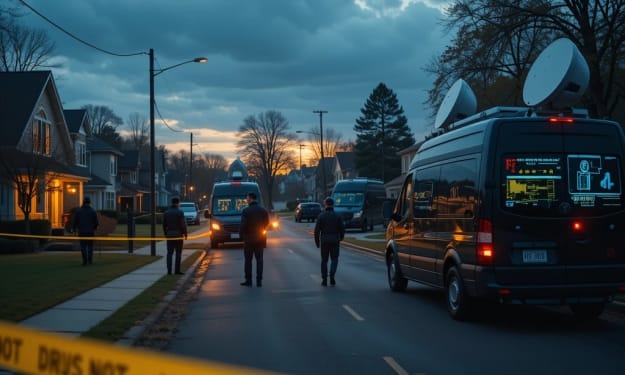
The incredible events today in New York have shaken the city. The streets were frozen in terror, the NYPD and the National Guard were out in force and many of the population cowered within their homes.
By Parody and Satireabout a year ago in Horror
31 Horror Movies to Watch Every Night in October. AI-Generated.
Today, October begins, and Halloween season is here, so you can question the nature of the real world and the supernatural. Watch each of these 31 horror movies every night this month and let yourself be fascinated by the madness.
By Ninfa Galeanoabout a year ago in Horror
The Metamorphosis of Bird. Top Story - September 2025.
Bird first noticed it in the mirror on Tuesday morning—a small dark spot on her left palm, like a beauty mark she'd never had before. She picked at it with her fingernail, but it wouldn't budge. It felt hard beneath her skin, like a seed waiting to sprout.
By Parsley Rose about a year ago in Horror