footage
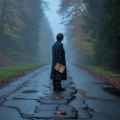
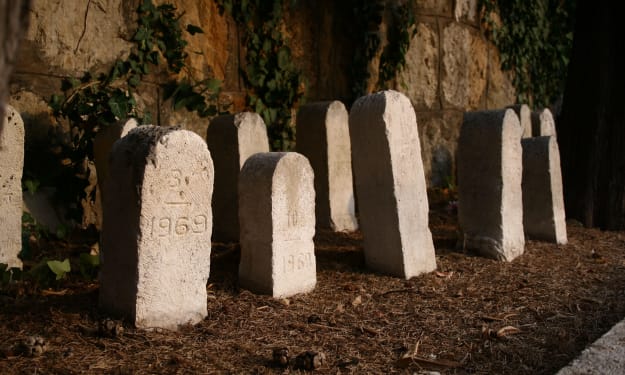
Footage so horrific, you wish it'd stayed hidden; discover found footage depicting horror in real-life, from eerie forest encounters to cemetery dwellers to paranormal activity and more.
Rooms We Never Entered
It started as a local curiosity, the sort of whispered story that drifts through small towns late at night: an old boarding house, abandoned decades ago, standing stubbornly at the end of Ashford Lane. The house had once been grand, its wooden balustrades carved with roses and angels. Now, rot claimed the walls and ivy strangled the stone, but something darker, locals said, had always haunted it. When I moved to Ashford to cover a series of ghost stories for the local paper, the boarding house was on everyone’s lips. “Rooms we never entered,” an old man at the diner told me one morning, his coffee trembling in his hands. “Rooms we were told not to go into, no matter what.” He wouldn’t say more. The building itself was easy to find. Even at midday, a hush surrounded it, as though the air itself held its breath. Windows, like blind eyes, watched silently. The gate creaked open under my touch, revealing a garden swallowed by thorns and moss. Inside, dust lay like a heavy blanket. Faded wallpaper peeled in long strips, revealing scars of damp and age. A grand staircase curved up into darkness. I explored carefully, notebook in hand, capturing fragments of what had once been: an old piano missing keys, a dining hall with chairs askew as if guests had left mid-meal. Then I saw them: four doors at the end of the upper hallway. Unlike the others, these doors were painted black and bore small brass plaques with numbers: 9, 10, 11, and 12. Their handles were tarnished, but the paint was strangely unchipped, as if someone had kept them up over the years. Each door felt oddly cold when my fingers brushed against them. The locals’ warnings echoed in my head, but curiosity clawed at me. The first three rooms were empty, save for rotting furniture and drifting cobwebs. But Room 12 felt different. Its door resisted, scraping against the floor as if reluctant to open. Inside, moonlight streamed through a crack in the boarded-up window, falling on a child’s wooden rocking horse. It was still rocking, gently, as though someone had just pushed it. My breath caught. Dust motes danced in the beam of my flashlight. Across the floor, dark stains marred the boards—old stains, but unmistakably shaped like footprints, leading to the corner. I raised my camera. The viewfinder showed only darkness. Lowering it, I saw the faint outline of something in the corner: a shape, hunched and unmoving. My pulse hammered. I stepped closer, telling myself it was just debris. But as I neared, I realized the shape had form—a small chair, and on it, a broken porcelain doll. Its head tilted at an unnatural angle, eyes cracked but staring directly at the door. A chill swept over me, the air tightening around my chest. I backed away, careful not to look away from the doll, afraid it might move if I blinked. The rocking horse had stopped. I retreated to the hallway, shutting the door with shaking hands. It clicked shut, and in the silence that followed, I heard a faint rustling from inside. Something brushing against the floorboards. I left the boarding house quickly, but that night, curiosity gnawed at me. The next day, I visited the town archives. An old ledger revealed the names of boarders over the years—most of them left no record beyond a signature. But four names were crossed out, all dated the same winter in 1927. Next to them, in red ink, was a single word: “Missing.” A faded newspaper clipping from that year told a fragment of the story: the owner of the house had sealed those four rooms after the disappearances, insisting they were cursed. Rumors spoke of strange laughter, figures glimpsed at night, guests waking to scratches on their doors. Eventually, the place emptied out, and the house was left to rot. I returned one last time, drawn by something I still can’t explain. In the quiet of the hall, I placed my hand on Room 12’s door. The air around it felt alive, pulsing with something old and cold. I didn’t open it. Instead, I pressed my ear to the wood. At first, there was nothing but silence. Then, faintly, so faintly I almost doubted it: a child’s giggle, echoing from the darkness beyond. I stepped back, heart pounding, and left. Outside, the sun had already dipped below the hills, and shadows stretched long across the lawn. I’ve thought often about that house, about the rooms we never entered—and the ones we did. Some doors, I’ve learned, are better left unopened. And some stories, even the ones we tell ourselves late at night, are truer than we’d ever dare to believe. ---
By Mati Henry about a year ago in Horror
''Don't Answer the Second Knock''
When you grow up in a house like mine, you learn the rules early. My grandmother wrote them down in a little leather journal with brittle pages and faded ink. But the most important one wasn’t written down—it was spoken, whispered, drilled into our heads. “Never answer the second knock.” Not the first knock. That was fine. That was normal. Pizza delivery, mailman, neighbor kid selling fundraiser chocolate—safe. But the second knock? That meant something else entirely. I was twelve when I first heard it. My parents were out. I was home with my older brother, Jason. We were watching a horror movie, the kind that ends with one person standing and everyone else dead or worse. We were halfway through when someone knocked at the front door. A solid, polite knock. We both froze. Jason looked at me and said, “You hear that?” “Yeah.” We crept to the door, as kids do when they’re trying to be brave. He peered through the peephole. “No one there,” he muttered. I stepped up. Nothing. Just our porch light flickering against the empty driveway. We both stood there, not speaking. Waiting. Knock. Knock. The second knock came—louder this time. Heavier. Slower. Like someone knocking not with their knuckles, but with something…thicker. Jason jumped back like he’d been burned. “That’s the second knock,” he whispered. And then, like a switch had flipped, he grabbed my arm and yanked me away from the door. “Upstairs. Now.” We locked ourselves in the bathroom, not saying anything. I asked him, over and over, what it meant, but he wouldn’t answer. He just sat there, pale as bone, arms wrapped around his knees like a kid half his age. Later, after my parents came home, Jason told them what happened. They didn’t ask questions. They didn’t accuse us of lying. Dad just nodded slowly. “Good. You didn’t answer.” Years passed. I moved away, tried to forget the old rules. But some things stay with you. Last fall, I came back to the house. My parents had retired to Florida, and I was only in town to handle some paperwork, clean the place up, maybe sell it. It was strange being back. The wallpaper was peeling. The stairs creaked louder than I remembered. But the rules? They still lived in the air like dust. I stayed one night. Just one. It was raining, the kind of rain that sounds like fingers tapping the windows. I was in the living room, sipping tea, scrolling through my phone when I heard it. Knock. My heart did a slow, cold somersault. I stood up. Moved to the door. Looked through the peephole. No one. Just the storm. And then— Knock. Knock. Lower. Slower. Like someone was drawing their hand through something thick and wet, then letting it fall against the wood. I backed away. Every hair on my arms standing at attention. That’s when I remembered something my grandmother said. Not in the journal—but in her voice, years ago, when I was barely old enough to understand: “It knocks twice because it wants you to open it. The first knock is permission. The second is invitation.” I didn’t sleep that night. I sat in the hallway, staring at the door, waiting for a third knock that never came. It’s been six months. I don’t live in that house anymore. I never went back. But last week, in my apartment three states away, it happened again. Knock. I knew that knock. It was friendly. Casual. Familiar. I stood still. Didn’t breathe. And then: Knock. Knock. I looked through the peephole. There was someone there this time. Not a monster. Not a ghost. Just a man in a delivery uniform, holding a clipboard. Except… His mouth was too wide. His smile didn’t touch his eyes. And his eyes—God—they didn’t blink. I didn’t open the door. He waited. Five minutes. Ten. Then he turned and walked away. But his feet didn’t make any sound. I don’t know what it is. I don’t know what happens if you answer the second knock. But I do know this: Wherever I go, it follows. It will find me again. And someday, I might not be strong enough to resist. So if you’re home alone, and you hear it— One knock. Then another. Please. Don’t answer the second knock.
By Israr khanabout a year ago in Horror
Venom and Grace: The World’s Deadliest Snakes You’d Never Want to Meet
Snakes are some of the most fascinating creatures on Earth. They come in all shapes, sizes, and colors—and while many are harmless, some are extremely dangerous. These deadly snakes carry venom so powerful it can kill a human in just minutes. Others have a silent, sneaky way of catching their prey and defending themselves. In this article, we’ll explore some of the world’s most dangerous snakes, what makes them so deadly, and why they deserve both respect and caution.
By ibrahim khanabout a year ago in Horror
The Silent Agony: A Portrait of Resistance and Loss
In a world overrun by noise—of war, of politics, of relentless chatter on digital screens—sometimes, a photograph tells the story louder than a thousand voices. The image before us is one such visual parable. It speaks in muted tones, in earth-stained fabric and blood-drenched wool. The woman depicted does not scream, does not reach out, does not protest. Yet everything about her—the closed eyes, the tension in her brow, the soft lines of her face frozen in fatigue or final rest—screams volumes.
By Fazal Malikabout a year ago in Horror
Names of Honor and the Tragedy in Balochistan
Balochistan’s Names of Honor and a Recent Tragedy Balochistan, a region rich in tradition and steeped in tribal values, has long upheld a cultural system that places honor—ghairat—at the core of personal and social identity. Within this code, the concept of “name” (naal) or honor (izzat) often determines an individual's reputation, familial pride, and community standing. However, the weight of this honor can, and often does, lead to tragic consequences.
By Fazal Malikabout a year ago in Horror
Whispers in Room 313
The House With No Past It started with a Craigslist ad. Three-bedroom Victorian, dirt cheap, barely an hour outside Portland. No neighbors for a mile. The photos were grainy, but I saw the charm under the grime. I needed quiet. I needed space. I needed to disappear for a while.
By Isabella Woodabout a year ago in Horror