fiction
Horror fiction that delivers on its promise to scare, startle, frighten and unsettle. These stories are fake, but the shivers down your spine won't be.
The Last Message
It was 2:14 a.m. when Ayan’s phone vibrated under his pillow. At first, he ignored it. Nights had become heavy for him—hours spent staring at the ceiling, trying to drown memories that refused to fade. Memories of her. The way she laughed with her whole face, the way she always warmed her hands on a cup of chai before drinking, the way she said his name as if it carried some hidden softness only she could hear.
By hamad khan10 months ago in Horror
The Mystery of the Last Message
It was 12:47 a.m. The lights in the room were off, and Arian lay on his bed, staring at his phone. Outside, November’s cold wind tapped softly against the windowpane. Most people were asleep at this hour. But Arian couldn’t sleep. Because three days ago, his younger sister, Ana, had mysteriously disappeared. Ana was only sixteen—cheerful, bright, beloved by everyone. She had gone out saying she was heading to her coaching class… but she never returned. The police said, “She probably ran away.” But Arian knew his sister. She would never do that. He had searched everywhere—social media, friends’ houses, empty streets. Nothing. Suddenly—ding! Arian’s heart almost stopped. A notification flashed on the screen: Message from ANA His hands trembled as he opened it. “Brother… help me.” Just four words. But those four words turned his world upside down. He quickly replied— “Where are you?? What happened??” No answer. One minute… two… five… Then another message appeared— “Don’t look behind you. Come to the old house on 7th Lane. Alone.” Arian didn’t waste a second. The cold night felt heavier than usual as he started his motorbike and sped toward 7th Lane. 7th Lane was one of the oldest parts of the city—abandoned buildings, broken lampposts. People avoided it at night. Some even claimed people vanished there. When Arian reached the old house, a chill crawled down his spine. The roof was half-collapsed, and the front door hung slightly open. He switched on his flashlight and stepped inside. THUD! The door slammed shut behind him. “Ana!! Where are you!?” His voice echoed through the empty house. No answer. Then his phone vibrated again— Message from ANA: “Come upstairs. There’s no time.” Arian rushed up the creaking staircase. On the first floor, he saw a half-open door. A shadow flickered inside. He sprinted in— “Ana!!” But the room was empty. No shadow. Nothing. Except a broken chair and some writing on the wall. “TRUST NO ONE” “HE IS WATCHING” His phone buzzed again— “Brother, RUN!” Arian’s heart froze. Who was sending these messages? Where was Ana? And who was watching him? Suddenly—footsteps. Heavy, slow… coming down the stairs. A tall figure in a black coat, face hidden, holding an old lantern, appeared in the hallway entrance. Arian held his breath, perfectly still. The man looked around… then walked downstairs. Arian slipped out of the room. But the moment he reached the lower floor, he froze. More shadows. Another man. Then another. Four… maybe five people—all in black. Who were they? What did they want with Ana? His phone buzzed again— “Brother, hide in the left room.” Arian dashed into the small room and quietly closed the door. It was pitch dark—only moonlight filtering through a cracked window. Then he heard it. Soft, trembling… “Brother…” Arian turned pale. That was Ana’s voice. He raised his flashlight. In the corner— Ana. Covered in dust, clothes torn, eyes wide with fear. Arian rushed to her. “Ana! Where were you!? What did they do to you!?” Ana sobbed, “Brother… they caught me. Something terrible is happening here. They said… they said they’d only let me go if you came…” Just then— BAM! The door burst open. The masked men flooded the room. One of them spoke, voice deep and cold— “You shouldn’t have come here.” Arian shouted, “Who are you!? Why did you take my sister!?” The leader chuckled. “She told us to.” Arian’s eyes widened. “What are you talking about!?” He pointed at Ana. “She contacted us long before. She led you here.” Arian turned to Ana. She was trembling, unable to look up. “Ana… is that true?” Ana whispered through tears, “Brother… I’m sorry. I tried to escape. They threatened me. They said they’d kill me if you didn’t come. I had no choice…” The men stepped forward. Arian grabbed Ana’s hand. “Run!” They bolted out of the room. Down the hallway. Down the stairs. Through the broken wall— Into the night. The masked men chased them fiercely. But then—a sound in the distance. Police sirens. Arian had already called 999. The moment the masked men heard the sirens, they scattered into the darkness. Police arrived and took Arian and Ana to safety.
By ABDULLAH AL LOKMAN10 months ago in Horror
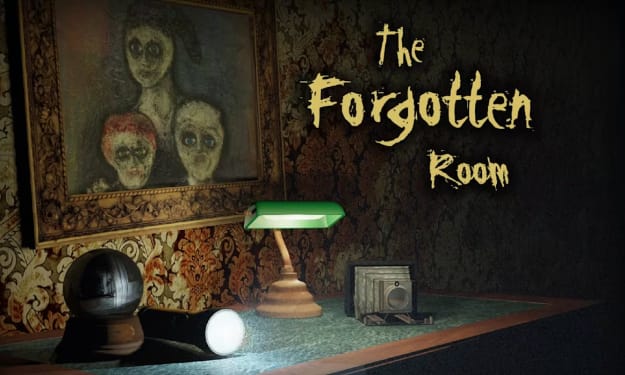
The Room That Time Forgot
The Room That Time Forgot A family drama about grief, memory, and the strength to open the past. Rain tapped gently against the roof of the old house, each drop sounding like a quiet knock from another time. Salman stood at the main gate, holding his small travel bag, staring at the home he had not visited in years. His childhood lived here. His laughter echoed in these walls. His memories had roots in every brick. But life had taken him far away, pulling him toward city noise, work, and responsibilities that slowly disconnected him from his past.
By Salman Writes10 months ago in Horror
“The Tree That Watches After Dark”. Content Warning. AI-Generated.
SECTION 1 — When Bhairavpur Held Its Breath At first glance, no one would ever believe that Bhairavpur hid such a deep terror inside its chest. In the morning, the village looked reborn—bathed in sunlight that made the golden tips of the paddy fields shimmer. Women laughed as they washed clothes at the pond. The smell of boiling milk drifted from the tea stalls. Cowbells rang as animals walked lazily down the dusty road. Children rode their bicycles to school, shouting and teasing each other. If someone stepped into Bhairavpur for the first time, they would think this village knew nothing about fear or sorrow. But the villagers knew that Bhairavpur’s peace lived only under daylight. The moment the sun began to sink into the west, the village’s rhythm changed. People working outside stopped talking abruptly and hurried home. Women who stood chatting by the pond suddenly gathered their sarees and rushed inside. The children ended their football matches without any argument and pushed their bicycles urgently towards their houses. The laughter that had warmed the village all day evaporated as if someone had sucked the sound straight out of the air. Everyone knew— Evening meant danger. The headman, Thakur Prasad, usually sat on the tea stall bench at this hour. When the light began to fade, he would tap his walking stick sharply on the ground and shout, “Come on, come on, it’s getting dark. Go inside!” Shibu, the young shopkeeper’s son, often tried to joke, but the moment he saw a flicker of fear in Thakur’s stern eyes, the smile died on his lips. At the cremation ground, old Hari Dom arranged firewood with shaking hands. He spoke as if pleading with someone invisible, “Let nothing happen tonight… please…” Gopal, passing by, frowned. “Kaka, who are you talking to?” Hari didn’t look up. “I can smell it in the air,” he whispered. “The tree is hungry tonight.” A chill ran down Gopal’s spine. He walked away without another word. At the pond, Padma Rani filled her water pot. Her face carried the weight of grief that had long turned into silence. Her eight-year-old daughter Mira had disappeared near the banyan tree three years ago. No one had found a trace. Monorama Devi, the village fortune-teller, walked up to her. “Padma,” she said quietly, “the wind feels strange today.” Padma’s fingers trembled. “Will Mira… call me again tonight?” Her voice cracked. Monorama held her hand. “Child, your daughter doesn’t call you anymore. What calls from that side… is not human.” Padma closed her eyes, fighting tears. In the playground, children were still jumping ropes and shouting. Then suddenly, little Mithu came running, panic on his face. “Stop! Go home! All of you!” he screamed. The kids laughed at first. “You always scare us for nothing!” But when they looked into Mithu’s eyes— eyes that had seen his parents swallowed by the same tree— their smiles faded. “My mother and father also didn’t listen…” he whispered. “And they never came back.” None of the children argued after that. They simply ran home. The bazaar started shutting down. Chandrima hurriedly packed up her shop. “Shibu, come. Enough for the day.” Shibu tried to act brave. “Ma, why don’t we just chop down that tree?” Chandrima turned, horror flashing across her face. “The one who tries to cut it… will be the first to die.” Shibu swallowed hard. No shopkeeper needed another reminder. By 6:50 PM, Bhairavpur began sinking into an unnatural stillness. The air grew heavy. Dogs stopped barking mid-howl. Children’s voices disappeared. The pond turned ink-dark. The temple bells stopped ringing. Only hurried footsteps echoed for a few seconds—then silence again. Old Raghunath locked his doors and looked up at the reddening sky. “There’s a smell of crying in the wind today,” he murmured. “This won’t be a peaceful night.” Thakur Prasad heard him and turned away quickly—as if he didn’t want the truth to touch him. Shadows stretched across the village, swallowing the dusty road. At 6:55 PM, every household closed their doors. Padma Rani’s hands shook as she bolted hers. Mithu stood beside her, whispering, “It’ll wake up today…” At 6:58 PM, Bhairavpur fell into a silence so absolute that people could hear their own heartbeat hammering inside their ears. Everyone stayed inside their darkened homes. Doors barred. Windows covered. Lamps dimmed or hidden under clay pots. No one dared to look toward the river. No one dared to speak. Because in that final minute before the hour turned— The entire village was holding its breath. Waiting. Not for sunset. Not for darkness. But for the sound— That sound which marked the moment when the banyan tree by the river woke up. The villagers knew the truth too well: At exactly 7 PM, the tree was no longer a tree. Something else awakened inside it. Something old. Something hungry. And Bhairavpur waited, trembling, for the first cry that meant the night had begun.
By KHANHORROR10 months ago in Horror
The Last Elevator Ride: The Unsettling Mystery of Elisa Lam
The strange thing about some mysteries is that they don’t start with a scream or a crime scene. They begin quietly, almost too quietly, and then grow into something no one can forget. The case of Elisa Lam is one of those stories—simple at the start, almost routine, and then suddenly so disturbing that Americans still revisit it years later, as if hoping this time the ending will change. In January of 2013, a 21-year-old student from Canada, Elisa Lam, checked into the Cecil Hotel in downtown Los Angeles. She was traveling alone, taking a break from university stress, and documenting every step of her trip on Tumblr. Her posts were emotional, thoughtful, sometimes funny—just like any other young traveler searching for something new in life. For the first few days, everything looked normal. She explored bookstores, photographed street art, shared her feelings online. There was no sign of danger. No hint that the world would soon know her name. Then, on January 31st, she vanished. The hotel staff told police she simply stopped appearing. No breakfast the next morning. No new Tumblr posts. No checkout. She was just gone. And that disappearance became the start of one of the most unsettling mysteries modern America has ever seen. When the Los Angeles Police Department struggled to find clues, they released a piece of evidence to the public—something they hoped might help. It wasn’t a note. It wasn’t a witness statement. It was a video. A short clip from inside the hotel’s elevator. The video appeared online on February 14, 2013, and within hours it spread across the United States. People shared it not because they wanted gossip, but because they couldn’t explain what they were seeing. The footage showed Elisa inside the elevator… behaving in a way no one could understand. She stepped in and pressed several buttons at once. Then she waited. The elevator doors didn’t close. She peeked outside, slowly at first, then suddenly jumped back inside as if someone was approaching. She pressed herself into the corner. She moved her hands in strange, fluid motions—almost as if she was trying to feel something in the air. Then she stepped out again, looking to her left and right, speaking to someone who wasn’t visible. And the doors still didn’t close. It was the kind of video that makes you lean closer to the screen without meaning to. It didn’t feel staged. It didn’t feel acted. It simply felt wrong. Millions of Americans watched. Some said she looked terrified. Others believed she was hallucinating. A few became convinced there was someone—just out of the camera’s frame—following her. Online theories exploded overnight. People compared the video to horror movies, psychological breakdowns, and paranormal encounters. The elevator itself became a character in the story. Why did the doors refuse to close? Why did it work normally as soon as she left the frame? Why did her hands move like that? But the real shock came two weeks later. Guests staying at the hotel began complaining that the water in their rooms tasted strange. The pressure was low. The color was off. Maintenance workers climbed to the roof to check the water tanks. Inside one of them, they found Elisa Lam. The discovery made the story even darker. The tanks were heavy, difficult to open, and standing on a platform that required a ladder. The area was supposed to be locked. And yet somehow, she ended up inside. There were questions everywhere. How did she get onto the roof? How did she open a tank designed to stay sealed? How did no one hear anything? Why did the elevator behave the way it did? Was she running from someone—or something—only she could see? Police eventually concluded the death was accidental. They explained it as a tragic combination of mental health struggles and disorientation. Many accepted the explanation. Many others didn’t. Not because they wanted drama, but because too many details didn’t line up neatly. The Cecil Hotel added another layer of unease to the story. This was not an ordinary hotel. It had a long history of violent deaths, suicides, unexplained accidents, and even serial killers who once lived there. It wasn’t cursed—but it certainly wasn’t normal either. Journalists called it “a building with a shadow.” For Americans who knew the hotel’s past, Elisa’s fate felt like another chapter in a book that should have ended long ago. What makes the Elisa Lam case so powerful in American culture is not just the sadness of a young life lost. It’s the combination of unanswered questions, real video footage, psychological complexity, and the eerie setting of a hotel with a dark reputation. It’s the kind of story that people return to when they can’t sleep, searching for a detail they missed. Even today, years later, the mystery stays alive. Documentaries revisit it. Podcasts analyze her gestures in the elevator frame by frame. Reddit threads still argue about whether someone was with her. Psychologists discuss the possibility she was experiencing a severe mental episode. Engineers debate the elevator’s behavior. Security specialists question why the footage had strange cuts. Some mysteries fade. This one didn’t. It remains suspended between rational explanation and haunting unanswered questions. A story that sits uncomfortably between coincidence and tragedy. A reminder that even in a world filled with cameras, technology, and logic, some events refuse to fit neatly into a single explanation. And maybe that’s why America can’t let it go. Human beings fear the unknown—but they’re also drawn to it. The Elisa Lam case gives people a puzzle they can almost solve, but not completely. It lets them explore fear safely, from behind a screen. It forces them to ask how well we understand our own minds. It asks whether buildings hold memories. It asks whether tragedy is always random. Most of all, it reminds us how delicate life is. Elisa wasn’t a ghost, a symbol, or an urban legend. She was a real person with dreams, anxieties, humor, and a future she never got to live. Her story became viral not because people wanted to turn her into entertainment, but because her final moments struck a nerve deeper than crime or fear—they touched something human. And that is why her last elevator ride is still one of America’s most unforgettable mysteries.
By The Insight Ledger 10 months ago in Horror
Whispers on Summerisle
I. The Island That Swallowed People Summerisle looked peaceful from the ferry—a quiet crescent of land surrounded by mist and gentle waters. Tourists called it charming. Locals called it home. But to Mara Willen, it was the last place her brother Jonah had ever been seen. He vanished on Summerisle six months ago. The police claimed he probably drowned during a night swim, but Jonah wasn’t the type to just disappear. He always called Mara, always told her where he was going. He was the protective one—her lighthouse during every storm. Now she was here to find out what happened. As she stepped onto the creaking wooden dock, the first thing she noticed was the silence. Not peaceful silence—forced silence. No laughter. No gulls. No wind. Just… stillness. It felt like the entire island was holding its breath.
By Sahir E Shafqat10 months ago in Horror