celebrities
From Hitchcock to Stephen King, a roundup of the who's who in horror; all about celebrities flaunting their loudest screams and most nightmarish scenes.
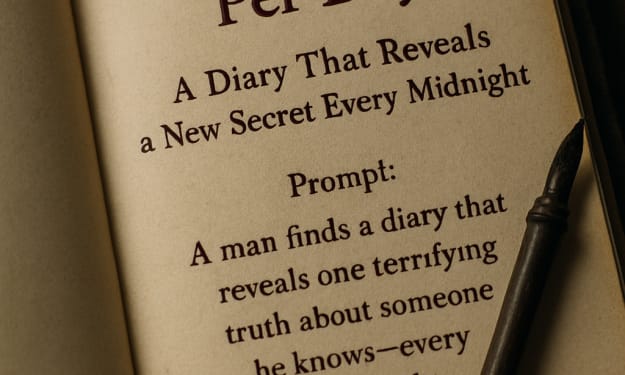
What would it be like if you saw someone else lying next to you in your sleep in the middle of the night?
When I got the new job, no one was happy. My mother said, “Don’t do this job, it’s not good to play with people’s deaths.” The people in the neighborhood laughed, and some whispered behind my back, “This boy has become a dom!”
By Ratul Shrikhabout a year ago in Horror
Whispering Pines
Part 1: The Arrival There were seven of us—friends since college—craving adventure and escape from the noise of our busy lives. The mountains were calling, and we answered, planning a full week in the wilderness. We packed tents, food, torches, and spirits high with excitement. The first two days were pure bliss: laughter by the bonfire, warm cups of tea, and storytelling under a sky full of stars. On the third evening, things shifted. Dark clouds rolled in suddenly, as if summoned. Lightning cracked so close it made our bones rattle. Wind roared like a beast. Our tents tore away, spinning into the black sky like leaves. Rain hit us sideways. Chaos swallowed us whole. We grabbed each other, shouting through the storm. But the wind was stronger. It pulled us apart. I was thrown hard. When I woke, I was lying near a dense forest, soaked, shivering. Only Saddam lay beside me, groaning. The others—Zaid, Talha, Bilal, Hamza, Danish—were gone. --- Part 2: The Forest We yelled their names. Only silence replied. Saddam and I decided to find shelter. The forest ahead was thick, its trees twisted like they had grown in pain. Stepping inside was like entering another world—no birds, no wind. Just the sound of our wet shoes sinking into the mud. Soon, we heard it. Whispers. Like voices behind a thin wall. We turned. No one. The whispers grew louder but made no sense. Words without form. Sounds that crawled into our ears. Then, we saw it: a wooden cabin wrapped in vines. Its roof sagged, its windows fogged. But somehow, it stood strong against the storm. The door opened slowly as we approached, creaking like a scream held too long. --- Part 3: The Cabin Inside, the air was freezing, heavier than outside. Our flashlight flickered. Cobwebs clung to old furniture. A portrait hung crooked on the wall—a family of five, all smiling with eyes scratched out. We lit a small fire and tried to dry off. Saddam dozed off. I sat, listening. The whispers returned. But now, they were inside the cabin. Footsteps above us. Then, on the porch. Then… the door creaked again. I blinked. Saddam was gone. His sleeping bag was still warm. I screamed his name. Ran outside. Fog had swallowed the forest. From the trees, a shape emerged. A man… Saddam? No. His eyes were pitch black, his smile stretched unnaturally wide. “You shouldn’t have come,” he whispered, voice like dead leaves. I backed away. He vanished. --- Part 4: The Lost Ones I wandered through the forest, calling for the others. Echoes returned, but twisted—mocking versions of their voices. I found Zaid, standing completely still, eyes closed. I ran to him. “Zaid!” I shook his shoulder. He opened his eyes. “Too late,” he whispered. “The forest owns us now.” His skin cracked like dry bark. He crumbled into a pile of leaves. I screamed. The forest pulsed. It was alive. Not metaphorically—truly. Every tree was watching. Every root whispered. We hadn’t wandered in. We had been invited. Chosen. And it wasn’t done with me yet. --- Part 5: The Loop Every path I took led me back to the same fallen log. My flashlight dimmed. My watch stopped. There was no night or day. Just grey. I found a tree carved with names—ours. Beneath mine: “Not yet.” Suddenly, I saw Danish. He was climbing a tree silently. “Danish!” I yelled. He looked down. “Don’t speak. It hears you.” “What is it?” He pointed at the sky. “It used to be a god. Now it’s hungry.” Then he vanished into the leaves, like he was never there. I was breaking. My memories faded. My name felt strange on my tongue. --- Part 6: The Exit On what I believed to be the seventh day, I saw a narrow trail lined with white stones. They glowed faintly, like moonlight trapped in rock. I followed, numb and trembling. Suddenly, I was back on a road. A truck stopped. A man helped me inside. I tried to speak. Nothing came out. --- Part 7: Home? Now, weeks later, I sit in my room, writing this. No one believes me. The others were never found. Sometimes I see them in reflections. Sometimes I hear them calling me from the trees behind my house, though there are no forests nearby. Last night, my mirror fogged up on its own. In it, I saw Saddam. He smiled. “You never left.” And behind me, I heard the cabin door creak open again.
By Noman Afridiabout a year ago in Horror
The Woman at the Bridge
It was past midnight when my car rolled over the ancient wooden bridge—a narrow, creaking relic strung across a river lost in mist and time. I was returning from my grandmother’s funeral. The road through the countryside was empty, winding, and lonely. Rain kissed the windshield. My headlights caught glimpses of rusted road signs and tangled trees. Then I saw her. A woman standing by the bridge’s edge. Drenched. Barefoot. Motionless. She wore a white gown, the kind brides might wear in forgotten photographs. Her face was hidden beneath a soaked veil. I slowed down. Rolled my window down an inch. “Are you okay?” I called out. No reply. I pulled over. My conscience wrestled with my fear. She might be hurt… or worse, lost. I opened the door. The rain struck cold. My shoes sank into the wet wood of the bridge. As I approached, she slowly turned. Her face—blurred by the veil—seemed expressionless. But I felt it. A sadness. A weight. A chill deeper than the storm. “Do you need help?” I asked again. She lifted her hand… and pointed. Behind me. I turned instinctively. Nothing there. Just the curve of the road and shadows twisted by headlights. When I turned back— She was gone. I gasped. My heart hammered. She’d vanished into thin air. I rushed back to the car, locked the doors, and started the engine with trembling fingers. The moment I crossed the bridge, something changed. The rain stopped. The mist cleared. But the road ahead… wasn’t the same. It was darker. Narrower. The trees leaned inward, as if listening. The signs were in a language I couldn’t read. And my phone had no signal. Panic rose. I turned around, desperate to find the bridge again. But it was gone. No sign of it. As if I had never crossed it. As if it had never existed. Then I heard her. A soft whisper. From the backseat. “Help me…” I jerked around. The seat was empty. But the scent of roses—wet and wild—filled the car. “Who are you?” I shouted. The engine sputtered. The lights flickered. And then… she appeared again. Not outside. Inside the car. In the rearview mirror, her face emerged slowly from the shadows. The veil still covered most of it… but I could see her eyes now. Empty. Endless. “Don’t be afraid,” she said, though her voice felt like frost against bone. “You’ve crossed into my sorrow. And now you must witness it.” The car began to move on its own. The steering wheel turned. The pedals pressed. I wasn’t driving anymore. It took me through dark woods, past ancient cottages with candlelit windows, and towards a field where dozens of white dresses hung from trees—swaying like ghosts in the wind. We stopped near a small, broken house. “Come,” she whispered. I stepped out, feet dragging. Drawn by something invisible. My heart raced, my breath shallow. Inside, cobwebs danced. Dust hung in the air like smoke. On a crumbling table lay a photograph. A man. A woman. A bridge. A wedding. Then the woman from the photo appeared behind me. Not a ghost. Not alive. Something in-between. She spoke, tears falling without sound. “He promised to wait for me at the bridge… but the flood took him. The water rose. The world forgot.” I looked closer at the photo. The man… he looked like me. Same eyes. Same scar on the brow. “You carry his blood,” she said. “And that’s why I found you. You’re the only one who can help me cross.” “Cross what?” I asked. She looked out the window. “Peace.” Then she took my hand. It was cold, like snow in spring. We returned to the bridge—now visible again under a sky torn with stars. She stepped forward, barefoot, veil fluttering. As she reached the center, a blinding light enveloped her. She smiled. And vanished. I collapsed. When I awoke, I was parked by the side of the road. Morning light spilled over the hills. The bridge looked old, broken. Closed for years. A sign read: Condemned—Do Not Cross. But the tire marks on the bridge… were fresh. I never told anyone. Who would believe it? But sometimes, when it rains, and the fog rises— I hear a whisper. “Thank you…” And in the rearview mirror, just for a second, I see a veil flutter… and vanish.
By Noman Afridiabout a year ago in Horror
"Barefoot, But Not Broken: A Doctor's Journey From Struggle to Strength"
Every journey begins with a single step, but for some of us, that first step can feel like an eternity. I remember the first time I stood in front of a mirror wearing the white coat. I was filled with hope, determination, and dreams of making a difference in the world. But what no one tells you about the path of a doctor is that the road is often lined with struggles that test not just your intellect, but your very spirit. My journey was never one of smooth sailing. Growing up in a small town, I often faced challenges that most people in urban areas would never understand. There were moments when the very shoes I wore felt like a luxury—literally. I recall walking miles to school with holes in my shoes, the cold biting at my feet, yet my mind never strayed from my dreams. Those shoes didn’t define me; they didn’t break me. They were a symbol of my resilience. I remember the day I decided to become a doctor. It wasn’t a decision born out of privilege or the desire for status. It was born out of a desire to heal—an innate calling to help others, especially those who, like me, often felt invisible. My own struggles with health during childhood gave me an understanding of the pain and hopelessness that many patients experience. And so, the white coat wasn’t just a symbol of professionalism for me; it was a shield, a tool, a promise. But nothing prepared me for the emotional weight that would come with this profession. During my medical training, I encountered moments that shattered me. I remember a patient, an elderly woman, who had no family to visit her in the hospital. She lay there, fragile and lonely, in stark contrast to the busy hospital environment around her. I held her hand, trying to offer her comfort, but there was nothing I could do for her loneliness. I went home that night with a heavy heart, questioning how I could be a part of a system that sometimes felt so cold. It wasn’t just the patients who left a mark on me; it was the constant battle between empathy and professionalism. There were days when I wanted to break down, to scream, to let out the emotions I had bottled up for so long. But I couldn’t. The white coat had become a mask, hiding the tears, the doubts, the moments of weakness. There were times when I felt lost, unsure of whether I was truly making a difference. The long hours, the never-ending list of patients, and the emotional toll of watching people suffer—it all became overwhelming. But in those moments of exhaustion, I would think back to my own journey. I would think of the days I walked barefoot, of the struggles I overcame just to be where I was. And that thought—of perseverance, of not giving up—kept me going. It was during my residency that I faced one of the most difficult challenges of my life. I was assigned to a particularly tough case—a young girl who had been in a severe accident. Her condition was critical, and the odds were stacked against her. But I couldn’t let go. I couldn’t just accept the fact that she might not make it. I poured every ounce of my energy into her care, working late into the nights, consulting with specialists, doing everything I could to save her. One night, as I sat at her bedside, exhausted beyond belief, I remembered something my mother once told me: "Sometimes, the most important thing you can do is just show up." It wasn’t about the perfect diagnosis, or the most advanced treatment—it was about being present, being there when someone needed you the most. And that’s what I did. By some miracle, she survived. That moment changed me. It reminded me of why I became a doctor in the first place—not for the accolades, not for the recognition, but to make a tangible difference in someone’s life. I had walked into that hospital feeling like I was barely holding it together, but I walked out knowing that my presence, my dedication, and my heart had made all the difference for that young girl. But the journey didn’t end there. After years of facing one emotional challenge after another, I began to realize something important: Healing wasn’t just about treating the body; it was about healing the heart. And in many ways, I had to heal my own heart before I could truly heal others. The white coat was a constant reminder of my responsibility, but it was also a reminder of the strength I had gained through every struggle, every tear, and every sleepless night. I had come to understand that I wasn’t just a healer of bodies; I was a healer of spirits. And in doing so, I was healing my own spirit as well. Through every setback, I learned the power of resilience. I learned that the toughest battles often come with the most rewarding victories. And I learned that, no matter how heavy the weight of the world may seem, I was never alone. I had the strength of my past, the hope of my future, and the unwavering determination to keep moving forward. I may have started my journey barefoot, but I am not broken. I stand today as a testament to the power of perseverance and the unyielding spirit that can rise from even the most difficult circumstances.
By Doctor marwan Dorani about a year ago in Horror
The Jinn Who Waited Beneath My Bed for Years
I was twelve when we moved into my grandfather’s crumbling mansion on the outskirts of a forgotten village. The house, older than memory, breathed with secrets. The locals called it Bayt Al-Ghaib — “The House of the Unseen.” My grandmother had one rule: "Never enter the upstairs room at the end of the hallway. Never." I was a boy. Boys are fools. The room was always locked. Its wooden door scarred by deep claw marks. I’d ask questions—who stayed there? Why did it smell like burnt incense? But my questions were met with fearful glances and trembling lips. One stormy night, lightning cracked the sky. I heard the door creak open on its own. Curiosity overpowered fear. Inside, dust floated like ghosts in the stale air. The room was bare—just a bed with ancient carvings, a cracked mirror, and a broken oil lamp. As I stepped in, the temperature plummeted. The floor groaned like it hated me. That night, I couldn’t sleep. At 3:03 AM, I felt the mattress sink beneath me. Something was crawling under the bed. Breathing. Caption: Shadows That Breathe Then came the voice—smooth and sharp, like silk slicing flesh. "You came willingly. You are brave. Or stupid. Either way... you’ve awakened me." I jumped, turned on the light—but nothing. Empty room. No footprints, no figure. But under the bed... darkness that seemed alive. I ran to my grandmother. She slapped me before I could speak. "Did he speak?" she asked, eyes wide with terror. "Who?" I whispered. "The one who waits beneath. He doesn’t kill. He makes you choose." I never entered that room again. But the whispers began. In mirrors. In dreams. In static on the TV. A name I could never repeat, yet it echoed inside my bones. Years passed. I moved to the city. Grew up. Became a man of reason. Left ghosts behind. Or so I thought. On my 25th birthday, I found something strange under my pillow: the old room’s iron key. Cold. Heavy. Familiar. I hadn't told anyone about it in over a decade. I lived alone. That night, I dreamed of the house. Of footsteps pacing the hallway. Of a whisper: "Ten years. As promised." Caption: Bargain of Blood and Silence I returned to the village. The mansion was now abandoned. Rotting. Eaten by vines. But the upstairs door stood pristine—untouched by time. Inside, he was waiting. No longer beneath the bed. He now towered beside it. His form was smoke stitched together by eyes. Dozens of eyes. Watching. "You returned," he said, voice layered like a choir of screams. "I never agreed," I whispered. "But you listened. That is enough." He offered me two choices. 1. Accept his mark. Become his vessel. His voice in the human world. No more pain. No more fear. Immortality, but never peace. 2. Leave. But never be alone again. He would live within my shadow. See through my eyes. Whisper through my thoughts. I chose the second. I ran again. But I didn’t run alone. Since that day, my reflection lags half a second behind me. I see him in puddles. Feel him in my bones. Hear him when I think I’m alone. I avoid sleep. Because in dreams, I wake up in that room again. And he’s closer every time. Caption: Reflections Are Liars I tried everything—prayer, fire, exorcists. They all said the same thing: “He’s bound to your choice. He didn’t enter. You invited him.” Then I met Rafiq, a blind Sufi who had once battled such a being. He touched my forehead and recoiled in horror. "Yours is no ordinary jinn," he said. "He is from the Harith. The old ones. He feeds not on flesh, but on fear and memory." "Can he be removed?" I begged. "Only if you return what was taken." But I took nothing. Or so I thought. Rafiq explained: I had taken his word. When I entered the room and heard his voice, I heard his true name. That name bound us. There was only one way to end it. Return to the room. Speak his name backward. In total darkness. With no fear in my heart. Easier said than done. I returned once more. The house pulsed with anticipation. The room welcomed me like an open grave. He waited, silent now. Testing my courage. I closed the door, shut off the flashlight, and let darkness swallow me. I spoke the name—every syllable backward, each one scraping my throat like broken glass. Nothing happened. Then the floor cracked. The walls bled. A wind like screams in reverse filled the room. He screamed—not in rage, but in loss. I had broken the bond. Or so I believed. Caption: Freedom Has a Price That night, I slept for the first time in years. But the next morning, the mirror in my room had something carved on it—from the inside of the glass: “I’m not beneath your bed anymore.”
By Noman Afridiabout a year ago in Horror
Unlock the Shadows: What You Need to Know About Vocal’s Horror Story Prompt Challenge
For writers who have a taste for the macabre, the eerie, and the psychologically unsettling, opportunities to showcase their talent don’t often come knocking. But when they do, they arrive cloaked in mystery, dripping with suspense, and beckoning the brave to test the limits of their imagination.
By Nora Arianaabout a year ago in Horror
The Room That Watches
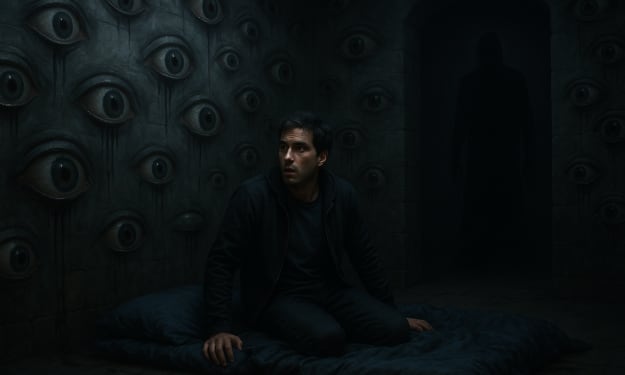
Rahim stood before the rusted gates of his grandfather’s ancestral mansion—its structure half-swallowed by creeping vines and a century’s worth of dust. The villagers had always spoken in hushed tones about this place. They warned of whispers in the night, shifting shadows, and the cursed room on the western wing. They called it The Room That Watched. When his grandfather died, Rahim inherited the mansion, along with one final warning in the will: “Do not enter the western corridor. Whatever you do, never open the last door. That room sees.” He laughed it off. Old men and their superstitions, he thought. By the third day of exploring the mansion, curiosity gnawed at him. That corridor, sealed with ancient locks and chains, felt like it breathed with anticipation. Dust covered every surface, yet the floor leading to that door was strangely clean—as though someone had walked it recently. Rahim found the keys in his grandfather’s study. That night, under the pale glow of a dying flashlight, he walked the forbidden corridor. The walls trembled faintly, like they were sighing. The final door was tall, wood rotting at the edges, with strange symbols scorched into it. He inserted the key, heart pounding, and turned it. Click. The door creaked open. The air inside was unnaturally cold. The room was empty—at first glance. A simple stone floor. No windows. But then he looked at the walls. They were covered—completely covered—with painted eyes. Hundreds of them. Some open wide. Some half-closed. Some crying black tears. They weren’t just painted. They felt alive. They followed him. Watched his every step. A shiver ran down his spine, but he forced himself to step inside. “Just paint,” he whispered. “Just old art.” He unrolled his sleeping bag in the center of the room. “I’ll prove there’s nothing here,” he said aloud, though his voice trembled. He lay down. Turned off the flashlight. Silence. Until… a creak. He sat up. The room had no doors except the one he entered. Yet, somewhere behind him, he heard soft breathing. Then a whisper. “Don’t look back…” He froze. The eyes on the wall began to change. Slowly. Subtly. They blinked. A few began to weep. The black tears moved, dripped, and dissolved into smoke upon hitting the floor. His chest tightened. From the corner of the room, something began to emerge. A shape. A shadow—taller than any man, thin and distorted like smoke and nightmare stitched together. No face. Just a hollow where eyes should’ve been. Rahim scrambled backward, heart racing. “What... what are you?” he gasped. The creature didn’t speak. But the room did. The eyes began to whisper. All of them, together, chanting in a soft, sickening chorus. “He opened the door... he opened the door... he looked inside…” The shadow extended a long, bony arm. Rahim screamed and bolted for the exit. The door… wouldn’t open. No matter how hard he pulled, the handle wouldn’t budge. He turned around, breath ragged. The room had changed. The floor now pulsed like living flesh. The eyes grew larger, some bleeding, some laughing—yes, laughing, their pupils twisting into tiny, grinning mouths. The shadow stepped closer. Rahim cried, begged, slammed the door with his fists. “Let me out! Please!” The eyes whispered again. “No one leaves. You saw too much. Now you must watch…” The last thing Rahim saw was the creature reaching into his chest—not tearing flesh, but pulling out light. Memory. Soul. The room went silent. --- The next morning, the door to the room stood wide open. A group of local workers entered the house, tasked with renovating the old mansion. One of them, curious, peeked into the western corridor. “I thought this was sealed?” he murmured, seeing the open door. He stepped inside, flashlight flickering. The walls stared back. Hundreds of eyes. And now—right in the center—was a freshly painted eye. It looked eerily like Rahim’s. The same color. The same fear. It blinked.
By Noman Afridiabout a year ago in Horror