art
Art that’s as dark as it is evocative; discover horror-inspired artwork, from twisted mutations of classic paintings, chilling sculptures, spooky photography and more.
The Midnight Dressmaker
In the quiet village of Gallowmere, where the moon always seemed just a little too full and the air always smelled faintly of roses and ash, there was once a woman named Elara. She was known far and wide as The Midnight Dressmaker. She wasn’t called that because she worked late. No—Elara only opened her boutique at midnight. That was when her shop lit up with soft candlelight, and she’d welcome anyone who knocked on her tall, black wooden door. By dawn, the shop would vanish into darkness again—shutters closed, windows covered, as if it had never opened. Elara was beautiful. Not in a warm, friendly way, but in the kind of beauty that made your heart skip—icy and elegant, like snow that had never been touched. Her eyes were grey, like storm clouds, and her voice was soft as silk. But what truly made her famous were her dresses. People claimed her gowns could make anyone breathtaking. If you wore one of Elara’s creations, you’d be the center of any room, the dream of every eye. Brides came from miles away. Actors begged for her designs. No matter how rich or poor you were, if she accepted your request… she never charged a coin. She only asked for something personal—something that "held a memory." A necklace, a diary, even a single teardrop on a handkerchief. And people always gave it. They said she worked with shadows and lace, with whispers and dreams. But those who wore her dresses never talked about them afterward. Not even once. That would’ve been the end of the story—just an eerie village rumor—if not for Maera, a curious 17-year-old girl who lived down the lane from Elara’s shop. Maera loved fairy tales, especially the ones that ended badly. She had a heart full of wonder and just enough foolish bravery to think she could solve any mystery. One night, when the air was thick with summer and the stars blinked like watchful eyes, Maera did something nobody else had dared: she snuck into Elara’s shop. She waited until the bell chimed midnight and the shop’s windows glowed golden. Then, wearing her father’s dark coat and her own trembling courage, she slipped through the side door that Elara had forgotten to lock. Inside, the boutique was like a dream stitched together by nightmares. Mannequins stood frozen like statues, all wearing half-finished gowns. Some dresses shimmered with golden thread, others were made of dark, feathery silk that seemed to breathe. There were mirrors—tall, warped, and dusty—lining the walls. None of them showed her reflection. At the center of the room, Elara stood with her back turned, humming a lullaby no one had heard in years. On a pedestal was her latest work: a gown so beautiful it almost made Maera cry. It glittered like midnight waves and smelled like old flowers and ink. But then Maera saw something that made her knees shake. The hem of the dress—dripping. Not with paint. Not with dye. With something darker, thicker. Blood. Elara turned slowly, her fingers still holding a silver needle threaded with red. “You shouldn’t be here,” she said, her voice as soft as snow. Maera tried to run, but her feet were rooted. Her voice didn’t come. Elara smiled—not cruelly, but with a sadness that filled the room like fog. “You’re just like I was,” she whispered. “Curious. Bright. Foolish.” Then she told Maera the truth—the truth that stitched everything together like seams no one ever saw. Elara had once been a simple girl too. Many, many years ago. She was in love. But her village had burned during a war, and she lost everything—her home, her family, her love. In her grief, she cried by the ruins until a stranger approached her. He was cloaked in black, with eyes like coals. He offered her a gift: The Needle of Remembrance. With it, she could sew beauty from pain, create gowns that captured memory, desire, sorrow… even life. But magic always comes at a cost. For every dress she made, a little piece of her soul was stitched inside. And for each masterpiece, someone had to pay—in blood, or in time. The dress would steal something from its wearer: their voice, their dreams, sometimes even their shadow. That’s why they never spoke afterward. And now, the needle had begun to whisper. It was hungry again. Tired of old memories. It wanted new ones. Maera’s. Elara pleaded with the needle to spare the girl. But the needle had rules. Only one way out: if Elara gave herself entirely to the final stitch. And she did. In front of Maera, Elara pricked her finger, whispering an ancient word. The thread blazed red, and the dress curled around her like vines. Her body shimmered, then folded into the fabric. She vanished—forever sewn into her last creation. The dress fell limp. Still beautiful, but empty now. Quiet. Maera dropped to her knees, breathless. The next morning, the boutique was gone. Just an old, boarded-up house, filled with cobwebs and dust. People say Maera was never the same after that. She stopped speaking for a year. But then one day, she began to sew. Just simple things at first. Scarves. Ribbons. Shawls. But with every stitch, her hands moved like they’d done it a thousand times before. She never used red thread. She never sewed at night. And if anyone asked why she kept a silver needle locked in a glass case on her shelf, she’d only smile and say: “Some dresses are too beautiful to wear. And some beauty... is better left unfinished.” The End.
By Silas Blackwoodabout a year ago in Horror
All AloneTogether Review: when the horror story you created comes to life
Today the horror movie All Alone Together directed by Maximus Jenkins is released on the digital market, a rather original story. A filmmaker achieves an impressive success in the last film he directs, but his life collapses in all aspects.
By Ninfa Galeanoabout a year ago in Horror
The Fifth Key
Dr. Sara Nadeem never believed in ghosts—until the day she received a letter from herself. She was alone in her laboratory at 11:57 PM, sipping cold coffee, buried in simulations on molecular time symmetry. Her research—considered fringe by some and foolish by most—suggested that certain isotopes could retain temporal "imprints," like echoes of events before they happened.
By Atif khurshaidabout a year ago in Horror
Whispers in the Jungle. AI-Generated.
It was supposed to be the perfect getaway. Three friends, Ayaan, Bilal, and Usman, had been planning their jungle adventure for months. The idea was simple: to escape the busy city life, explore the unknown, and challenge themselves to survive in the wilderness. Ayaan had heard stories of a forgotten jungle, nestled deep in the mountains — untouched, mysterious, and waiting to be explored.
By nasir shahabout a year ago in Horror
Return of the Living Dead adds a videogame and two horror movies
The iconic 80's horror comedy Return of the Living Dead is turning 40 and the entertainment industry has decided to celebrate in a big way. First, a horror video game called More Brains - Assault on Uneeda will be released. Then fans of the saga will have the joy of seeing the next film in the saga The Return of the Living Dead Universe: Trash's Revenge, which will focus on Trash, a young punk woman who was in the 1985 film Return of the Living Dead.
By Ninfa Galeanoabout a year ago in Horror
Whispers of Miani Sahib. Content Warning.
The air was heavy with dust and abandoned prayers as Hamza walked through the broken gates of Miani Sahib Graveyard. The air held the smell of dry roses and incense, and the distant thrum of city sounds disappeared behind the walls. Within this sprawling necropolis more than 1,200,000 graves deep time had folded into stillness.
By Zubair Ullah Khanabout a year ago in Horror
The Mirror Never Lies
When Anna inherited the old Victorian house from her late aunt, she didn’t know what to expect. The house had been empty for years, its paint peeling, windows dusty, and floorboards creaking with each step. Yet, the moment she entered, one item caught her attention: a large, ornate mirror standing tall in the dim corner of the parlor.
By Story Masterabout a year ago in Horror
The Bedroom Window That Was Never There
A Normal Room Lily’s bedroom was nothing special. Bed, bookshelf, lamp shaped like a cloud, blue walls, one window that faced her backyard, and a desk where she never finished her homework. She lived with her mom, who worked night shifts at the hospital, so Lily was often home alone from 10 p.m. to 6 a.m. No big deal—she was brave. Or at least, she used to be. Until the night the second window showed up. It happened around 1:13 a.m. She had been drawing in her sketchbook, lying on her bed with headphones on, when she felt a breeze. But… her window was closed. She looked up. And on the wall opposite her bed—where there had never been a window before—was now a square frame, slightly cracked open, with cool air seeping in. She blinked. Rubbed her eyes. The window was still there. Chapter 2: Outside the New Window Lily got up and slowly walked toward it. The window looked old, with chipped black paint on the wooden frame, and four small panes of glass so dusty it was hard to see through. But when she peeked? She didn’t see her backyard. She didn’t see anything from her house. Instead, it was a long, foggy field. Gray grass. No trees. No buildings. Just endless mist and one thing in the middle: A tall, crooked scarecrow. It wasn’t facing her. It stood with its back turned, like it was looking off into the distance. A chill ran through her. She slammed the window shut and backed away. But she couldn’t stop looking. There had never been a window there before. And that field? It wasn’t real. Not in her world, anyway. Chapter 3: It Moved Lily told herself not to look again. But when the wind came back the next night, she peeked. This time, the scarecrow was closer. Still turned away. But now she could see the stitches in its coat, and how its shoulders were crooked. Like one arm was longer than the other. She slammed it shut again. But before she turned away, she noticed something scratched into the wooden windowsill: “DO NOT OPEN.” She ran to her desk, grabbed a sticky note, and stuck it right below the window with her own message: “GO AWAY.” Chapter 4: 1:13 A.M. Every night, the window opened at the same time—1:13 a.m. It didn’t matter if she locked it. It didn’t matter if she taped it shut. It creaked open anyway. And the scarecrow? It kept getting closer. By night four, it was right at the edge of the window. Still not facing her. But now she could see its hat was sewn from human skin. That night, she slept in the hallway. Chapter 5: The Note The next morning, her sticky note was gone. In its place was a scrap of old paper, folded three times. She unfolded it slowly. It read: “Turn around.” She dropped the paper like it was on fire. She was alone in the room. But she didn’t turn around. She refused. Chapter 6: Mom Doesn’t Believe Her When her mom got home from work, Lily begged her to look at the window. But when they entered the room—it was gone. Just a blank wall. Lily tried everything. Took pictures (they turned up blank). Drew it in her sketchbook. Described it over and over. But her mom just said she was lonely, tired, maybe dreaming. “I’m not dreaming,” Lily whispered. Her mom patted her shoulder and left the room. That night, at 1:13 a.m., the window returned. So did the scarecrow. Chapter 7: It Knocks Lily tried wearing headphones. Tried hiding under her blanket. But that night, it wasn’t just wind. It was knocking. Soft at first. Then louder. Then a voice. Scratchy. Croaky. “Open the window, Lily.” She froze. How did it know her name? “I’ve been waiting to come in.” She couldn’t move. Couldn’t scream. Just pulled her blanket tighter and prayed it would be morning soon. Chapter 8: Under the Bed At 3 a.m., the knocking stopped. She peeked out. The window was shut. She dared to stand. And that’s when she heard it. A whisper—not from the wall this time. From under her bed. She slowly bent down and lifted the edge of her blanket. And in the darkness, she saw— Two black hands. Not grabbing. Not moving. Just… waiting. She screamed. Ran from the room. Slept on the stairs that night. Chapter 9: The Friend Who Believed Her Lily finally told her best friend, Jules. Jules didn’t laugh. Instead, she came over with a flashlight, a journal, and a pack of salt. “My grandma says spirits can’t cross salt,” Jules whispered. “We’re making a circle.” They did. They sat in the middle of the room, candles flickering, salt all around them. And at 1:13? The window opened. The scarecrow stood in the opening. But this time… it turned. Lily gasped. It had her face. Jules screamed. The scarecrow stepped forward. But the salt held. For now. Chapter 10: The Final Night That night, Lily had a dream. She was inside the gray field. The scarecrow stood ahead. But this time, it wasn’t wearing her face—it was wearing her. Like she was trapped inside it. She tried to scream but couldn’t. The scarecrow turned its head—and whispered in her voice: “Let me back in.” She woke up, gasping. The salt line had been broken. The window was wide open. Chapter 11: Gone Jules came by the next morning. But Lily wasn’t there. Her mom said she left for school. But she never arrived. They searched the house. The backyard. The woods. But she was gone. In Lily’s room, the wall where the window used to be looked… different. If you squinted, you could still see the outline of a frame. And scratched into the wood: “1:13” Epilogue: Who’s Next? They say the window sometimes shows up again. Not in Lily’s house. But in others. Always at 1:13 a.m. Always bringing a breeze. Always with the same scarecrow, waiting patiently in the mist. And if it turns to face you? If it knows your name? Don’t open it. Because if you do… it might take your face next.
By Silas Blackwoodabout a year ago in Horror
"The Clock That Stopped at Midnight"
The Clock That Stopped at Midnight The clock on the wall struck midnight. It didn’t chime. It simply stopped. Henry lay on the hospital bed, his breath shallow, his hands thin and pale like parchment. Tubes ran in and out of his body, machines beeped rhythmically beside him, and the faint scent of antiseptic filled the air. Death was close. So close that he could almost see it standing in the corner of the room, patient and still. But Henry wasn’t afraid. He wasn’t ready either. For all the 82 years he had lived, Henry had never truly thought about the end. Not until three days ago, when the doctor gently told him that the cancer had spread too far. That there was nothing more they could do. Three days. Three days to think. Three days to remember. Three days to die. He looked at the ceiling, where soft light filtered through the fluorescent tubes. He wondered how many others had died staring up at that same ceiling. He blinked slowly. And then, it happened. A whisper. Not in the room—but in his mind. “Henry…” He opened his eyes wider. It was a voice he hadn’t heard in years. “Anna?” he said hoarsely. The chair next to his bed was empty. But then, slowly, as if forming from mist, a figure appeared. It was Anna. His wife. Dead for twelve years. Smiling the way she used to, eyes kind and full of light. “I’ve come to help you cross,” she said. Henry’s eyes welled with tears. “I missed you every single day.” “I know,” she said. “But now you have work to do.” “What work? I’m dying.” “You must let go of your regrets, Henry. Or you’ll never be free.” He looked away. “I have too many.” She knelt beside him and held his hand. It felt warm. Real. Alive. “Start with the ones that matter most,” she said. He closed his eyes, and the memories flooded in. --- He saw himself as a young man, walking out of his father’s house, angry and proud. He had never turned back, never spoken to his father again. Not even when the old man died. He saw his daughter, Emily, crying on the porch the day he refused to attend her wedding because she’d chosen a man he didn’t approve of. They hadn’t spoken in ten years. He saw the look in Anna’s eyes during their final argument—the night she died in her sleep, with harsh words still hanging between them. --- “I was stubborn,” he whispered. “I thought I had time to fix it all. I thought… I’d always have more time.” Anna smiled sadly. “You always believed tomorrow was guaranteed.” “I want to say I’m sorry,” he said. “But I can’t.” She squeezed his hand gently. “Then I’ll help you.” And with that, the room began to shift. The sterile white walls faded. The bed melted into soft grass. A breeze blew through trees, and the sound of laughter filled the air. He was no longer in the hospital. He was in a park. Emily stood in front of him—young again, maybe 25. Her eyes met his. “Dad?” she said. He stepped toward her. “I was wrong,” he whispered. “I was so wrong.” She stared at him. “I judged you. I punished you for loving someone I didn’t understand. And I lost you for it.” Tears slid down her cheeks. “All I ever wanted was for you to love me the way Mom did.” “I did,” he said. “But I showed it badly. Forgive me, Emily.” And then she hugged him. As the vision faded, Anna appeared once more. “You’ve taken the first step,” she said. --- They returned to the hospital room. The clock was still frozen at midnight. “One more thing remains,” she said. He nodded. “I’m ready to see him.” A new figure appeared. Stern eyes, graying hair. His father. They stood face to face. “I hated you,” Henry said. “For being hard on me. For making me feel like I was never enough.” “I pushed you because I believed in you,” his father said calmly. “But I failed in how I showed it.” They looked at each other for a long moment. “I forgive you,” Henry whispered. “And I hope… you forgive me too.” “I do.” And just like that, the burden lifted. The tubes vanished. The machines silenced. Only Anna remained now. “Are you ready?” she asked. Henry smiled. “Yes.” The clock, after hours of silence, ticked once more. 12:01 AM. And Henry breathed his last. --- At that moment, in another part of the city, Emily woke from a dream. She didn’t remember it fully—only the feeling of being hugged tightly, forgiven, and loved. She stared at the stars outside and whispered, “Goodbye, Dad.” death, life, regret, afterlife, moral story, emotional, family, forgiveness, English story, Vocal Media
By Afzal khan dotani (story uplode time 10:00 PM)about a year ago in Horror
I Was Accidentally Added to a Group Chat Planning a Crime—Here’s What I Did Next
It started with a ping. A single WhatsApp notification at 1:47 a.m. on a Tuesday. I was lying in bed, scrolling through mindless reels, battling another round of sleeplessness when the message preview popped up.
By Muhammad Sabeelabout a year ago in Horror
Aladdin to get his own horror movie:Aladdin: The Monkey's Paw
Aladdin, the famous Arabian children's tale, will be turned into a chilling horror movie. Aladdin joins the latest trend in the horror genre that consists of taking an adorable children's tale and transforming it into a creepy story. This trend was started by Winnie the Pooh and continued by Peter Pan, Pinocchio and several others. The film industry plans to transform many more children's stories in the coming years.
By Ninfa Galeanoabout a year ago in Horror
The Voice at the Door
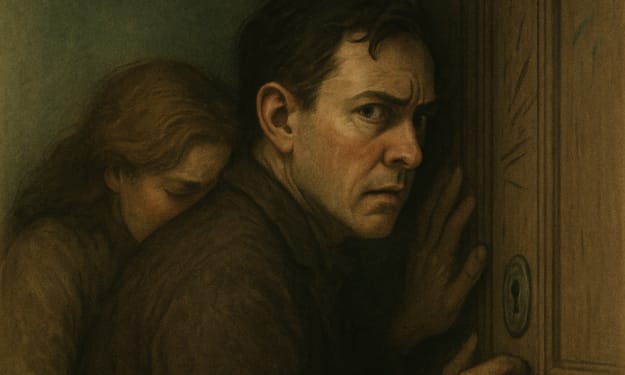
The rain was a steady, mournful rhythm against the windows, a soundtrack to the oppressive silence inside our small cottage. Three days. It had been three days since we’d buried my mother, Clara. Three days since her vibrant laughter, her comforting presence, had been reduced to a cold, sterile memory. The grief was a physical weight, pressing down on my chest, making every breath an effort. My wife, Sarah, sat across from me, her face pale and drawn. She hadn't cried much, not openly, but I could see the sorrow etched in the lines around her eyes, the way she clutched the steaming mug of tea, as if seeking warmth against an internal chill. She had loved my mother, truly loved her, and her quiet suffering was almost harder to bear than my own. A sudden, sharp rap echoed through the house, cutting through the rain and our unspoken grief. We both stiffened, our eyes meeting across the dimly lit room. It was late, past midnight. Who could it be? Another rap, louder this time, more insistent. I pushed myself up from the armchair. “I’ll get it,” I murmured, my voice raspy. “No!” Sarah’s voice was sharp, a sudden tremor in her tone. She stood up, her eyes wide, almost pleading. “Don’t, Daniel. Don’t open it.” I paused, surprised by her vehemence. “Sarah, it’s probably just a neighbor, or someone lost. It’s pouring outside.” “No,” she repeated, stepping towards me, her hand reaching out to grasp my arm. Her fingers were cold. “Please, just… don’t.” Before I could question her, a sound, faint but unmistakable, drifted from the front door. A voice. A voice that sent a jolt of ice through my veins, making the hairs on my arms stand on end. “Daniel? Are you there, my son? It’s your mother. Let me in, it’s so cold out here.” My blood ran cold. It was Mother’s voice. Her gentle, slightly reedy tone, the familiar way she elongated the ‘so’ in ‘so cold.’ Impossible. My mind screamed in protest. This had to be a cruel, sadistic prank. But who would do such a thing? I turned to Sarah, my face a mask of disbelief and dawning horror. “Sarah… did you hear that? It’s Mother! But… how?” Sarah’s grip on my arm tightened, her nails digging into my skin. Her eyes, usually so warm, were filled with a profound, terrifying dread. “Don’t open the door, Daniel!” she hissed, her voice barely a whisper, yet filled with an urgency that terrified me. “Please, for God’s sake, don’t!” Another series of knocks, more frantic now, accompanied by that voice, pleading, cajoling. “Daniel, darling, please. My old bones are freezing. Just a moment, let me come in. I need my son.” My heart was a war drum in my chest. Every fiber of my being yearned to rush to the door, to throw it open, to embrace the mother I had just buried. My grief-stricken mind wrestled with the horrifying reality. She was dead. We had stood by her grave just three days ago, watched the coffin lowered into the earth. “It’s not her, Daniel,” Sarah choked out, tears finally streaming down her face. “It can’t be. It’s… it’s something else. Something trying to get in.” Her words made a chilling kind of sense, even as my emotions fought against them. The raw, desperate need in that voice, the way it played on my deepest sorrow, felt predatory. But the resemblance was uncanny. Every inflection, every nuance, was exactly like Mother. The knocking escalated into a frantic pounding, rattling the doorframe. And the voice changed, subtly. The soft pleading took on a sharper edge, a hint of impatience, even anger. “Daniel! Are you going to leave your mother out in the storm? After all I’ve done for you? After all these years?” A shiver of genuine fear ran down my spine. Mother, for all her love, had never resorted to emotional manipulation, not like this. This was a twisted mimicry, a violation of her memory. “Who are you?” I yelled back, my voice trembling, cracking. “Leave us alone!” A silence fell, thick and unnerving, broken only by the relentless rain. My heart pounded so loudly I thought Sarah must hear it. Then, a low, guttural chuckle emanated from the other side of the door. It wasn't Mother’s laughter. It was something else. Something ancient and malevolent, devoid of humor, filled with contempt. And then the voice returned, but this time, it was a chilling, distorted parody of my mother’s voice, stretched and deepened, laced with a faint, gurgling sound, like water bubbling through mud. “You buried me, Daniel. You put me in the cold, dark ground. But I’m still here. And I need to come home.” The pounding on the door intensified, becoming violent, as if something heavy was slamming against it. The entire frame shuddered. Sarah let out a strangled cry, burying her face in my shoulder. I could feel her shaking uncontrollably. “It knows,” I whispered, my eyes fixed on the trembling wood of the door. “It knows we buried her.” “It’s not her, Daniel,” Sarah sobbed into my shirt. “It's using her… to get to us.” Suddenly, the pounding stopped. Another silence, even more terrifying than the last. Then, a scratching sound began, slow and deliberate, like long, sharp nails dragging across the wood, moving from the doorknob, upwards. And then, I heard it. A faint, wet sniffing sound from directly outside the keyhole, followed by a soft, almost inaudible sigh. Then, the voice again, a whisper now, right at the keyhole, raw and intimate, filled with a horrific intimacy that turned my stomach. “I can smell your fear, Daniel. And I can smell your grief. Such a heavy grief. It’s almost as heavy as the earth on my coffin.” I stumbled back, pulling Sarah with me, away from the door. My mind reeled. This wasn't some trick of sound or light. This was real. Something was out there. Something that had taken on my mother’s voice, her memories, to gain entry. Something that was preying on my sorrow. The scratching continued, now higher up the door, then lower, as if whatever was outside was circling, testing, searching for a weakness. A faint, earthy scent, like damp grave soil, began to seep through the cracks around the doorframe, mixing with the clean smell of rain. Sarah clung to me, her face buried against my chest. “What does it want?” she whimpered. The voice answered, a low, satisfied murmur from the other side of the door. “I want to be warm again, my son. And you are so warm. You held my hand when I was cold. Now, let me hold yours. Forever.” A chilling sound, like a wet, sucking noise, came from the keyhole, followed by a faint, clicking sound, as if something was attempting to turn the lock from the outside. Panic surged through me, cold and absolute. It wasn't just a voice. It was trying to get in. It was trying to claim me, just as it had claimed Mother’s voice. I dragged Sarah back, away from the door, towards the deepest part of the house, the small, enclosed pantry where we kept emergency supplies. We huddled there, in the oppressive darkness, listening to the rain, and to the faint, persistent scratching that continued at the front door. It went on and on, punctuated by the chilling whispers of a voice that was both familiar and utterly alien. I knew then, with a sickening certainty, that the grave had not held her. And now, the thing that had followed her back was patiently waiting, clawing at the door, to finally claim what it believed was its due. My mother's voice, transformed into a siren's call from the abyss. And the night was long. So very long.
By Noman Afridiabout a year ago in Horror