
Superstition: The Forgotten 80s Horror Movie That Really Wanted You Dead
A cursed house, a vengeful witch, and enough gruesome practical effects to make Carolco Pictures’ early days considerably bloodier than its later blockbusters

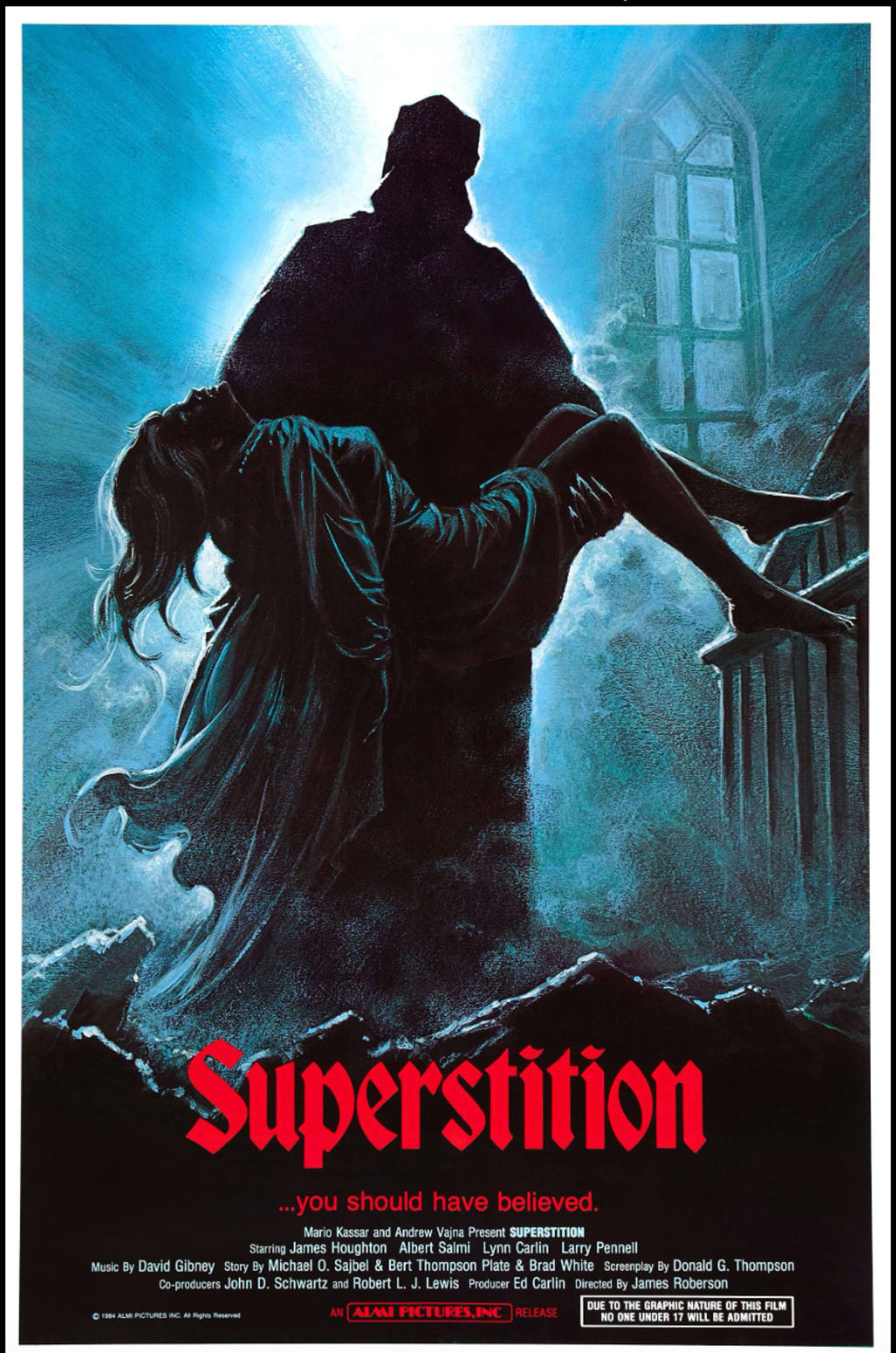
There is something wonderfully nasty about Superstition.
Released in 1982, James W. Roberson’s supernatural horror film is the kind of movie that seems to have been assembled from whatever the early 1980s horror boom had lying around. Take the haunted-house atmosphere of The Amityville Horror, throw in the increasingly elaborate body count of the slasher movie, add a little Italian-style gore, and drop the whole thing into a house with a very bad history.
The result is Superstition, occasionally marketed under the considerably more ominous title The Witch.
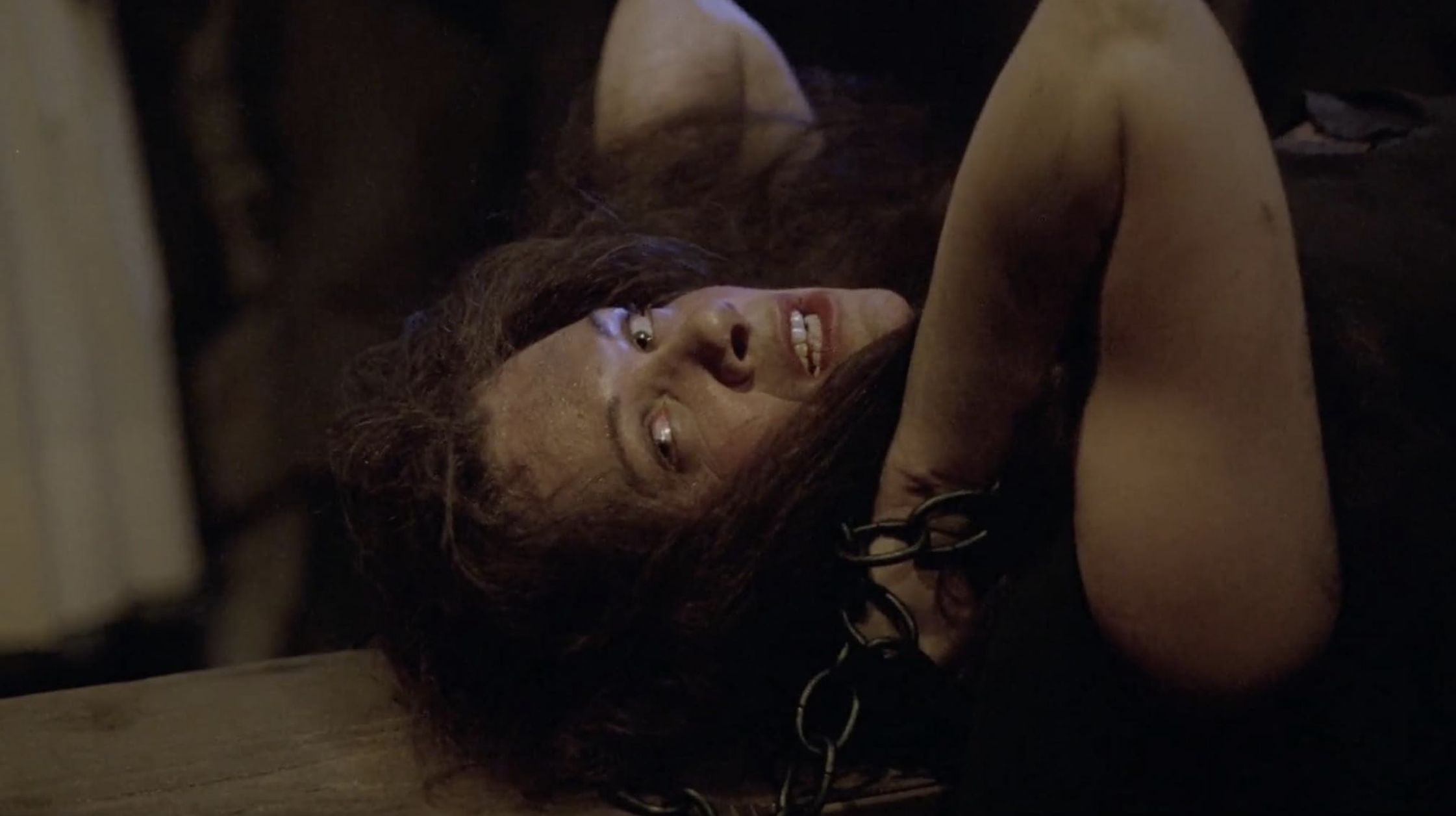
Starring James Houghton and Albert Salmi, the film revolves around a family moving into a church-owned estate built on ground carrying a particularly unpleasant history. Centuries earlier, a woman accused of witchcraft was executed on the property. Now, something has apparently decided that the modern occupants deserve to pay for it.
And this is not a ghost interested in knocking over a few chairs.
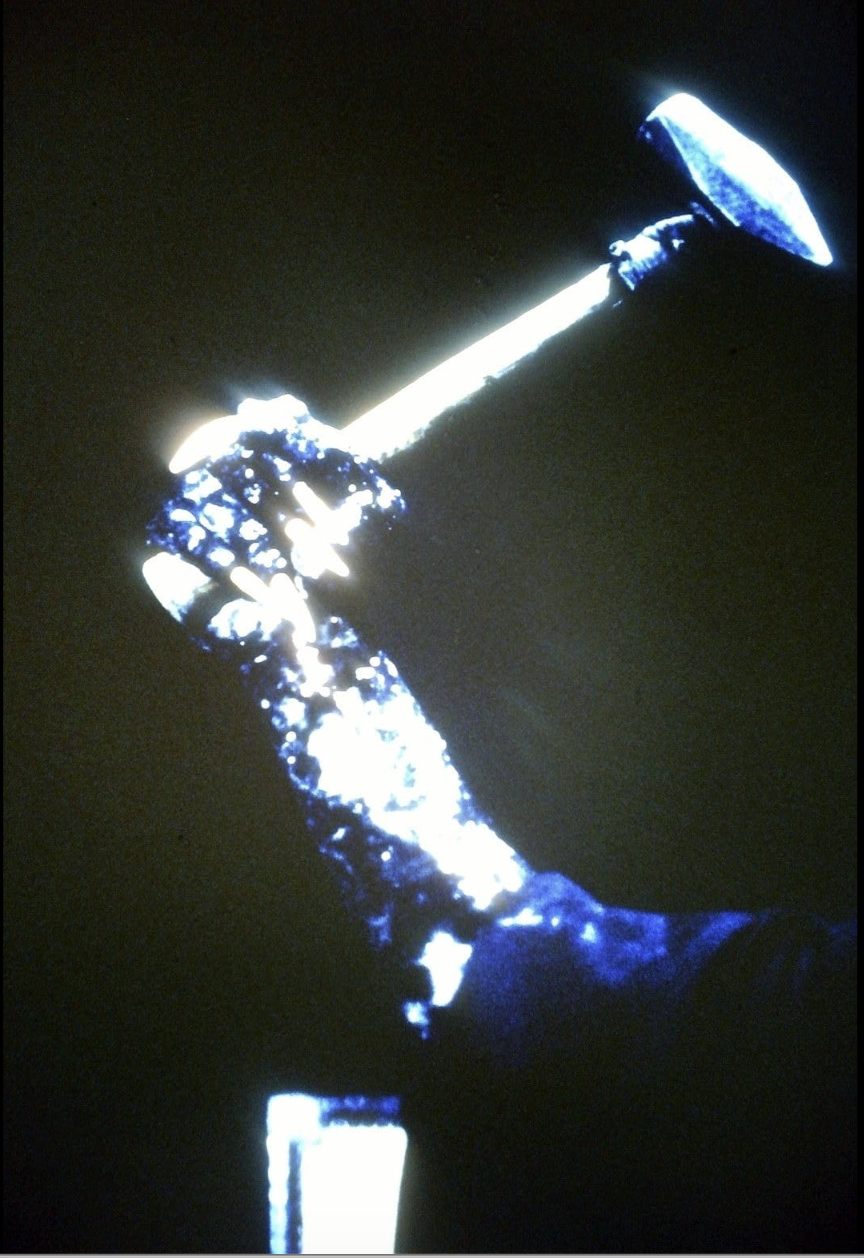
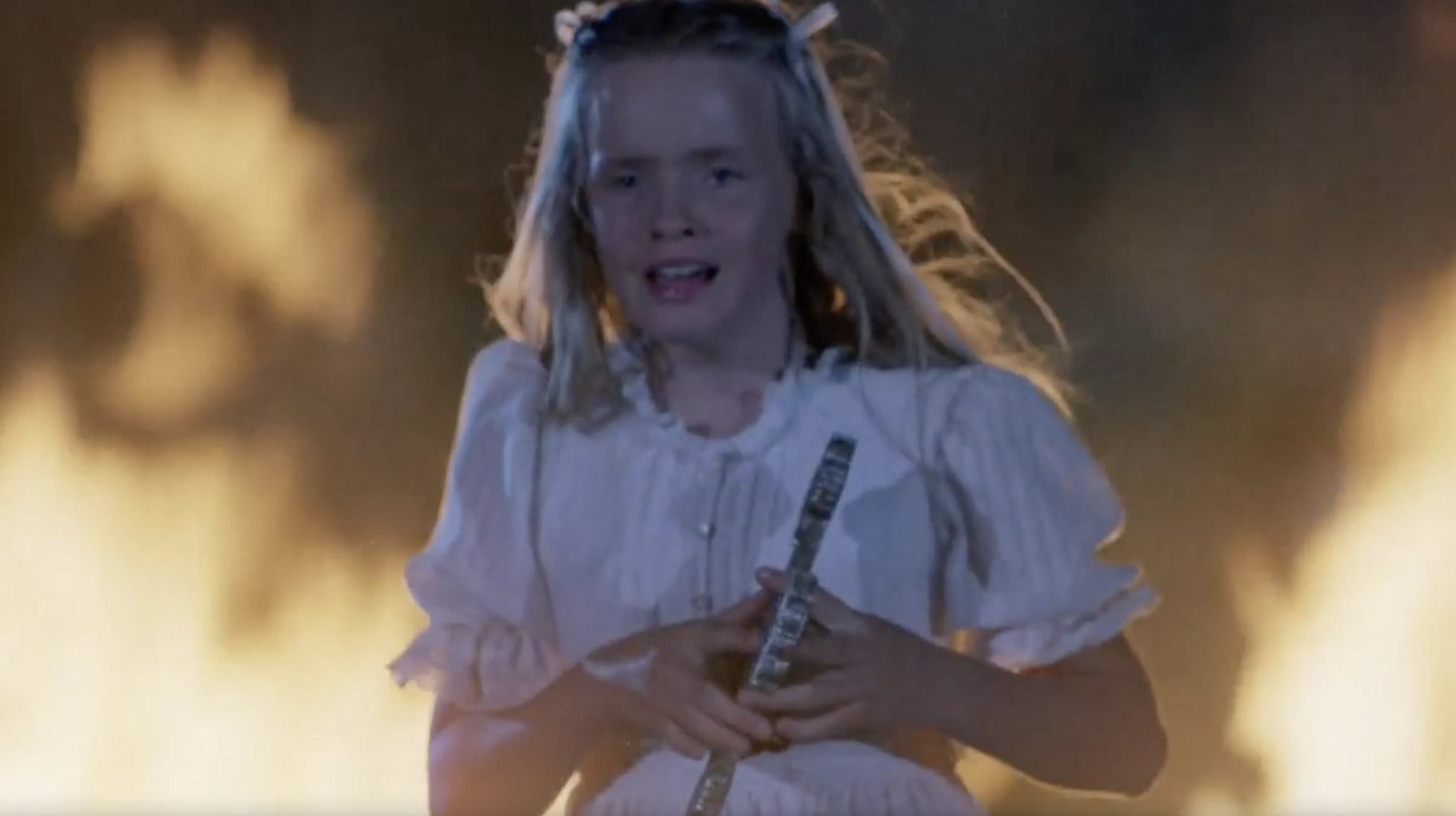
The supernatural presence, played by Elondra Sharack, leaves behind a trail of increasingly elaborate deaths. Microwave ovens, power tools, saw blades and other seemingly innocent pieces of modern technology become instruments of murder. Superstition takes the familiar haunted-house formula and gives it the sensibilities of a slasher movie.
It is not subtle.
It was never really trying to be.
And that may be part of its charm.
A Horror Movie Becomes a Calling Card
The origins of Superstition are almost as interesting as the movie itself.
The project began as a calling card for filmmakers Michael O. Sajbel, Brad White and Bret Thompson Plate, who had gained experience working on the low-budget productions of Charles B. Pierce. Rather than immediately attempting to finance an entire feature, the filmmakers produced a roughly ten-minute teaser designed to demonstrate what they could do.
The teaser reportedly drew heavily from the atmospheric nightmare of Dario Argento’s Suspiria, which makes perfect sense when looking at the finished film. Superstition is less interested in building a carefully constructed mythology than it is in creating an oppressive environment where something terrible could happen at any moment.
That short demonstration was enough to attract financing.
And the financier was a company that would soon become one of Hollywood’s biggest independent success stories.
Carolco Pictures provided the financing through international presales, with exploitation veteran Ed Carlin overseeing the production. Donald G. Thompson was brought in to work on the screenplay, expanding the original concept and helping shape it into a feature.
The production was hardly a smooth, carefully controlled studio operation. Sequences were reportedly added and reworked along the way, including lakeside flashbacks incorporated during post-production to increase the film’s supernatural and technological paranoia.
Carolco was already trying to establish itself in the international marketplace, and Superstition became part of that early push.
The company would eventually become synonymous with Arnold Schwarzenegger, Sylvester Stallone, Terminator 2 and enormous Hollywood budgets.
But before all that, Carolco was making movies like this.
The House From Hell
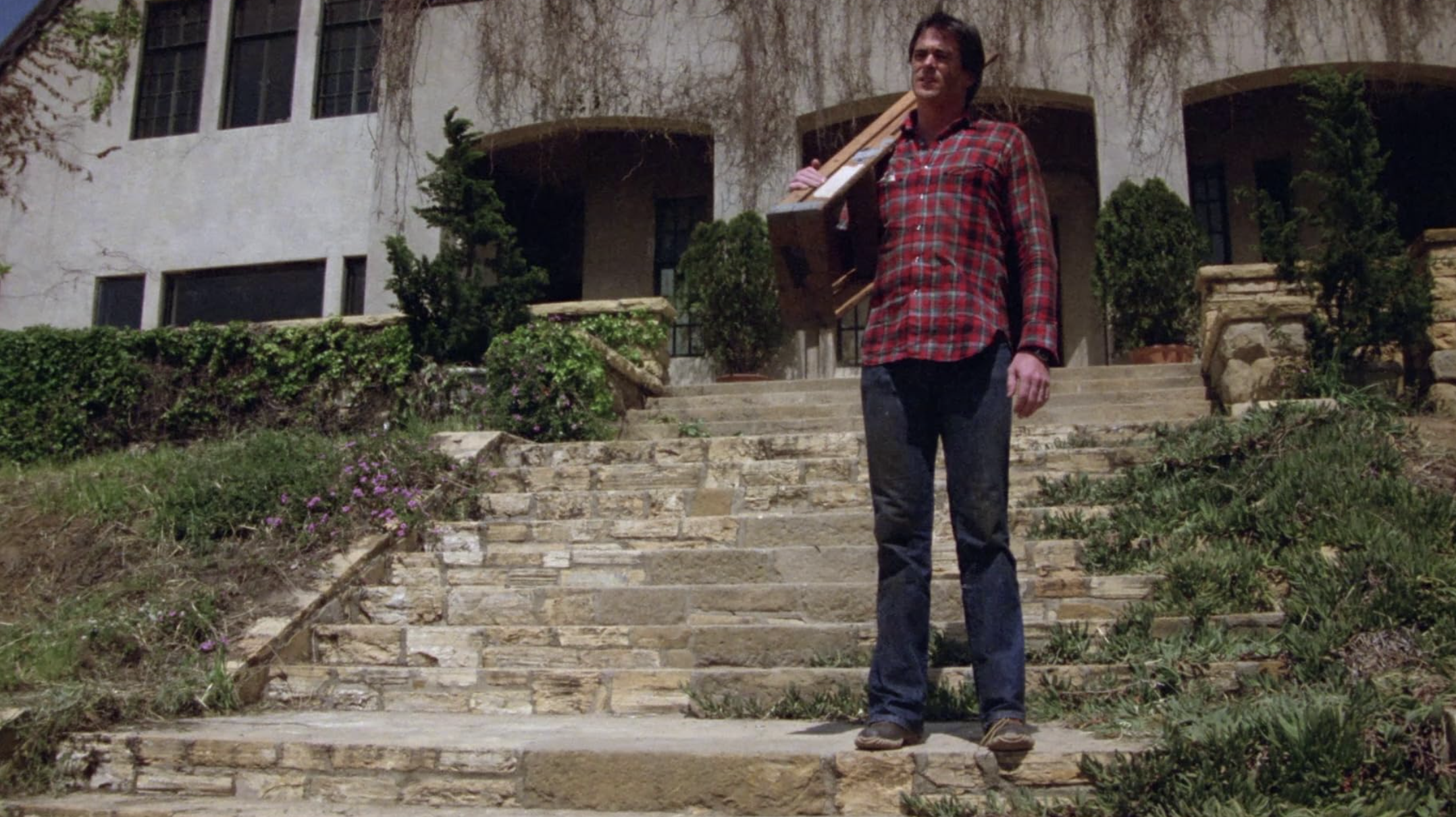
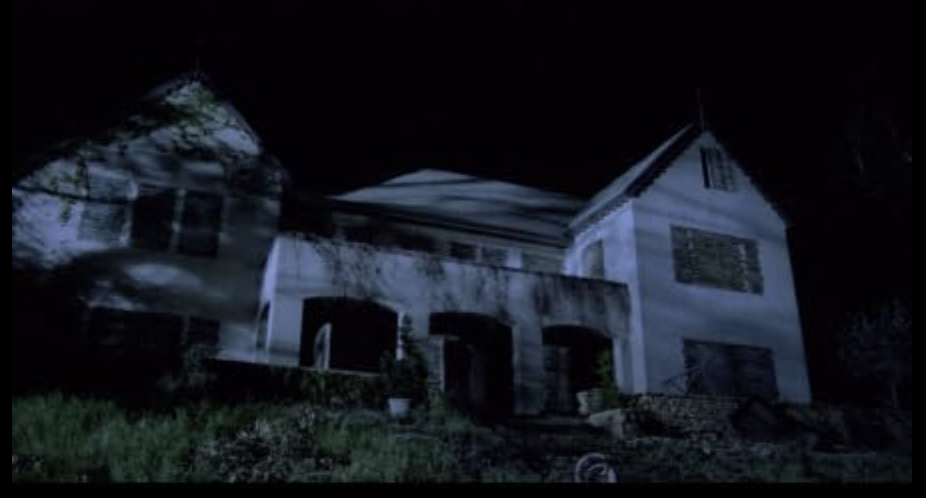
Filming began in 1981, with the Garbutt House in Silver Lake providing the primary location.
The concrete structure gave the production exactly the kind of imposing, fortress-like appearance it needed. Although the story was supposed to take place in New England, the location has an almost bunker-like quality that makes the house feel less like a home and more like a place designed specifically to trap its occupants.
And Superstition makes good use of it.
The film’s greatest asset is arguably its willingness to turn the environment itself into a weapon.
The production employed a collection of talented makeup and effects artists, including William Munns, while future effects heavyweights Steve LaPorte and David B. Miller were also involved.
This is where the movie starts to come alive.
Because while the characters aren’t exactly Shakespearean creations, the effects department clearly understood the assignment.
Superstition delivers the sort of practical carnage that was becoming increasingly important to low-budget horror in the early 1980s. There are microwave explosions, industrial machinery and gruesome encounters with saw blades, all staged with the kind of practical effects that remind you why this period remains so beloved by horror fans.
The movie may not always know what it wants its mythology to be.
But it knows how it wants its victims to die.
A Little Prestige in a Lot of Blood
One of the stranger elements of Superstition is the presence of Lynn Carlin.
Carlin was an Oscar-nominated actress, best known for her acclaimed work in Faces, and her appearance gives the film a little more professional credibility than its exploitation roots would normally suggest.
That was hardly unusual for 1980s genre movies.
Horror filmmakers regularly attempted to give their productions a touch of legitimacy by surrounding relatively unknown performers with recognizable veterans. Sometimes it worked. Sometimes it simply made the rest of the movie look even cheaper by comparison.
In Superstition, Carlin provides a reminder that this wasn’t simply a collection of unknown actors thrown into a haunted house.
There was an attempt to make the movie feel like something more substantial.
The gore, however, wasn’t going anywhere.
The Long Road to American Theaters
Superstition had a somewhat unusual release history.
Rather than immediately receiving a substantial American theatrical release, the film was pushed into international markets in 1982. It reportedly performed particularly well in markets such as Mexico City, demonstrating exactly why international presales were so important to companies like Carolco.
The American release would take considerably longer.
The film eventually reached East Coast theaters in 1985 through Almi Pictures, by which point the horror landscape had changed considerably. The slasher boom was already well underway, and audiences had been exposed to increasingly sophisticated and increasingly outrageous examples of the genre.
That probably didn’t help Superstition’s reputation.
It was arriving late to its own party.
Home video, however, proved to be considerably kinder.
Distributed on video by Lightning Video, the movie found the natural audience that theatrical distribution had largely failed to locate. Like so many low-budget horror films of the era, VHS gave Superstition something theaters never could: time.
People could discover it years after its original production.
And then there was Britain.
The Video Nasty Problem
Superstition also became caught up in Britain’s infamous “video nasty” panic.
The film appeared on the notorious Section 3 list, placing it within the larger cultural hysteria surrounding violent horror movies on home video during the early 1980s.
The British video-nasty controversy has become one of the defining pieces of horror history from the period. Movies that might otherwise have disappeared into obscurity suddenly became forbidden objects. Being associated with the list could give an otherwise obscure horror movie an entirely new afterlife.
For Superstition, that association helped cement its reputation as something dangerous and disreputable.
Ironically, that’s exactly the sort of reputation that can keep a movie alive.
The film eventually moved through various home-video releases and, decades later, received upgraded attention from specialty labels including Scream Factory and Imprint Films.
The technology changed.
The movie didn’t.
Critics Were Not Impressed
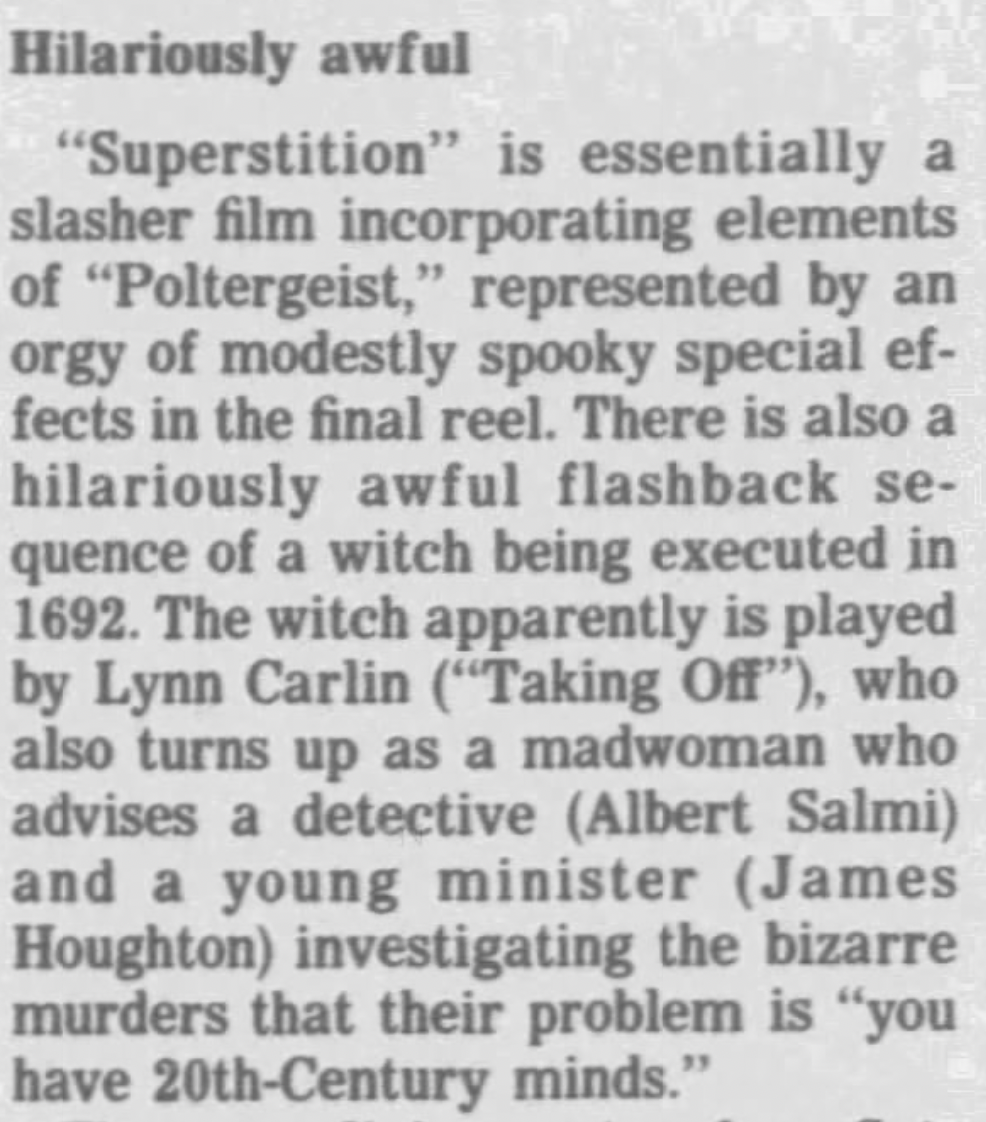
When critics encountered Superstition, they weren’t exactly rushing to defend it.
The complaints were predictable.
The screenplay was considered derivative. The pacing was frequently criticized as sluggish. The story was accused of wandering between supernatural mystery and body-count horror without completely committing to either.
Some critics essentially viewed it as a splatter movie wearing the clothes of a haunted-house thriller.
And, honestly, that’s not an entirely unfair description.
The narrative can feel like a ragged collection of set pieces rather than a carefully constructed story. Characters appear, disappear and occasionally make decisions that seem designed primarily to move them toward the next death scene.
But that is also where the movie’s reputation has changed over time.
Modern horror audiences are often more forgiving of movies whose practical effects are better than their screenplays.
Superstition is one of those movies.
Its story hasn’t suddenly become brilliant.
Its characters haven’t magically become three-dimensional.
But those kills still work.
When the House Becomes the Star
The best way to appreciate Superstition may be to stop expecting it to be something it isn’t.
This isn’t The Shining.
It isn’t The Amityville Horror.
And it certainly isn’t Suspiria.
Instead, it is an artifact of the moment when supernatural horror and the slasher movie were beginning to overlap.
The haunted house gives the filmmakers an atmosphere.
The slasher formula gives them victims.
The practical-effects department gives them increasingly inventive ways to dispose of those victims.
Put all three together and you get a movie that is often more memorable for individual images than for its overall narrative.
There is something almost mechanical about the way Superstition works.
Set up the house.
Establish the curse.
Introduce another character.
Find an interesting piece of machinery.
Kill somebody with it.
Repeat.
It isn’t elegant.
But it is effective in precisely the way exploitation cinema is supposed to be effective.
From Superstition to Carolco
There is also something fascinating about watching Superstition today because of what Carolco Pictures eventually became.
The company that helped finance this grim little supernatural slasher would go on to become one of the most powerful independent production companies in Hollywood.
First Blood was already helping put the company on the map around the time Superstition was being marketed. Eventually came the Rambo sequels, Terminator 2: Judgment Day, Total Recall, Basic Instinct and a string of enormous productions.
Looking back, Superstition feels like a relic from another Carolco entirely.
There are no massive action stars.
No giant explosions.
No blockbuster budgets.
Just a creepy house, a witch’s curse and a group of filmmakers trying to turn a ten-minute teaser into a feature.
And yet, that’s precisely what makes the movie historically interesting.
Before Carolco became a Hollywood powerhouse, it was willing to gamble on scrappy genre productions like this.
A Mean Little Time Capsule
Today, Superstition occupies the comfortable but increasingly crowded territory of cult horror.
It isn’t a lost masterpiece.
It isn’t a neglected classic that critics somehow completely misunderstood.
It is something arguably more interesting: a genuinely weird snapshot of how American horror was being made at the beginning of the 1980s.
It has the haunted-house paranoia of the previous decade, the increasingly graphic sensibilities of the slasher boom, the influence of European horror and the anything-goes attitude of independent exploitation filmmaking.
Most importantly, it has the practical gore.
Lots of it.
The characters may be thin. The plot may occasionally collapse under its own weight. The supernatural mythology doesn’t always survive close examination.
But Superstition doesn’t really care.
It wants to put you inside a bad house and convince you that absolutely nothing in it is safe.
For horror collectors, that’s enough.
In an era when independent filmmakers could sell a movie internationally before American audiences had even heard of it, Superstition represents a fascinating crossroads between exploitation cinema and the coming blockbuster age.
Carolco would eventually make movies that cost tens of millions of dollars.
But before the company was making Hollywood history, it was helping make movies about haunted houses where people get killed by saw blades.
That’s a pretty good reminder that every Hollywood empire has to start somewhere.
About the Creator
Movies of the 80s
We love the 1980s. Everything on this page is all about movies of the 1980s. Starting in 1980 and working our way the decade, we are preserving the stories and movies of the greatest decade, the 80s. https://www.youtube.com/@Moviesofthe80s
Enjoyed the story? Support the Creator.
Subscribe for free to receive all their stories in your feed.
Comments
There are no comments for this story
Be the first to respond and start the conversation.