
Still Hiding
The moving truck pulled away just as the sun dipped behind the pines

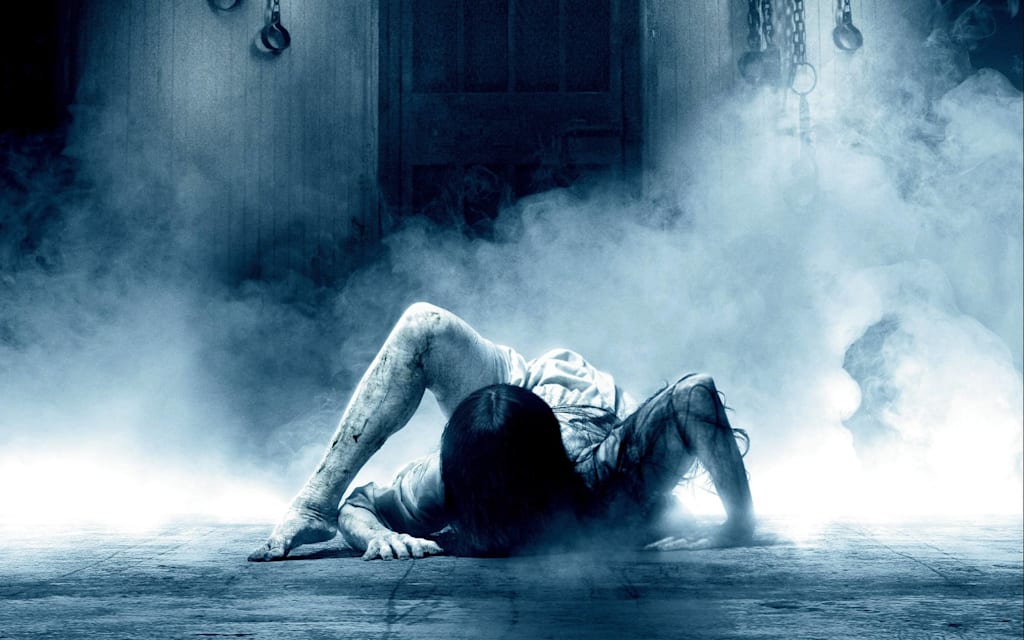
The moving truck pulled away just as the sun dipped behind the pines, and Mira Calloway stood alone in the driveway of her family's new home, suitcase in hand, staring up at a house that seemed to be staring right back.
It wasn't supposed to be like this. Her mother had promised a fresh start after the divorce — a quiet town, a cheaper house, a chance to breathe. What she hadn't promised was a house with a crooked weather vane, ivy choking the porch railings, and windows that looked like they'd been watching the street long before Mira was born.
"Charming, right?" her mother called from the doorway, voice falsely bright. "Victorian. A hundred and ten years old."
"Charming," Mira repeated flatly, and dragged her suitcase inside.
The first few days passed in a blur of cardboard boxes and bubble wrap. Mira, seventeen and friendless in a town she hadn't chosen, spent most of her time exploring the house's odd corners — a pantry with a hidden shelf, a window seat that creaked when you sat on it, a narrow staircase that led to an attic nobody had bothered to clean out.
It was on the fifth day, while hauling a box of winter clothes upstairs, that she found it.
The toy lay half-buried beneath a loose floorboard in the attic, as if it had been hidden — or had hidden itself. A wooden train, dark green paint chipped down to raw grain, one wheel snapped clean off. Something about it made Mira's chest tighten, though she couldn't say why. She picked it up, and the temperature in the attic seemed to drop three degrees.
That night, she heard the wheels.
A faint, rhythmic clack-clack-clack, rolling across the floorboards above her room. She told herself it was the house settling. Old houses did that — sighed and groaned like tired old men. But the sound didn't fade. It circled, slow and deliberate, like something pacing.
By the second week, Mira had a name for the feeling that lived in her house: Eli. She didn't know where the name came from. It simply arrived in her mind one evening, fully formed, the way names do when you've heard them whispered just below the edge of hearing.
She might have dismissed all of it — the cold spots, the sound of small feet on the stairs, the toy train that kept appearing on her windowsill no matter how many times she put it away — if not for Jonah.
Jonah Reyes lived three houses down, and he found Mira on a Tuesday afternoon sitting on her porch steps with the broken train cradled in her hands like something wounded.
"That's an antique," he said, dropping his backpack beside her without asking permission, the easy confidence of someone who'd never once worried about being unwelcome. "Carver Wilkins toy company. They stopped making those around 1914."
"How do you know that?"
"My grandfather collects this stuff. Sells it, mostly. I help him sometimes." He turned the train over in his hands, careful, almost reverent. "Where'd you find it?"
"Attic. Under the floor."
Something shifted in his expression — quick, then gone. "Hidden, huh."
"You know something."
He hesitated. Then: "There's a story about this house. My grandfather told it to me once, when I was a kid, to scare me into behaving. About a boy who lived here. Eli Wren."
Mira's stomach dropped at the name — her name, the one that had arrived unbidden in her thoughts.
"Eli got sick the winter of 1913," Jonah continued. "Scarlet fever, supposedly. But the story goes that his parents wouldn't let anyone see him — not even a doctor, near the end. Some people said they were ashamed of something. Others said worse." He shrugged, but his eyes didn't match the casualness. "He died in that attic. They found his toys hidden all over the house afterward, like he'd been squirreling them away. Hiding them from someone."
"Hiding them from who?"
"Nobody knows. That's the story."
Mira looked down at the train in her lap, its broken wheel, its careful, deliberate hiding place beneath the floorboard. Hiding them from someone.
That night, for the first time, she heard a second sound layered beneath the wheels — something heavier. Footsteps, adult-sized, moving with a slow and terrible patience down the attic stairs.
Over the following weeks, Mira and Jonah became something neither of them quite named out loud. They spent afternoons in the library hunting through town archive records, evenings on her porch comparing notes, and somewhere in between, Mira found herself laughing — really laughing — for the first time since the divorce. Jonah had a way of making the impossible feel survivable, of turning her fear into something they were facing together rather than something she carried alone.
"You like him," her mother said one evening, not really asking.
"It's not like that," Mira lied, badly, and her mother only smiled into her coffee.
But the house did not share her happiness. The cold spots spread. The train moved on its own more frequently now, always toward the attic stairs, always pointing up, like a small green compass with only one direction. And one night, Mira woke to find words fogged onto her bedroom window from the inside: HE'S COMING BACK.
She and Jonah found the truth in a yellowed newspaper clipping buried in the town archive's microfiche — a brief, clinical obituary notice for Eli Wren, aged nine, dated February 1913. But it was the follow-up article, three months later, that made Mira's hands go cold. The Wren family had left town abruptly that spring. The house had changed hands four times in the following decade — an unusually high turnover for a property that, according to records, was never anything but "well-maintained."
"Four families in ten years," Jonah murmured. "Something scared every single one of them out."
The attic held the answer, though Mira would later wish it hadn't. Beneath a second loose floorboard — this one under where Eli's bed must have stood — they found a small tin box. Inside: a child's diary, water-stained, the handwriting cramped and frightened in its later pages.
Father says I must stay hidden when He visits, one entry read. Father says if He finds my toys He will know I have been good, and good boys do not need fixing.
The final entry, dated the week of Eli's death, was barely legible: I have hidden everything I love. He will not find them. He will not find me either, if I am very still.
Mira understood, with a horror that settled into her bones like winter, that Eli Wren had not died of scarlet fever. He had died hiding from something — or someone — inside his own house, and his fear had outlasted his small body by over a century.
The climax came on the night of the first frost, when Mira woke to the attic door standing open and the temperature in her room plunging so fast her breath turned visible in the dark. The footsteps were already on the stairs — heavy, unhurried, final.
She ran. Not away, but up — toward the attic, toward the small cold presence she now understood was not her tormentor but a child still hiding, still terrified, still waiting for a danger that had been dead for a hundred years.
Jonah found her there minutes later, having seen her bedroom light flicker wild through his window and sprinted the three houses between them without his shoes. Together, in the attic's freezing dark, they did the only thing that made any sense: Mira knelt by the loose floorboard and spoke, gently, into air that held no visible answer.
"He's not coming, Eli. He's gone. He's been gone a long, long time. You can stop hiding now."
The cold did not break all at once. It thinned, slowly, like fog lifting off a lake — and in its place came something that felt, absurdly, like relief. The wooden train on the windowsill gave one last soft clack, rolled to the edge, and stopped. It never moved again.
Spring came gentler than Mira expected. The house warmed in a way that had nothing to do with the season — no more cold spots, no more footsteps on the stairs, no more fog-words on glass. She kept the little train on her desk anyway, mended now, a new wheel carved by Jonah's grandfather as a gift "for the house that finally got some peace."
She and Jonah were sitting on the porch the evening she finally let herself say it out loud — that she loved him, that the last terrifying, beautiful months had taught her that some hauntings end not with violence but with someone finally being heard.
"I have a theory," Jonah said, lacing his fingers through hers like it was something he'd practiced. "I think Eli wasn't haunting the house because he was angry. I think he just needed someone to find the things he'd hidden. To know he existed."
"And now he can rest."
"Now he can rest." He smiled, and added, almost too quietly to catch: "Funny thing about old houses. They don't let go of people who were never let go of in the first place."
Mira leaned her head against his shoulder and watched the last color drain gold from the sky, and for the first time since she'd dragged her suitcase up that crooked driveway, the house behind her felt less like something watching — and more like something, finally, at peace.
But late that night, long after Jonah had gone home and the lights were off and the house had settled into the kind of silence that follows a long exhale, Mira's phone buzzed once on her nightstand.
One new photo, sent from an unknown number, timestamp glitched to read 02/14/1913.
It was a picture of her attic. And in the corner of the frame, half-hidden behind a stack of boxes, stood a small boy, smiling, holding a wooden train with both its wheels intact.
She never figured out who sent it.
She never deleted it, either.
About the Creator
write with shan
🌍 Discovering the world through words.
👻 Horror & Mystery Stories
🔬 Science & History Articles
📈 Trading Knowledge
🎬 Movie Reviews & Analysis
New content every week.
Enjoyed the story? Support the Creator.
Subscribe for free to receive all their stories in your feed.
Comments
There are no comments for this story
Be the first to respond and start the conversation.