
"Phantoms" -- if Dean Koontz had written "It"
The Book Report: "Phantoms" by Dean Koontz (1983)

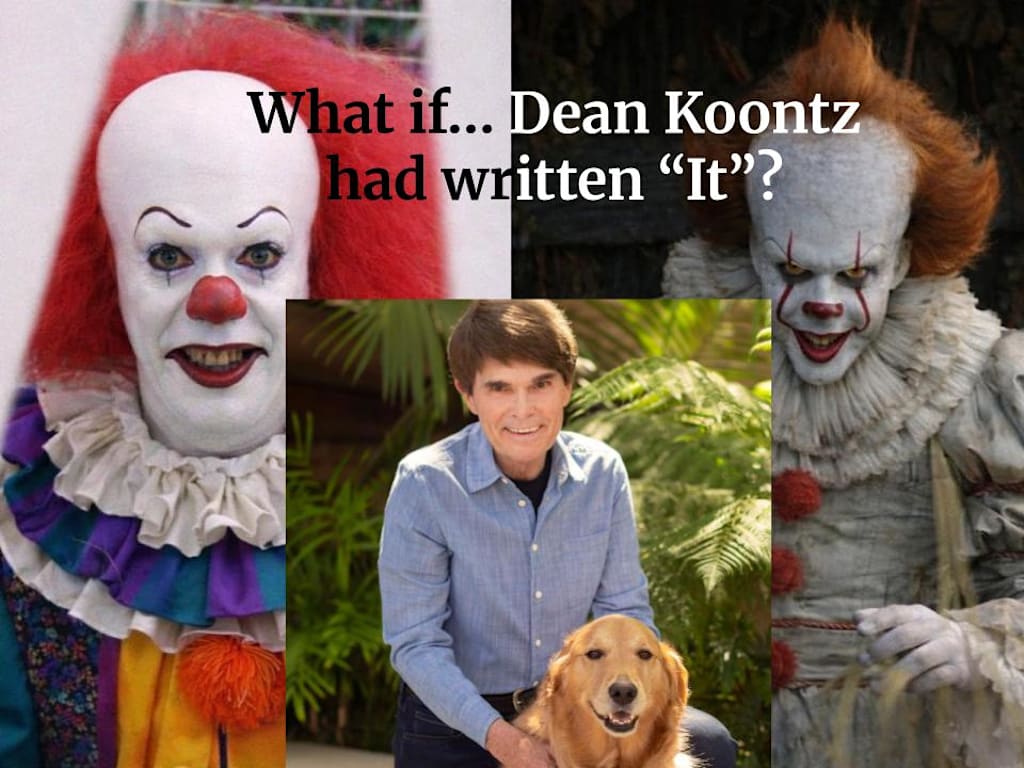
This article contains massive spoilers! If you are interested in Dean Koontz’s works (especially “Phantoms”), or if you really like “It” by Stephen King, please read each book before reading this article.
In relating the narrative context of the story, there are references made to physical and sexual violence. Reader Discretion is Advised.
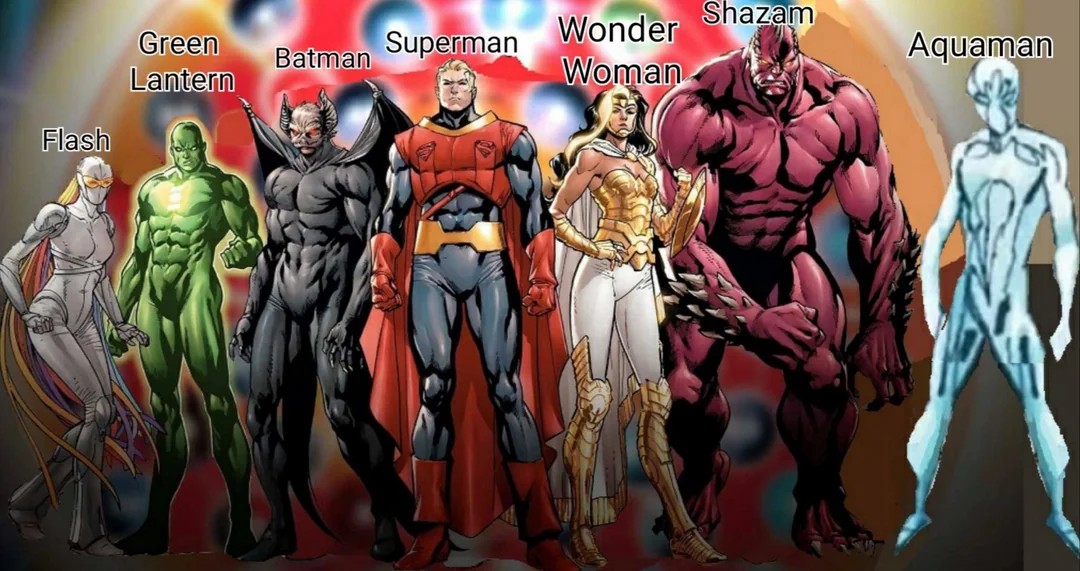
In 2001, DC Comics published a unique comic run of “What If?” stories, rarely talked about nowadays. “What If?” stories are far from rare--in fact, Marvel Comics made a full series out of the question, spanning about 200 issues over fifty years and adapted into an animated television show. “What If?” is the great Question Of The Ages, both from other people and from our own wild dreaming. “What If Goku and Superman fought?” “What If I miss the bus this morning and I’m late to work?” “What If I didn’t drop out of music classes when I was younger?” “What If I pluck up the courage to ask her out?” “What If Superman and Goku fought?”
The list goes on and on.
DC asked a bold question themselves: “What If Stan Lee had created our Superhero roster? What would Superman look like; what would Batman look like? What would a Stan Lee Justice League be--or a Stan Lee Crisis?” And so, for 13 issues, DC ran the “Just Imagine…” line (since “What If?” was taken by Marvel), answering that very question.
The quality of the comics is not the point of my bringing it up (in large part because, although I saw it once at Harrison’s Comics, I haven’t gotten my hands on the omnibus edition of “Just Imagine…” yet and I still haven’t read them!), but the scenario is prescient:
What If--or, to avoid copyright issues, Just Imagine if--one famous author wrote the same scenario or the same villain as another?
“Phantoms” is What If Dean Koontz wrote Stephen King’s “It,” two years earlier than that book came out. It's also the book that forever cursed Dean Koontz’s legacy.
In the world of 20th and 21st century horror authors, many stand out. The most obvious is Stephen King, and hot on his heels, most people would automatically blurt out “Dean Koontz” as second-in-command. The popular assumption is that, in terms of horror fiction, King is King and Koontz is King-if-he-wasn’t-as-good. You might get a few people who remember to mention Peter Straub in the mix; maybe more that mention Robert Bloch and Richard Matheson; and more recently a glut who would light up with mentioning Joe Hill and Grady Hendrix. But, always at the top--and deservedly so--is Stephen King, authoring Pennywises and Shining Hotels and Crazy Scenarios Galore.
And, in the public eye, always in comparison but never overreaching King, sits Dean Koontz, whose books are astonishingly many--but who actually knows them? Who reads them? Who can tell you something about them, aside from “didn’t he write Odd Thomas?”
Since 1968, Dean R. Koontz has authored over 100 books, originally over a variety of pen names. Mr. Koontz’s output is fast and consistent, aiming for five or six pages of finished work in ten-hour days. In terms of word count, I’d estimate that’s somewhere between 3- and 5,000 words a day, which is no small feat for an author to do one day, let alone at a consistent pace. From 1968 through 1975--only 7 years--Koontz wrote a full 30 novels, over two-thirds of which are science-fiction books you might get on the dime-store rack: interesting, and a way for an author to cut his teeth on plot without necessarily building the most awe-inspiring character arcs. Almost all of these books were quietly allowed to go out of print, and now run high prices in second-hand bookseller sites as intriguing curiosities.
From 1973 or so until 1980, over the course of about 10 books--that are much more readily found in circulation--Mr. Koontz wrote more straight-suspense, occasionally including psychic abilities or a supercomputer, but more focusing on the relation of protagonist and antagonist, and the threatening cat-and-mouse hunt.
From 1980 onwards, Dean Koontz has written over 60 more books, with elements of science-fiction and horror and satire and fantasy--and all of them comfortably labeled “Suspense” with terrific (though varying) results.
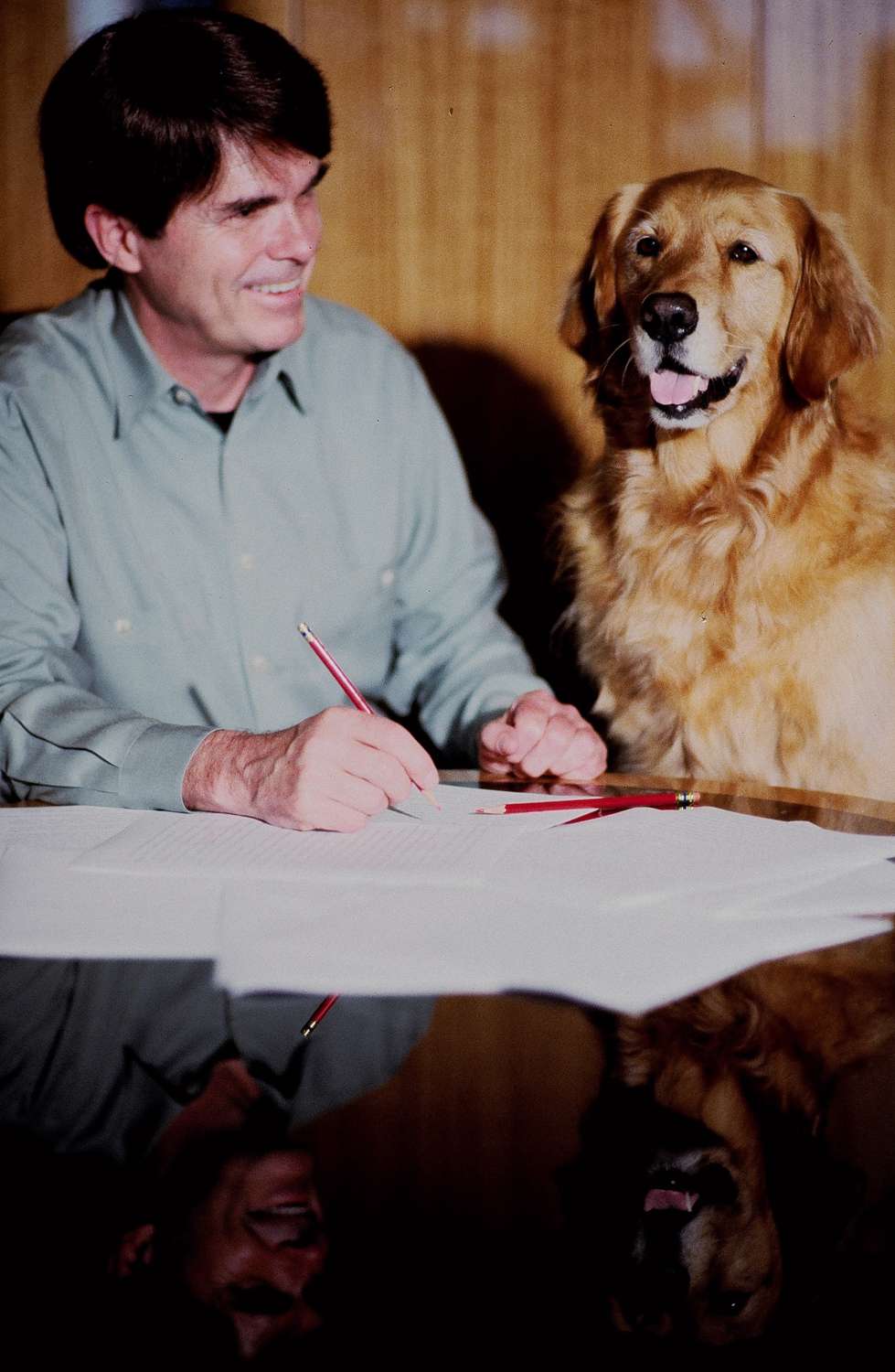
Koontz, like King, has his comfortable plot elements to fall back on. Dogs are a huge part of Koontz’s life; his dog Trixie directly inspired three books, accompanied Koontz on the author’s photo of dozens of his books, and is likely why dogs appear as trusted companions (and sometimes nasty adversaries) in a plethora of his work. Scientific meddling, procedural analyses, serial killers, innocent children involved in dangerous peril, antagonists who are primarily murderous but secondarily sexual predators, outcast heroes who aren’t physically strong, distrust of and shady branches of government, and an uncertainly tentative hopefulness in religion seem to populate Koontz’s worlds in great sweeping arcs. Many readers will point to newer works with glumness, reciting the same story beats they’ve seen and talking about how “back in the 70s and 80s he was really good, but--”
(That sounds a lot like King, who until around 2015 enjoyed a healthy dose of “man his work used to be good” as well!)
For my part, I am a newer Koontz reader; I’ve liked everything I’ve read, to varying degrees. I have about 50 of his books but have only read 7--I started with “Fear Nothing” and “Seize the Night” which were wild fun, moved back in time to some of the 70s suspenses (“Shattered,” “Night Chills,” “The Face of Fear,” “The Vision,” which I liked more often than I didn’t), and now “Phantoms.” Yet to my right I can see a stack of fifteen or so 2000s books from him, all patiently waiting their turn, and when I get to them, I may have a sequel to write detailing in better clarity if there’s truth about cyclical burnout in being a constant reader.
What I’ve found, more than anything, is that Dean Koontz is a very entertaining writer who prefers action in stories over character-writing. That’s perfectly fine, and I sort of categorize it in the same loving vein as authors of long-past Penny Dreadfuls and 1930s Pulp Adventures. I’m not expecting to be blown away or moved to tears: I know I’m in for a great premise and a lot of fun set-pieces, and Koontz hasn’t let me down yet with that assumption.
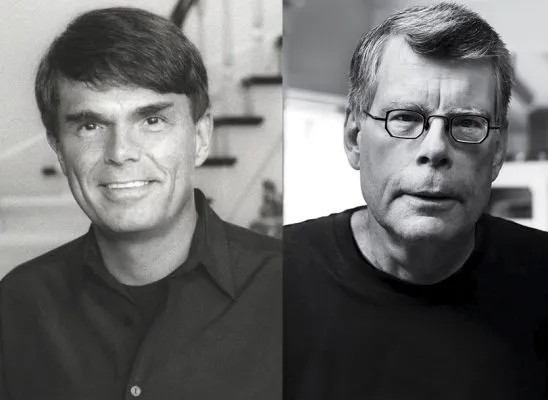
With all that history said: why is he perpetually in King’s shadow? King has interesting scenarios and intensive character arcs; Koontz has interesting scenarios and intensive narrative arcs. The way they’re written is fundamentally different-focused, and Koontz is usually far more grounded in some semblance of reality than the fantasy-horror realm of King. Yes, they both have more books than you can shake a stick at; they’re both working authors with over five decades’ experience; white guys; married; big smiles on their author photos; from the 1940s; their last name is a powerful one-syllable-sharp K____. So why is one so intertwined with the other, when they really don’t have as much overlap as you’d anticipate from public perception?
“Phantoms.”
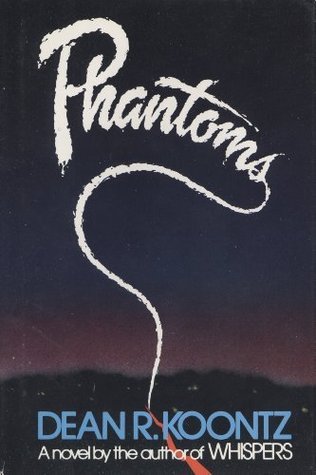
“Phantoms” is one of Koontz’s earlier-to-middle-period novels; the 46th he wrote. By this time, Koontz’s books were known to be tight-paced thrillers, moving out of harder science-fiction into the realm of light super-realism; away from sentient machines and into psychic abilities, though still with the mild alien invasion once. While 1979’s “The Key to Midnight” helped launch him into prominence, it was 1980’s “Whispers” that catapulted him into the bestselling forefront.
“Whispers,” like countless Dean Koontz novels, follows a woman and a policeman falling in love and fighting back against a bizarre serial killer who threatens sometimes sexual and mostly physical violence. Tightly bound, suspenseful, and uniquely strange, “Whispers” is emblematic of the powers that Dean Koontz has--and, as his publisher said to him after it was written, only whetted the public appetite for horror, not semi-grounded strange suspense. Despite protesting, Koontz eventually wrote “Phantoms,” released in 1983, and everything changed.
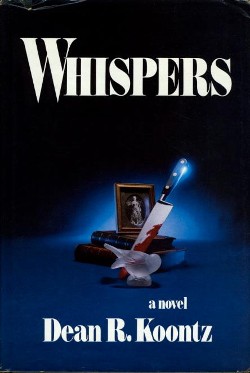
COMPLETE PLOT SYNOPSIS--INCLUDES MASSIVE SPOILERS! Seriously, this is a great book with a great twist, read it FIRST before reading this:
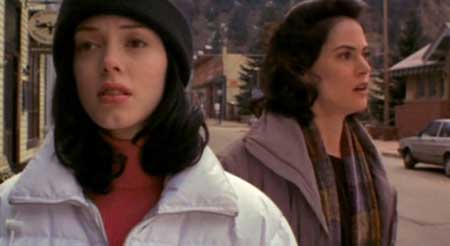
“Phantoms” follows two sisters returning to the town of Snowfield, up in the mountains of California near Santa Mira. Our main heroine is Jenny, Snowfield’s doctor, returning to town after an absence with her teenage sister Lisa, after the untimely death of their parents and Jenny’s subsequent taking-over of custody. Despite not being completely familiar with one another, the two young women get along, and a minor subplot revolves around whether or not Jenny will be accepted by Lisa, since Jenny originally left home under a terribly scandalous circumstance. (The subplot is wrapped up very neatly after being mentioned and eluded to and danced around and finally hey no everything’s fine, okay back to unfathomable horrors--)
They get back to town to discover it’s quiet.
Very quiet, in fact.
Dead quiet.
They quickly find Jenny’s housekeeper on the floor of the kitchen, sprawled out with hideous bruising over literally every inch of her skin. Jenny, being a doctor, determines that there might be a plague in town, and self-quarantines with Lisa, determining not to leave Snowfield until they know they’re clean. (Jenny would go on to do great things in the COVID-19 years, with that attitude.) Their phone is out, and they go over to a neighbor’s house to try their phone--but the neighboring family is gone, dad, mom, and children; seemingly in the middle of their supper. The phone is likewise dead. Going to a business down the street, they have to go through the alleyway and get the creeps that something is watching them in the dark. Going into the kitchen--
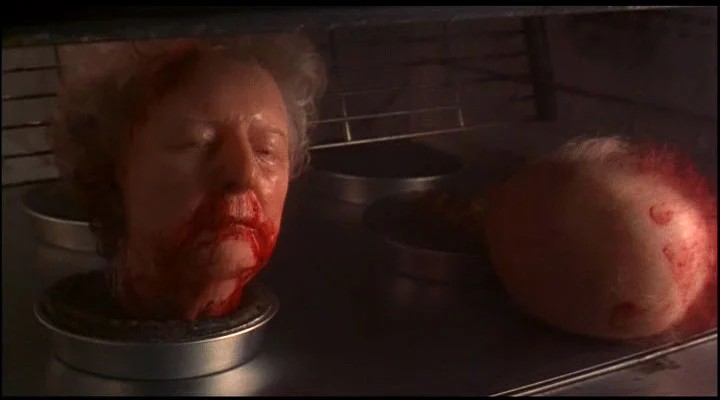
OH MY GOD that’s some heads in the oven. And cut-off hands, still holding a rolling pin of dough.
Things being horrifically wrong, they rush back to the police station (where our cold-open showed the Sheriff on-duty being surprised by something appearing out of thin air as distant screams envelop the town), and the phone actually works! They get a call through to the Santa Mira police.
Now, the Santa Mira police are also dealing with something. They have Fletcher Kale--yeah, that’s right, THE Fletcher Kale--in custody to go over how his wife and son died. Now, we all know that Fletcher Kale is one of those sleek, slimy, sociopathic types, who has an inflated sense of self but somehow manages to get away with anything. But by gum! Our great sheriff, Bryce Hammond, is not going to let that stand! And as a result, he manages to catch Fletcher Kale out in a big lie; turns out this very obviously evil man did in fact kill his kid! And now he’s going to jail for a long time.
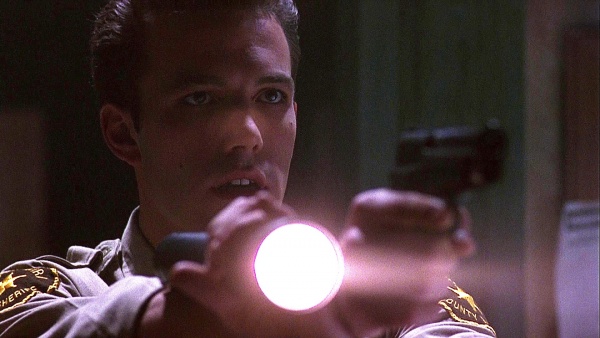
With that vignette out of the way, and with assurances that we definitely won’t see Fletcher Kale, that most minor of characters, again throughout the rest of the book, interrupting the great tension and pace of the plot, Bryce picks up the phone and is alerted to the disappearances of Snowfield. He assembles a team of some of the best deputies he has!
We have his second in command: Tal Whitman. Tal is big, black, and no nonsense; he’s the most down to earth, tough, heart of gold guy!
We also have Gordy, a deputy who is afraid to fire his gun, and is built like a professional linebacker; another man with the heart of gold! He wants to be a vet when he grows up, or at least when he grows out of the daydream of being a police officer, which he did to spite his parents.
Accompanying Gordy we have Jake Johnson! Jake is––somebody. I sort of don’t know who Jake is. The only info we get is that his dad was a police officer, and he followed in his footsteps. Although later on, we learned that he’s apparently a survivalist type! To the point of burying guns and money under the floorboards of his house, and having a little cabin for himself up in the mountains, and also having a cave in the mountains as his real backup plan, which definitely won’t come into play later!
We also also have Frank Autry, a veteran of war--and the police force--who is our diminutive no-nonsense gentleman! Tough as nails, ultra serious, the perfect man to have in your corner!
Rounding out our sextet of cops, we have the one and only Stu Wargle. Stu absolutely sucks. Stu is hated by everybody and is not a polite dude; he’s abrasive, whiny, out of shape, a holdover from the last police-chief, lazy, potentially abusive to criminals, and most importantly, he not only doesn’t have an imagination; the only imagination he has is for sexual predator talk towards women of any kind! Does that include the doctor that we are following in Snowfield? Yes! Does that include the dead bodies that we find in Snowfield? Yes! Does that include pedophilic comments about the 14-year-old sister of the doctor in Snowfield? Also, yes!
It’s a Dean Koontz book; gotta have at least one sexual predator in it.
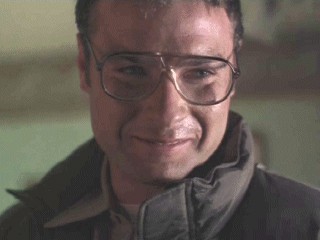
The cops get up to Snowfield, and Stu wastes no time making everyone uncomfortable, but beyond that we actually get some procedural stuff! We retrace our steps, going back to visit the grizzly sites that Jenny and Lisa saw on their own, and then trying to explore a little bit more of the town. There is plenty of debate about just what the heck is going on around here in Snowfield; it could be a plague, it could be a murderer, it could be some kind of outbreak of rabies! It may be a combination of these things; as Jenny well observes, some disease like rabies would mean that people would die en masse, and if they turned violent before death, it could lead to why there were as many instances of mangled corpses as there are.
Everybody splits up into a couple of groups to go take a look throughout town. Some highlights include: finding a lot of water? All over the floor of some of the buildings? In multiple locations?? That’s odd. More importantly, basically nobody is alive, and that includes every man, woman and child in Snowfield. Also, Frank and Stu encounter the corpse of a naked woman who was getting ready to have the ba-doing-a-doing time. This is where Stu comments on a corpse and on Lisa, and Frank almost shoots him. We get the ever-immortal shield of not-all-men everywhere: “Bro it’s just a joke, I’m not actually going to make a pass at the 14-year-old!”
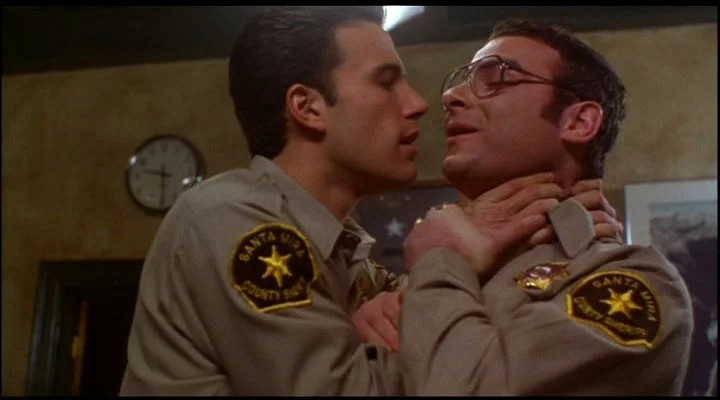
Most importantly, one of the houses has a couple from out of town huddled in the locked upstairs bathroom. Whatever screwed up the town still got in and killed them gruesomely, but not before they scrawled a message on the mirror: “Timothy Flyte, the ancient enemy.”
When everybody reconvenes, it’s starting to get dark in town; as it gets dark, everybody starts to get the feeling that they are not, in fact, alone. Bryce remembers a very important gentleman in the US government who has army connections, and access to biohazard, chemical, scientific men and equipment! Let’s go find a way to call them. But first, let’s scout one or two last buildings to see if there’s anybody here; and in the deli, the lights randomly go out, and Jake Johnson (that ultra-well-developed character) gets pulled into thin air in the span of 20 seconds! He is never seen again! At least, not by his friends…
Getting to the police station, shaken and afraid, the radio to call for help is found to have been tampered with, but they do realize that everything else could be in working order! Managing to get through to the army general by desk phone, Bryce details that he needs all of the scientific help they can get; and then calling the governor, requests that Snowfield be absolutely cordoned off, as well as requesting a backup of as many unmarried officers as they can spare. He also requests all the info possible on Timothy Flyte. Most importantly, he hears some truly weird and creepy sounds on the other end of the phone; birds and bugs transitioning into the yells of children and scared women being tortured. He hastily hangs up.
As our survivors hunker down, it’s time for some character development! Let’s meet some of our cast: Lisa is hanging out with Gordy and Gordy is like a nice big brother to her. That’s really nice! Tal is somewhere around.
Frank and Stu are working on trying to figure out what the hell happened to the radio. Do we need to know more about them? Not really!
Moving on: Jenny and Bryce are falling in love extremely easily, because they both have a tragic past; Jenny fell in love with a guy who tried to turn her into his sex-slave wife, and after having an abortion, got back into medical school. The shock of it all may or may not have caused her father's stroke. Bryce had a wife and a young son named Timmy, who got into a horrific car crash that killed the wife and left his son in a comatose state for the past year.

Bryce does also give Tal a little bit of character development. Tal is so awesome and cold-blooded that he foiled a robbery, and got shot, and said it was a cakewalk, because it was in a grocery store and he was stepping on overturned cake.
I’m not making that up, that’s an actual anecdote from this book.
In another throwaway story that's somehow going to become an incredibly relevant plot point, did you know that all bikers are evil? Jenny, as the doctor in the mountains, was stopped by a group of bikers called the Demon Chrome, and was probably going to be sexually assaulted and murdered. Instead, she got out of her car and threatened to gun down the leader of the bikers, a guy named Gene Terr. He backed off when she pointed out that if he ever needed a doctor in the mountains, she was the only one that would be available to save his life.
Bryce, after hearing the story, develops an even harder crush on her, which is of course what would happen; they’re the leads in a book--and are male and female--of course they’re going to fall in love.
Boy, I sure hope this evil biker doesn’t come back to interrupt the tension and the plot of the story again and again!
Something large starts thwacking at the windows, but can’t make it in, thankfully. But they can’t stay here, where there could be things moving in the shadows after the lights go out…
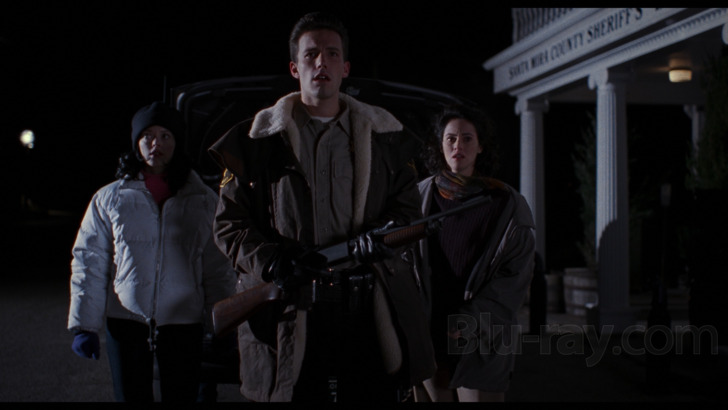
The surviving group rush down the street, scared and rambling about “this probably is something outside of natural explanation!” Only ol’ trustee Stu Wargle, the best character ever, belligerently explains how this cannot be a weird spirit or anything unexplained: it’s got to have a reasonable explanation--blah blah blah y’all are crazy--and that’s when a prehistoric moth comes out of nowhere and face-huggers him to death. When they finally get it off of him and shoot it (and it still flies away), they realize that Stu's face is down to a skull and nothing else. It somehow had acid and ate through his features and flesh. Couldn’t have happened to a nicer guy.
That's definitely the last we’ll meet this freaking character.
Finally, the reinforcement of deputies arrives, and our heroes hunker down in the secured inn. Lisa gets up in the night to go use the bathroom, at which point we get a truly harrowing scene of our pal and Epstein-file-wannabe Stu Wargle somehow reappearing in the Women’s Room, completely naked and fondling himself, salivating over the teenager. Lisa is so shocked, she cannot do anything until he gets incredibly close, at which point she screams and passes out.
Okay, onto the next scene!
Do we want to maybe address what happened after Lisa lost consciousness?
No?
No, we’re just going to gloss it over as “well, when we found you there was no one there”?
Cool, the implications of that are absolutely, disgustingly horrifying (even though we’ll find out later on that genuinely nothing Epstein-y happened).
Anytime I’m on one of those lists on Reddit or Ranker that’s along the lines of, like, “The Five Most Horrible Things To Happen In A Stephen King Book,” I always remember people quietly mentioning that those are a cakewalk compared to Dean Koontz in his prime. Between this book and the ending of “The Vision” … I mean… yeah, you’re right, commenters.
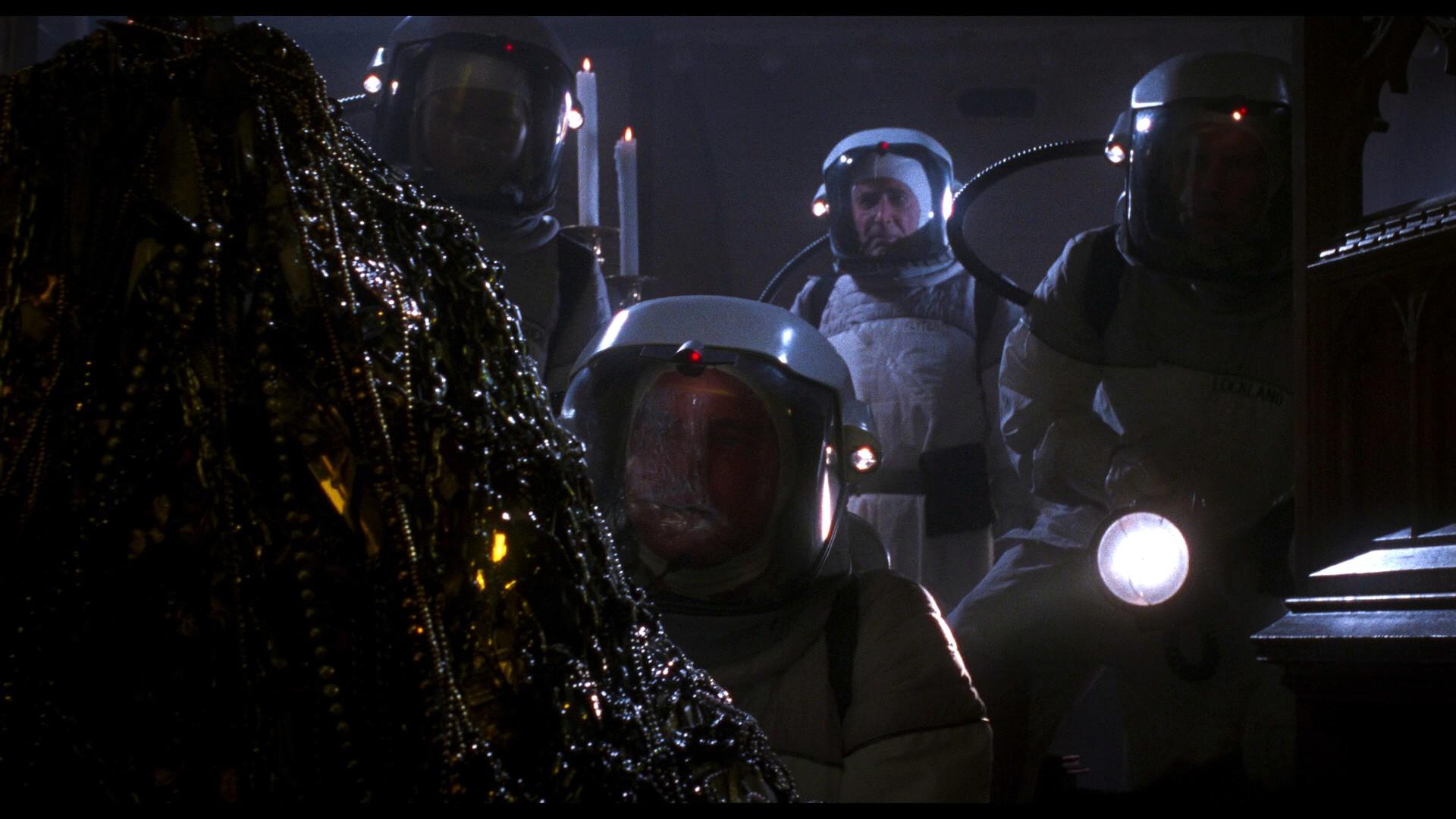
The Science Team shows up, with RVs full of SCIENCE!, and threaten to just straight up shoot our heroes for getting too close. It makes sense for two reasons: number one, if there is an infection, they don’t want to get it all over their fancy equipment, and number two, the story takes place in America.
Rather than listen about the supernatural occurrences, the Science Team does SCIENCE! by going everywhere and being a bit redundant, but does eventually figure out that there’s something odd going on. To their credit, the skepticism is born from real-life viruses that will cause hallucinatory and violent behavior, before finally killing someone; and while the timeframe is wrong, they could be experiencing a variation or mutation of these viruses in Snowfield.
All of the science goes completely out the window when they go back to where Jake Johnson disappeared--because he’s back! He’s somehow in the freezer! The freezer that he definitely was not in, and that he definitely would not have survived being in overnight, and that he definitely did not lock himself into. But our heroes now look like they’re losing their mind, and the scientists are more than happy to have one of their soldiers go into the freezer to check it out and––oh God--
Some of the most horrific descriptions of offscreen death occur, and despite emptying a full magazine of bullets, there is literally no trace of this person left.
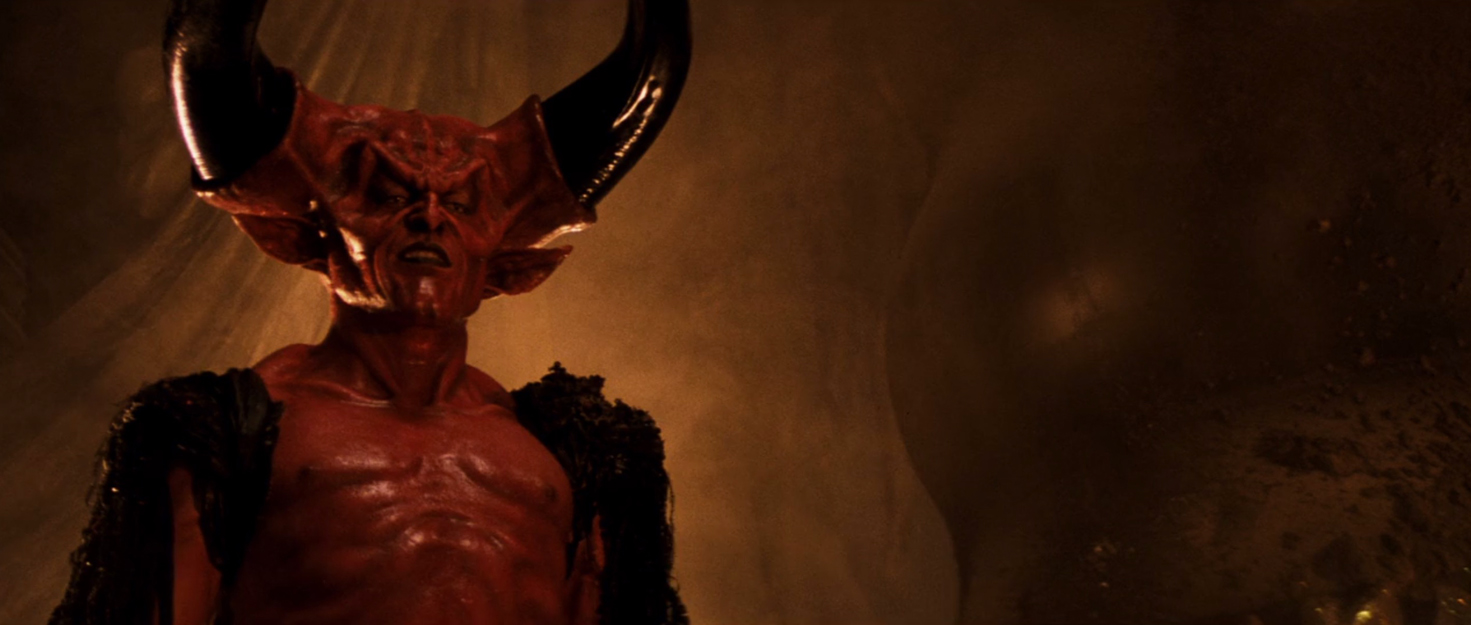
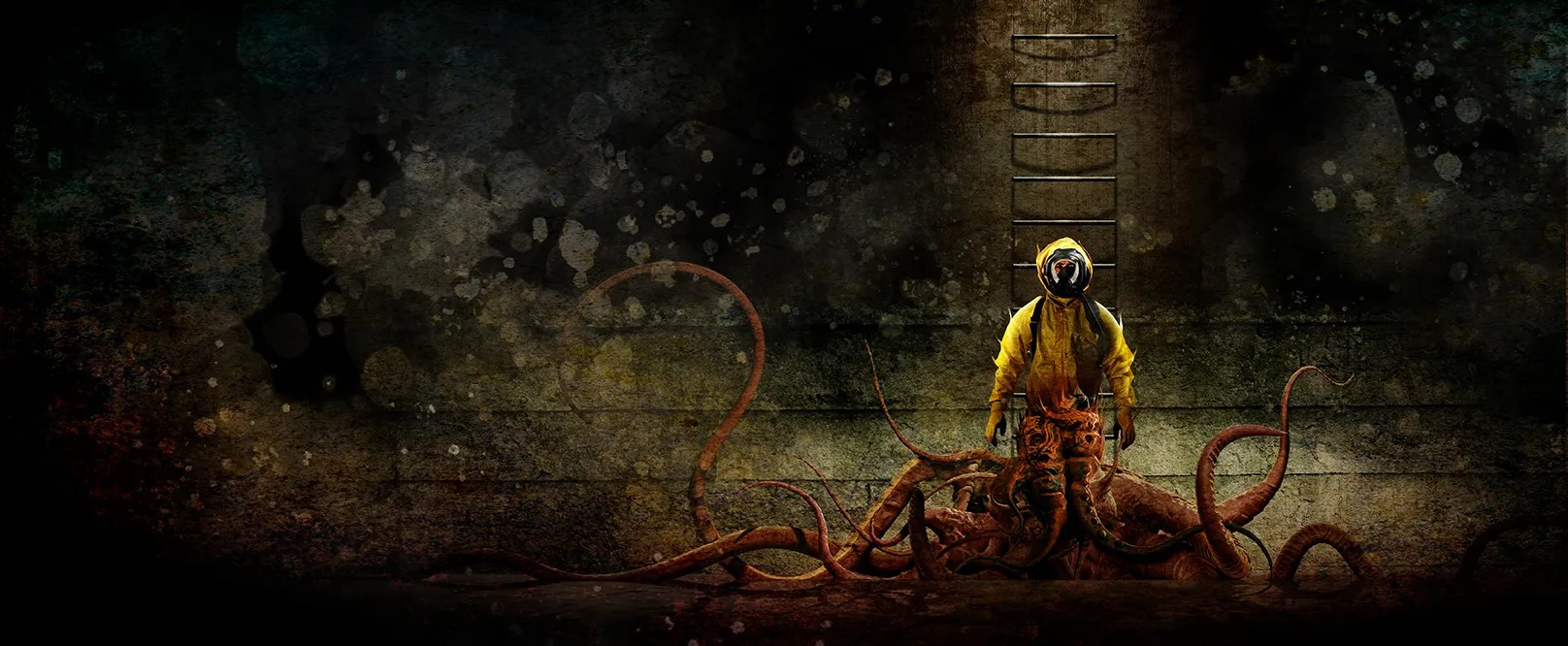
Coupled with a scene almost directly after it, the Science Team completely cracks on this being natural: to make sure that there are no power outages (where something in the dark can slither in), two soldiers go down to the sewer to route power into the main breaker box. They see a stampede of animals in the sewer, followed by one that is a literal, scaled, horned, demon CREATURE, that drags the slower of the two down off of the ladder, out of the arms of the science military man in charge--and they just get to listen to him scream “it’s the Devil!” as he's eaten over their intercoms.
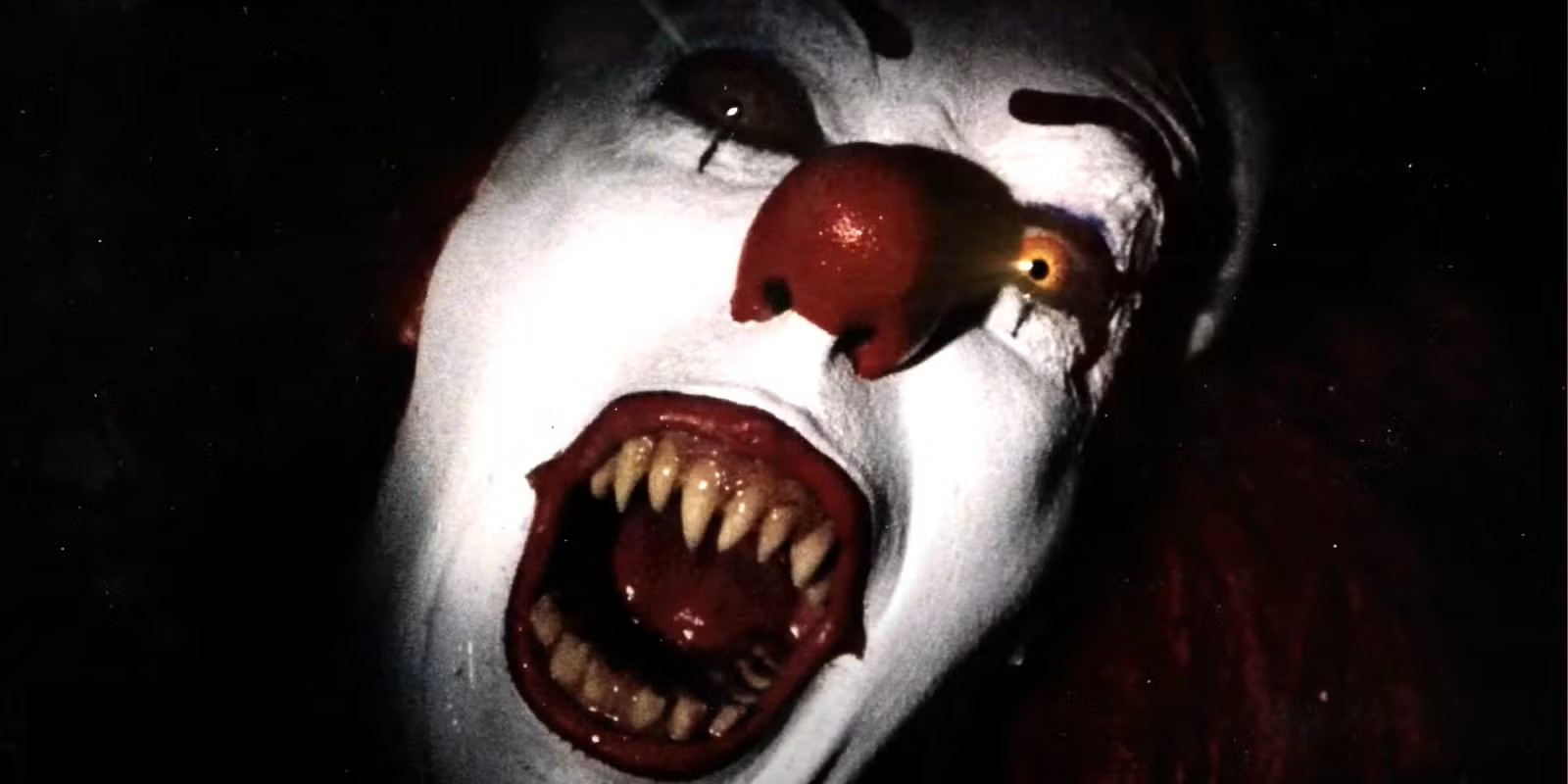
Uh--I mean, on the bright side, we at least know we’ve ruled out a crazy new virus! That’s-- That’s good news, at least?
Anyway, now to get on to the REAL story! We have Fletcher Kale back! YES! My favorite guy! He’s in jail, rotting and plotting his escape, since he’s too important a man to die in prison… Thankfully, Fletcher Kale escapes jail by killing a cop. He then gets to Jake Johnson’s house to hide out and decides to find the stash of guns and money that, according to our knowledge of Jake Johnson so far, likely wouldn’t be there?? He didn’t seem like a survivalist-- ope. Nope, no, it’s there. Kale tears up the house until he eventually does find it; I guess he knows more about Jake than we do. It makes sense, I mean Kale is the main character.
Okay, SERIOUSLY: MAJOR SPOILERS from here on about the twists of the book. Even if you haven’t read it and you’ve gotten this far: please, if it sounds interesting so far, go read it first.
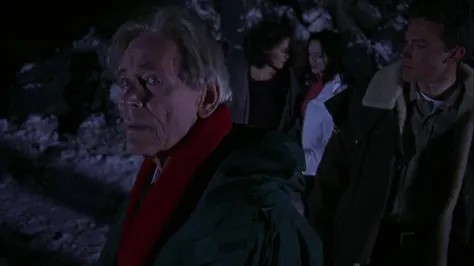
Timothy Flyte turns out to be a professor over in England, who wrote a book called “The Ancient Enemy” that the dead couple had read, and the situation reminded them of it. The book is essentially a hypothesis about some sort of creature that has existed from the dawn of time that is the reason why there are mass disappearances on earth; the Roanoke colony, Mayan colonies, Ghost Ships like the Mary Celeste, the Bermuda Triangle, and much more. Flyte is as quickly as possible brought to California, close to Snowfield, with a book agency claiming that he is going to write a new account of The Ancient Enemy and they can sensationalize the HELL out of a tragedy that is still ongoing.
Damn, this really is American.
Fantastically, we learn that the huge plot thread of scientists and military personnel coming in to quantify and fix everything--ends up with them all being unceremoniously killed, completely offscreen.
(It’s actually very unsettling, because it’s literally a case of “I left them for five minutes out of my sight“ and it’s a small regiment that has guns galore and is in a group, and they just cease to exist.)
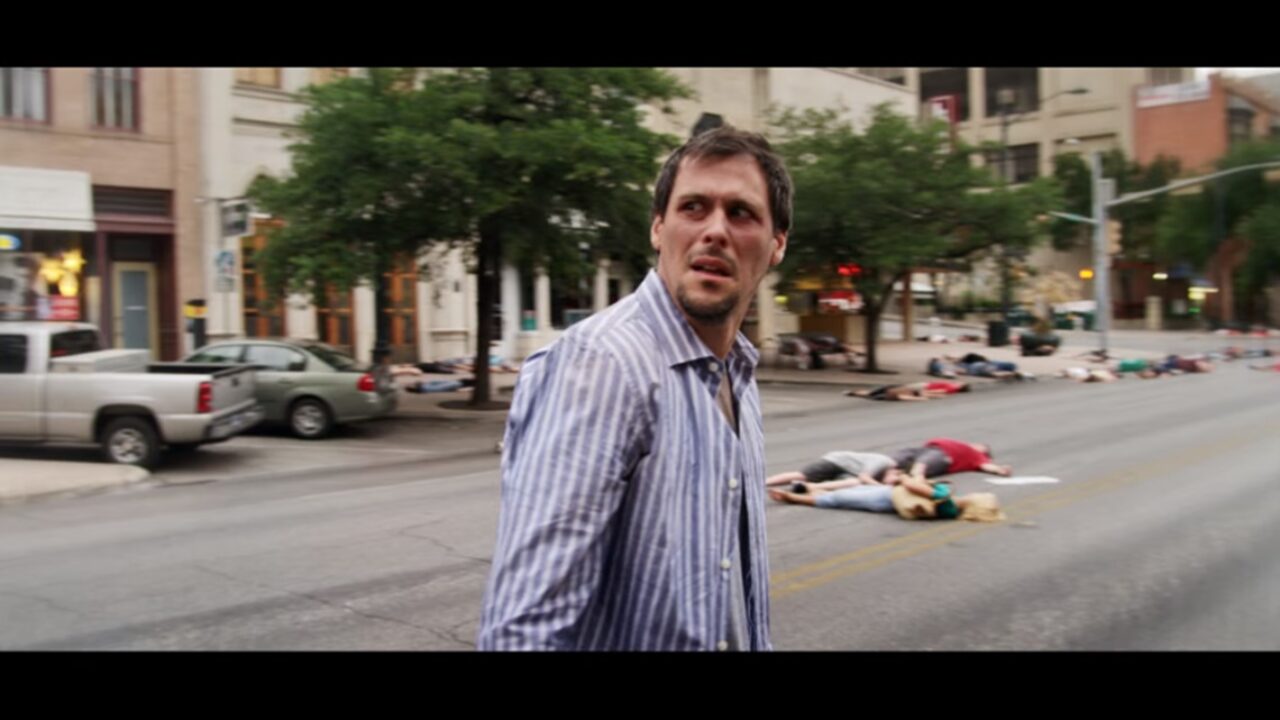
What we do get now is another wonderful Dean Koontz trope: “the talk with the computer!”
The last scientist left is a microbiologist lady. The Science Vans have a crazy-cool computer, which was analyzing the water that they sampled from the weird pools in some of the buildings, as well as DNA from the dead bodies. As it turns out, whatever this thing is that’s able to do all of this madness is also able to communicate through their super-computer--and wastes no time calling the female scientist some of the most horrific names you’ve ever heard. It does, however, mention that it is the Literal Devil, and that it wants Dr. Timothy Flyte to be there as its biographer/apostle. Importantly, it also says that if Timothy Flyte gets there, the rest of them will live. They all basically know that it’s lying, but play along for time, playing into its enormous ego because they are rightfully convinced that it is able to completely and utterly destroy them.
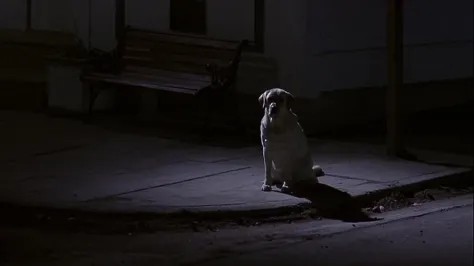
Gordy meanwhile has been losing his cool in increments. Whatever this Ancient Enemy is, it’s not content to just disappear people; it loves to mess with them. As a result, it leaves a blasphemous warning of dead bodies strung up in the church, which bothers Gordy as the most religious one there. When Gordy sees a dog limping up and down the road, he immediately renounces being a cop and tries to go help as a veterinarian, despite the fact that they have all very clearly not seen any animals in town anymore alongside not seeing any people in town anymore. Thus, the moment that he tries to pick up the dog, it goes full “John Carpenter’s The Thing” and becomes an acidic parasite, unable to be put down and eating through him piece by piece--weighing him down to the asphalt and letting him scream as it eats through his chest as a big amorphous glob. Bryce mercy-kills Gordy, and the rest have very little that they can do but retreat to the inn.
All the other deputies that came in? Also killed offscreen.
Enough of this weird stuff; FLETCHER THE PROTAGONIST KALE drives up to Jake Johnson’s house and kills deputies who are doing a roadblock. After that, it’s--back to the main story, okay, thank you Fletcher--
Timothy Flyte is given the choice to go to Snowfield, and is hyper-excited to go into this effectively lethal place to learn more about the thing he theorized about, which is in turn super excited to meet him and give him safe passage. Also, it definitely won’t kill our protagonist group ha ha. So, he gets there and they need an example of the creature to be able to study it.
Frank, the veteran deputy, calls his wife of many decades; having established he is a beloved family man, he is then HORRIFICALLY murdered by the creature wrapping a gooey tendril around his neck and aciding through to decapitate him.
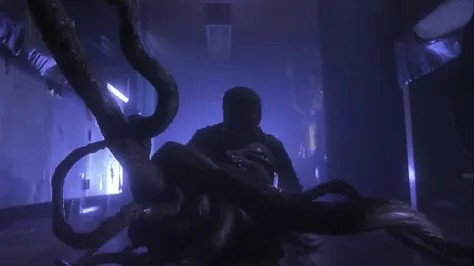
The creature is studied, and as it is being studied, they learn that it must be controlled by some super-nucleus, centralized in a brain of sorts; that it cannot be shot because it will just absorb bullets; that it can change into basically anything, and will have the memory and characteristics of everything that it changes into. The water found in the buildings was leftover water from the human bodies it ate Jesus Christ, and the bruises covering the corpses were from it wrapping around them as the worst weighted-blanket experience you’ve ever had.
Most importantly, they discover by accident that it can somehow die because a very tiny piece of it did actually die in a petri dish!
The microbiologist tries very hard to make sure that their plans are not discovered as she pieces together what chemical compound could actually kill it. Chatting with it over the super-computer is a wonderful way of learning how egotistical it is, as well as how much it likes to insult everybody. Tricking it by saying “we need more advanced scientific materials to study you,” they are allowed to call more scientists, wherein the microbiologist sends out a coded list that includes a massive order of the chemical compound that could actually damage the Ancient Enemy.
But enough of all this schlock! Thankfully now I can breathe easier; Fletcher Kale is back and JESUS CHRIST what is happening? Five naked half-eaten Jake Johnsons appear from the woods and pursue Kale up past the survivalist cabin and into the cave where there’s also Gene Terr?! YES everyone important is here! Also some Ancient Enemy goop-blob with eyes and mouths and wings and claws is in the caves and “Jake Johnson” was absorbed back into it (the titular "Phantoms" are the ancient enemy's false creations it sends out to kill with)--but Gene AND Fletcher together?!
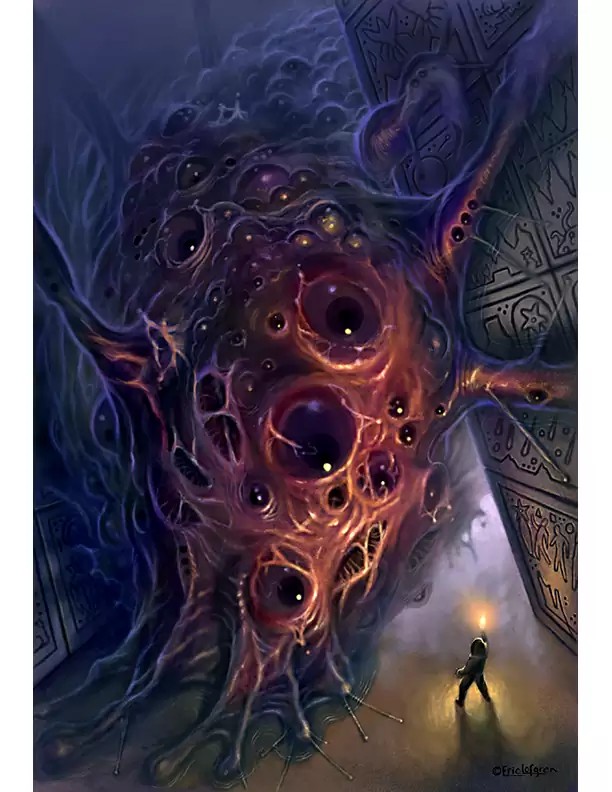
The scientists cargo-drop the chemicals from a helicopter to the street, where everyone wastes no time dispensing of any ruse and strapping on fluid-packs and extremely advanced chemical water-guns to destroy The Ancient Enemy. (I’m being far kinder to the antagonist; in the book, its name is always in lowercase, making “the ancient enemy” somehow almost a boring villain to name!) The ancient enemy then immediately figures out what they’re doing, surging up in a tidal wave to kill them all, starting with dissolving the microbiologist!
Hey, so it turns out that Gene Terr and the Demon Chrome also knew about Jake Johnson’s extreme survivalism, and used the cabin as a place to bring back women they wanted to gangbang and/or dump in the woods and/or perform human sacrifices with to Satan. And what else can this amorphous blob of body parts be but Satan himself, in liquid form for the first time five years before John Carpenter’s “Prince of Darkness”? It ate the other bikers, but spared Gene, and seems to know everything about him (*due to the people it absorbed’s memories*), guns don’t hurt it, and it’s got the ego of the Devil himself! Fletcher Kale sits down to become a disciple of Satan as well, with an itch in his leg.
Oh, we should go back to the climactic battle up above? Heavy sigh oh fine, let’s leave Kale and Terr and go back to our heroes, I suppose…
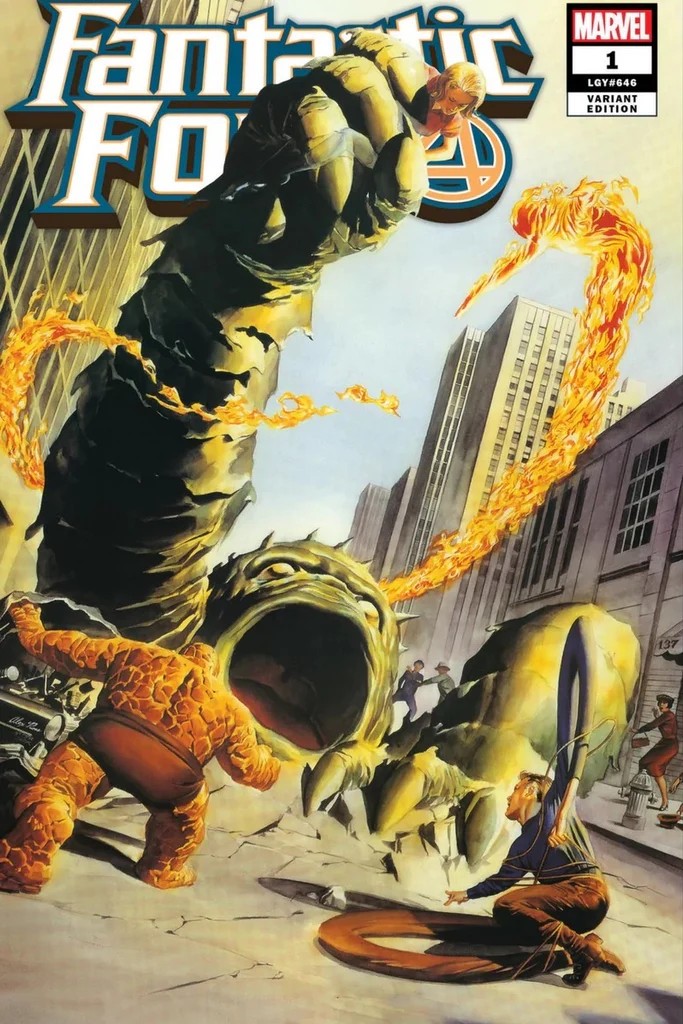
Up above, the street itself is starting to come up! Everything’s going nuts; the ancient enemy literally breaking the town apart to swallow our protagonists whole into the earth! The fancy squirt guns are doing their jobs though--the tendrils are dying, and the ancient enemy quickly sheds pieces of itself so they won’t infect the nucleus with Biosan-4 (based on a real scientific compound Koontz researched! See, it’s based on a new chemical by Dr. Ananda Chakrabarty, breaking down oil from water, and used only in a lab setting, but then to explain in more detail--). The spray doesn’t stop the street from rupturing, lurching everyone into a massive sinkhole over the cave system the nucleus is talking to our human antagonists in. The ancient enemy burns through a fair amount of Tal’s leg--but the black guy in the horror movie is saved and lives to the end, thanks to the Biosan-4 compound! On the other hand, chunks of granite street crush Timothy Flyte’s legs, and the old professor is thrown into the sinkhole where the ancient enemy angrily devours him.
Never meet your heroes--or in this case, your apostles.
Bryce jumps down, emptying his canister of Biosan-4 over the ancient enemy and letting it trickle-down-economics its way to the nucleus! Being 1980’s America, this works!
As the nucleus lurches and heaves, it extracts promises from Terr and Kale to be its continuation, spreading chaos over the earth and killing the Snowfield survivors. It then tries to ooze away out to the depths of the ocean again, but has a moment’s fleeting consciousness that it is dying, after so many long centuries…
The day is saved! Our heroes go to rest, exhausted but steady, although Lisa is in battered psychological shape. At the hospital 5 days later, they are attacked by Terr and Kale--
Who, after all the build-up in the plot, are very easily shot down. Terr immediately dies, shot by Tal; Kale tries to take out Timmy’s comatose form and then Bryce, but the itch in his leg turned out to be woodland ticks that burrowed in and gave him severe blood poisoning, untreated over the past five days (when he and Terr just smoked weed and talked about Satan and did nothing).
On one hand, I was almost positive that ticks would’ve been eaten like every other bug and animal in the woods. On the other hand, it could’ve been from earlier hiking outside of the danger zone--and more importantly, it ties into the novel’s final thematic moments.
One year later, Bryce and Jenny are on their honeymoon. Tal managed to settle down with the black nurse mentioned in the hospital in the previous scene (and I honestly thought he was joking about chasing her tail to settle down with her, but apparently not). Lisa is happy again, and Timmy iiiiiiis still in the coma. But Bryce had a dream he’ll wake up soon…
O-kay… that’s… happy?
Bryce and Jenny make love, then discuss if the ancient enemy was the Devil, and it probably was--not the Fallen Angel; but having absorbed so much human consciousness, being amalgamated into a shapeshifting predator that styled itself on preconceived notions of Satan. And if Satan can exist, even in such a tenebrous form, then surely God can exist too--not as a white-bearded All-Father, but in the little things like the ticks taking out Kale before he could steadily shoot them; in Jenny and Bryce making it to be together; in their ability to fight and overcome evil--even if the future remains unknown.
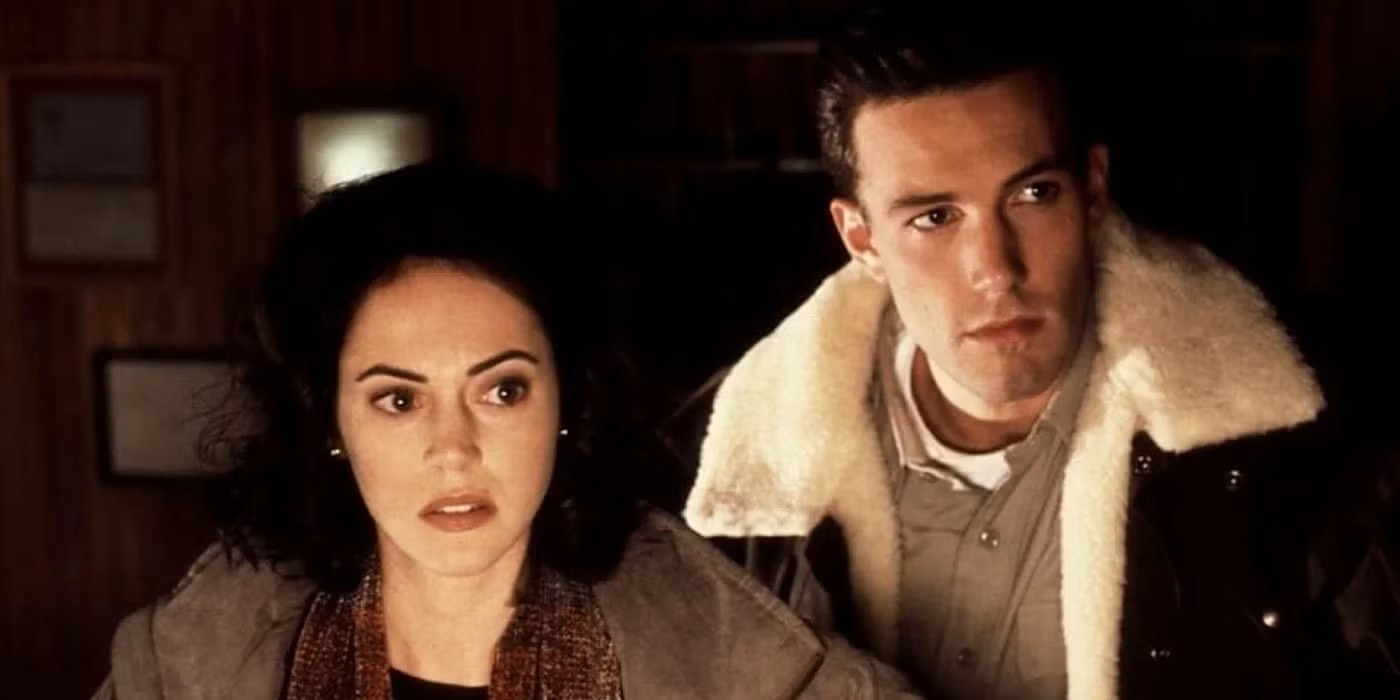
What sets “Phantoms” apart in Dean Koontz’s bibliography is the subgenre of horror it uses as a vehicle. In his book “Danse Macabre,” Stephen King details that “Horror” as a genre can be categorized into three main categories, headed by three titanic achievements in Horror Fiction: “Frankenstein” by Mary Shelley, “Dracula” by Bram Stoker, and “Strange Case of Dr. Jekyll & Mr. Hyde” by Robert Louis Stevenson. (Ironically, in 2004 Dean Koontz began his own series of books that reimagined “Frankenstein”--that is a story for another article!) These three novels headed the three subgenres of “Scientific Horror,” “Fantasy Horror,” and “Human Horror,” respectively.
Usually, Koontz seems to comfortably write in either “Human Horror” or in “Scientific Horror.” This is where he gets the majority of his antagonists; the serial killers aplenty and sexual predators are all from “Human Horror”--the government projects gone awry and evil (or, more accurately, morally gray and selfish) viruses and programs are straight out of “Scientific Horror”.
But him using these subgenres does not immediately make it a “Horror” novel; it’s the way in which it is written that does that. “Horror” as a genre has the tendency to leer over the spectacle, to use suspense to dig in on the visceral moments of shock. What Koontz does is more akin to “Terror;” the anticipation of the horrific, using gut-wrenching visceral moments to be the exclamation mark on the Terrifying buildup. The focus isn’t on the “payoff” scary moment as much as it is the feeling of being scared without release, and that fits more in with what we nowadays refer to as “Suspense” or “Thriller” novels, especially if they are more "realistic" vs. "fantastical."
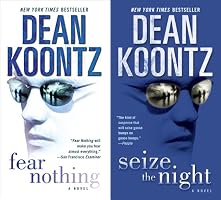
(This point is exemplified by one of my favorite reviews of the first Dean Koontz book I ever read, “Fear Nothing”. It is another case of “Small Town Destruction From Supernormal Event” which is my favorite subgenre, and has a scene of our protagonist being terrified to go upstairs in a house to see what is making such terrible noises--and if it’s killed the inhabitants of the house. For me reading it for the first time, I was breathless, and I wound up rating the book very highly. For this other reviewer, they rated it One Star, citing only “there’s a 4-page-long scene of a guy going up a f*cking flight of stairs.” Suspense hits people differently! I’d be happy to cover Koontz's “Moonlight Bay” trilogy another time; it’s a very fascinating parallel of, if we’re keeping the comparison train rolling, King & Straub’s “Talisman” series.)
But what about the “Fantasy Horror”? For the most part, these elements are restrained to the protagonists; psychic abilities they have, or genetic traits (that come across as fantastical despite being scientific) that are exceptionally rare. You might read into it as “Good has a leg up over Evil, and invariably wins no matter how realistically gruesome evil is.” (In more recent stories, Koontz is criticized for a majority of human antagonists having psychic powers to use against the heroes. I haven't read these books yet, so I cannot in good faith comment!)
What this means for Koontz is that, unlike King, his plot synopses are harder to share with a friend. Because so many of his characters across multiple novels share traits (both protagonist and antagonist), there gets to be a point where the “Human Horror” side feels a bit interchangeable. When I read “The Face of Fear” and “The Vision” back to back, I was struck by the microcosm example of it. Both books are about a person with psychic abilities playing a cat-and-mouse hunting game with a serial killer/sexual predator. The main difference for a one-sentence synopsis is that “The Face of Fear” is about a retired mountain climber who now needs to scale down a building in a blizzard to survive, and “The Vision” is about a psychic starting to suspect her detective-husband.
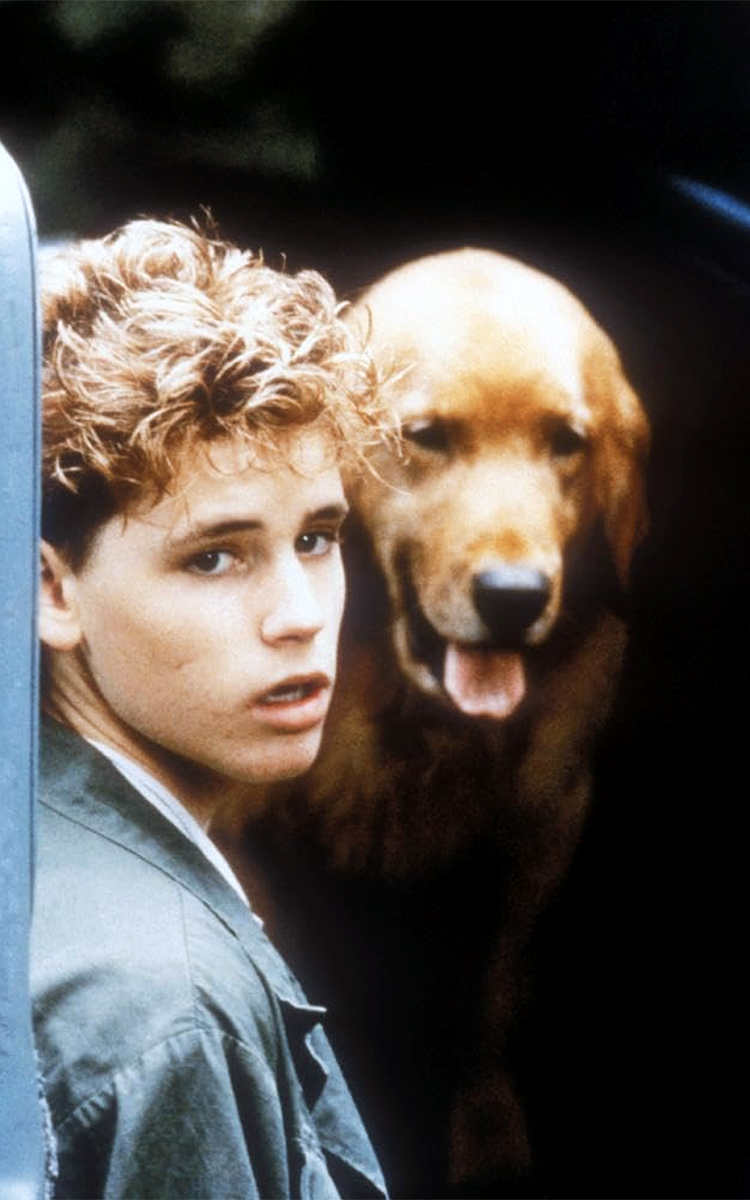
Both have a myriad of interesting differences--but they’re harder to immediately relate past the archetypal tropes. “Watchers,” Koontz’s most famous book besides the “Odd Thomas” series, can be dumbed down to “super-intelligent dog and owners vs. bad government people.” “Fear Nothing” and especially its sequel “Seize The Night” can be dumbed down to “outcast boy with strange abilities sees things we don’t and tries to stop them; he and his super-intelligent dog vs. bad government people.” “Odd Thomas” might be dumbed down as “outcast boy with strange abilities sees things we don’t and tries to stop them.”
What I mean is that, within these subgenres of horror, there are a million permutations but a fixed set of rules, especially the more grounded you keep your antagonistic force. Part of why the “Moonlight Bay” trilogy is so loved (as is “Odd Thomas,” which for the sake of the running analogy would be Koontz’s “Dark Tower”) is that the situation--once you recognize it--is so OUT there. But that’s the main issue with Suspense/Thriller writing; you have to get there to explain what is going on.
From the outside, “Phantoms” is a Suspense book about people investigating a town that disappeared, and who try not to disappear themselves. It’s a decent premise, and one I would still read; it’s also one that feels familiar, because it is. We’ve seen town populations disappear before: “Salem’s Lot” disappeared (Stephen King’s book of the same name), “Milburn, New York” disappeared (“Ghost Story” by Peter Straub); hell, in Koontz’s own works, “Black River, Massachusetts” effectively disappears (“Night Chills”). What sets these stories apart from one another is the antagonistic force that causes the disappearances, and to drag that cause into the light winds up spoiling the suspense for a first-time reader questioning what the heck is happening. If you know what it is lurking around the corner, you can gauge how scared to be for the protagonists.
In some cases, this spoiling-suspense doesn’t matter. We know going into “Night Chills” that it’s about a hypnotizing science program turning everyone into drones; we know in “Salem’s Lot” it’s vampires. But for “Ghost Story,” telling you the antagonist skews the perspective on what information you have, even from the title of the book. “Phantoms” is the exact same; the title implies something, and it is accurate but not completely so. So, if I were to say, “aw MAN you have GOT to read this Dean Koontz book! It’s about a shapeshifting blob that eats a town!” it dumbs it down enough to be much more unique, but it also reveals the ¾-of-the-way-through twist, getting rid of the suspense of where danger could be coming from in all our previous scenes.
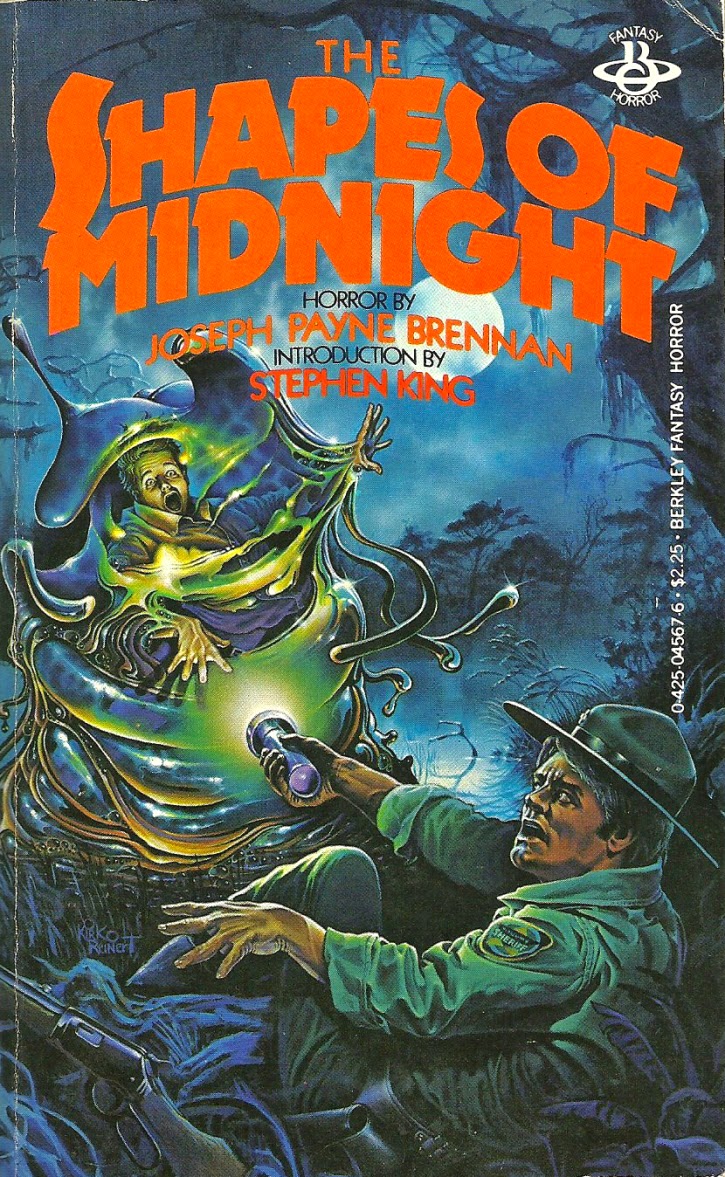
Yet, despite the fact that it is more in keeping with “Scientific Horror,” what really sets “Phantoms” apart is that it plays out more akin to Science Defeating Fantasy Horror. Conceptually, an amorphous blob that is long-lived but killable with a special chemical compound is right out of the great “Blob” subgenre of “Science Horror” (1958/1988's “The Blob,” the ending of 1960's “First Spaceship on Venus,” 1964's awful “The Creeping Terror,” and for literature Joseph Payne Brennan’s wonderfully traumatizing 1953 story “Slime”. Dear God in Heaven, I haven’t forgotten that one as a bedtime story, o Father of mine…)
In terms of shapeshifters, I’ve already mentioned the ever-astonishing “John Carpenter’s The Thing” (1982), but “Invasion of the Body Snatchers” (1956 or 1978 or other remakes) also works well as a peer in the genre. All of these doppelgänger stories (besides something like the Kolchak: The Night Stalker episode “Firefall” (1974), unquestionably the best of that series and pants-wettingly frightening for a ten-year-old thank you again, Dad! I had an awesome childhood) also fit into “Scientific Horror.”
What makes the ancient enemy so unique is that, despite combining two prolific Science-Antagonist archetypes, its intelligence and esoteric egotistical grandeur turn it into the culmination of “Fantasy Horror.” Is there a vampire or werewolf shapeshifting in the woods eating a small European town? It could’ve been the ancient enemy. Is there some eerie unexplained force destroying ships like the Mary Celeste? It could’ve been the ancient enemy. Is there a town like Roanoke where there’s no explanation what happened to them besides “they vanished,” which opens the floodgates of imagination to exposit on “well it could’ve been aliens, or zombies, or some ghostly vengeance, or mystical natives, or--”
It could’ve been the ancient enemy.
Most importantly, rather than show its true face, the ancient enemy hides behind our human concepts of what it should look like. As it eats, it absorbs the personalities and memories of its food in order to better mimic it; but that means it takes in all the concepts we’ve made about demons and monsters and Lucifer rising from the Pit. Despite being “Science Horror,” it tricks us and itself into the category of “Fantasy Horror,” trying to remain unkillable by scientific means. It believes itself immortal because it absorbed the human concept of an egotistical Devil and identified itself as that, because the food it ate thought it was that.
It is this hook that I could share to make “Phantoms” unique: a small town is destroyed by a shape-shifter that could just be the Devil itself; who will survive? Not only does that give away the twist and thus lessen the earlier Suspense, but our minds slot “the Devil” into “Fantasy Horror” as quick as we can.
Dean Koontz and Stephen King both have amazing concepts, but their styles differ in how to present these concepts. If I shudder and say “my God, the hotel is alive and evil,” I’m not spoiling “The Shining” for you. If I shudder and say even something as slight as “the monkeys,” that does spoil the tiniest bit of the huge conceptual twist of “Fear Nothing.” Both wield Horror, but use it as a tool in extremely different ways. King usually uses it as the dread of knowing what the threat is, but not the scope nor how to stop it. Koontz usually uses it as the dread of knowing something is wrong, but not what it is and thus not just how wrong, making the possibilities multiply beyond what’s actually going on. Thus, I can share one author’s amazing concepts, but if I care about your enjoyment of the story, sharing the other’s will basically drag half the novel down because you’ll be impatient to learn what you already know.
This above anything else is the reason why I think Koontz isn’t as widely regarded as King. Because he has the same label as a “horror author,“ we naturally expect him to fall into the same category. But King mainly writes “Fantasy Horror” as his antagonists; look no further than how his Richard Bachman pen-name was exposed because it wrote a story with “Fantasy Horror” (1984's “Thinner”) where it had previously only written “Human Horror.”
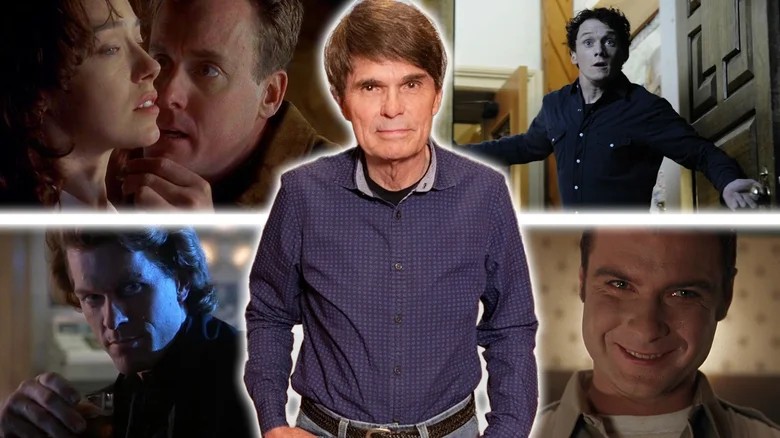
This pigeonholing of Koontz as an author means that we are now going into his works with an expectation of what kind of antagonist we will be facing, and are let down when it’s not some fantastical nightmare. Humans want fantastic spectacle, after all. We’re also going in with the expectation that this work will be something that we can easily describe to those around us. Is it a killer car like “Christine”? Is it an insane laundry press like “The Mangler”? In reality, it’s much closer to “The Dead Zone” or “Firestarter,” with a protagonist with abilities beyond ours up against a force he may not be able to face. Its very uniqueness makes it more complex to describe satisfactorily. But just what that antagonist is, we will not know until it’s brutal reveal later in the book, so how could we possibly market it around to our friends to get them invested? How could Koontz’s publishers do that on a massive scale, without giving away too much of the plot to share the unique pieces, or too little of the plot and making it sound generic?
“Phantoms” sadly suffered on its initial release. As Koontz chronicles in his 2001 afterword to the 60th printing, the publishing house which had originally ordered a “horror book” to capitalize on “Whispers” popularity only printed 5,000 initial hardcover copies and sent it out to die. Still, it got rave reviews (including one by Stephen King himself: “Phantoms is gruesome and unrelenting. It has atmosphere, character, and story. I couldn’t let it alone until it was done. It’s well-realized, intelligent, and humane.”), and was followed by a booming paperback release that hasn’t lost steam since its initial publication.
It was so popular, in fact, and such a success at what it set out to achieve, that “Phantoms” became the subject of a lawsuit, when two books by “Pauline Dunn” (a pen-name for two sisters) plagiarized huge passages of the novel in order to sell a creepy-good time. Thankfully, Koontz’s lawsuit was successful and the plagiarized books were withdrawn.
But “Phantoms,” though a plume in his career, also labeled Koontz forever as a “horror writer.”
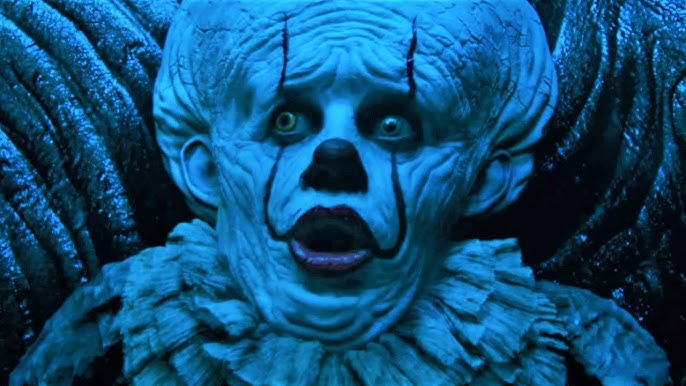
In looking at “Phantoms” through the lens of Stephen King’s “It,” published two years later in 1985, you could rightfully argue that the books differ tremendously. There are no big scientists in “It,” and likewise no band of children in “Phantoms.” The nature of the monster (prehistoric protoplasm that gained sentience and ego and thinks it's the Devil vs. Killer Klown from Outer Space (itself a conceptual nightmare to truly explain; It is essentially manifested wrongness and Fear from outside the dimension we can conceive)) is different. The way it's defeated (Science in Koontz vs. Belief in King) is different. The way it affects the whole town is different (as a disease killing everyone in Koontz; as a hypnotic influence corrupting everyone in King). Yet for all those broad overviews, there are also a surprising amount of similarities:
The self-righteous Otherworldly Menace from the dawn of Time that is able to shape shift and sneak through the cast and location, killing whatever it wants in grizzly fashion, that has a large hibernation cycle until it decides to cause another mass series of deaths, which could be a source of any and all mythological devils
The Town/Country Natives banding together in a tight group to defeat it against insurmountable odds
The Human Antagonists who start out unrelated to the main threat, but who become deputized into a larger evil against the heroes
Our main heroes being picked off up to and through the climactic battle; nobody is safe (but some live, and go on to marry one another)
A POV scene as this ancient evil incredulously realizes it’s actually dying, although there is the possibility that some small part of it survived and went on to gestate into another horrible monster
The Complete and Utter Destruction of a small town that seemed possibly pleasant to live in
Things ending overall optimistically, but not conclusively, with some things left unanswered on what the future holds for our heroes
A Film Adaptation that completely removes the metaphysical and Lovecraftian interesting element to the supernatural threat, resulting in a flashy but lackluster ending. (In “Phantoms,” there’s actually a few oblique references to H. P. Lovecraft, and the implication that the ancient enemy is Nyarlathotep, the Crawling Chaos!)
(I plan on covering the film in another review: please check out my page to find it once it is posted later on, as I don’t believe I can re-edit it into this review to link it! It has a massive 9% on Rotten Tomatoes; oh I’m over the moon looking forward to it.)
The main thing though, that these two novels prove in comparison--is that we have got to stop comparing Dean Koontz and Stephen King!
Both authors can take amazing premises and then deliver in wildly different ways; it’s literally the meme of “Two Cakes”! Just be happy they’re both here, one doesn’t have to be “better,” we can enjoy both in very different ways and have a blast without comparisons.
So… why am I doing it in this article? Koontz deserves to stand on his own two feet; why am I framing everything under the shadow of the King?
Truth be told, it’s so that you would give this article a chance. How many people clicked on it because they like Pennywise the Dancing Clown, and would never have clicked on it if it was just about Dean Koontz?
(Also, being autistic, I saw a pattern between the books and thought it was cool!)
We’re all curious about this author we’ve heard so much of but haven’t met before; I wanted to give everyone a chance to meet him. If you’ve never read him, “Phantoms” is a really good book to start with--not because he is a horror writer, but because this is a really good example of Koontz’s style. “Phantoms” is sleek, fast, surprisingly thoughtful, shockingly gory, pulling very few punches, eerily heartfelt--and most importantly, it has a tiny bit of profound grace at the exact moment you least expect it.
He may not be a horror writer, but anyone who can write a book like “Phantoms” is a good writer, and it’s a fantastic book that makes you so eager to devour it you can’t put it down. Every Koontz book I’ve read so far has done that, and I hope will also do that for you (4 pages of stairs or not)!
About the Creator
Enjoyed the story? Support the Creator.
Subscribe for free to receive all their stories in your feed.
Comments
There are no comments for this story
Be the first to respond and start the conversation.