
Nine Went In. None Came Out Walking.
In January 1959, nine experienced hikers entered the Ural Mountains. The Soviet investigation lasted three months. The official explanation was four words. The case was classified for thirty years.

The case was closed on May 28, 1959.
Cause of death: "An unknown compelling force."
This phrase appears in the official Soviet investigation. It is the only explanation. After three months of inquiry, interviews, autopsies, and a search operation involving hundreds of soldiers and volunteers across the northern Urals, lead investigator Lev Ivanov wrote those four words, closed the folder, and classified the case for thirty years.
Nobody asked him what he meant.
Or, if they did, there is no record of it.
What the Records Show
In January 1959, nine experienced hikers set out into the Ural Mountains under the leadership of 23-year-old Igor Dyatlov, a student at the Ural Polytechnic Institute. They were not beginners. Each of them had done this before. They had the right equipment and food for the expected conditions.
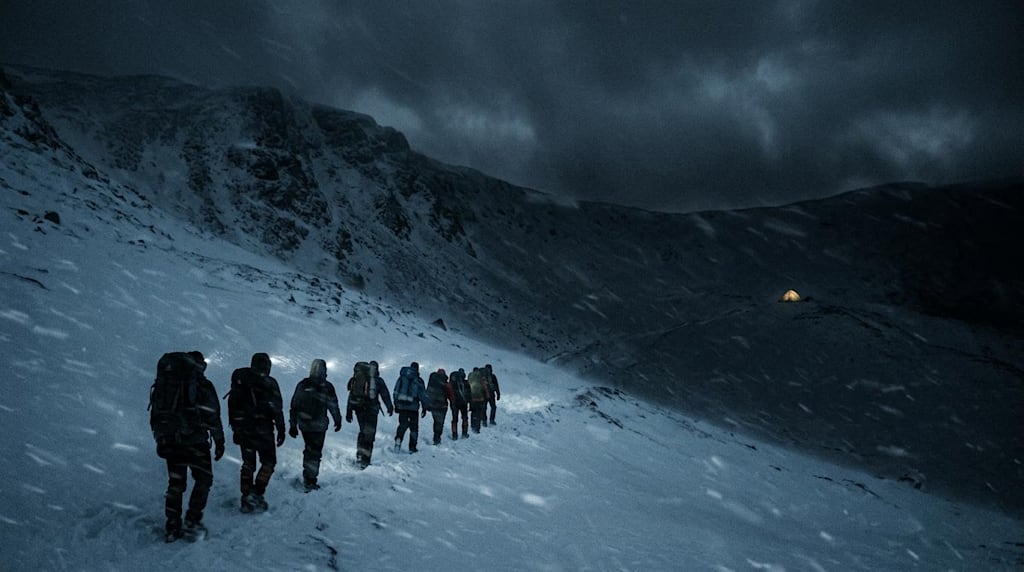
On the night of February 1, something happened at their camp on the slope of a mountain that the local Mansi people called Kholat Syakhl.
In the Mansi language, that means Dead Mountain.
They had set up their tent on the slope rather than in the valley below. This was unusual. Experienced hikers camp in valleys, which are sheltered from the wind. Camping exposed on a slope in a Ural winter requires a reason.
We don't know what their reason was. They didn't write it down.
The Tent
The tent was found on February 26.
It had been cut open from the inside. It was not unzipped. Investigators described the cuts as controlled and deliberate rather than panicked slashing.
All nine people had left through those cuts and entered air that was minus 30 degrees Celsius.
They left their boots inside the tent. Their coats. Their equipment. They left behind everything that would keep a person alive in a Ural winter and walked out into the dark in their socks.
The Tree Line
The first bodies were found 1.5 kilometers from the tent. They were at the tree line. Two of them had climbed a cedar tree high enough that the branches broke four meters up. The skin on their hands had been torn away. Not by an animal. It was from climbing the rough bark of the tree. They climbed in the dark and cold without gloves and held on.
Whatever they were looking at, they needed to be higher up to see it.
Or they needed to be away from something below.
The Ravine
The remaining four were found in May buried under four meters of snow in a ravine.
This is where the official record becomes difficult to read.
One woman, Lyudmila Dubinina, was missing her tongue. Her eyes were missing, too. The soft tissue on her face was missing, too. The medical examiner noted this. As reports often do, the report quickly moves on from things that don't fit the available explanations.
Two others had fractured ribs. The examiner wrote that the fractures were consistent with being struck by a car. Or an explosion. Not with a fall. Nor with an animal attack. Investigators had no framework for the force required to break ribs that way without breaking the skin.
The examiner wrote it down anyway. Someone filed it. Someone classified it.
The Interview
Decades later, after the Soviet Union had collapsed and the file had been partially declassified, the lead investigator, Ivanov, gave one interview.
He said he had been ordered to close the case.
Ivanov said that he was told not to include certain details in the official report.
Ivanov said he personally believed that the group had encountered something connected to military testing in the region.
He did not specify what kind of testing.
Ivanov was in his eighties at the time of the interview. He died shortly after the interview.
Throughout the conversation, the journalist noted that Ivanov seemed less like a man sharing information and more like a man finally putting something down that he had carried for a very long time.
The Explanation
In 2019, the Russian government reopened the investigation. Fourteen months later, they announced their conclusion: avalanche.
Skeptics pointed out that there was no evidence of avalanche debris at the scene. They also noted that the slope angle was insufficient. They also noted that the snow conditions that night did not support an avalanche.
Nevertheless, the government closed the case again.
"An unknown compelling force" had become an avalanche. Sixty years later, the explanation arrived.
But it didn't explain anything.
Dead Mountain still stands. The slope is still there. Hikers still go there.
Some of them camp in the valley like experienced hikers do.
For reasons they can't quite explain afterward, some of them find themselves setting up their tents on the exposed slope instead.
They say it feels like the right place to stop.
They say it feels like something is already there, waiting.
They always come back down.
So far.
About the Creator
Chronicle and Void
Every collapse has a cover story. Every war has a cause that didn't make it into the history books. History is not an accurate record of what happened. It's a record of what they allowed to survive.
Enjoyed the story? Support the Creator.
Subscribe for free to receive all their stories in your feed.
Comments
There are no comments for this story
Be the first to respond and start the conversation.