
Movies of the 80s: 'The Mutilator' — Welcome to the Deadliest Fall Break Ever
A North Carolina beach town, a grieving father, and an arsenal of fishing equipment turned one low-budget slasher into a bloody little cult classic.

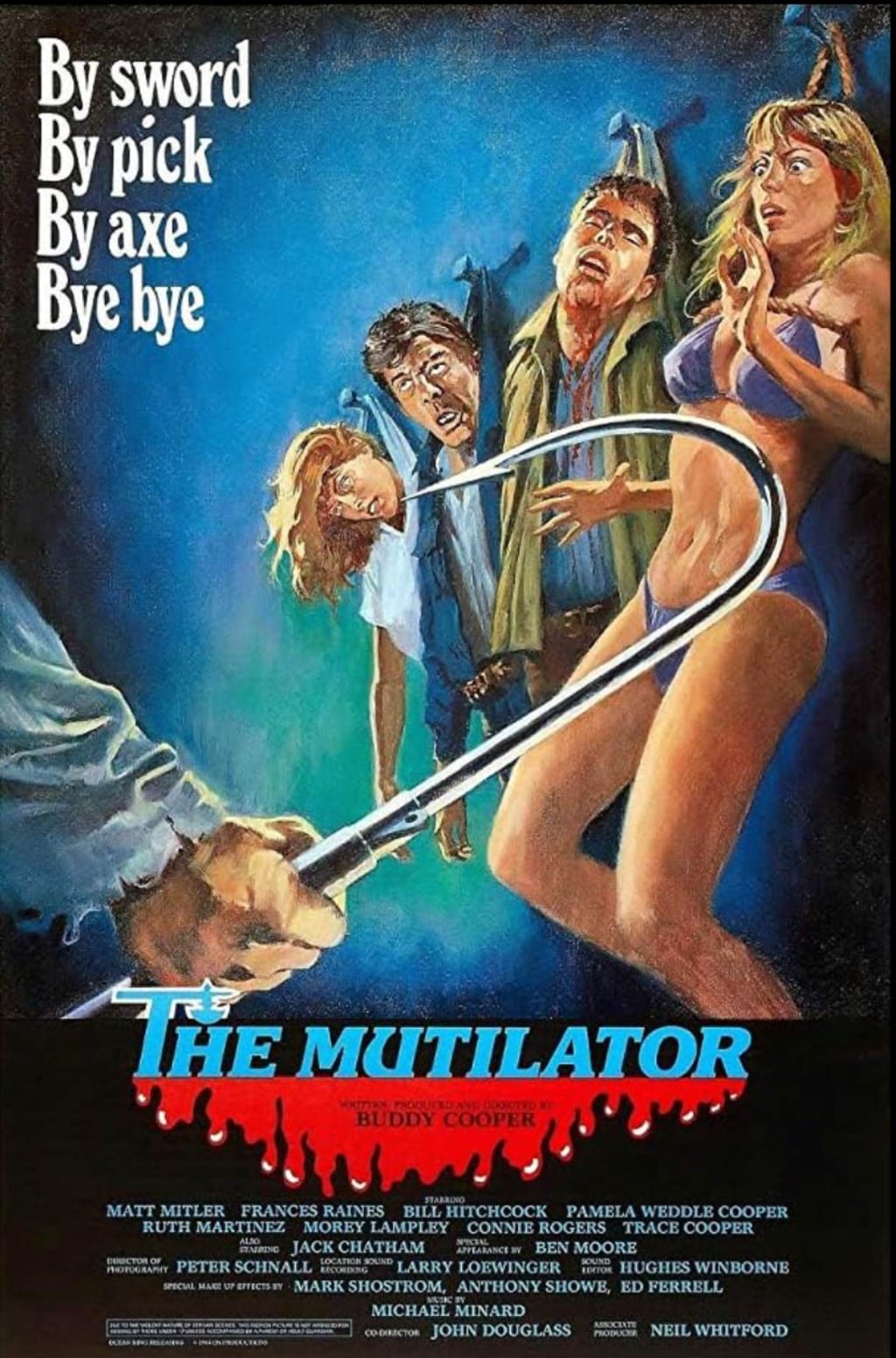
Movies of the 80s: The Mutilator
There are slick Hollywood movies from the 1980s that look exactly like products of their time.
And then there are movies like The Mutilator.
Originally released as Fall Break, Buddy Cooper’s 1984 slasher is the kind of movie that could only have come out of the great American independent horror boom. It is scrappy, occasionally awkward, unapologetically bloody, and built around one wonderfully simple idea:
What if a beach vacation became a killing ground?
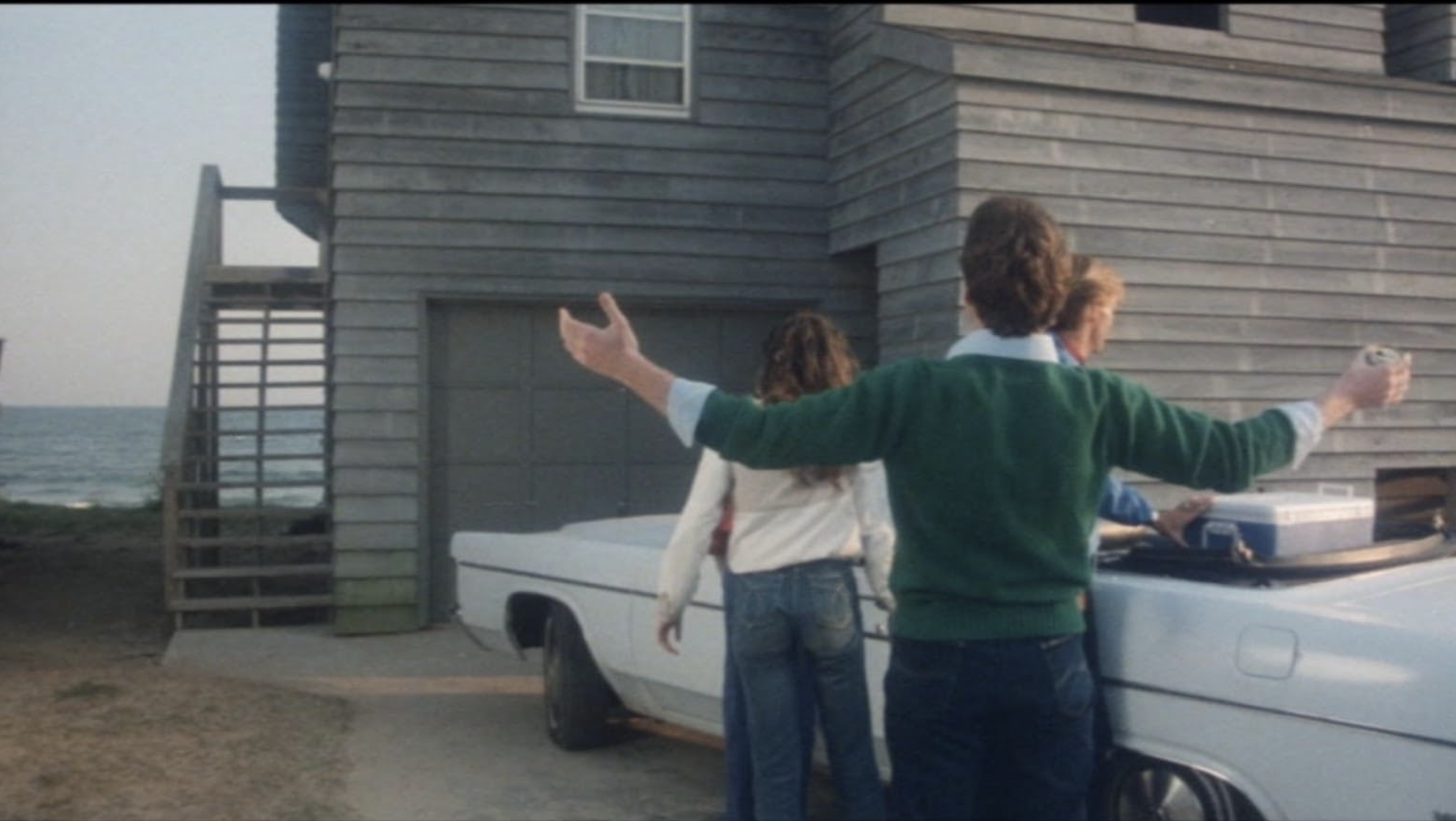
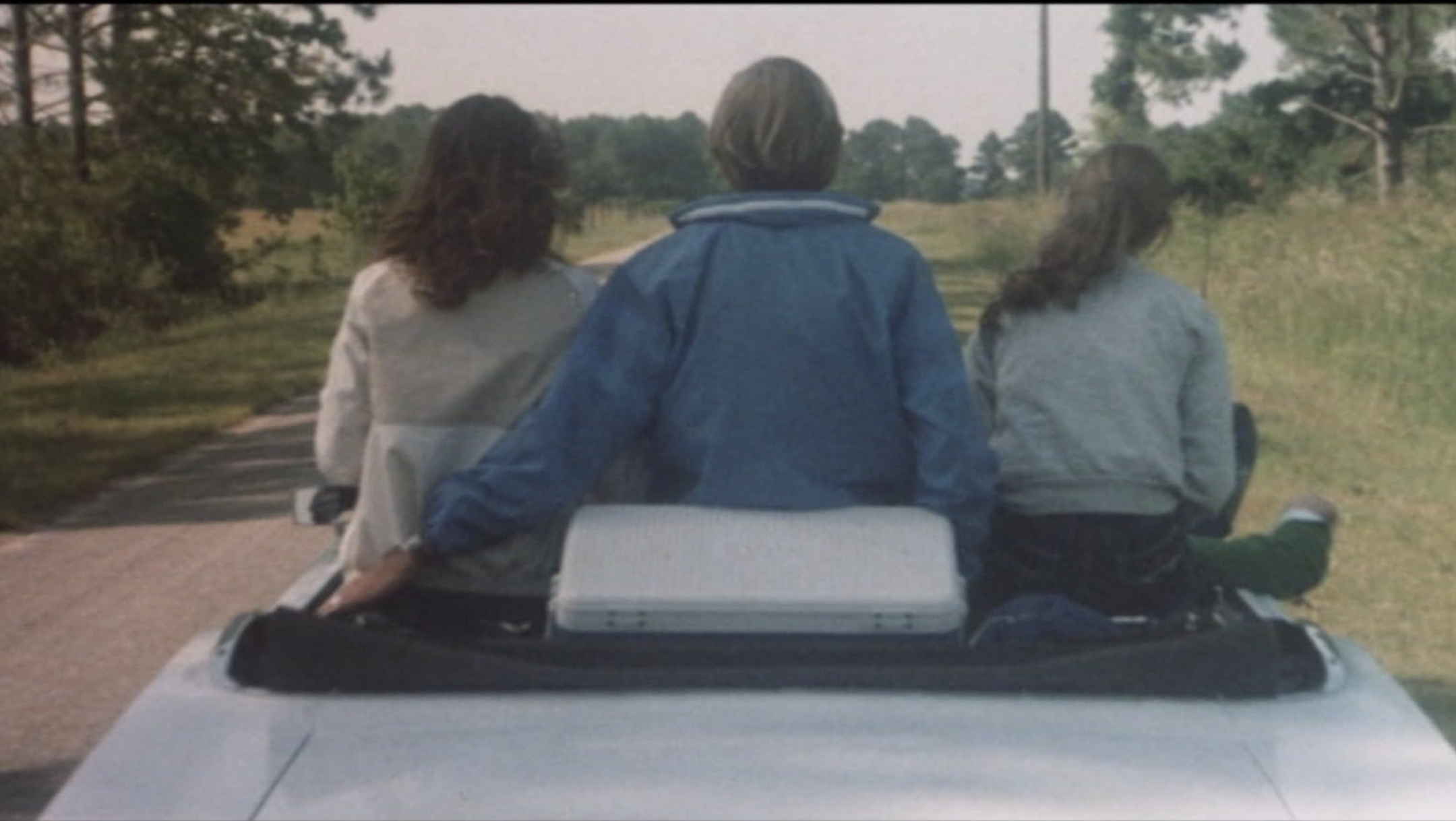
Set against the beaches of Atlantic Beach, North Carolina, The Mutilator takes a familiar slasher formula and gives it a distinctly regional flavor. There are college students, an isolated vacation property, a mysterious killer, and enough bad decisions to keep the body count moving.
But there is something particularly strange about watching a slasher unfold beside the Atlantic Ocean.
The beaches are beautiful.
The vacation house looks inviting.
And the killer has apparently decided that boats, fishing equipment, and anything else within arm’s reach can become murder weapons.
That combination gives The Mutilator a personality that many of its more polished contemporaries never quite possessed.
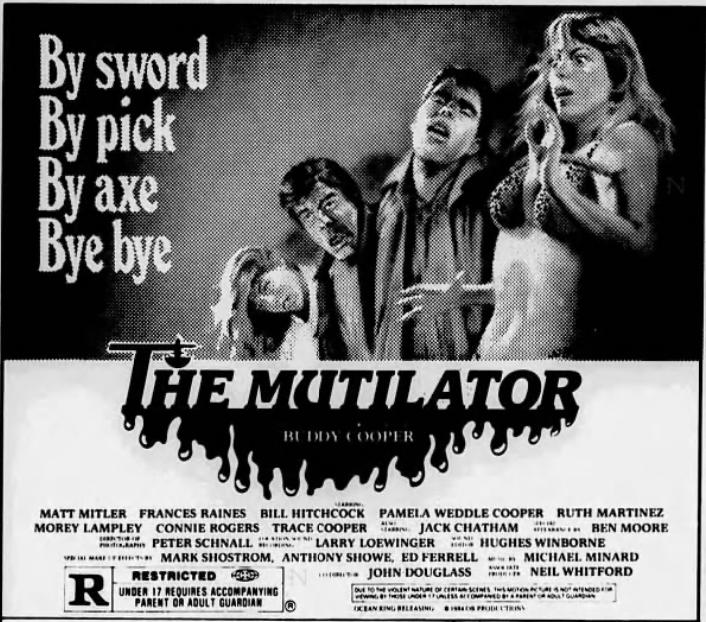
A Lawyer With a Movie to Make
Buddy Cooper was not coming out of Hollywood.
He was a North Carolina attorney with a lifelong interest in filmmaking and an appreciation for the eerie emptiness that settles over a beach town after the summer crowds disappear.
That became the foundation for The Mutilator.
Cooper saw something inherently unsettling about an oceanfront resort during the off-season. The same beaches that could feel crowded and carefree during the summer suddenly became isolated and desolate once Labor Day had passed.
It was the perfect environment for a slasher.
Cooper worked on the screenplay during the early morning hours before heading off to his regular legal job. The movie was conceived as both a horror story and an opportunity to take advantage of the enormous appetite for bloodshed that had developed around the slasher genre.
By the early 1980s, audiences had already been introduced to masked killers, haunted summer camps, isolated cabins, and just about every sharp object imaginable.
Cooper decided to bring something else to the party.
Fishing equipment.
Boat motors.
Flounder gigs.
Hooks.
Anything associated with the seaside could potentially become an instrument of death.
That gave The Mutilator its own particular brand of nastiness.
John S. Douglass, a film professor, also became an important part of the production, helping refine the script and bringing students into the filmmaking process. The result was a production that was part regional filmmaking experiment, part horror movie, and part full-scale gamble.
Cooper was betting that audiences would pay to see it.
More importantly, he was betting that he could actually get it made.
$80,000, Maxed-Out Credit Cards, and a Whole Lot of Blood
Making an independent horror movie is one thing.
Financing one is something else entirely.
Cooper initially put approximately $80,000 of his own money into the production. When that wasn’t enough, he turned to credit cards and bank loans.
By the time production was finished, the budget had climbed to nearly $450,000.
For a regional independent production, that was a serious investment.
The movie was shot around Atlantic Beach between 1982 and 1983, with a 29-day production schedule that demanded plenty from the cast and crew. Local talent worked alongside professionals from outside the area, including cinematographer Peter Schnall.
Students from American University were also brought into the production, giving The Mutilator the feel of a genuine filmmaking community project rather than a miniature Hollywood production.
And then there were the effects.
Makeup artist Mark Shostrom helped turn Cooper’s relatively modest production into a showcase for practical gore. In an era when audiences were increasingly demanding more elaborate kills, practical effects were still king.
And The Mutilator understood the assignment.
The movie doesn’t have the money to compete with the biggest studio productions of the period.
So it competes with imagination instead.
The result is a collection of kills that remain the primary reason horror fans remember the movie.
There is also something wonderfully bizarre about the contrast between the carnage and the film’s upbeat beach-music sensibility.
It is sunny.
It is catchy.
And people are getting mutilated.
That is very 1980s.
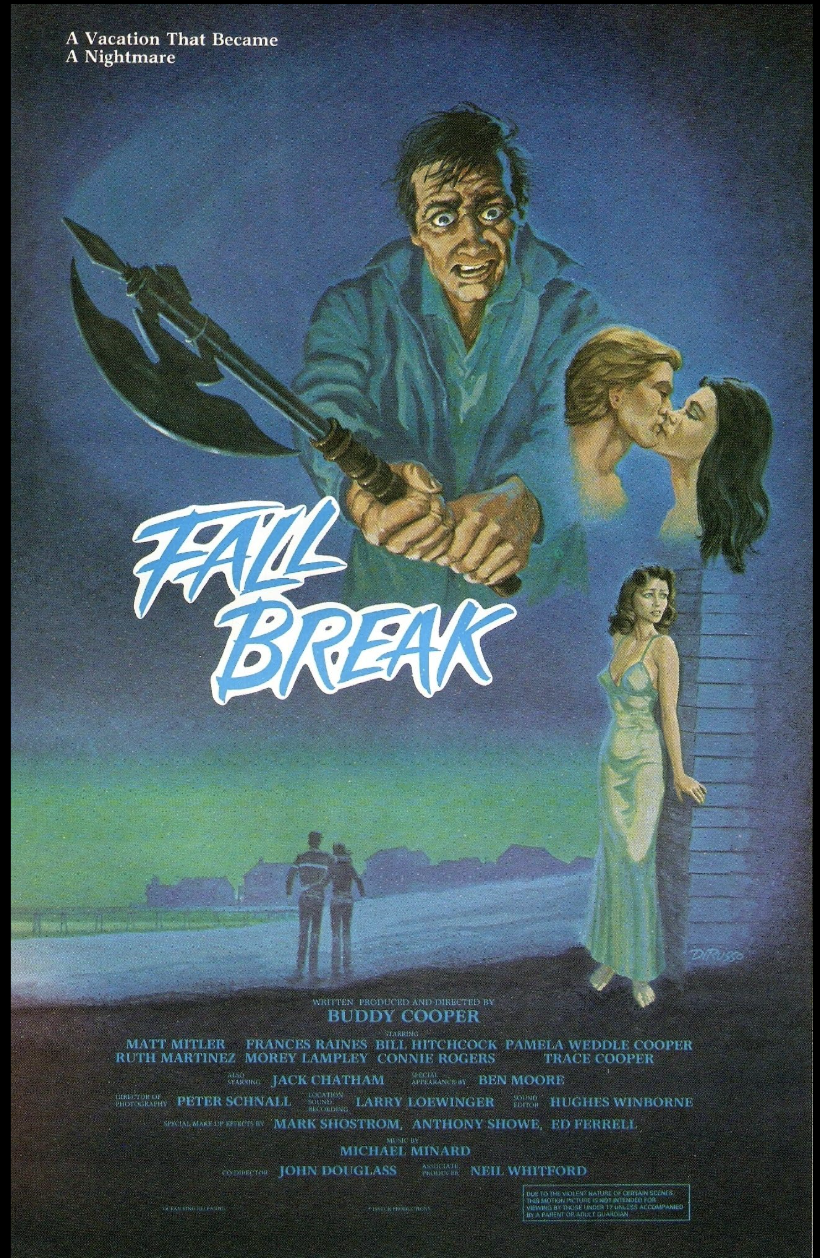
Fall Break Becomes The Mutilator
The movie originally went out under the much more innocuous title Fall Break.
That title makes the film sound like a college comedy.
A group of young people head to the beach.
They drink.
They party.
They get into trouble.
Maybe somebody learns something about themselves.
Instead, they get murdered.
The title was eventually changed to The Mutilator at the insistence of distributors.
It wasn’t subtle.
It didn’t need to be.
The new title told audiences exactly what kind of movie they were buying a ticket to see.
The film received regional screenings in 1984 before eventually expanding its reach. A New York run followed in 1985 through Ocean King Releasing.
Getting the movie into theaters, however, meant dealing with another obstacle familiar to virtually every ambitious 1980s horror filmmaker:
The MPAA.
The violence proved problematic, and Cooper ultimately cut the film in order to secure an R rating rather than accept an X.
That meant the version audiences saw theatrically wasn’t necessarily the version horror fans would eventually come to seek out.
Home video changed that.
Vestron Video helped bring the unrated version into the burgeoning VHS marketplace, where movies like The Mutilator could find an audience far removed from the traditional theatrical system.
And that audience remembered.
Critics Didn’t Exactly Fall in Love
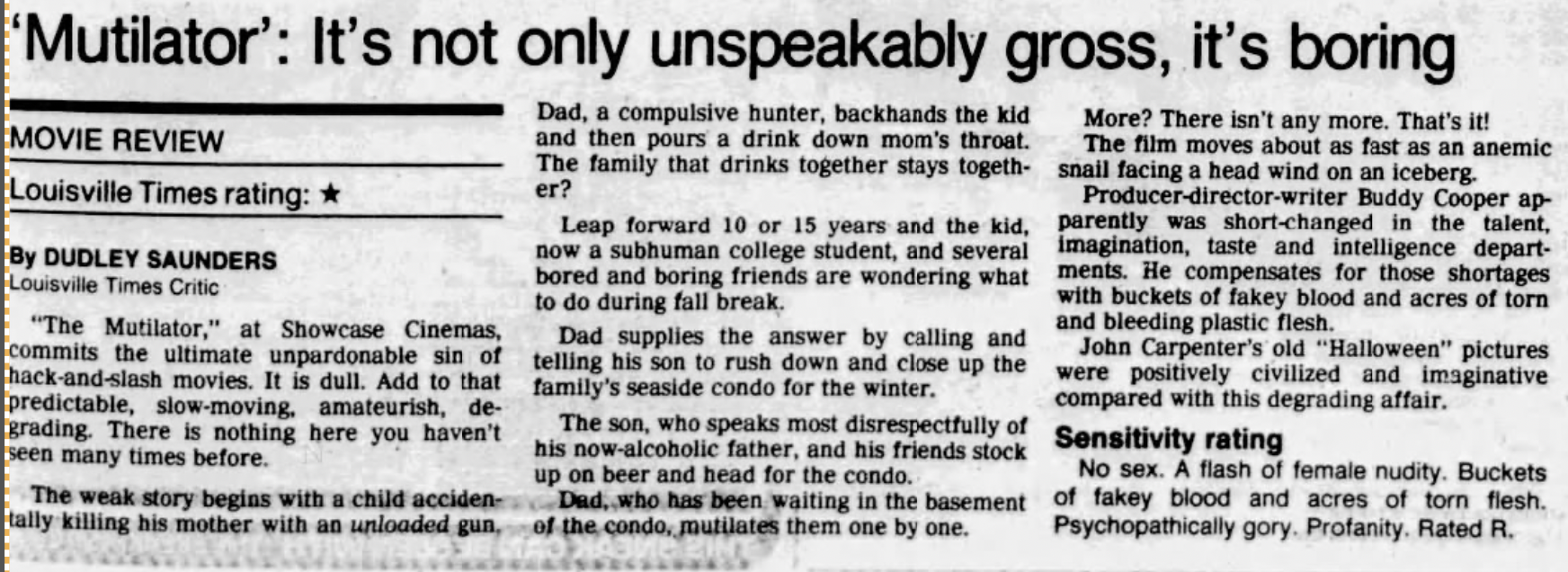
The mainstream critical establishment wasn’t particularly impressed.
Contemporary reviews tended to regard The Mutilator as little more than another low-budget gore movie trying to cash in on the slasher craze.
Patrick Goldstein of the Los Angeles Times was dismissive, while Variety found the movie tedious and primarily suited to viewers interested in explicit violence.
That criticism isn’t entirely difficult to understand.
The Mutilator is not a technically polished movie.
The acting can be uneven.
The pacing occasionally drags.
The dialogue isn’t going to be confused with the work of William Goldman.
But that isn’t really why people watch The Mutilator anymore.
They watch it because it is a genuine artifact of the independent horror explosion.
They watch it for the kills.
They watch it for the strange atmosphere.
They watch it because there is something irresistible about a movie made by people who clearly wanted to make a movie badly enough to risk everything they had to do it.
The Beach Was Never Safe
What makes The Mutilator particularly interesting today is how much it represents the regional side of 1980s filmmaking.
This wasn’t Hollywood.
There wasn’t an enormous production apparatus standing behind it.
There wasn’t an established studio star system or a giant effects department.
There was a filmmaker, a location, a relatively small crew, a bunch of students and professionals willing to work together, and a whole lot of determination.
And there was an audience hungry for horror.
The result is rough, but the roughness is part of its charm.
The Mutilator feels like a movie that escaped from somebody’s basement, borrowed a beach house, raided a tackle box, and somehow made it onto movie screens.
That is precisely why it has endured.
From Obscurity to Cult Favorite
For years, The Mutilator existed primarily as one of those titles passed around among hardcore horror fans and VHS collectors.
Then came the rediscovery.
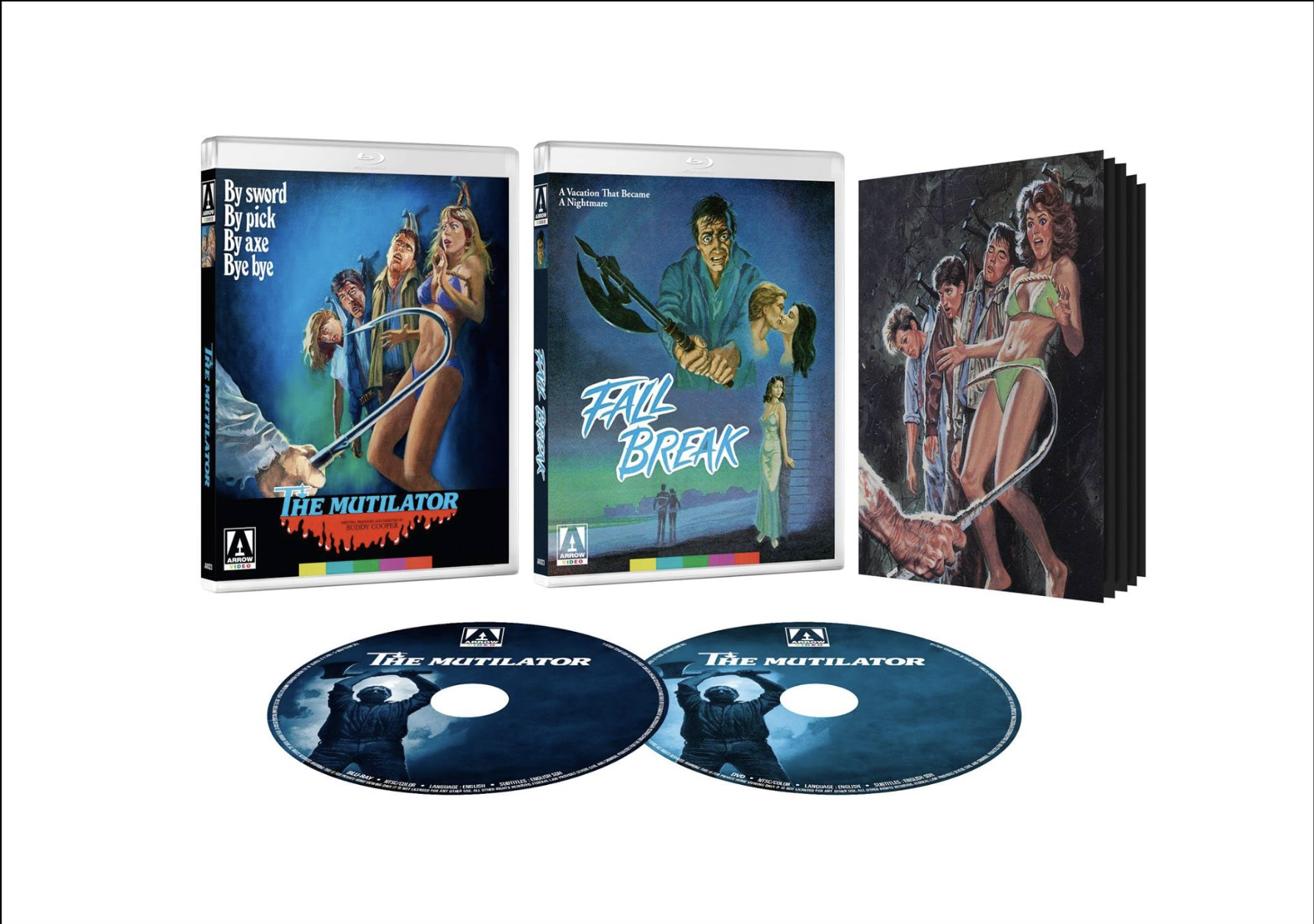
Arrow Video’s 2016 release helped give the film a new life, presenting the uncut version to a modern audience and bringing renewed attention to a movie that had spent decades living on the fringes of the genre.
Suddenly, The Mutilator wasn’t just another forgotten 1980s slasher.
It was a time capsule.
A reminder of what American horror looked like when filmmakers outside Hollywood could pick up a camera and make something bloody enough to compete for attention with the major studios.
And eventually, the story came full circle.
The Mutilator became successful enough within cult-horror circles to inspire Mutilator 2, bringing the property—and members of the original cast—back for another round of carnage.
The little regional slasher that once looked like a long shot had become a franchise.
One Last Trip to the Beach
There are hundreds of slasher movies from the 1980s.
Some are masterpieces.
Some are terrible.
Some are almost completely forgotten.
And then there are movies like The Mutilator.
It doesn’t need to pretend that it belongs alongside the most sophisticated horror films of its generation. Its appeal comes from somewhere else.
It is a movie born from ambition, financial risk, regional filmmaking, practical effects, and the sheer insanity of the 1980s horror marketplace.
It took a beach vacation and turned it into a killing field.
It took fishing equipment and turned it into an arsenal.
And it took one North Carolina attorney’s filmmaking dream and turned it into a piece of cult movie history.
The beach may look peaceful.
The music may sound cheerful.
The sun may be shining.
But if The Mutilator taught us anything, it is this:
Never assume you’re safe just because you’re on vacation.
Welcome to the 1980s.
Welcome to Fall Break.
And whatever you do, stay away from the tackle box.
About the Creator
Movies of the 80s
We love the 1980s. Everything on this page is all about movies of the 1980s. Starting in 1980 and working our way the decade, we are preserving the stories and movies of the greatest decade, the 80s. https://www.youtube.com/@Moviesofthe80s
Enjoyed the story? Support the Creator.
Subscribe for free to receive all their stories in your feed.
Comments
There are no comments for this story
Be the first to respond and start the conversation.